 Sold
Sold
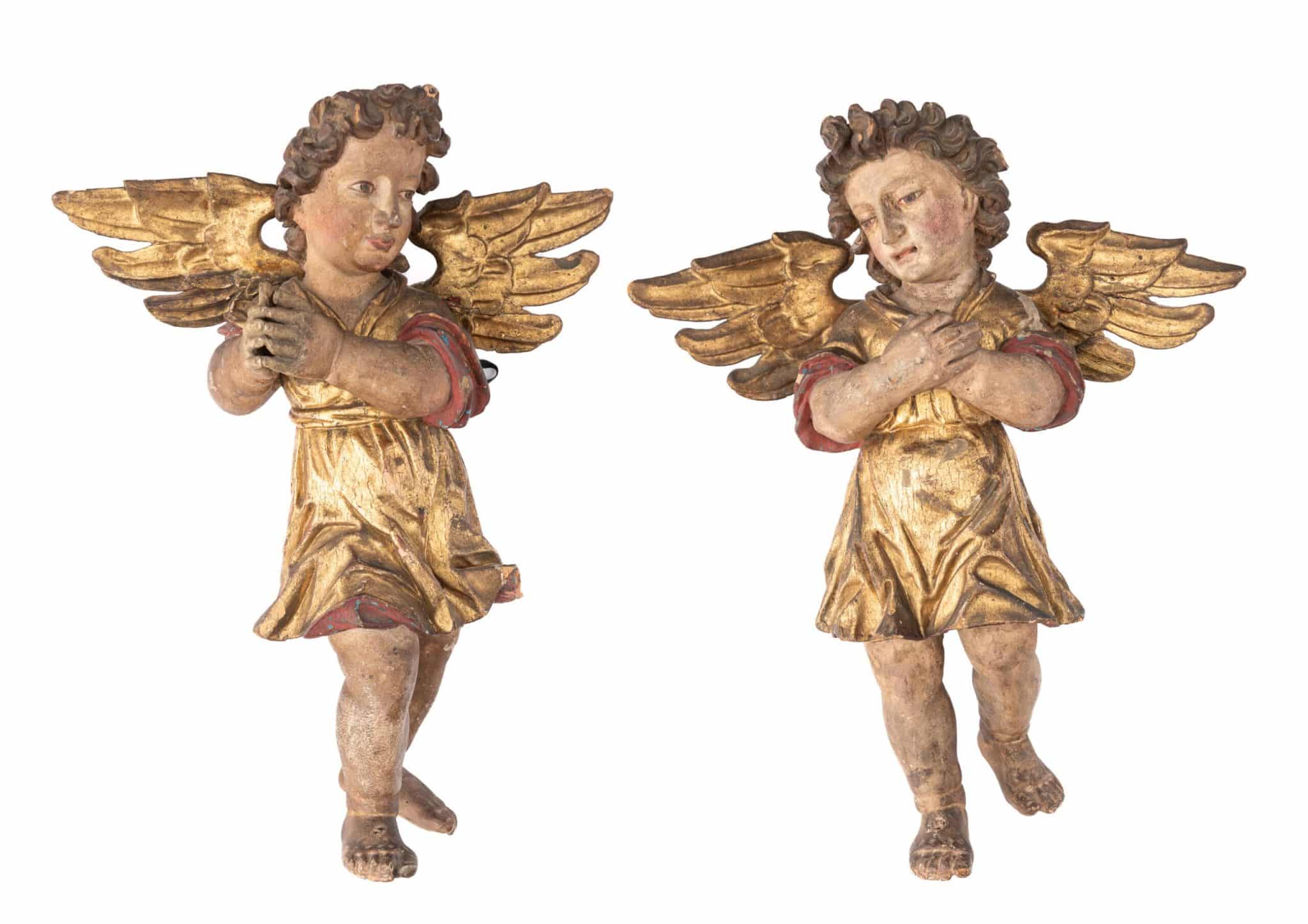
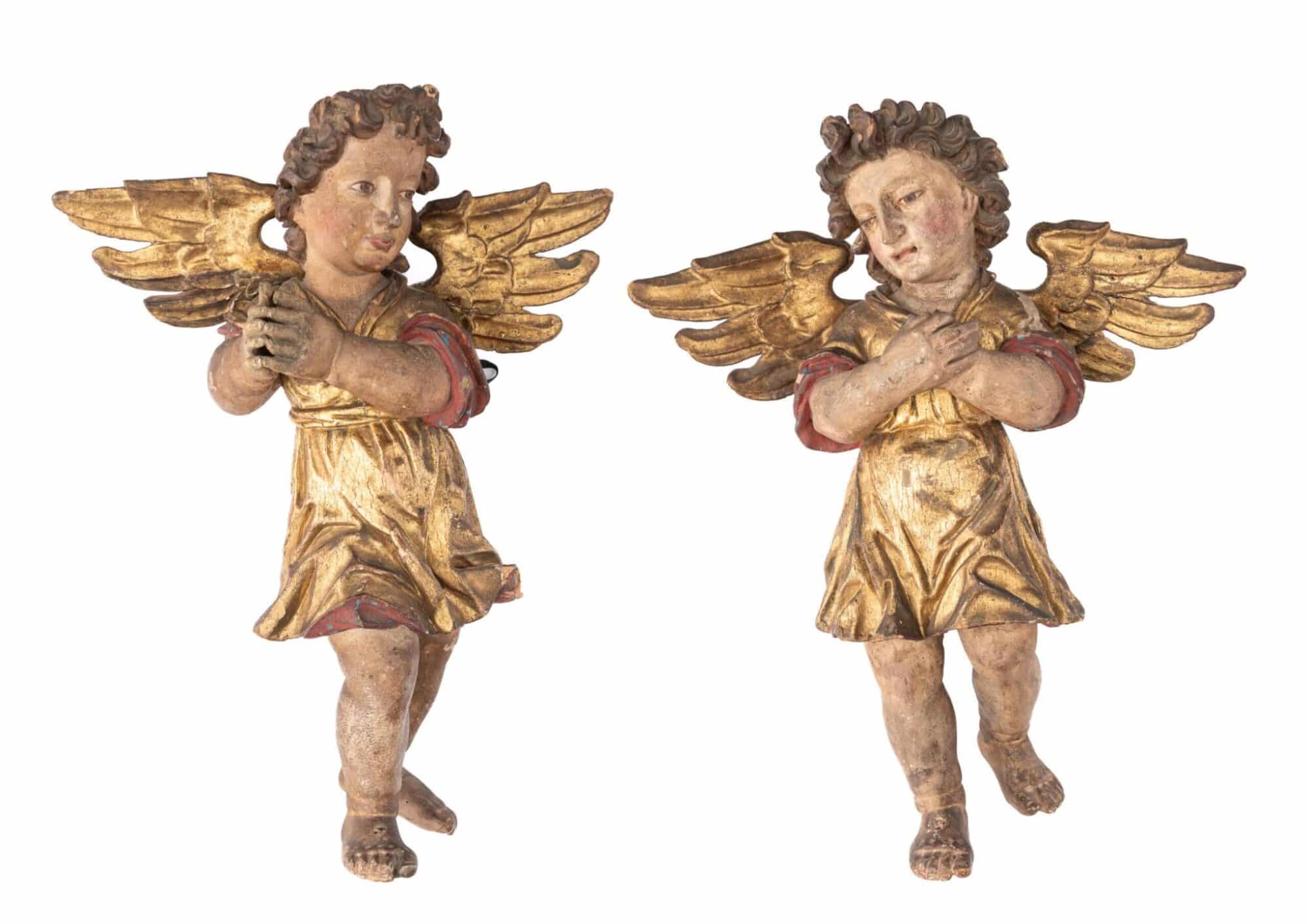
Pair of Late Renaissance Winged Cherubs
- Period
- Circa 1580 - 1600
- Origin
- Netherlandish (possibly Antwerp)
- Dimensions
- W 16" × H 20" × D 6"
- Reference
- #Marh3194
This piece has been sold. It is shown here for reference in our archive.
Description
Carved in wood and retaining their original gilding and polychromy, this fine pair of late Renaissance winged cherubs exemplifies the lively, devotional sculpture produced in the Netherlands at the close of the 16th century. Each figure is shown in motion, with gilded feathered wings spread behind them and curly hair framing rounded, childlike faces. One cherub clasps its hands in prayer, while the other folds its arms across its chest in a gesture of humility. Both wear short tunics highlighted in gold, with red undersleeves lending a rich contrast to the gleaming surface.
Figures of this type were produced for altarpieces, tabernacles, pulpits, and canopies, where they served both decorative and symbolic purposes. Cherubs — associated with divine light and heavenly praise — were imagined as eternal attendants at the throne of God. Their presence near the altar or the Eucharist reflected the idea of heaven breaking into the liturgy, surrounding the sacred action with angelic hosts.
The style of carving, particularly the rounded facial type and the treatment of the drapery, suggests the influence of Antwerp workshops, which were prolific centres of wood sculpture in this period and exported altarpieces, saints, and angelic figures throughout Northern Europe. The figures’ compact scale and vivid surface decoration would have made them especially suited to framing a central devotional focus, animating the space with a sense of celestial presence.
Pairs of such cherubs are relatively rare survivors, as many were later removed or dispersed during the iconoclastic movements of the 16th and 17th centuries. Their survival together here enhances their significance as an intact ensemble.