
Paul Fitzsimmons logo
  • Current Stock
  • Archive
  • Notable Works
  • About Us
  • News
  • Contact
Home / Archive / London Delftware Pla…
Previous Next
London Delftware Plate with Chinoiserie Landscape Sold

London Delftware Plate with Chinoiserie Landscape

Period
1680 - 1700
Origin
London
Dimensions
W 13 1/2" diameter" × D 2"
Reference
#Marh2308

This piece has been sold. It is shown here for reference in our archive.

Description

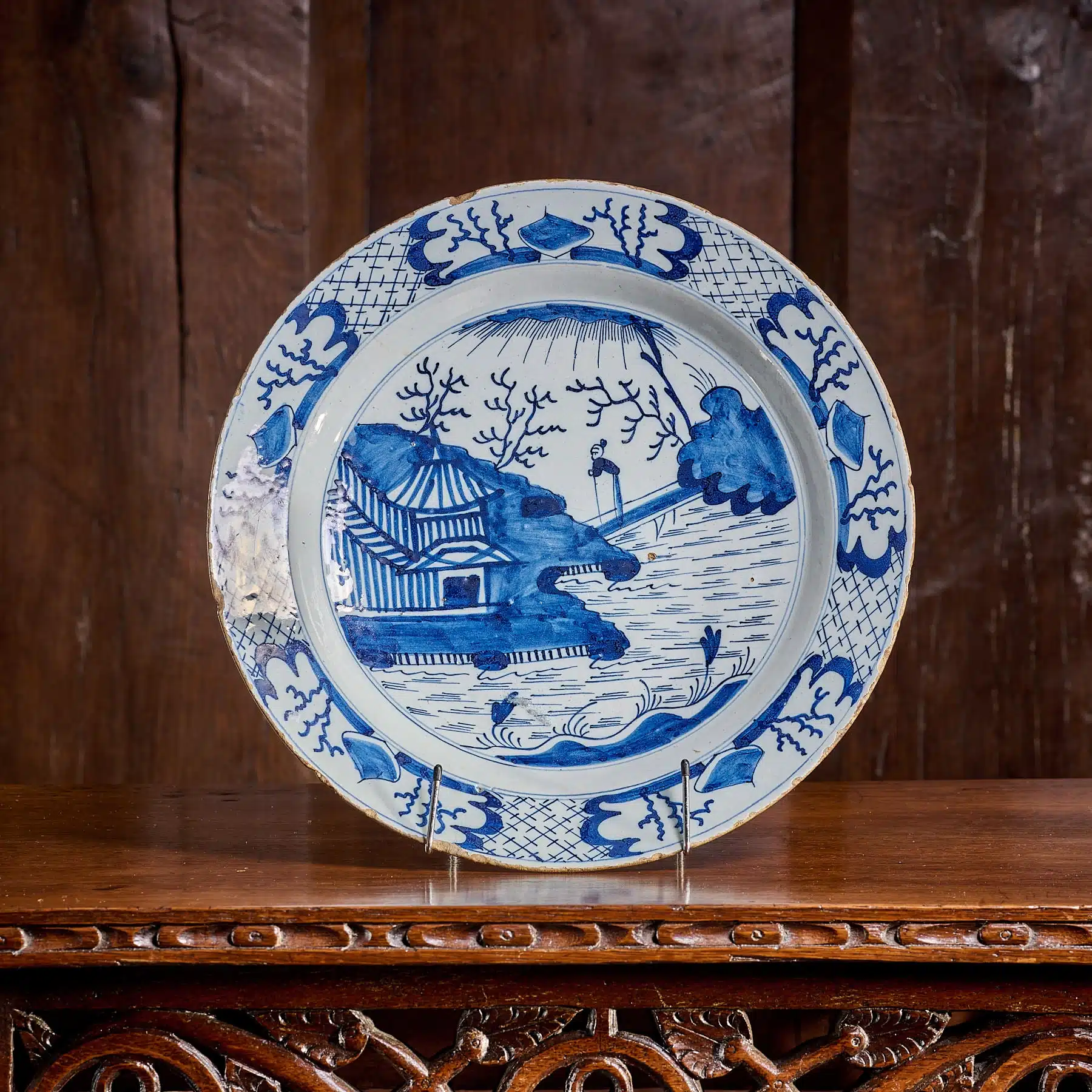
A late 17th-century London delftware plate, painted in cobalt blue with a chinoiserie riverside scene. At the centre, a pavilion stands beside a rocky outcrop, with trees in bloom and a figure crossing a narrow bridge. The composition is framed within a wide border decorated with alternating diaper trellis panels and stylised foliate motifs, all inspired by contemporary Chinese kraak porcelain.
This type of decoration reflects the strong demand in England for Chinese blue-and-white porcelain during the late Stuart period, when imported wares through the East India Company were both fashionable and expensive. Delft potters in London responded by creating their own interpretations in tin-glazed earthenware, combining exotic imagery with a distinctly English painterly hand.
The glaze and freely brushed cobalt exemplify the character of London delft production at Southwark and Lambeth in the last decades of the 17th century. Such plates would have been used both at table and as decorative display pieces, testifying to the cosmopolitan tastes of London’s merchant classes.

During the late 17th century, most delftware in London was produced in the Southwark and Lambeth potteries along the Thames. These workshops were staffed by a mix of English craftsmen and skilled immigrant workers, many of them Dutch or Flemish, who brought with them the techniques of tin-glazing and cobalt painting.
The workforce included throwers and moulders who shaped the clay, glaze-men who applied the distinctive white tin glaze, and painters who freehanded decoration directly onto the raw surface before firing. The painters’ skill varied: some were highly trained, able to imitate the fine line of imported Chinese porcelain, while others produced looser, more provincial designs. The spontaneity of brushwork seen on your plate reflects this hand-painted process, where no two pieces were exactly alike.
Working conditions were tough. The kilns burned with coal and wood, creating stifling heat and frequent firing flaws. Yet despite these difficulties, London potters supplied a thriving domestic market, producing everything from tablewares and apothecary jars to decorative chargers. Their work bridged the gap between costly imported porcelain and everyday English earthenwares, making chinoiserie imagery accessible to a much wider audience.

Curator's Note

Previous 17th century capstan… Next Dutch Delftware Plat…
  • London Delftware Plate with Chinoiserie Landscape

Newsletter

New Stock, Direct to Your Inbox.

Be among the first to hear about new acquisitions and notable works.

Please enable JavaScript in your browser to complete this form.
Loading
Paul Fitzsimmons logo
  • Current Stock
  • Archive
  • Notable Works
  • About Us
  • News
  • Contact

Contact Us

+44 (0)777 903 8891

  • Pinterest
  • Instagram

By Appointment

Devon, England.

Paul Fitzsimmons

Specialist in early oak furniture and works of art.

© 2026 Paul Fitzsimmons | Website by Dancing Badger Ltd

  • Privacy Policy
  • Terms & Conditions

Search the collection

Search in
    1 / 1