
Paul Fitzsimmons logo
  • Current Stock
  • Archive
  • Notable Works
  • About Us
  • News
  • Contact
Home / Archive / Late Renaissance / E…
Previous Next
Late Renaissance / Early Baroque Madonna and Child Sold

Late Renaissance / Early Baroque Madonna and Child

Period
1580 - 1620
Origin
Italy
Dimensions
W 11" × H 24 1/2" × D 7"
Reference
#Marh2901

This piece has been sold. It is shown here for reference in our archive.

Description

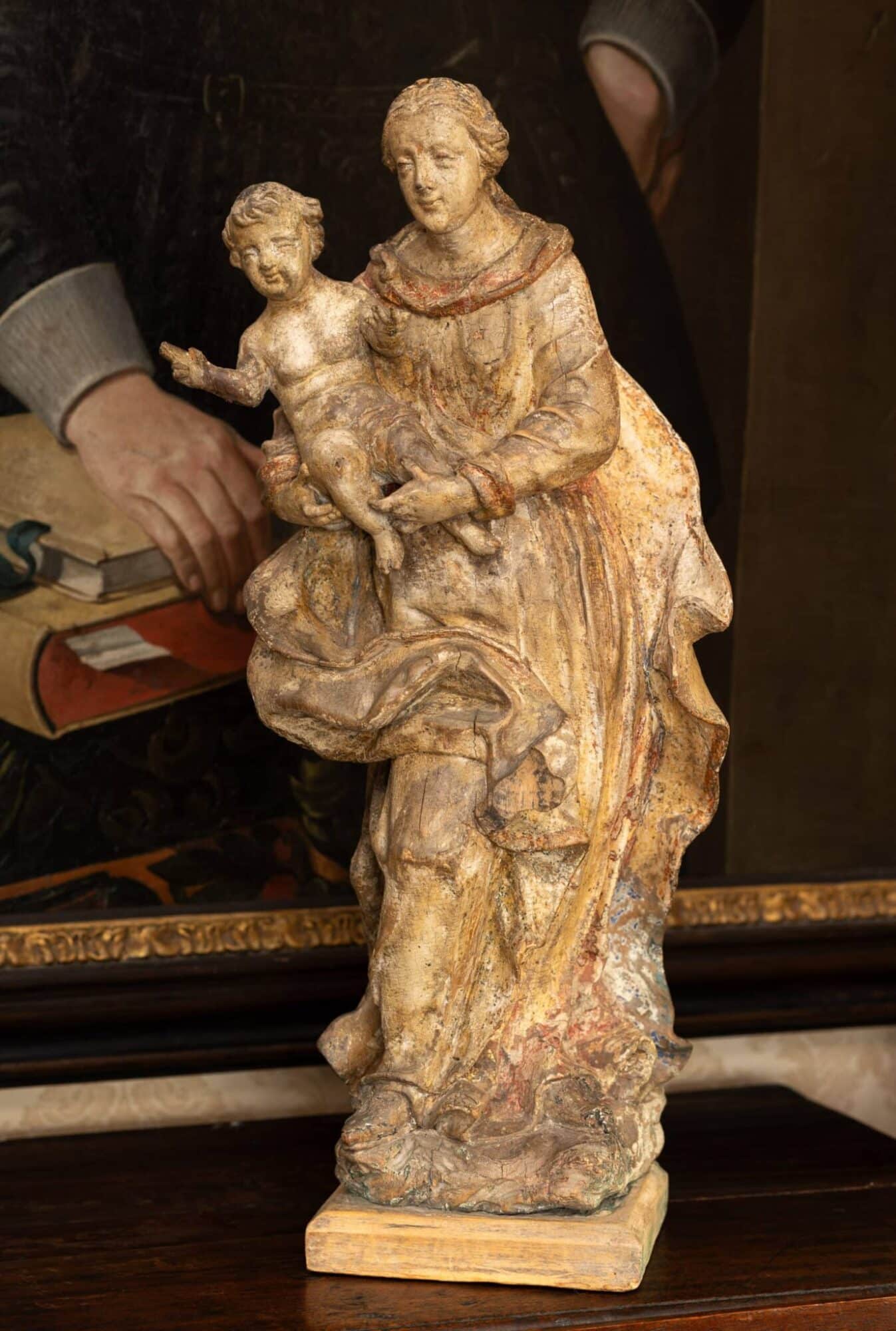
This finely carved limewood sculpture depicts the Virgin Mary holding the Christ Child in a tender yet dignified pose, an image central to Catholic devotion throughout the Renaissance and Baroque periods. The figure of the Virgin is conceived with calm verticality, her drapery falling in broad, flowing folds that recall the compositional restraint of the Renaissance. Yet her face is softened into an idealised serenity that anticipates the devotional warmth of the Baroque.
The Christ Child, by contrast, introduces a more naturalistic and animated character. His body is rendered with a plump vitality, his right hand raised in a gesture of blessing, his head slightly turned in a lifelike movement. This departure from the linear Gothic or early Renaissance manner marks a clear transition towards the Baroque sensibility, in which sacred figures were presented with heightened naturalism and immediacy to engage the faithful more directly.
The hollowed reverse indicates the figure was originally intended for placement against a wall or in a devotional setting, perhaps within a small chapel or private oratory. Surviving traces of the original polychromy add to the historical resonance of the piece, offering a glimpse of its former vibrancy.
This sculpture thus stands at the threshold between two artistic worlds: it retains the compositional balance and restraint of the late Renaissance while embracing the emotive, humanised qualities that define the early Baroque.
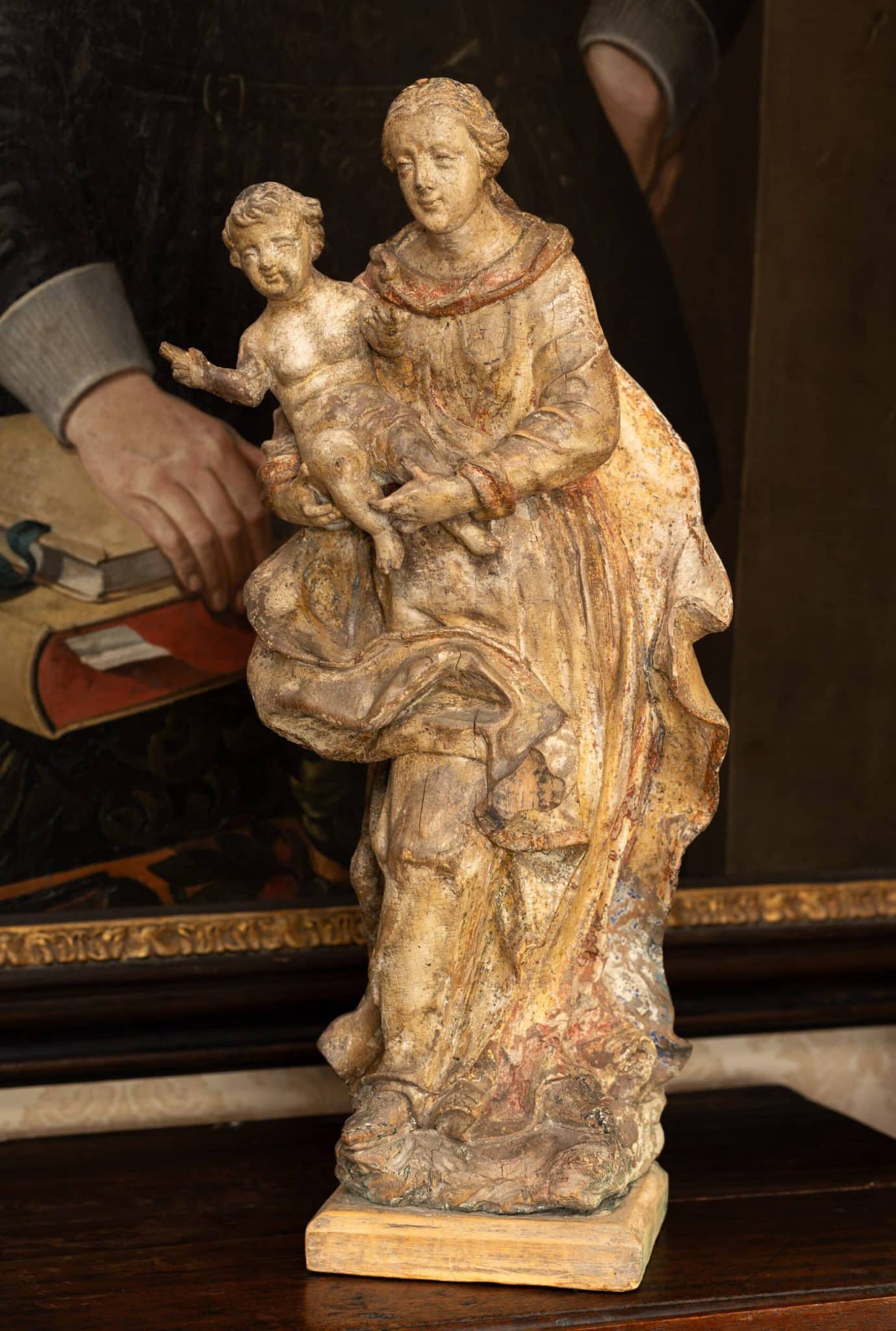
Around 1580–1620, sculptors in northern Italy began to move away from the calm balance and idealised forms of the Renaissance towards the heightened naturalism and emotional immediacy of the Baroque.
In this Madonna and Child, the Virgin’s drapery still reflects the broad, orderly folds of the Renaissance, but her softened face and the lively, plump figure of the Christ Child reveal the new Baroque taste for naturalism. The Child’s turning gesture and blessing hand embody the Baroque emphasis on movement and direct engagement with the viewer, contrasting with the more linear and restrained Gothic or early Renaissance style.
This sculpture therefore exemplifies the moment of transition: retaining Renaissance compositional dignity while anticipating the warmth, vitality, and devotional immediacy of the Baroque.

Curator's Note

Previous Charles II West Coun… Next Charles I Joined Oak…
  • Late Renaissance / Early Baroque Madonna and Child

Newsletter

New Stock, Direct to Your Inbox.

Be among the first to hear about new acquisitions and notable works.

Please enable JavaScript in your browser to complete this form.
Loading
Paul Fitzsimmons logo
  • Current Stock
  • Archive
  • Notable Works
  • About Us
  • News
  • Contact

Contact Us

+44 (0)777 903 8891

  • Pinterest
  • Instagram

By Appointment

Devon, England.

Paul Fitzsimmons

Specialist in early oak furniture and works of art.

© 2026 Paul Fitzsimmons | Website by Dancing Badger Ltd

  • Privacy Policy
  • Terms & Conditions

Search the collection

Search in
    1 / 1