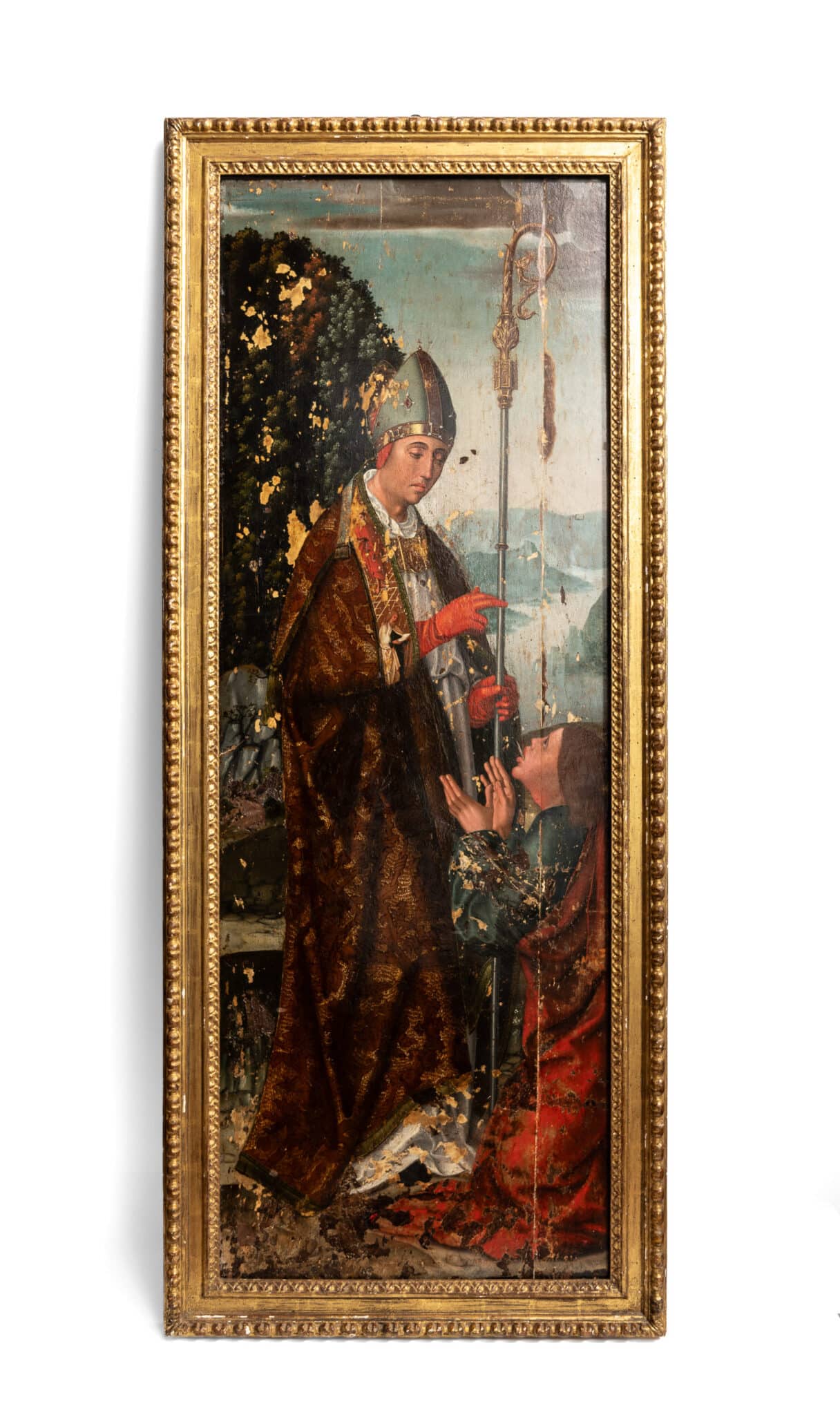
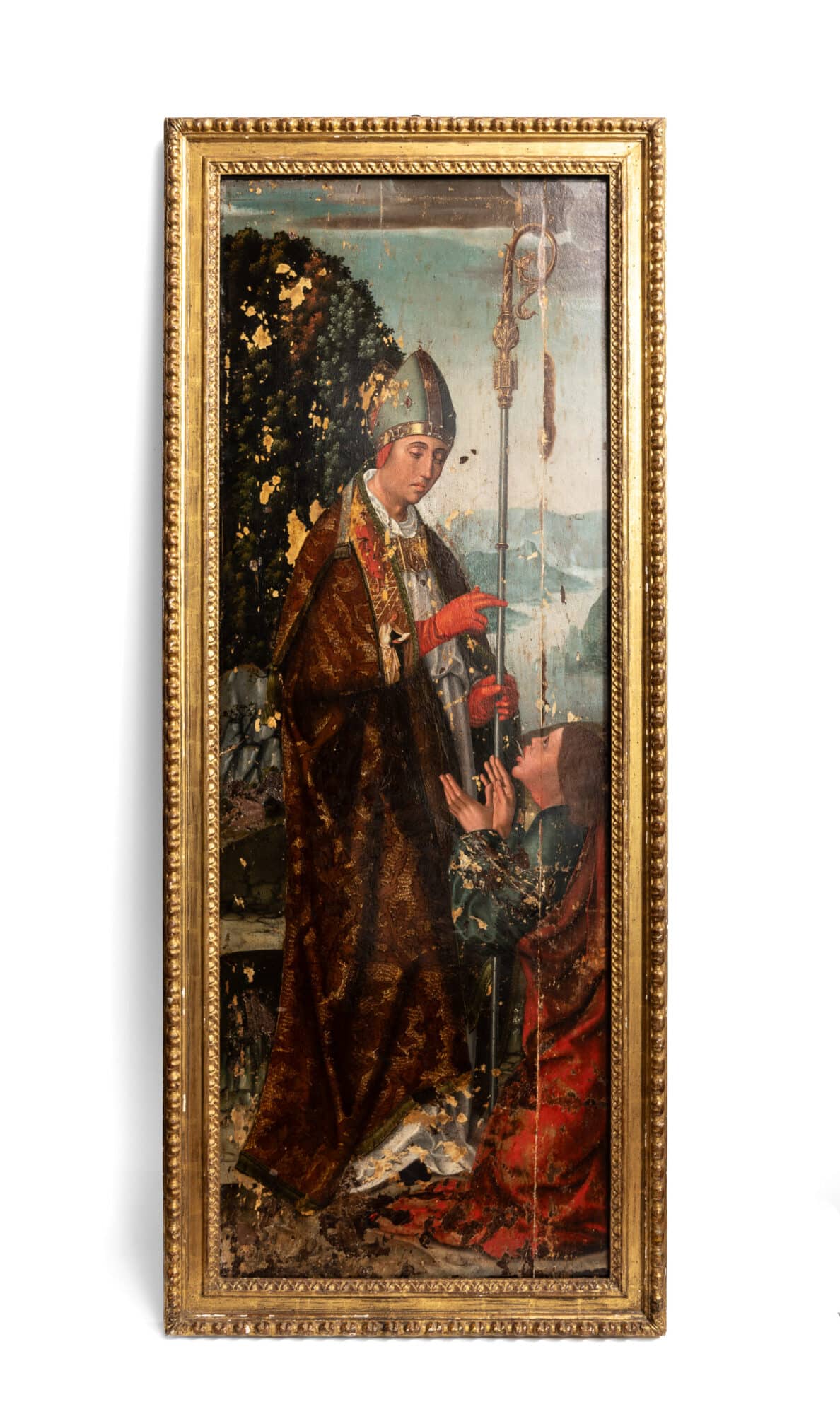
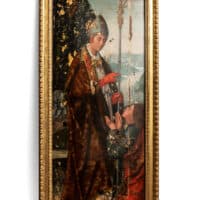

Netherlandish or Flemish School A Bishop Saint Blessing a Kneeling Youth (possibly Saint Blaise Healing the Choking Boy)
- Period
- 1500 - 1520
- Origin
- Netherlandish or Flemish
- Dimensions
- W 25" (frame 32")" × H 69 1/2' (frame 76")" × D 1" (frame 3")"
- Reference
- #Marh3776
Price on application
Description
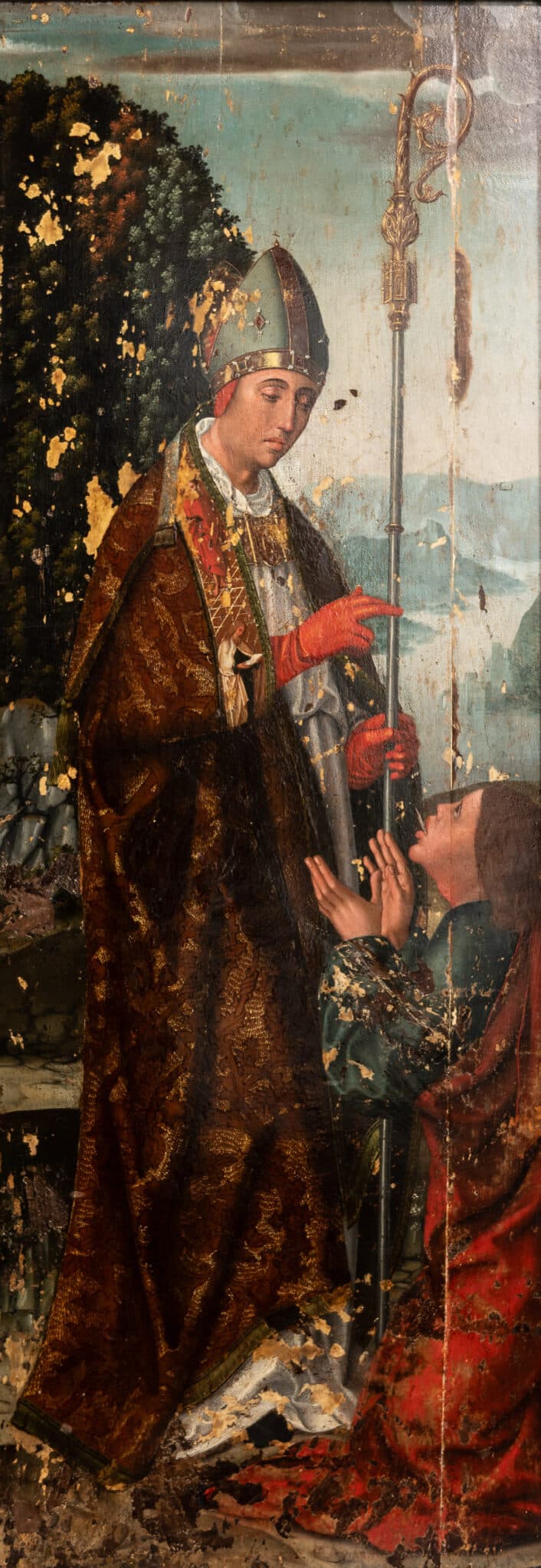
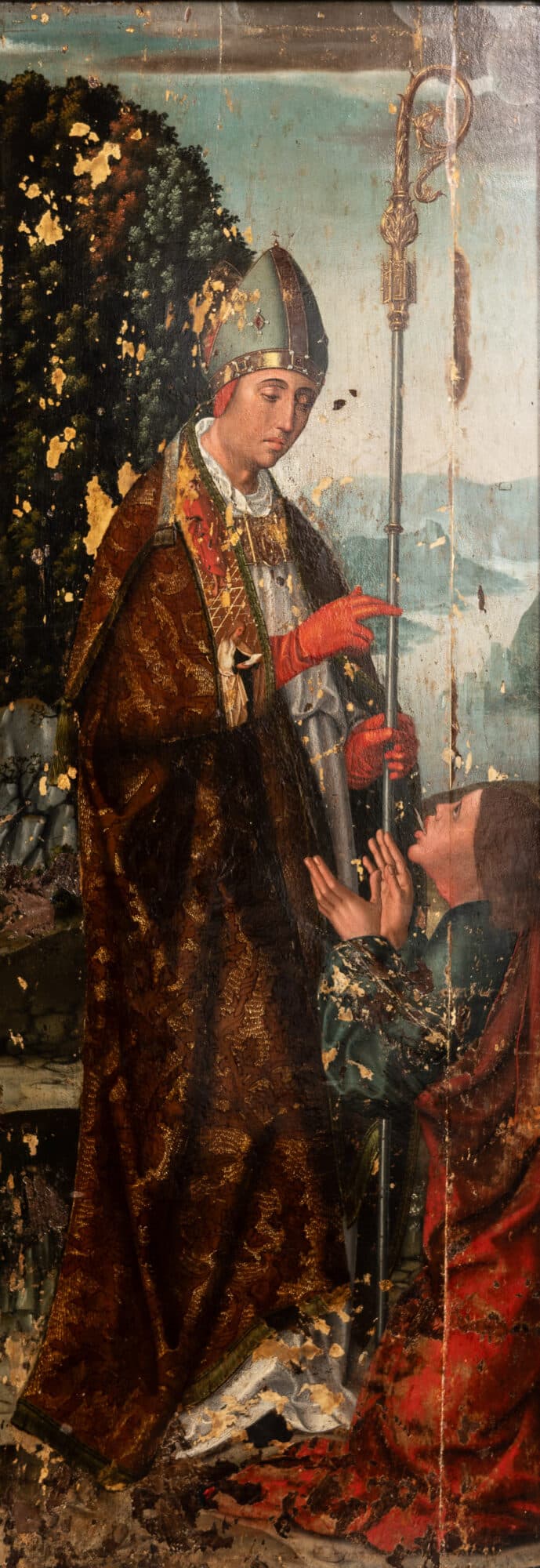
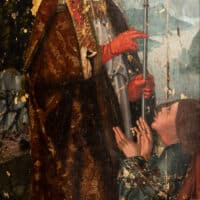
Originally conceived as the left wing of a large devotional altarpiece, this imposing panel depicts a youthful bishop saint in sumptuous liturgical vestments blessing a kneeling youth. The saint is shown wearing an elaborately embroidered cope, jewelled mitre and red episcopal gloves, while carrying an exceptionally refined Gothic crozier. Behind the figures stretches a finely observed landscape rendered with the atmospheric depth characteristic of Netherlandish painting of the early sixteenth century.
The identity of the bishop has long remained uncertain. Various saints have been proposed, including Saint Nicholas, Saint Martin and Saint Louis of Toulouse. However, the iconography may more convincingly represent Saint Blaise, Bishop of Sebaste, whose most celebrated miracle was the healing of a child choking on a fishbone. The bishop’s blessing is directed specifically towards the mouth of the kneeling youth, from whose lips projects a slender, pale object resembling a fishbone, a detail consistent with the saint’s best-known legend as recorded in the Golden Legend. While this interpretation cannot yet be regarded as definitive, it provides a coherent reading of the composition.
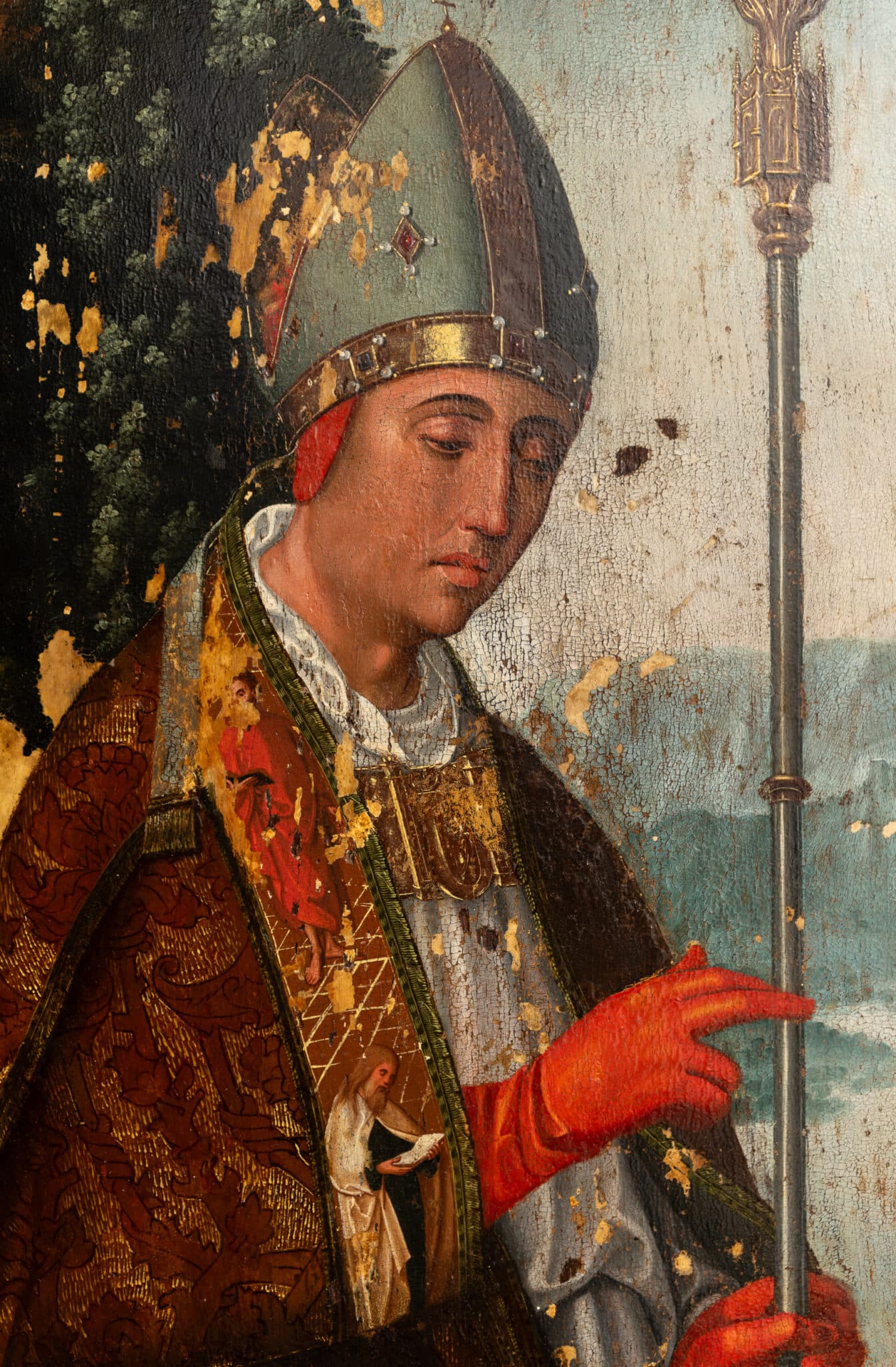
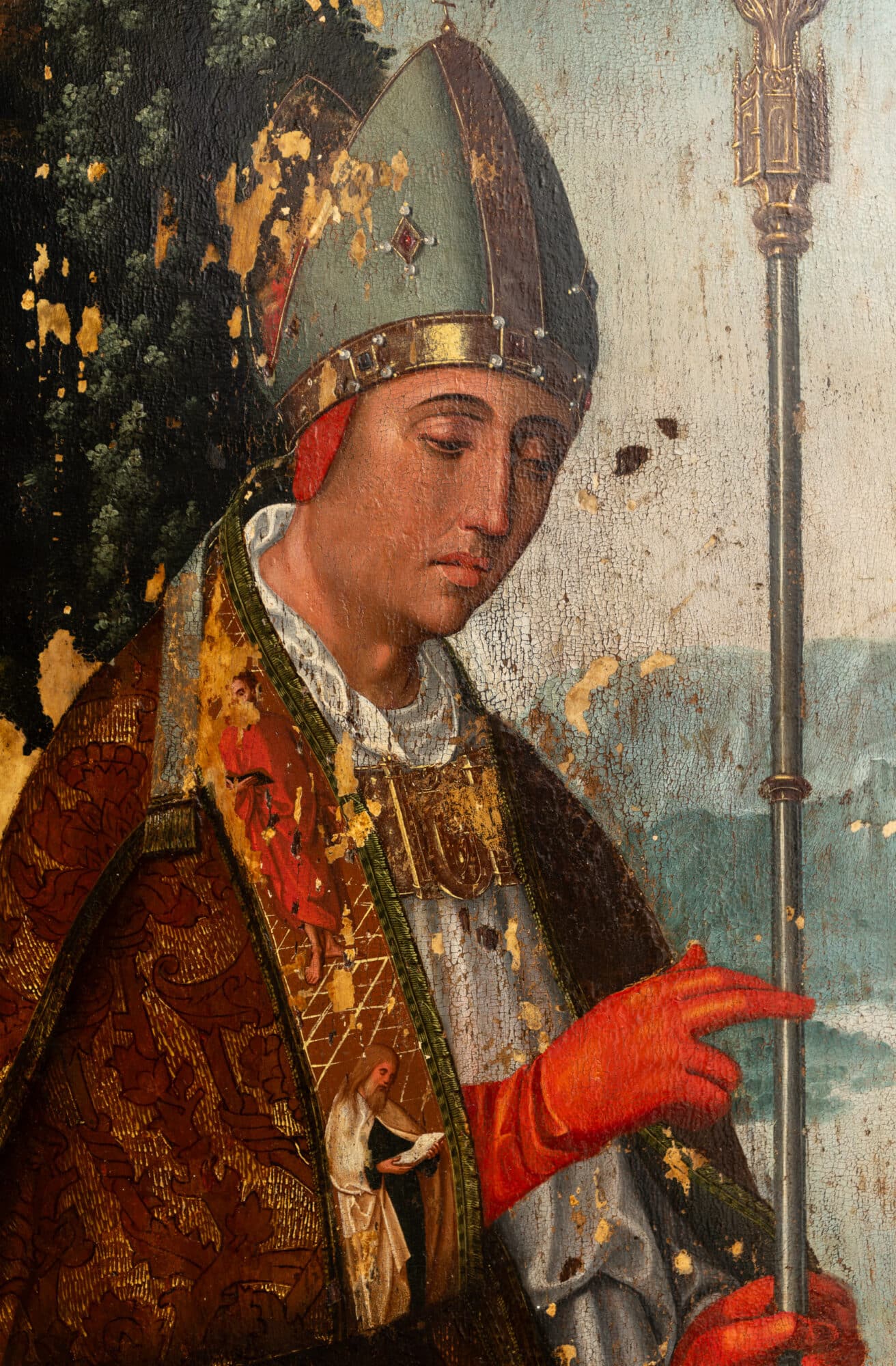
The painter demonstrates remarkable attention to liturgical detail. The cope is richly ornamented with woven gold decoration and embroidered figures of bearded saints reading from open books, faithfully reflecting the luxury ecclesiastical textiles produced in the Low Countries around 1500. The finely modelled face of the bishop, the restrained emotional tone, and the meticulous rendering of the episcopal regalia all suggest the work of a highly accomplished workshop.
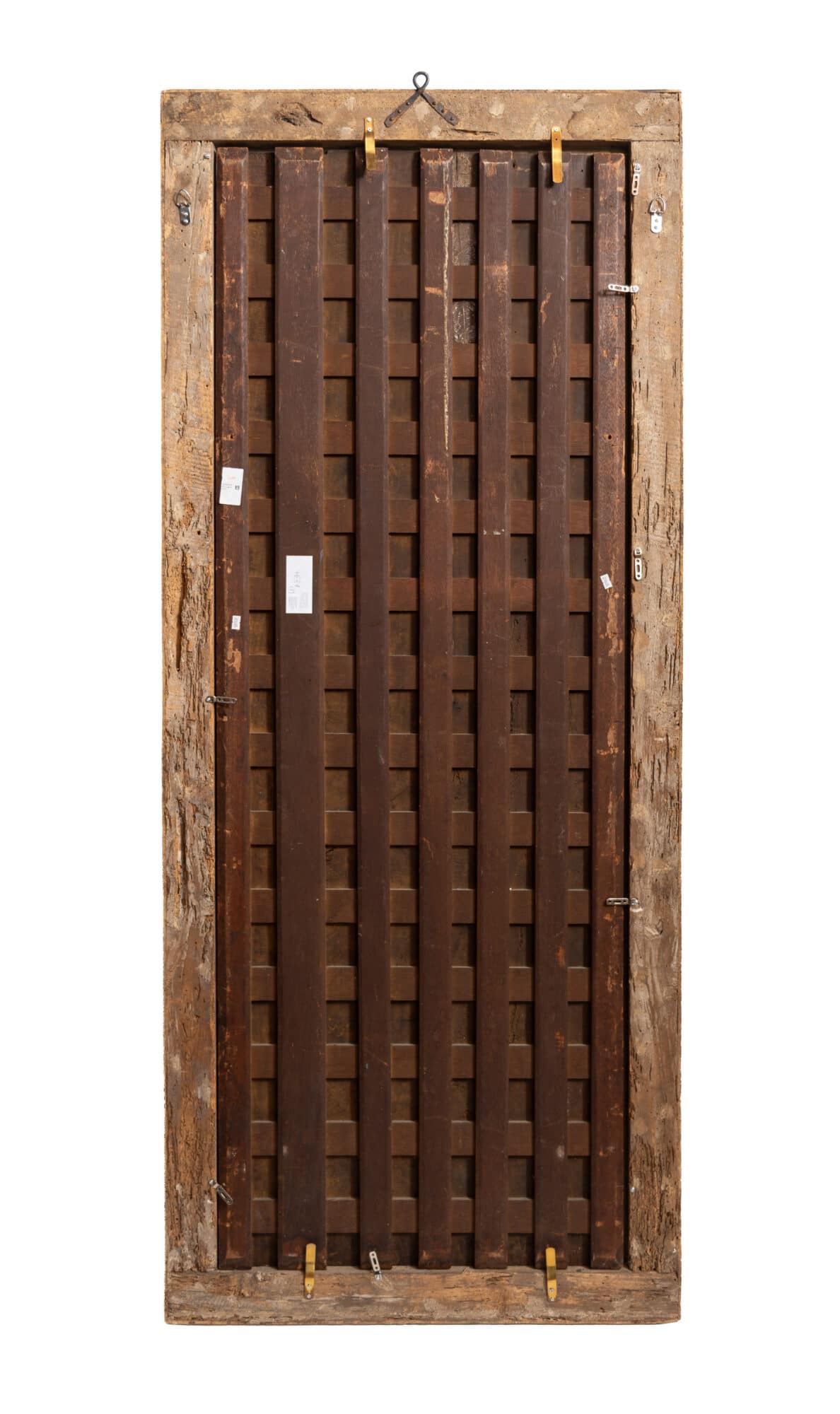
Executed on oak, the panel was originally part of a substantial polyptych commissioned for an important ecclesiastical or private devotional setting. The quality of both design and execution places it comfortably within the tradition of the leading Netherlandish workshops active around 1500.
Condition
The panel has survived with evidence of age and historical wear, including areas of paint loss and abrasion consistent with its original function as the wing of a large altarpiece. It has undergone professional conservation in recent years, preserving the integrity of the original paint surface while allowing the exceptional quality of the surviving passages—particularly the bishop’s face, vestments and crozier—to be fully appreciated.
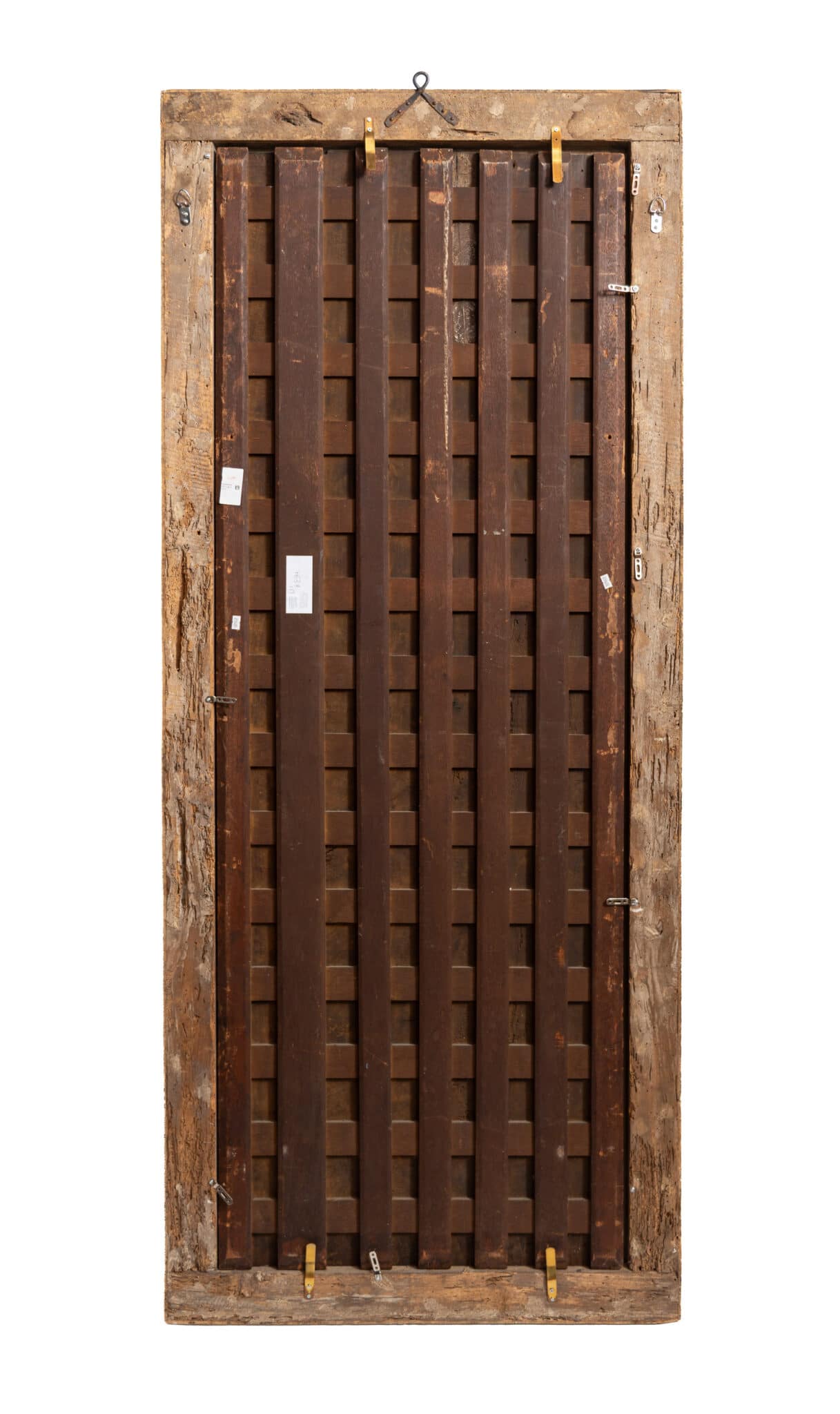
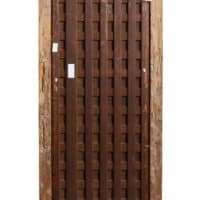
A label on the reverse indicates that the panel has passed through Simon Gillespie Studio, London. While the precise extent of treatment is presently unknown, the studio is internationally recognised for the conservation and technical examination of Old Master paintings.