 Sold
Sold
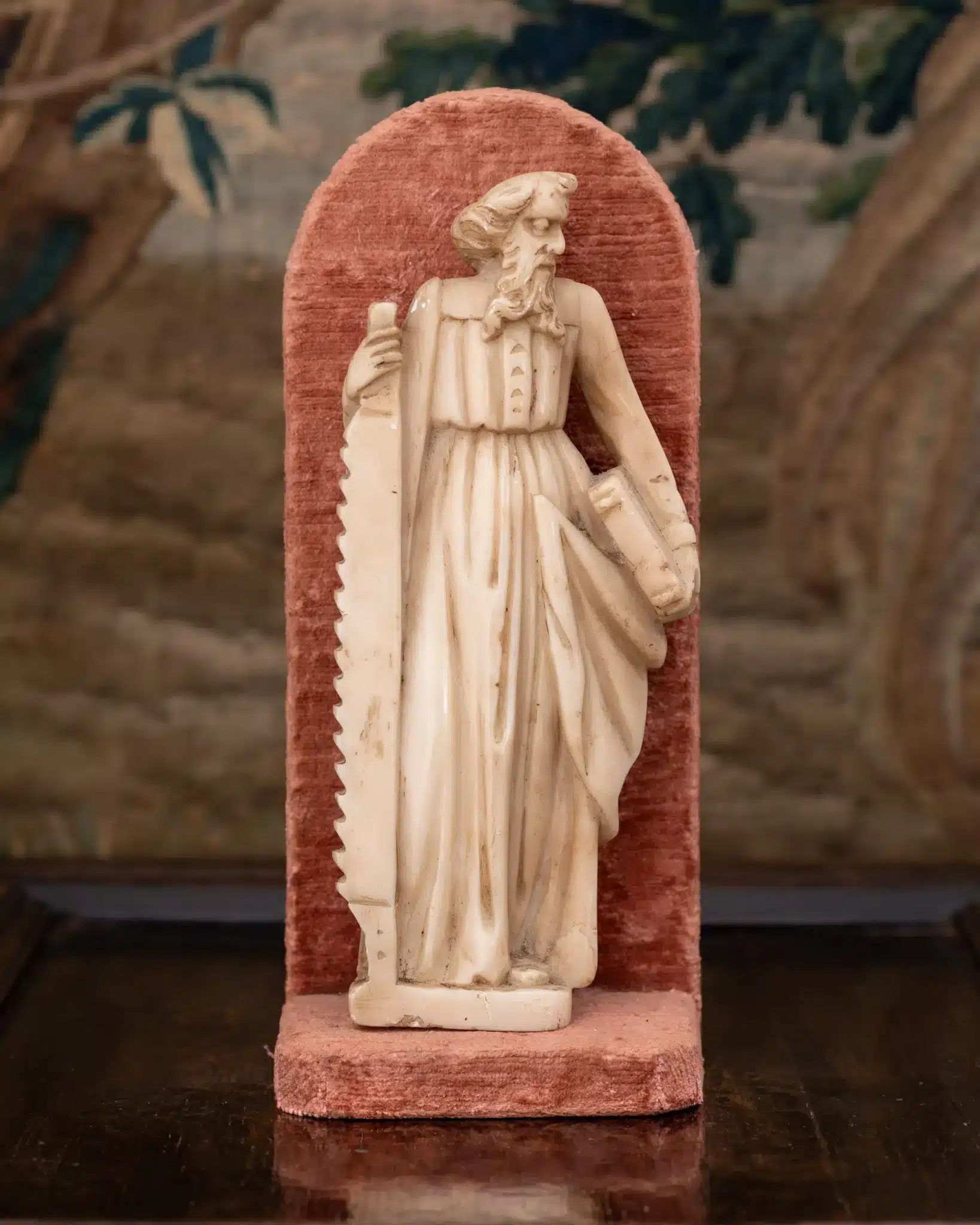
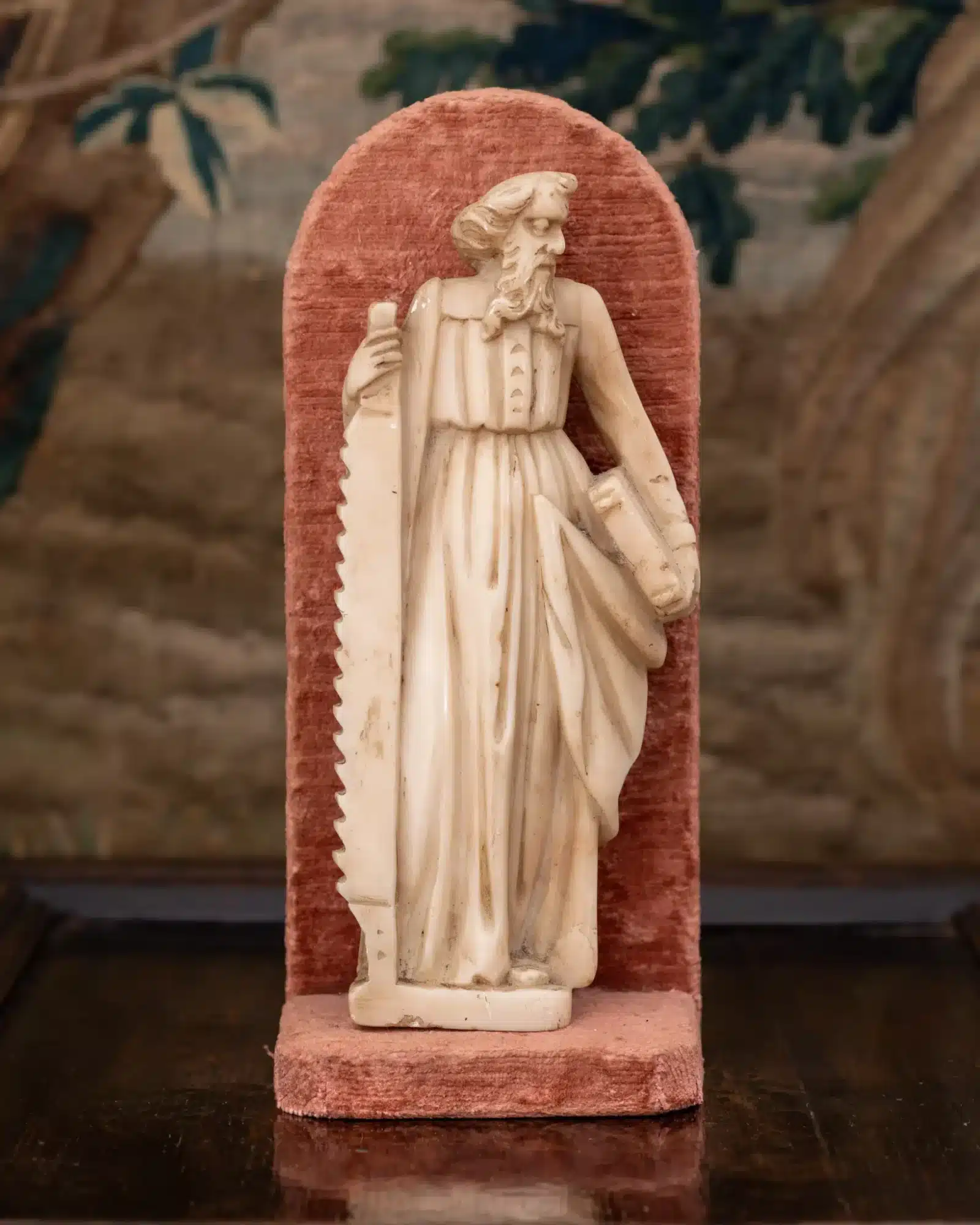
Nottingham Alabaster Sculpture of St Simon the Zealot
- Period
- Circa 1480 - 1500
- Origin
- Nottingham, England
- Dimensions
- W 4" × H 9 3/4" × D 1 1/2"
- Reference
- #Marh3204
This piece has been sold. It is shown here for reference in our archive.
Description
Carved in fine English alabaster, this rare figure represents St Simon the Zealot, one of the Twelve Apostles, identifiable by his traditional attribute of the long saw, the instrument of his martyrdom. In his other hand he holds a book, symbol of his role as an evangelist. The saint is shown standing frontally, with long flowing drapery falling in stylised pleats, his head turned to one side in quiet contemplation.
This work belongs to the celebrated tradition of Nottingham alabaster carving, which flourished between the mid-14th and early 16th centuries. Alabaster, quarried in large quantities near Chellaston in Derbyshire, was both workable and luminous, lending itself to the crisp cutting of features and folds. Figures such as this were originally painted and gilded to heighten their presence, although many today survive stripped of their medieval colouring.
Nottingham alabaster workshops specialised in the production of altarpieces, panels, and devotional figures, which were exported widely across Europe — to France, the Low Countries, and Spain — making them one of England’s most important artistic exports of the late Middle Ages. Series of apostles, often twelve in number, were a popular subject, and this figure of St Simon would once have formed part of such a cycle, adorning an altar or shrine.
The survival of a free-standing alabaster apostle on this scale is significant, as the majority of Nottingham alabaster works were produced in low relief. Its presence today attests both to the devotional culture of late medieval England and to the extraordinary reach of the Nottingham carvers, whose works were prized throughout Christendom.