 Sold
Sold
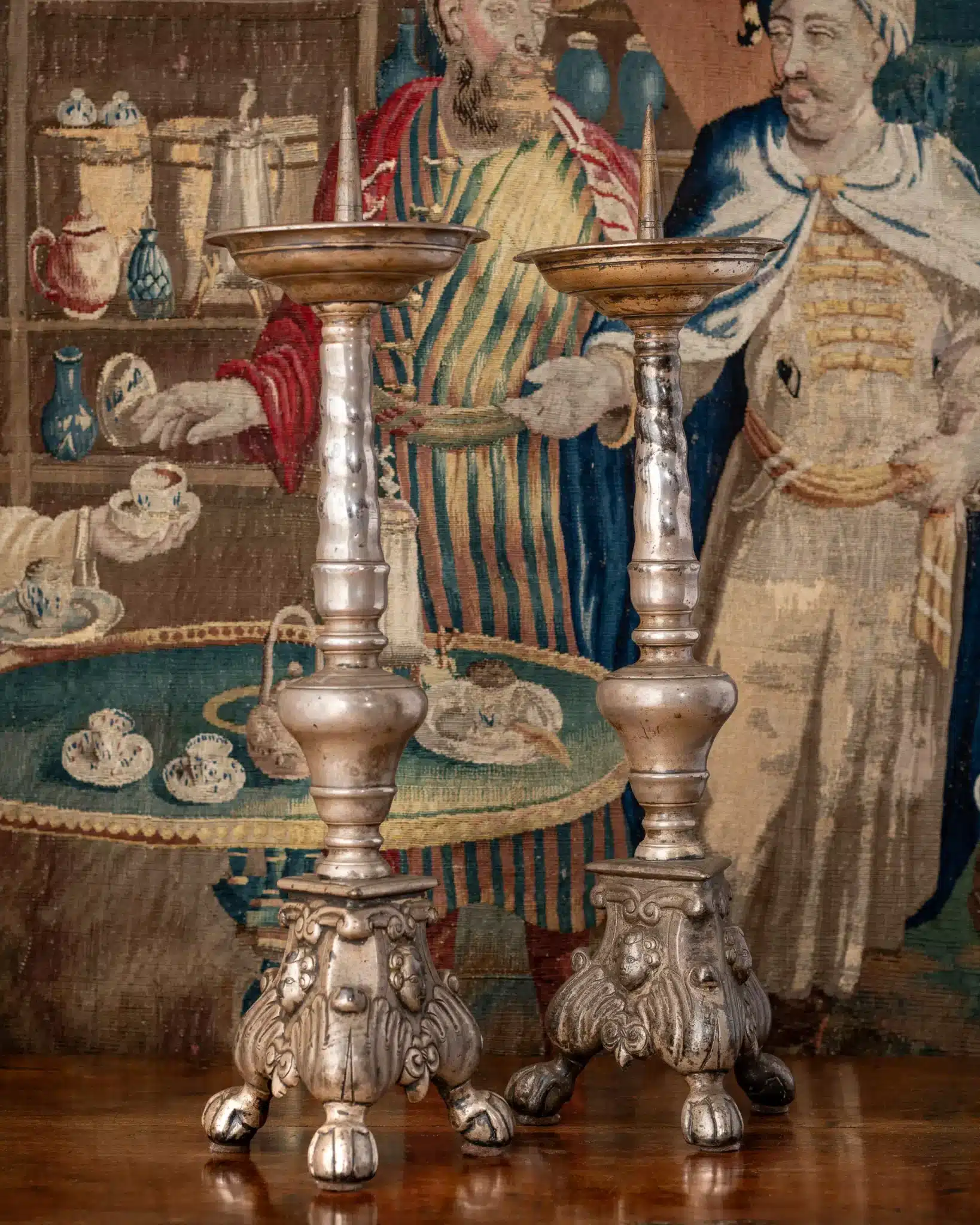
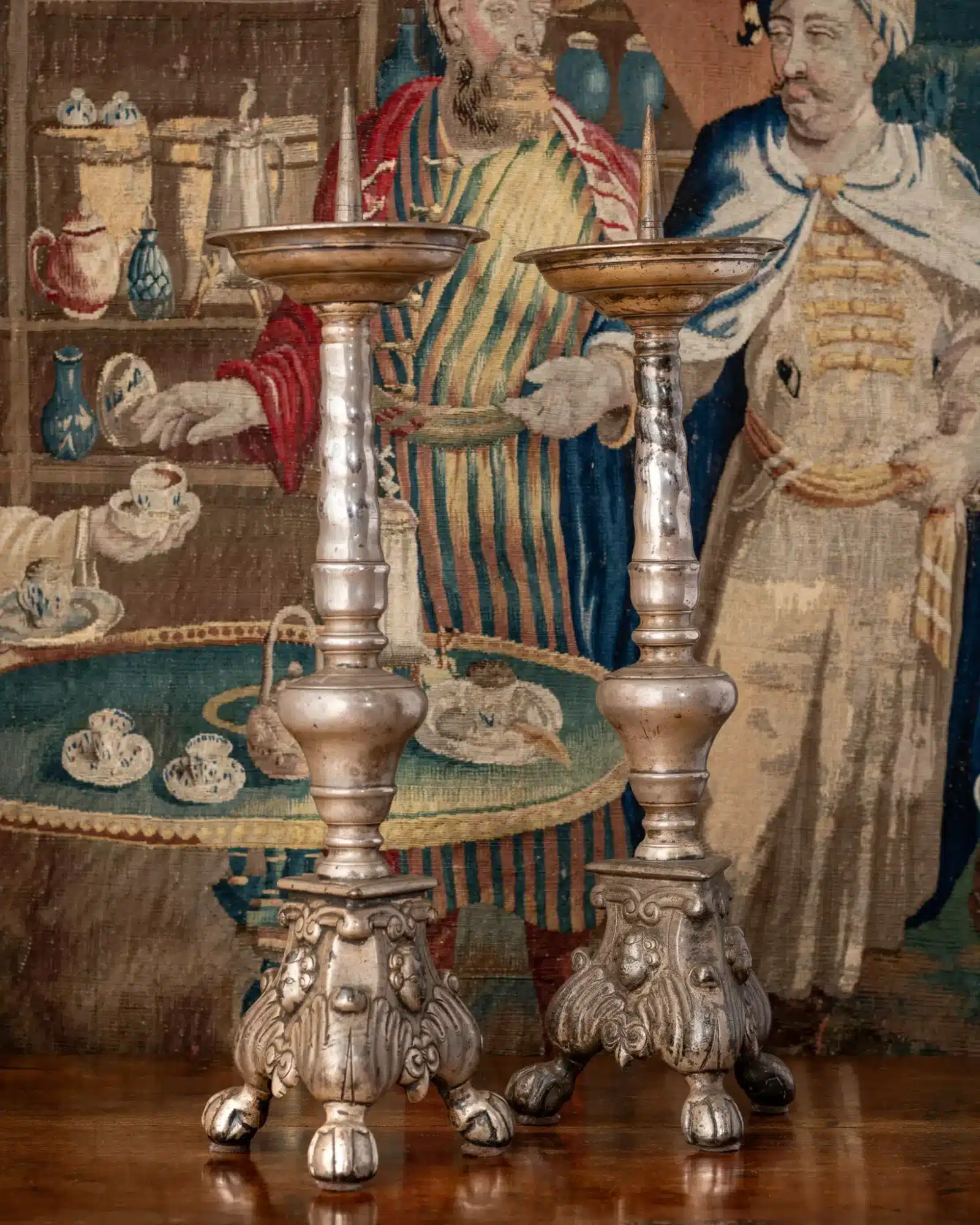
Pair of Silvered Bronze Pricket Candlesticks
- Period
- Circa 1600 - 1620
- Origin
- Southern Netherlands or Northern Italy
- Dimensions
- W 7" × H 23 1/4" × D 7"
- Reference
- #Marh3165
This piece has been sold. It is shown here for reference in our archive.
Description
A pair of monumental early 17th-century silvered bronze pricket candlesticks, each with a broad drip pan and tall central pricket above a balustered and knopped stem, set on a triform base with cherub faces between bold ball-and-claw feet. The heavy casting and traces of silvering reflect their intended role as prestigious ecclesiastical furnishings, combining both splendour and durability.
The ornament of cherub heads and clawed feet situates these candlesticks firmly within the vocabulary of early Baroque church metalwork. Such imagery, emphasising divine guardianship and the majesty of the celestial host, was frequently employed in the decoration of altars during the period of the Counter-Reformation, when Catholic worship embraced theatricality and visual richness to inspire devotion.
Silvered or parcel-gilt bronze altar furniture of this scale was produced in both the Southern Netherlands (particularly Antwerp, then a major centre of bronze casting) and in Northern Italy (notably Lombardy and Venice), where ecclesiastical patrons commissioned lavish fittings for chapels and altars. The combination of Netherlandish verticality with more sculptural Italianate bases suggests these prickets belong to the international stylistic exchange flourishing around 1600, when artists and craftsmen moved fluidly between Antwerp, Milan, and Venice.
Comparable examples can be seen in Flemish and Italian churches, as well as in museum collections of haute époque metalwork, where they remain prized for their imposing presence and survival as matched