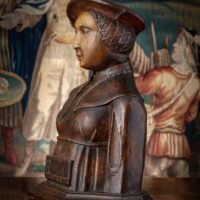
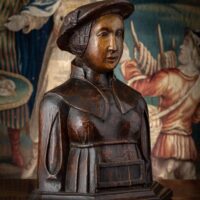
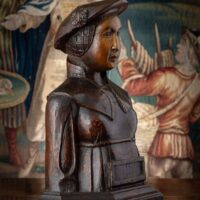
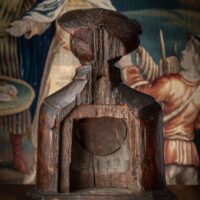
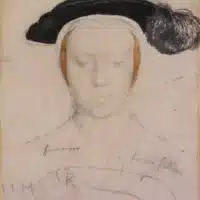

Portrait Bust of Mary Howard, Duchess of Richmond (1519–1557)
- Period
- Circa 1540
- Origin
- England possibly London or Norfolk
- Dimensions
- W 14 1/4" × H 17 1/2" × D 8"
- Reference
- #Marh3741
Price on application
Description
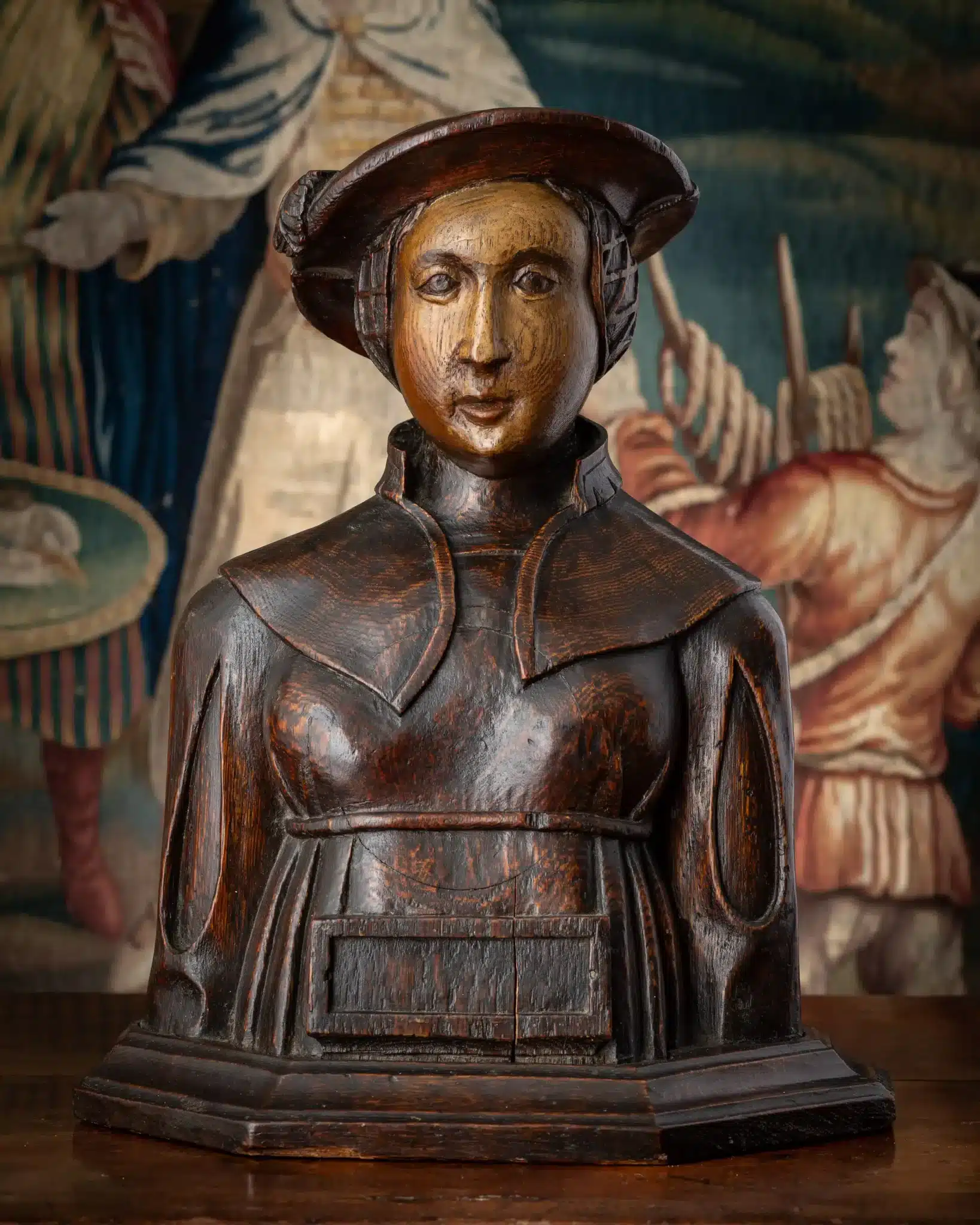
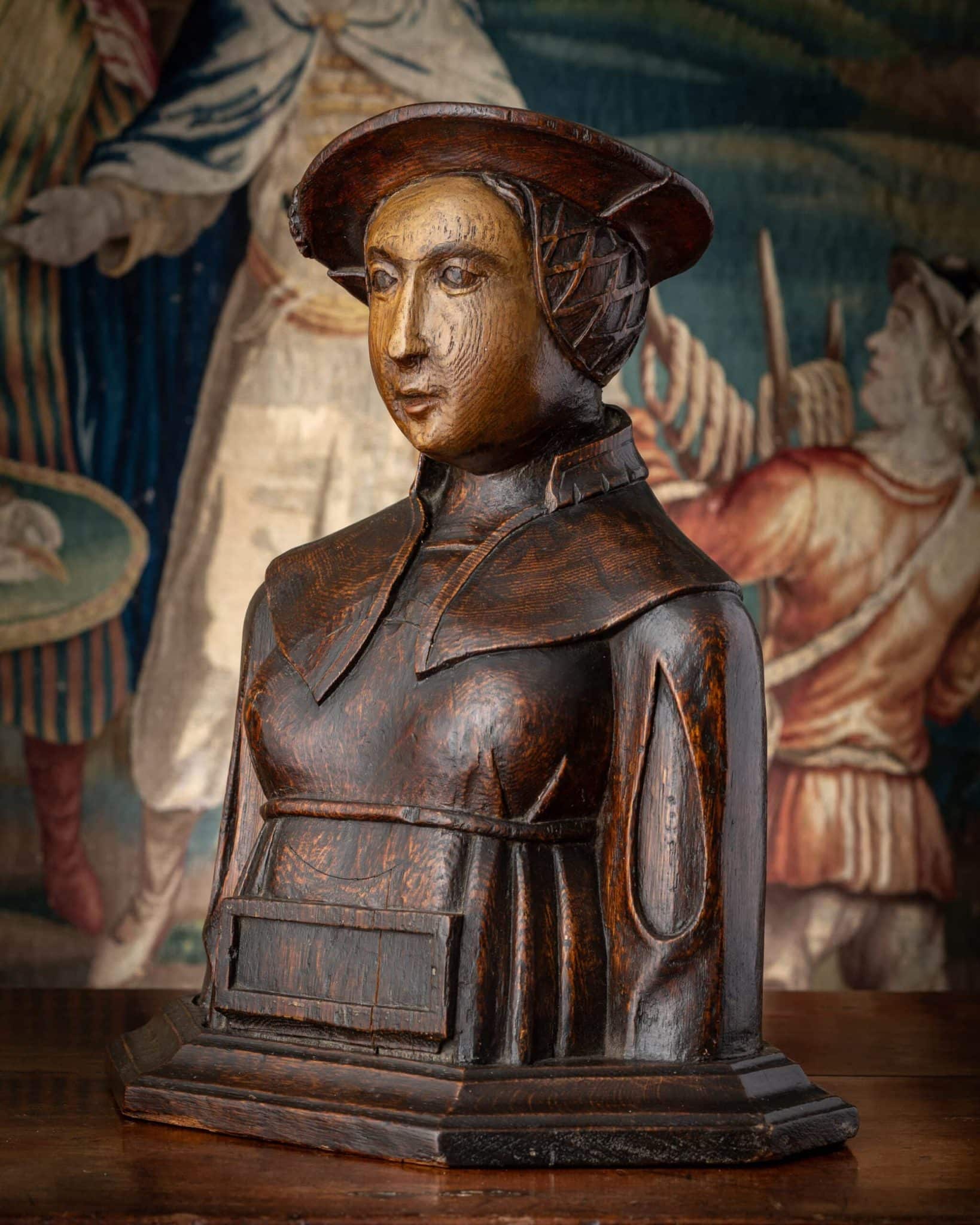
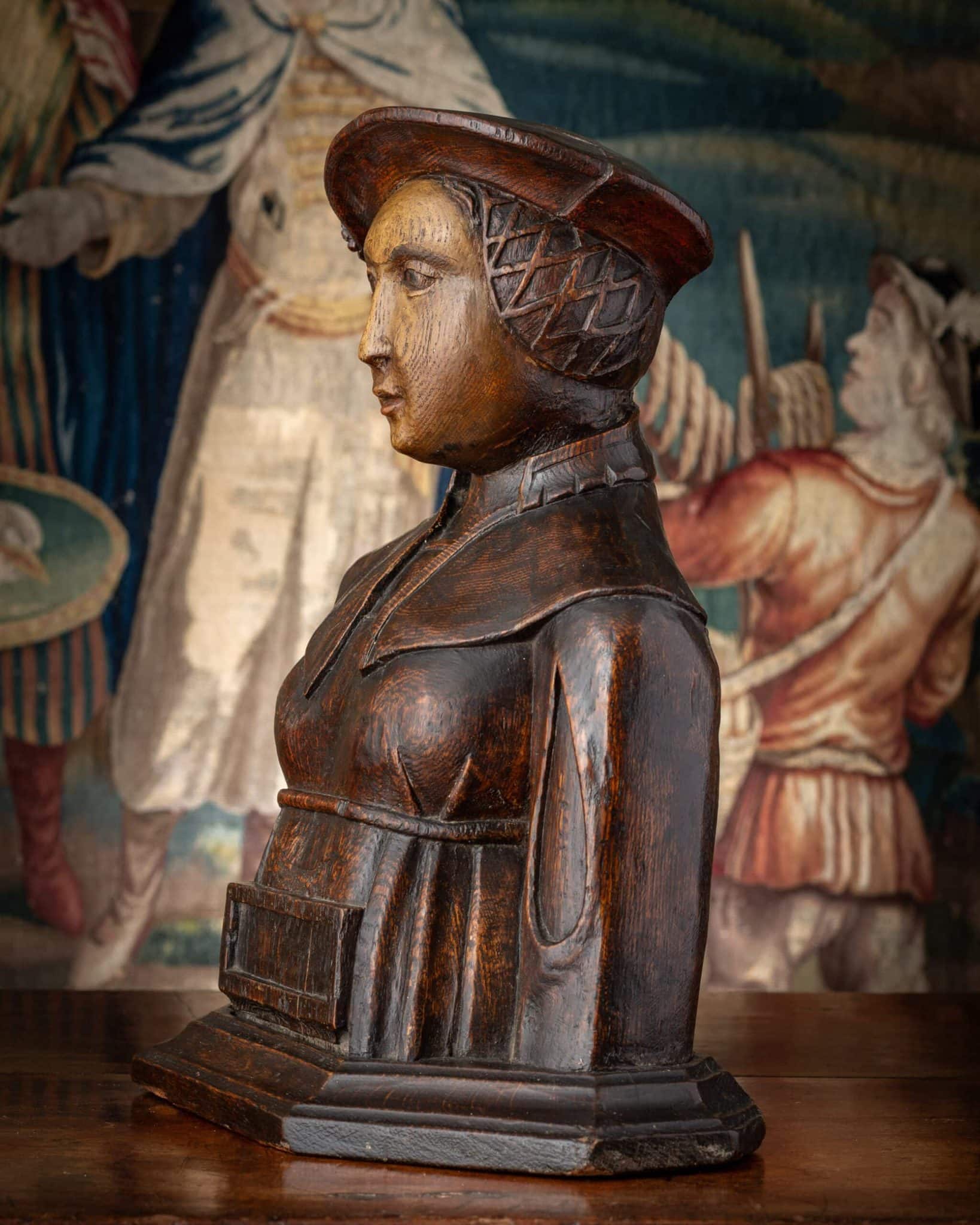
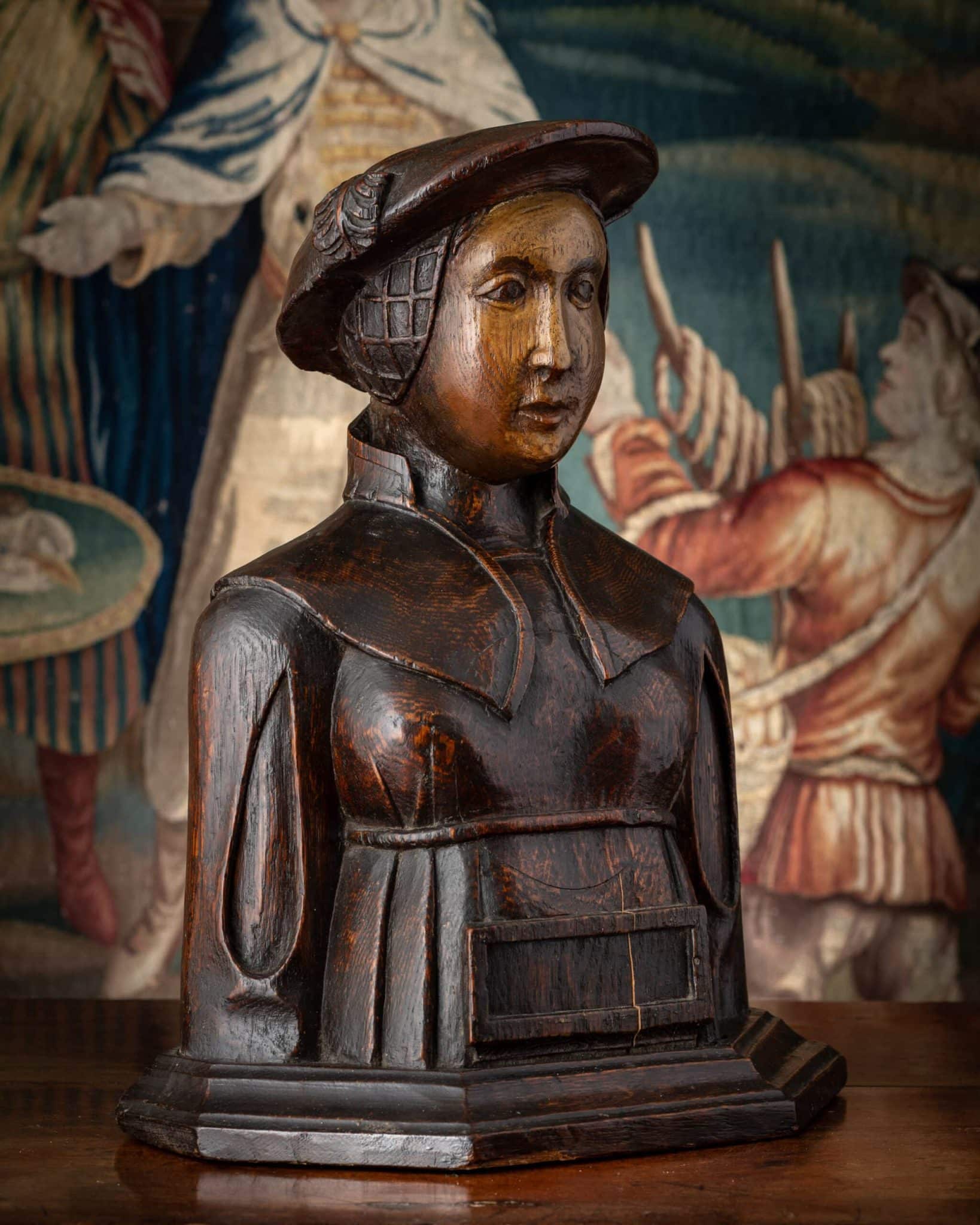
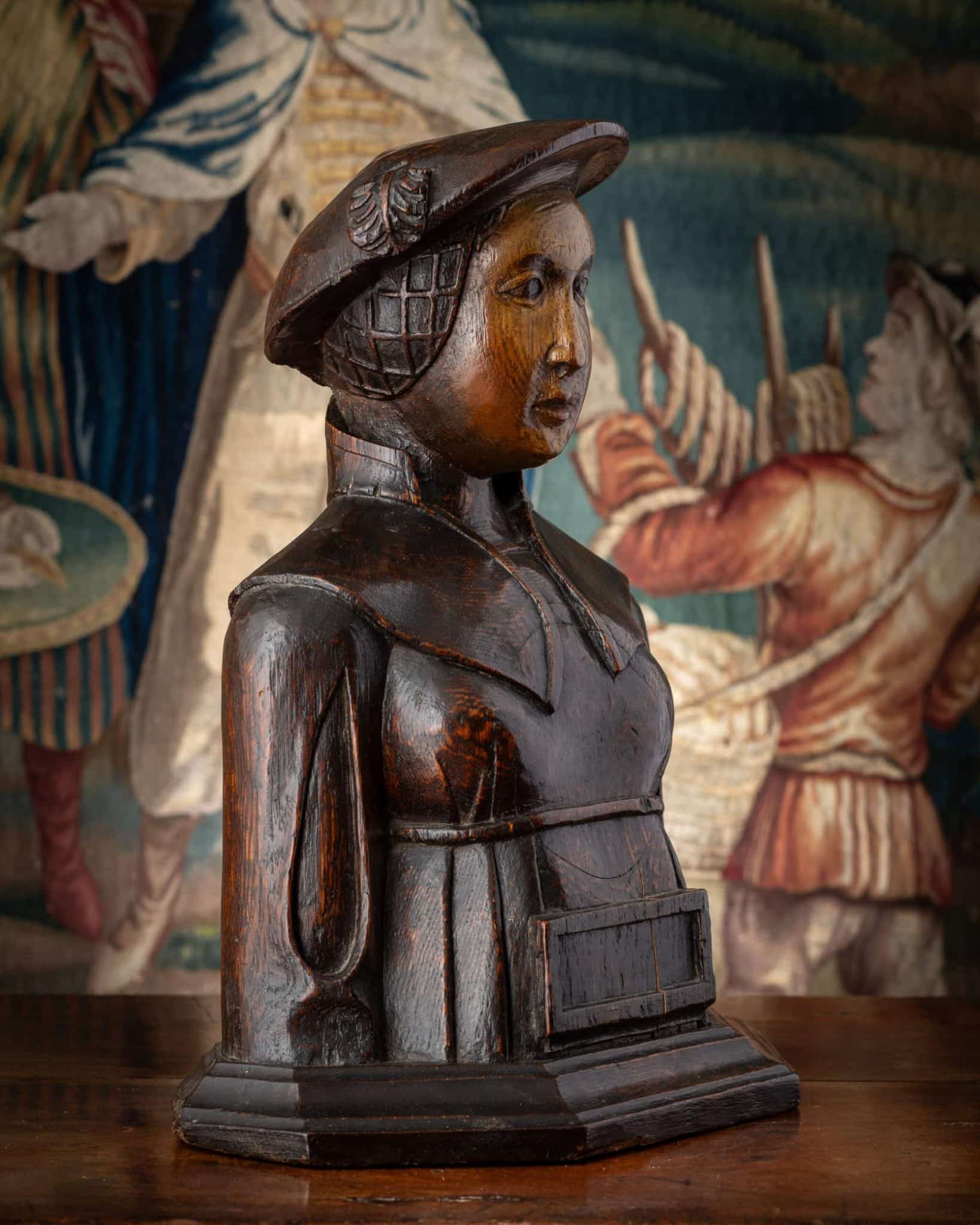
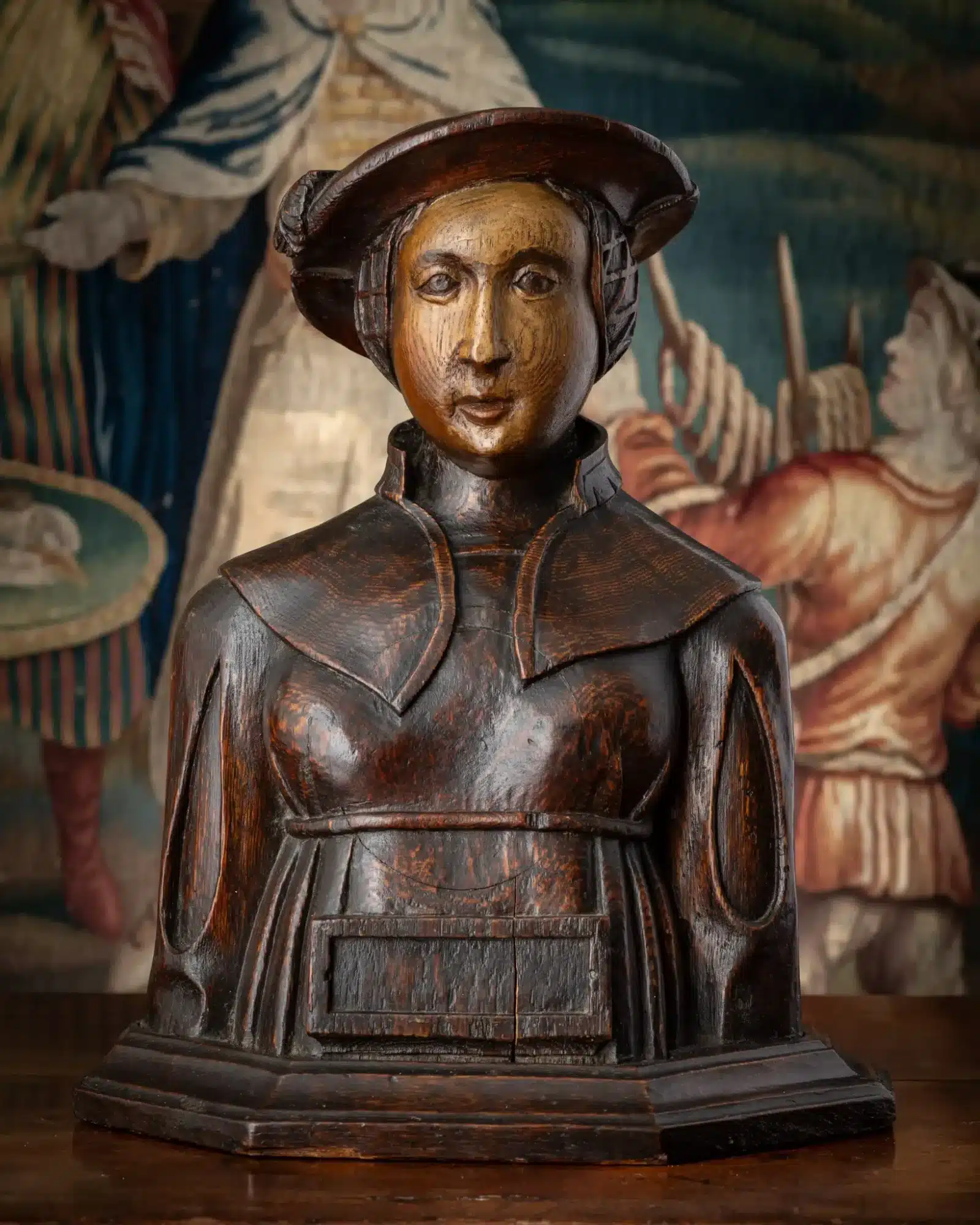
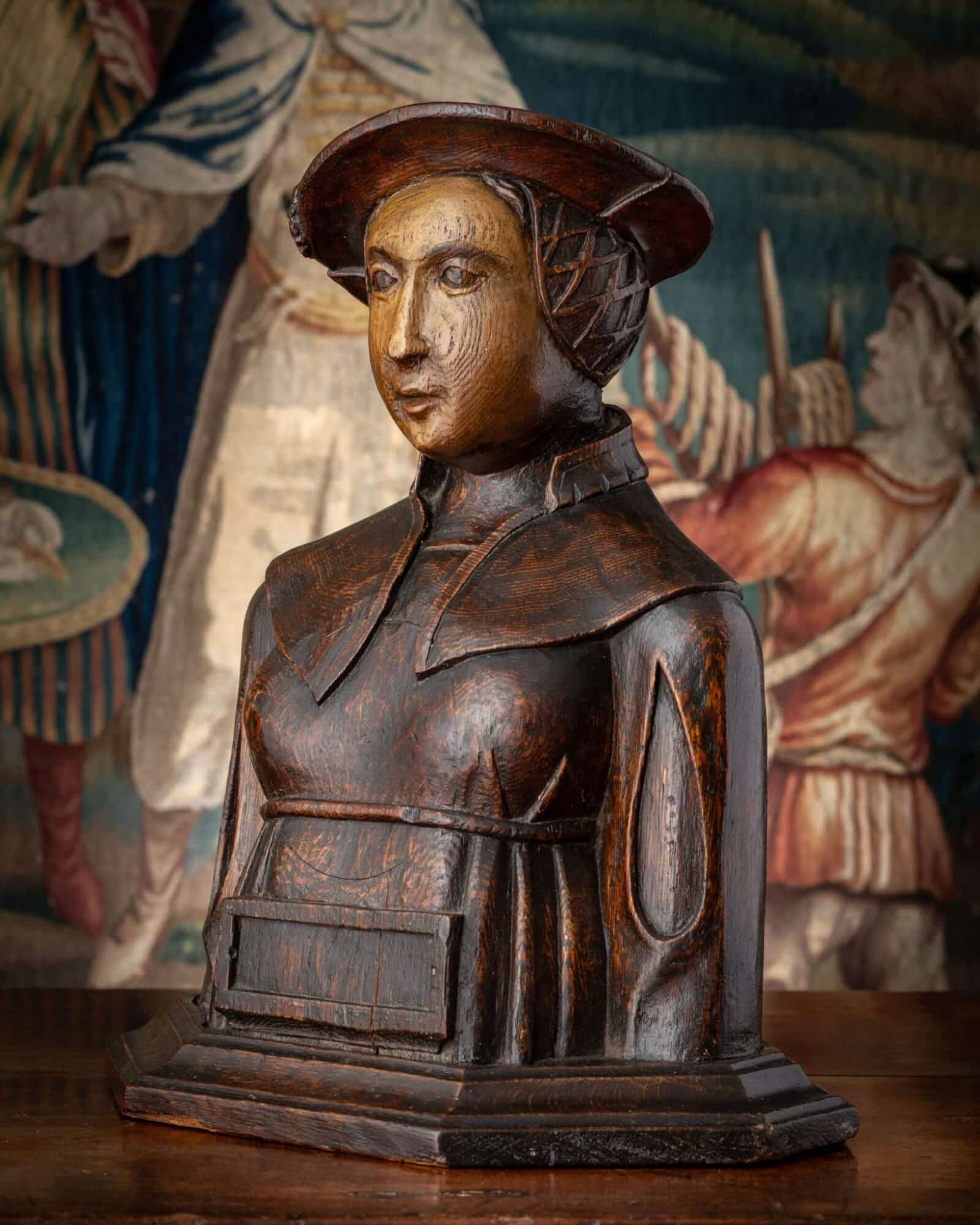
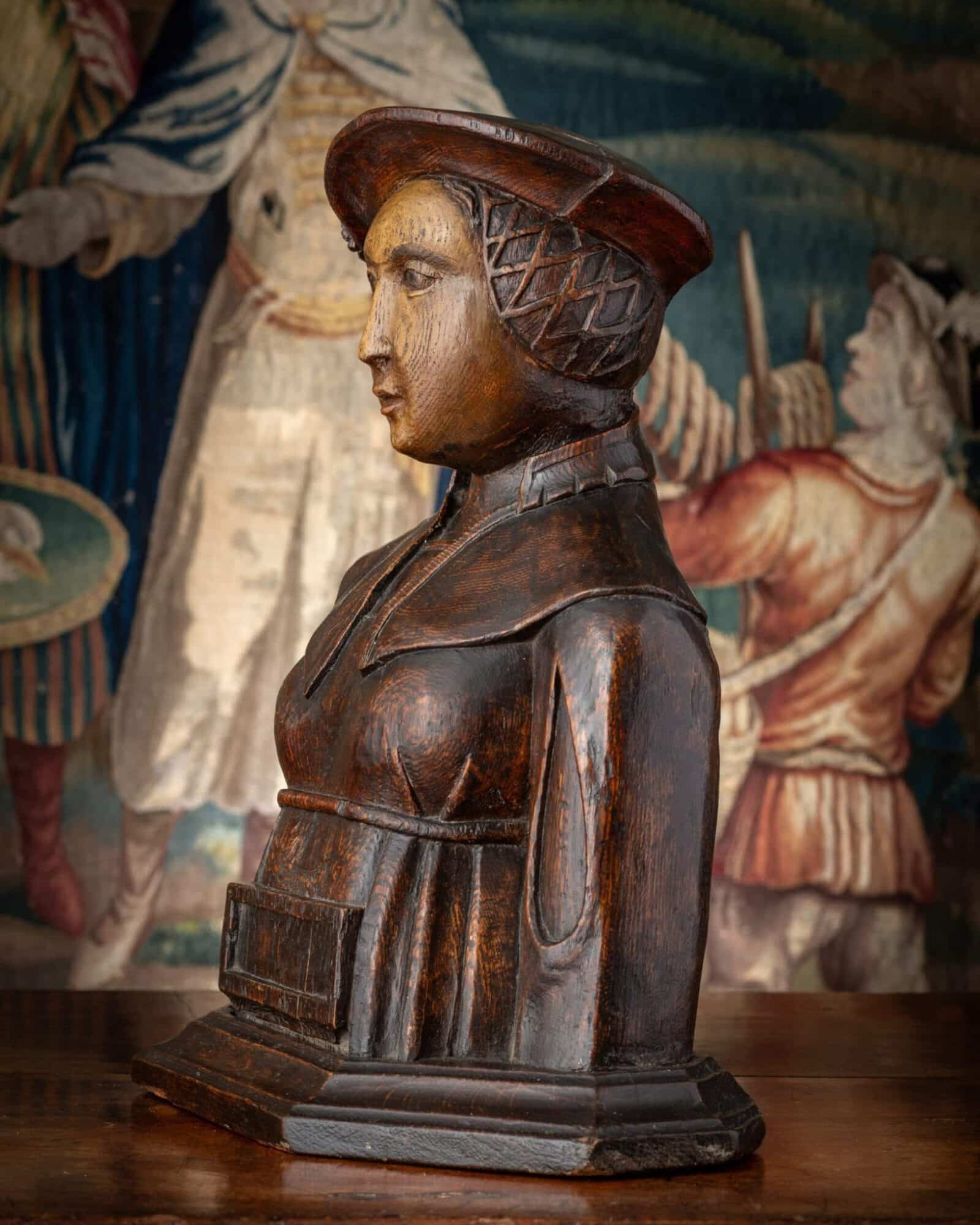
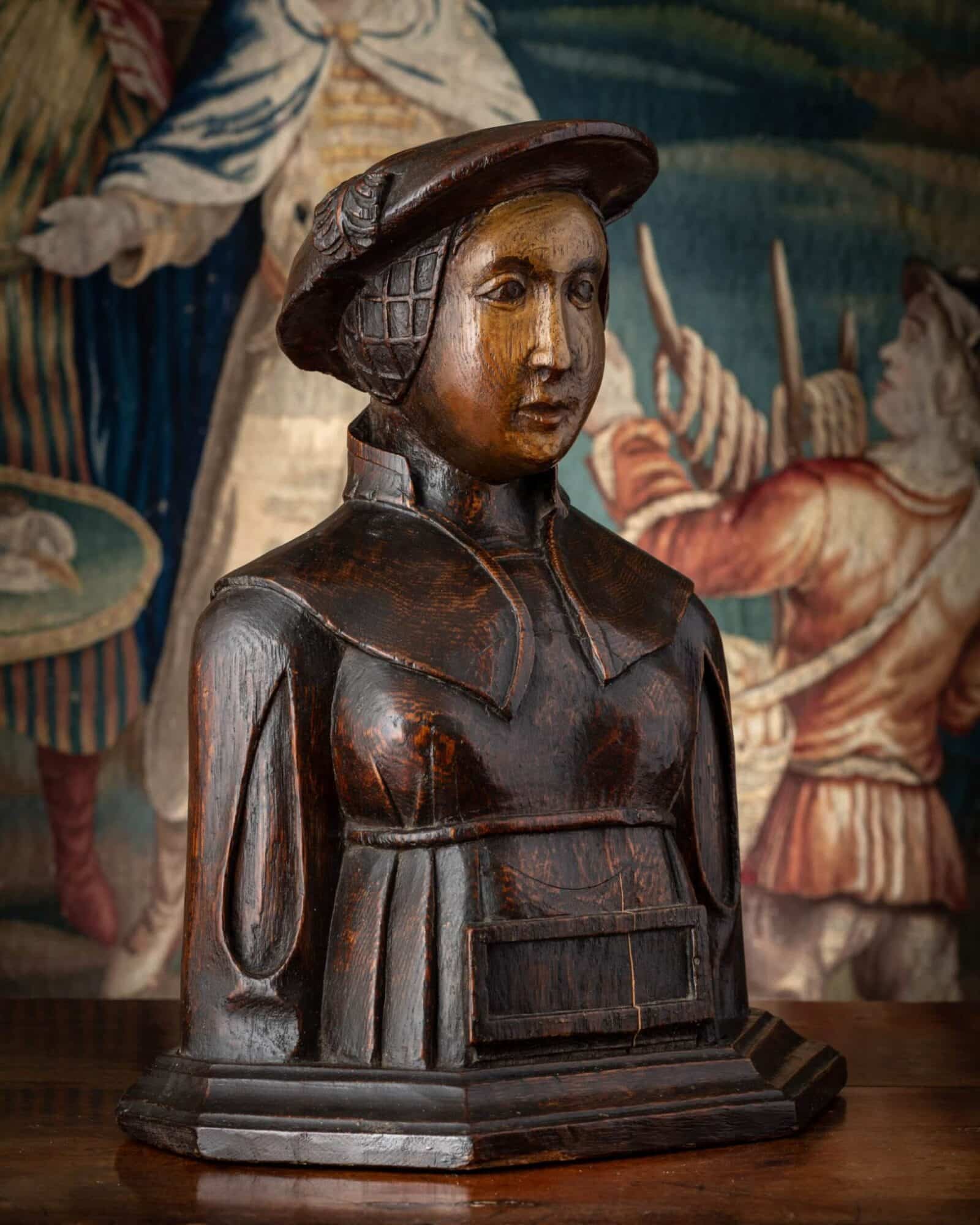
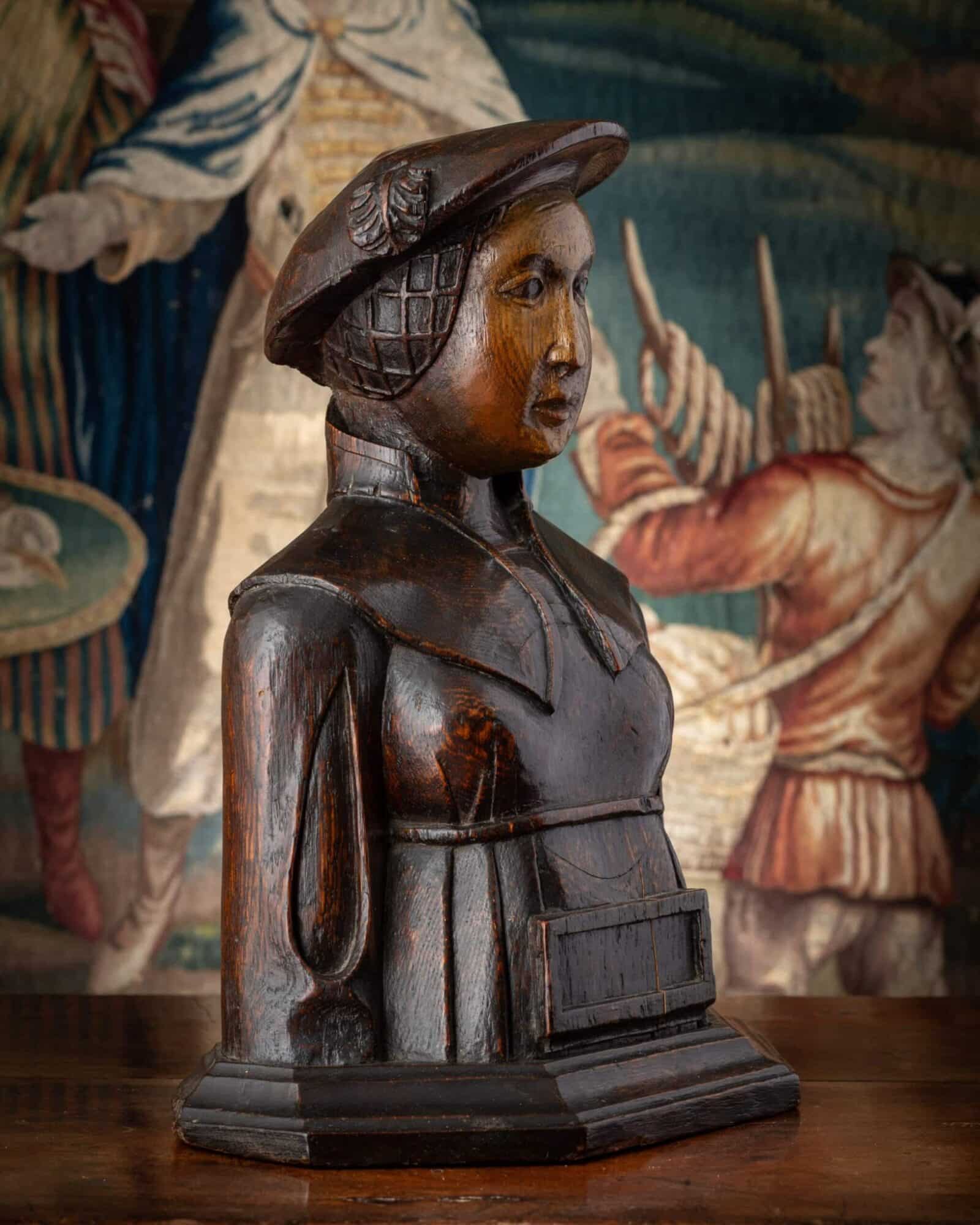
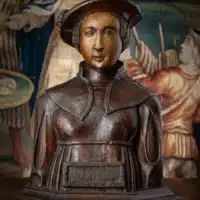
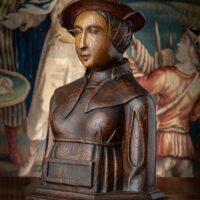
Portrait Bust of Mary Howard, Duchess of Richmond (1519–1557). A rare Tudor-period carved portrait bust, representing Mary Howard, Duchess of Richmond, daughter of Thomas Howard, 3rd Duke of Norfolk, and widow of Henry Fitzroy, Duke of Richmond (the illegitimate son of Henry VIII). The bust is finely carved, showing Mary in contemporary English court dress, her hair partially concealed by a distinctive English-style headdress. The surface retains traces of original polychromy.
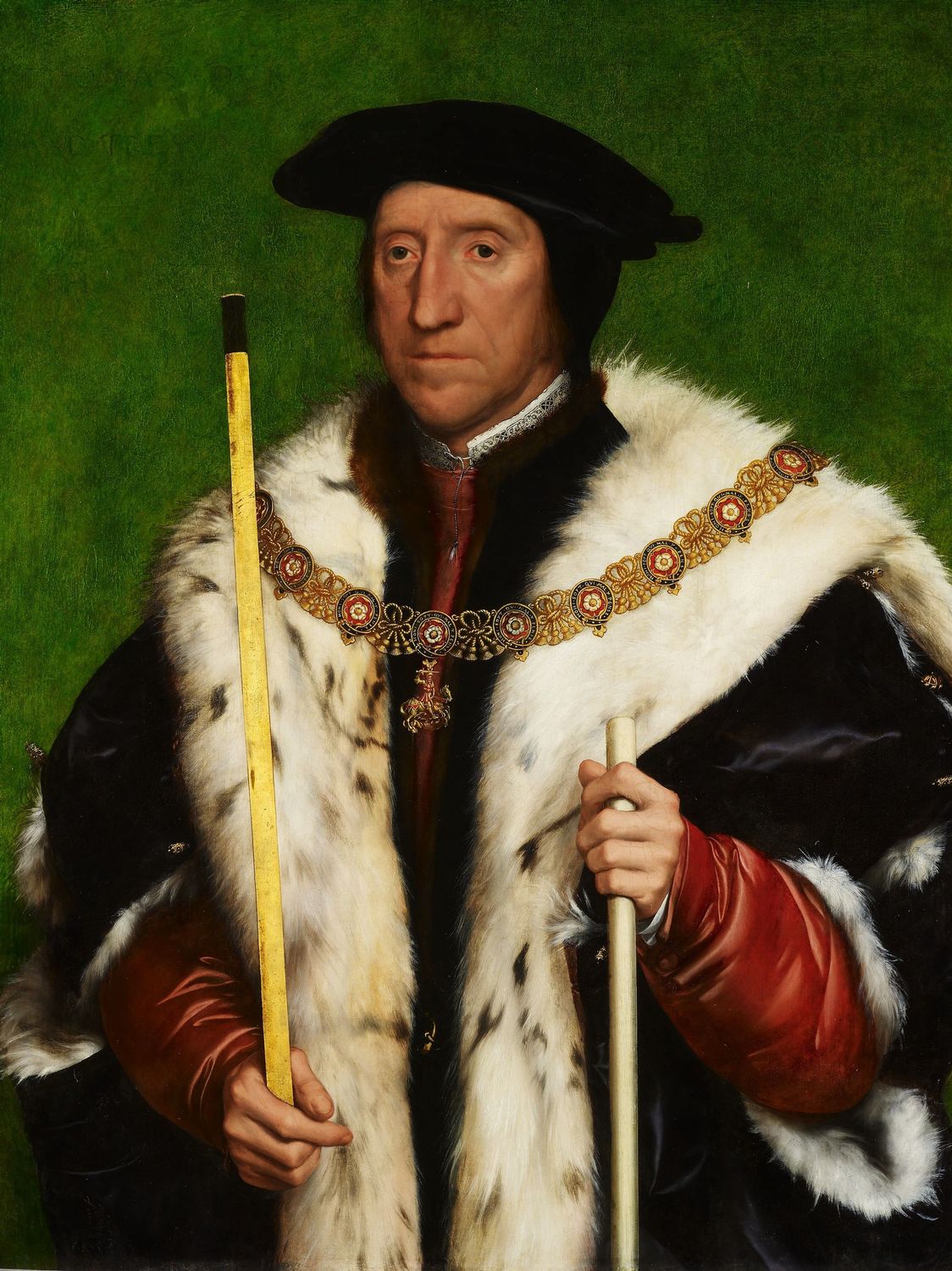
The Howards were England’s premier Catholic dynasty, closely tied to the Tudor monarchy. Mary Howard’s marriage to Henry Fitzroy placed her at the heart of Tudor dynastic politics. As the only daughter of Thomas Howard, 3rd Duke of Norfolk, and sister to Henry Howard, Earl of Surrey, she occupied a pivotal position in one of the most powerful and controversial noble families of the period.
The reliquary aspect of the bust reflects the Howards’ enduring Catholic piety, even during the turbulence of the English Reformation. Reliquary busts were designed both as devotional objects and as dynastic memorials. It is possible that this bust once housed a relic associated with Mary herself, or a sacred relic placed within her likeness as an act of familial and religious devotion.
Reliquary busts were common across late medieval and Renaissance Europe, particularly in the Netherlands, Germany, Italy, and France. Examples include the Netherlandish reliquary busts in the Museum Catharijneconvent, Utrecht (c. 1520), the busts of saints in Cologne and Aachen, and Italian works by Mino da Fiesole. All share the same round chest aperture for relic display.
In England, however, reliquary busts were almost entirely destroyed during the Reformation, making this survival of outstanding rarity. No directly comparable Tudor reliquary bust of a secular noblewoman is currently known.
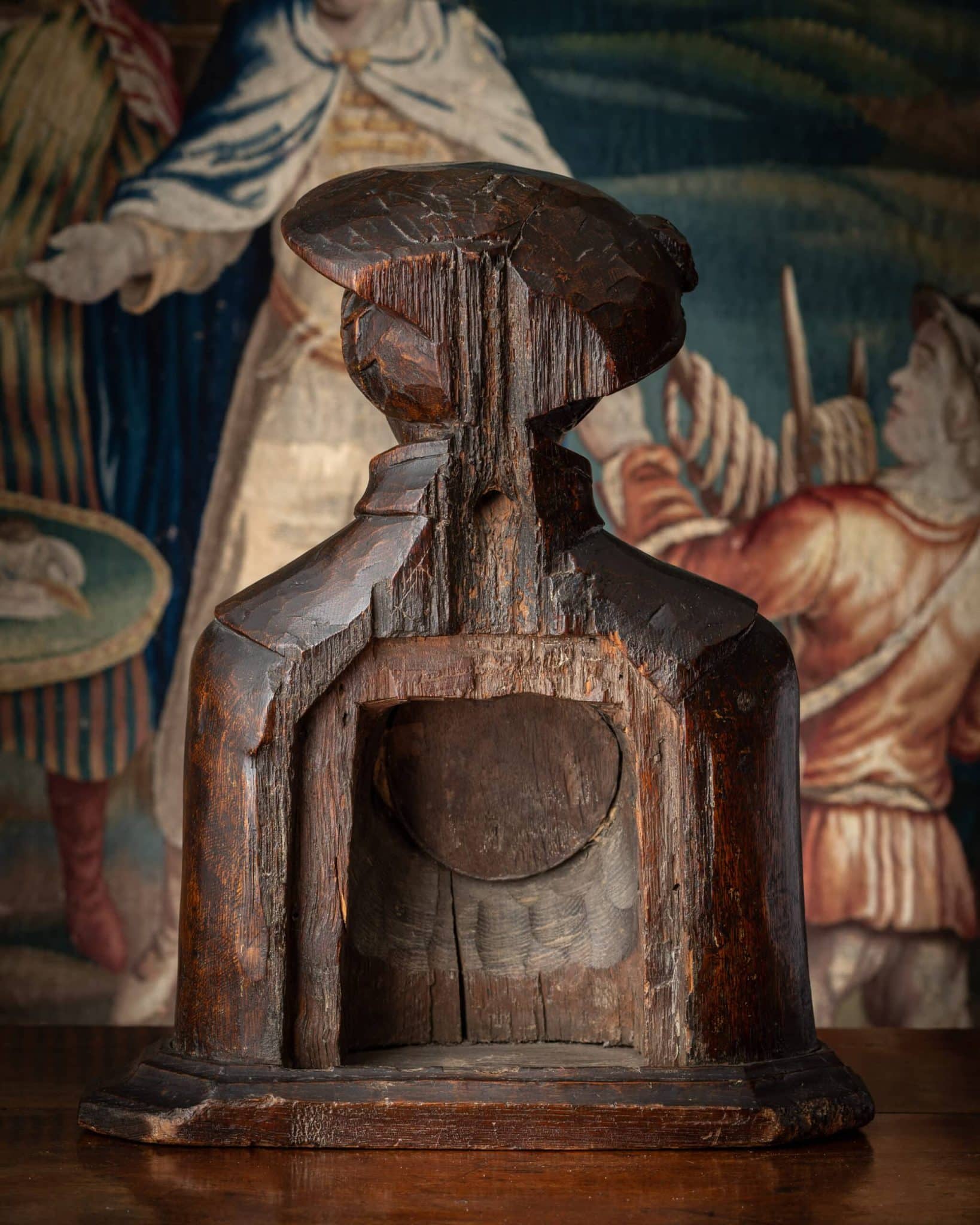
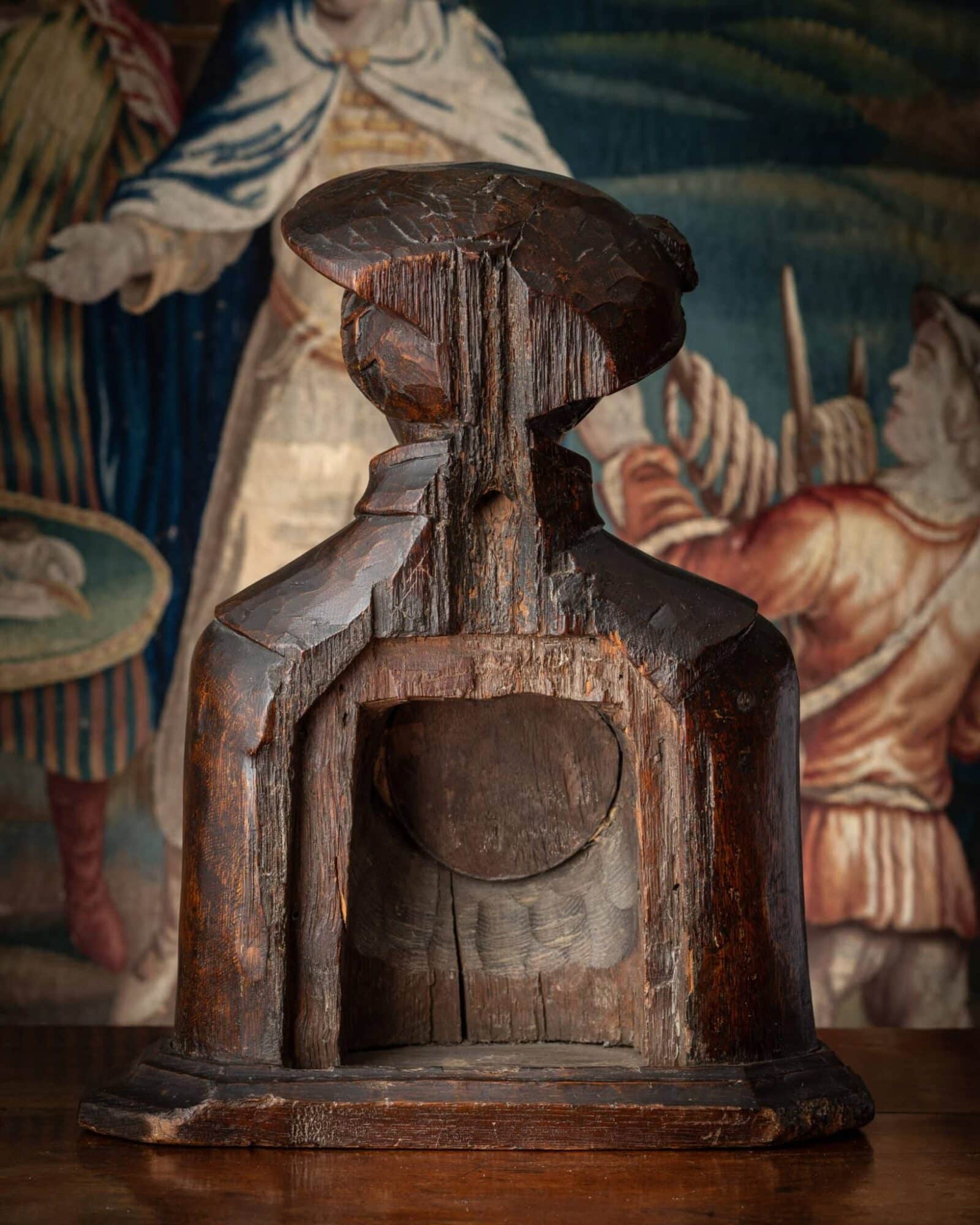
A key feature of the bust is the round cover at the centre of the chest, now fixed with glue and difficult to detect. This is not an incidental repair but an original and deliberate element of the sculpture’s design: it marks the presence of a reliquary cavity.
In reliquary busts of the late medieval and Renaissance periods, the chest was the customary site for a receptacle to house relics. This placement was deeply symbolic, evoking the heart as the spiritual seat of the individual. The round aperture in the present bust follows this established tradition, though very few examples survive in England owing to the widespread destruction of reliquaries during the Reformation.
The sealing of the opening, whether in the sixteenth or seventeenth century, reflects both the vulnerability of such objects and the changing religious climate. Relics themselves were often removed and the cavities obscured or disguised to avoid iconoclastic damage. The survival of the cover, even though long secured with glue, preserves vital evidence of the bust’s original devotional function.
This reliquary element profoundly enhances the sculpture’s significance. It demonstrates that the bust was not solely a commemorative likeness of Mary Howard but also a devotional object — potentially intended to enshrine either a relic associated with her, or another holy relic placed within her likeness as an act of Catholic veneration.
Placed in the context of the Howard family’s well-documented Catholic faith, the reliquary opening strengthens the argument for the bust’s intimate connection to their religious and dynastic identity. It represents a unique fusion of portraiture, piety, and lineage at the heart of Tudor England.
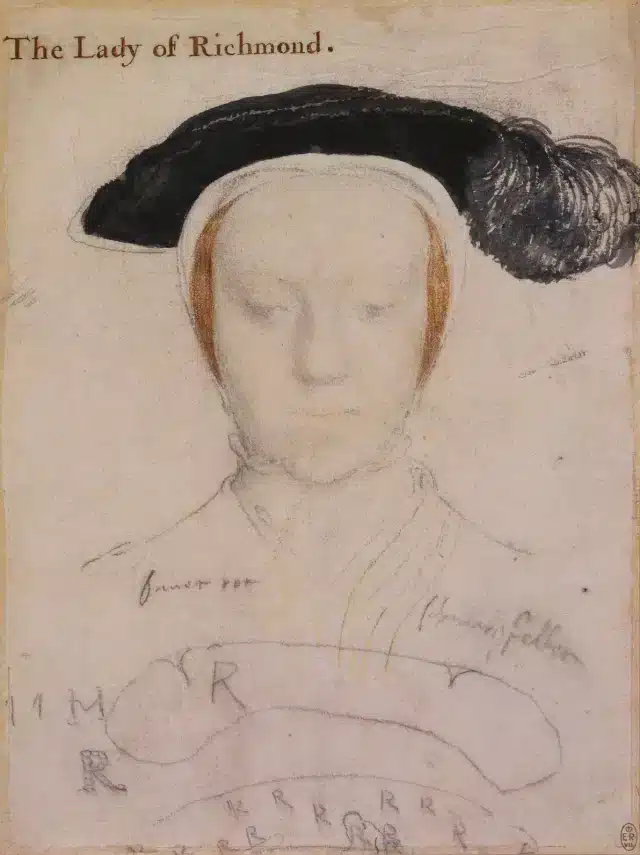
Portraits of noblewomen at Henry VIII’s and Edward VI’s courts — such as drawings by Holbein of Mary Howard herself, and paintings of women like Katherine Parr — show closely related headwear. She wears the square-necked gown fashionable at Henry VIII’s and Edward VI’s courts, characterised by a broad, flat neckline and fitted bodice. This contrasts with the deeper, more rounded French necklines seen on the Continent. The angular cut of the gown, often stiffened and reinforced, was a hallmark of Tudor dress and symbolised both propriety and aristocratic status. Though the bust is simplified in its carving, there are traces of layered fabric and structured folds consistent with the heavy velvets and damasks favoured by English noblewomen. Such gowns were typically lined with fur and ornamented with applied bands of embroidery or jewels, signalling wealth and courtly standing.
Mary Howard, Duchess of Richmond, was not only one of the most prominent noblewomen of Henry VIII’s reign, but also the first cousin of Queen Anne Boleyn. Her father, Thomas Howard, 3rd Duke of Norfolk, was Anne’s uncle, making Mary part of the same powerful Howard–Boleyn circle that dominated court politics during the 1520s and 1530s. It was during Anne’s queenship that Mary made her most important dynastic match: a marriage to Henry Fitzroy, Duke of Richmond, Henry VIII’s acknowledged illegitimate son. This union, strongly encouraged by Anne Boleyn and the Howard faction, was intended to cement the family’s influence at the very heart of the Tudor dynasty.
Mary’s fortunes, however, mirrored those of her cousin. Anne’s fall in 1536 curtailed the Howard ascendancy, leaving Mary a young widow at court, her marriage unconsummated but politically explosive in its implications. Her closeness to Anne Boleyn — both by blood and by shared political fortunes — makes any surviving likeness of Mary an invaluable witness to the intertwined destinies of the Howards and the Boleyns.