Royal Heraldic Badges of James VI & I
- Period
- Circa 1603 - 1625
- Origin
- England
- Dimensions
- W 15 1/2" × H 21" × D 3"
- Reference
- #Marh2109
£14,500
Description
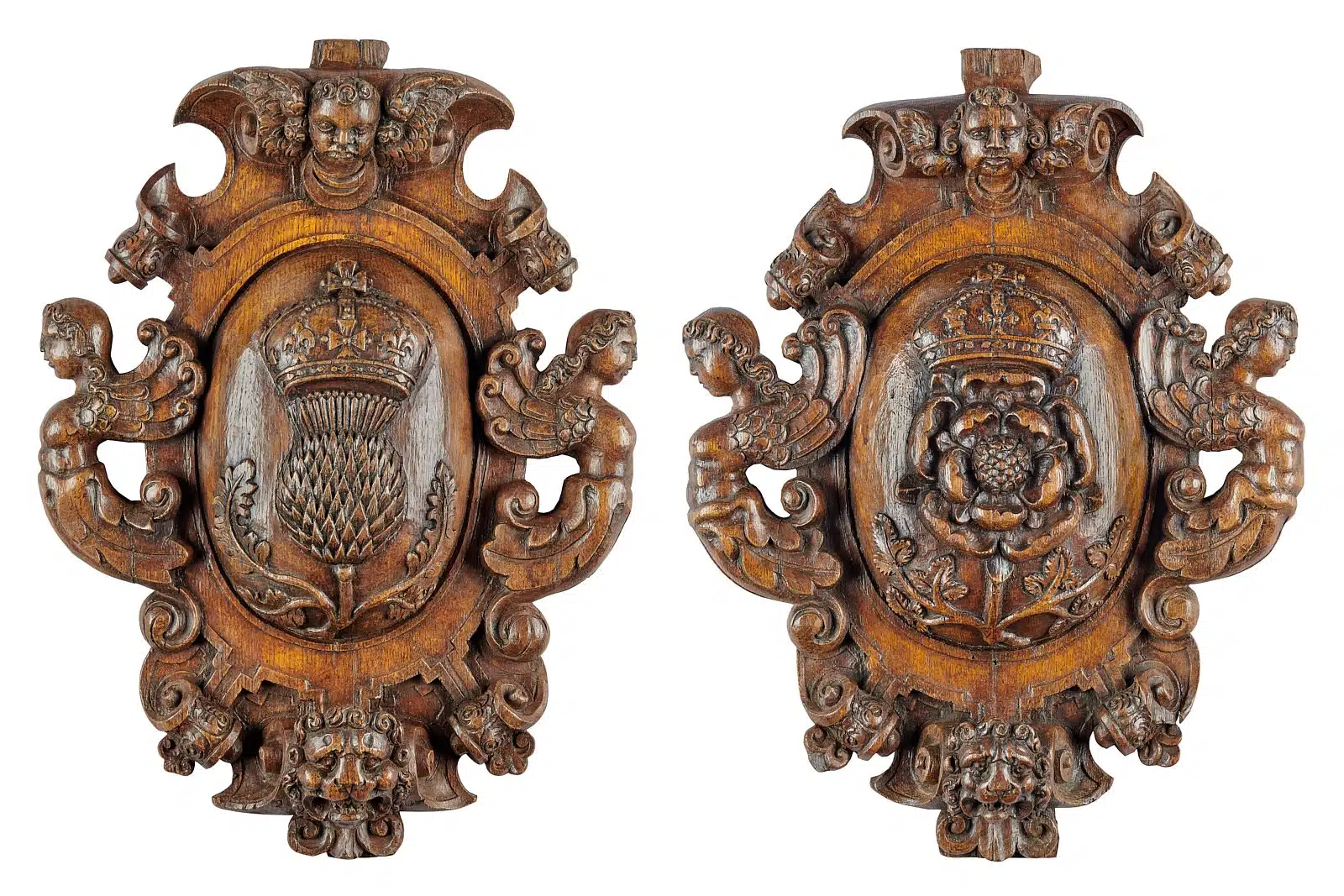
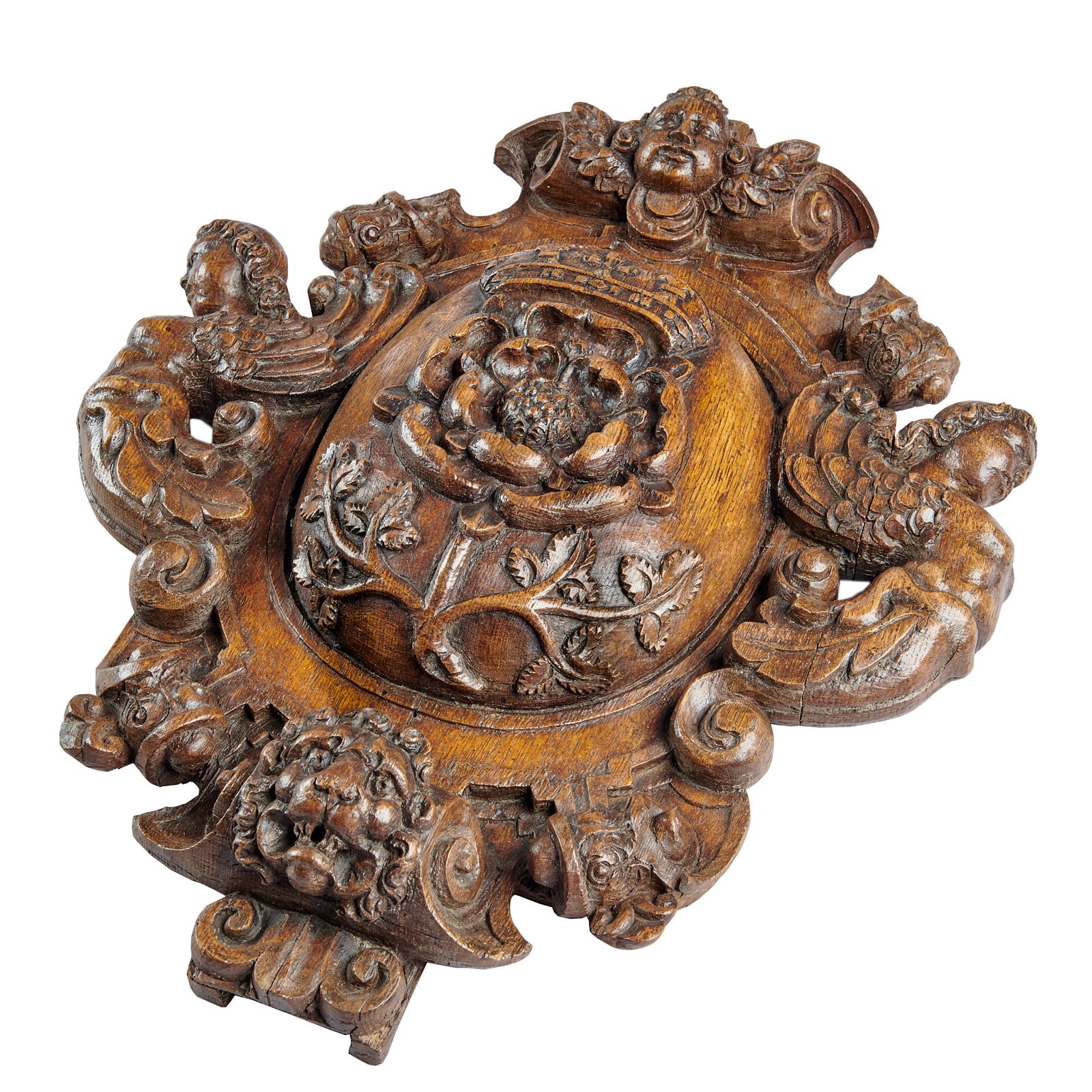
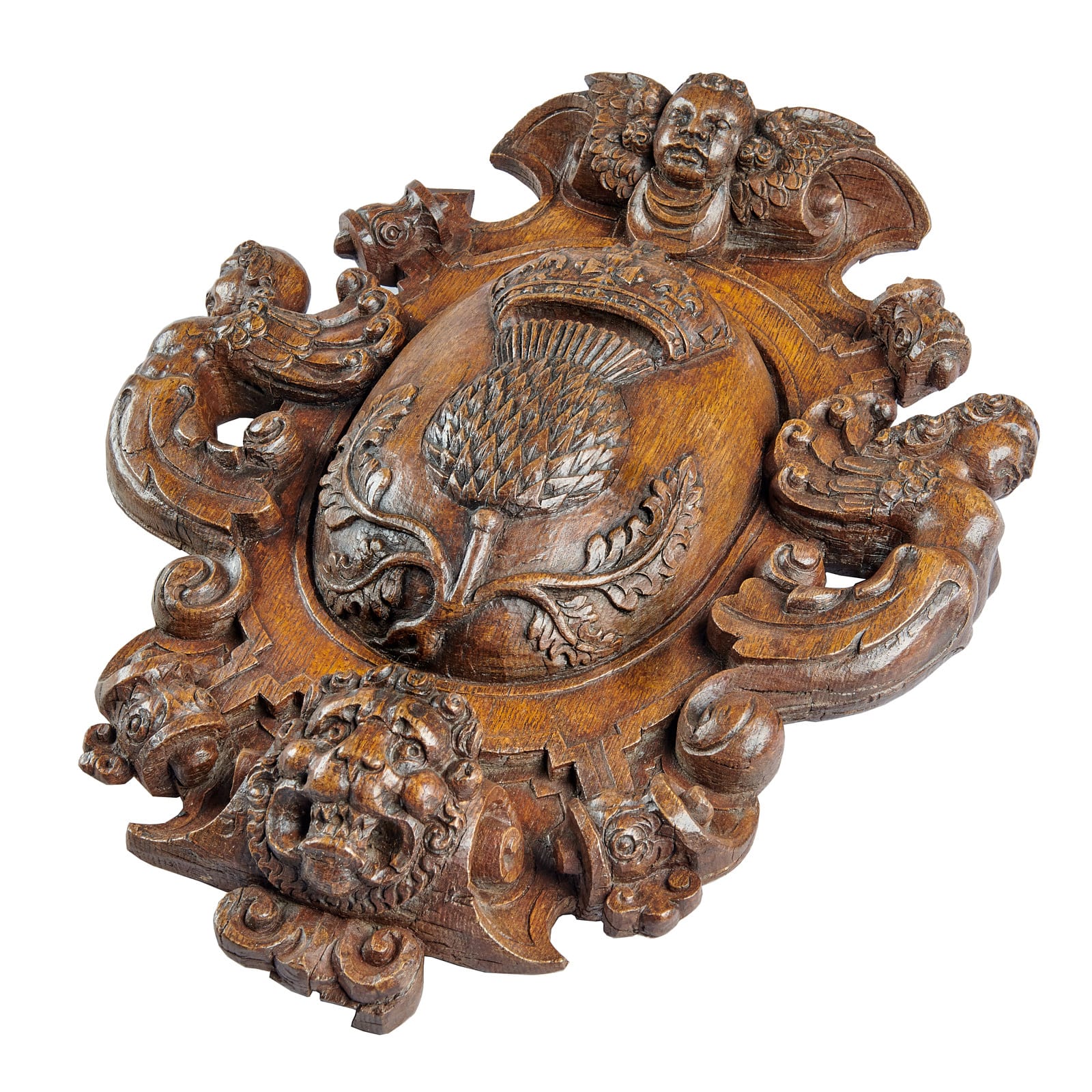
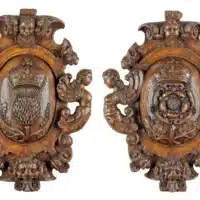
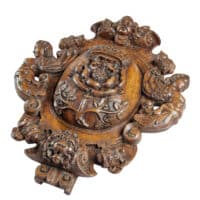
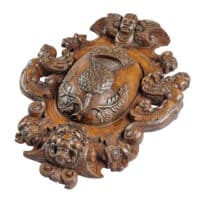
A rare and highly important pair of early 17th-century carved oak royal badges, almost certainly made during the reign of James VI & I. Each badge is carved in bold high relief within a richly modelled Mannerist cartouche, one centred by the crowned thistle of Scotland, the other by the crowned Tudor rose of England.
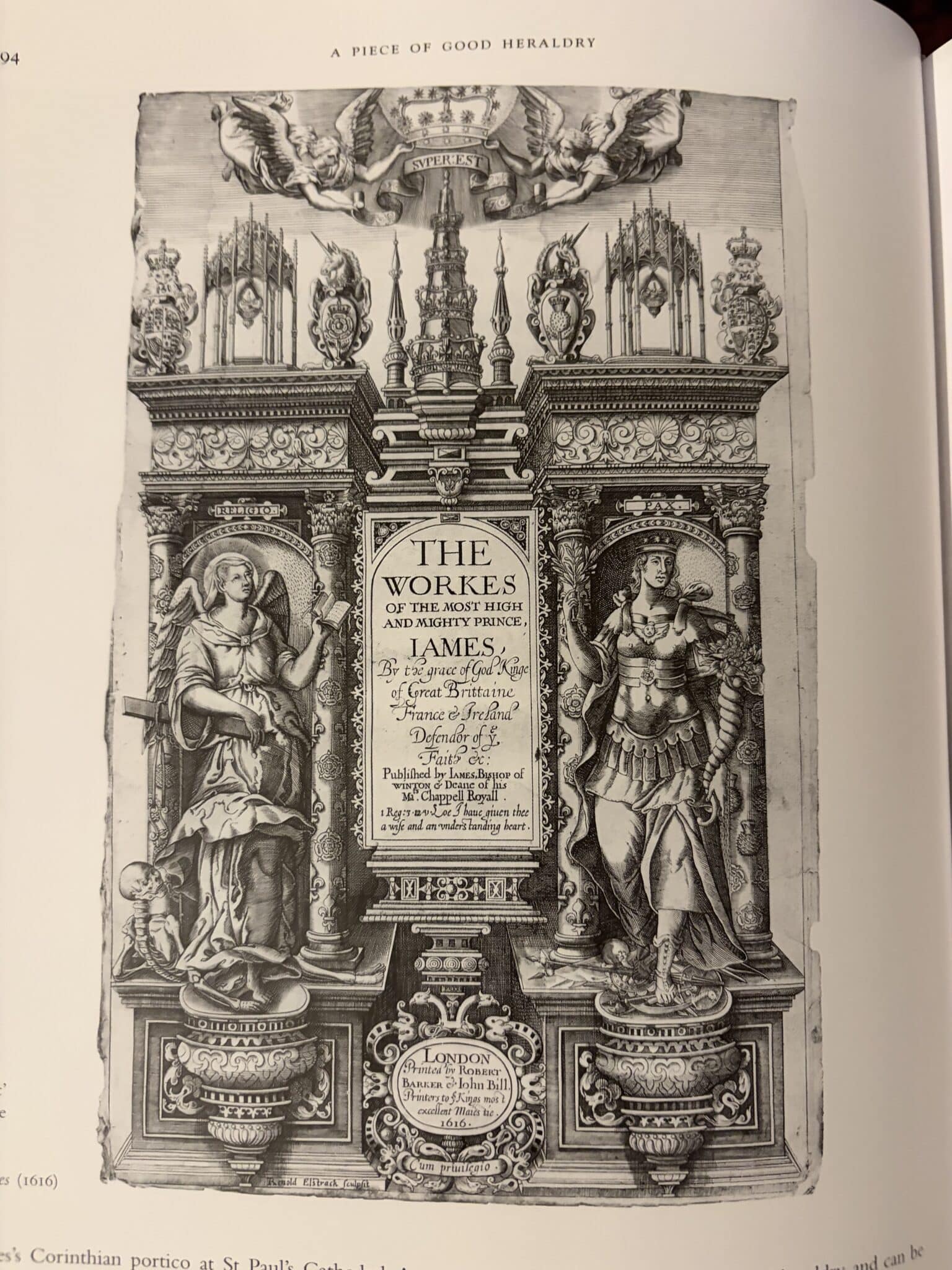
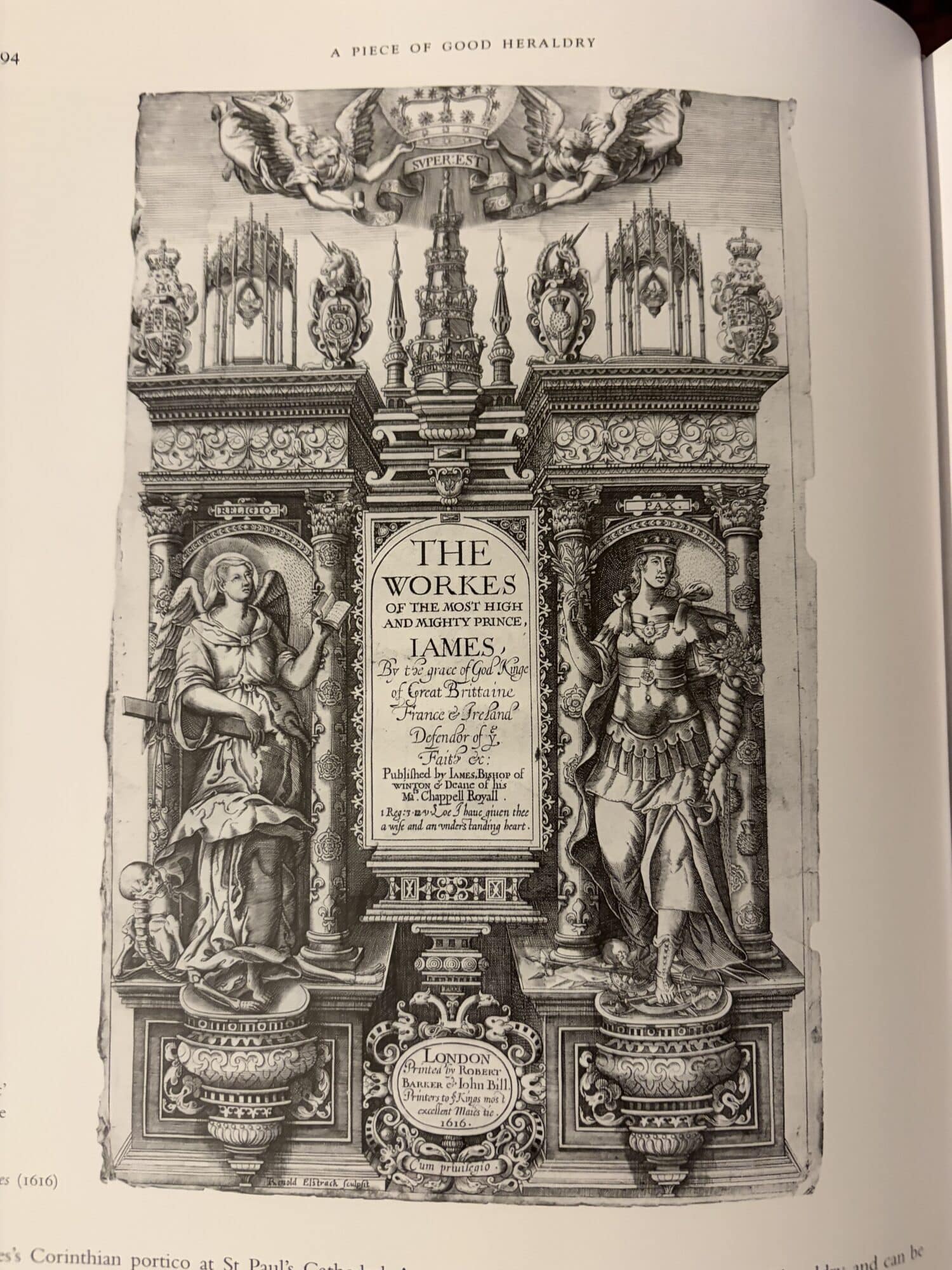
Together, the rose and thistle form one of the most powerful emblematic statements of James I’s reign, celebrating the Union of the Crowns following his accession to the English throne in 1603. The royal crowns, carved above each badge, are closely comparable in form and handling to those seen on high-status Jacobean royal sculpture of the period.
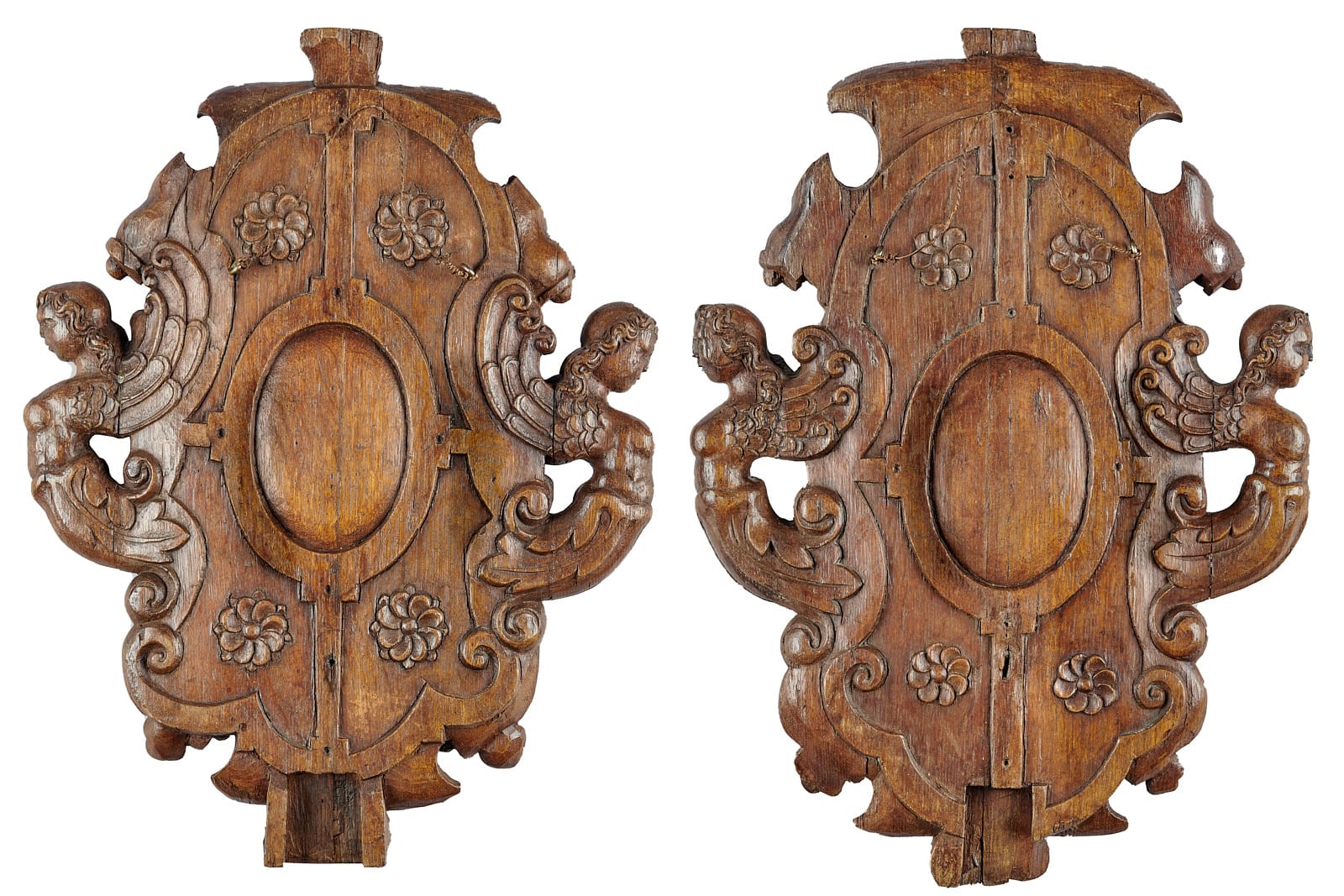
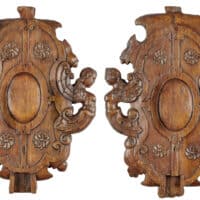
The badges are exceptionally unusual in being carved on both sides, indicating that they were originally designed to be seen in the round rather than fixed flat against a wall. The surviving tenons suggest that they were once socketed into a larger royal or ceremonial fixture, perhaps a screen, state furnishing, architectural setting, royal barge, or other courtly structure.
The sophisticated strapwork, masks, winged terms and animated ornamental detail place the carvings firmly within the refined London court style of the early Stuart period. Their design relates closely to the ornamental vocabulary promoted by Inigo Jones and his circle, drawing on Serlian and late Renaissance pattern-book sources. The quality of the carving also invites comparison with the work of leading London royal carvers active under James I, including Gerard Christmas, who is documented as producing royal sculpture and carved devices for the Stuart court.
Objects of this type were vulnerable during the Civil War and Interregnum, when royal imagery and decorative fixtures were frequently removed, dismantled or sold from royal houses. Their detached condition today may reflect the dispersal of court furnishings during this period.
A remarkable survival of Jacobean royal iconography in oak, these badges represent the political and dynastic imagery of James I’s reign in a form of great rarity.