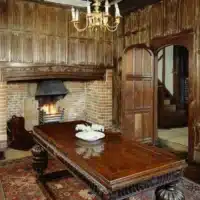
A Late Elizabeth I Oak and Elm Draw-Leaf Table
- Period
- 1580 - 1600
- Origin
- England
- Dimensions
- W 73 1/2 (129 1/4 extended)" × H 32" × D 35"
- Reference
- #Marh3739
£25,000
Description
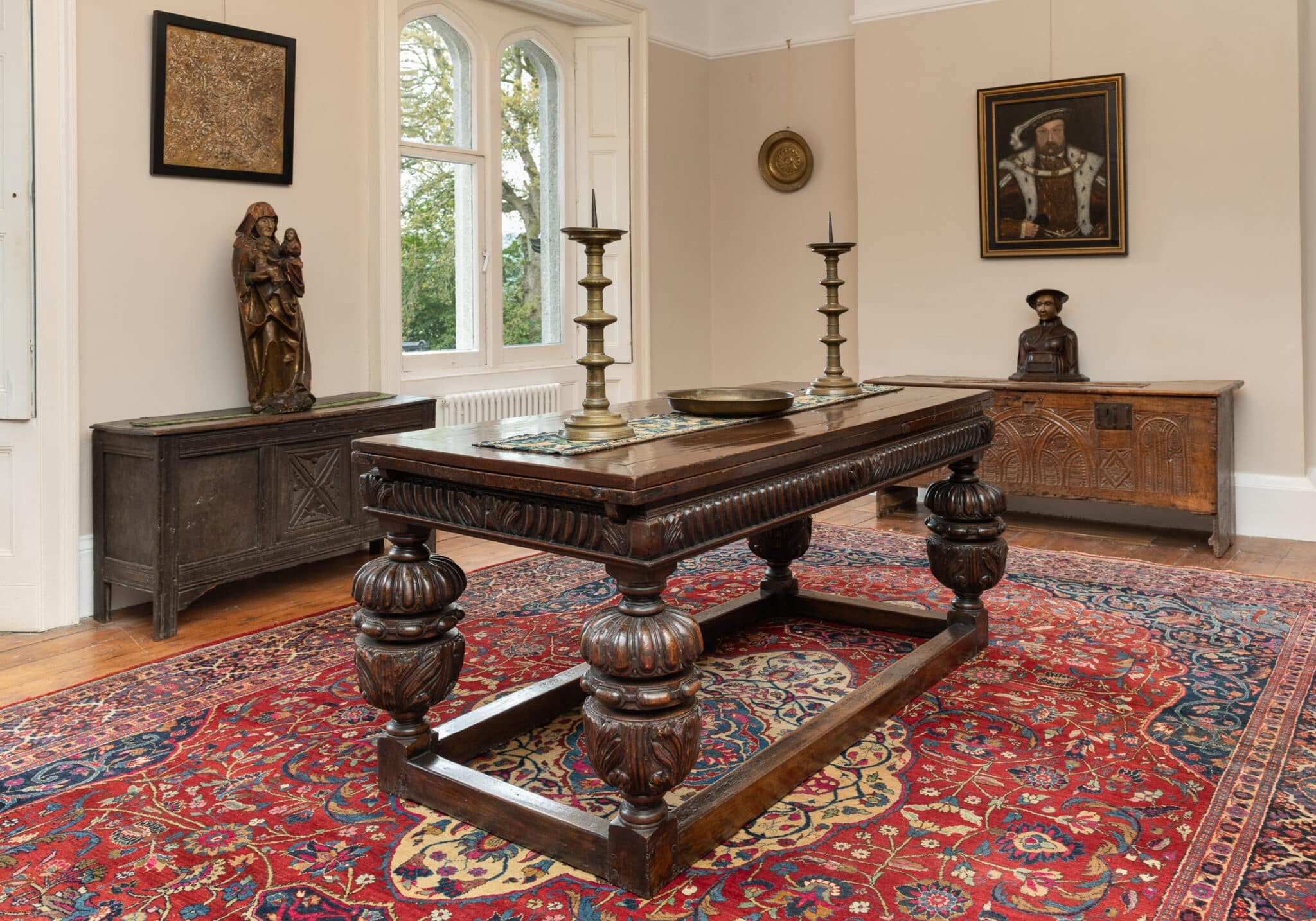
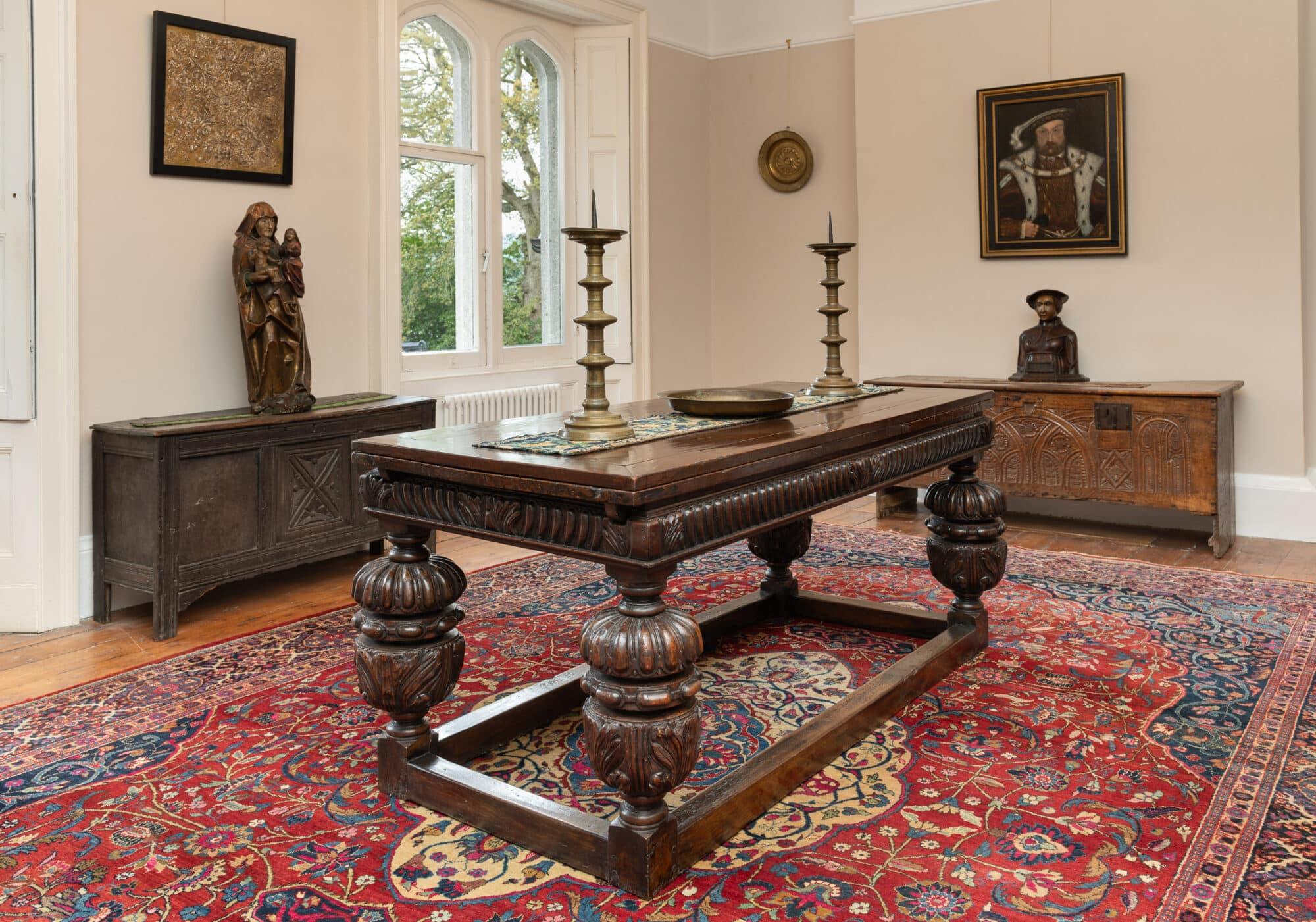
Constructed in oak and elm, this impressive late Elizabeth I draw-leaf table represents one of the most enduring and architecturally successful furniture forms of the Tudor period. The table retains its original extending construction, with draw leaves housed beneath the principal top, allowing the surface to be enlarged when required for dining and ceremonial use.
The rectangular top is raised above a richly carved frieze ornamented with lunettes and stylised foliate motifs, reflecting decorative traditions current in the final decades of the sixteenth century. The substantial understructure incorporates four boldly modelled cup-and-cover legs of pronounced bulbous form, each carved with vigorous leafy ornament and united by peripheral stretchers. The quality of the carving, together with the table’s imposing proportions and excellent colour, attests to its manufacture by a highly accomplished provincial workshop.
Draw-leaf tables of this type occupied a central role within the principal rooms of prosperous Tudor and Elizabethan households. Their development reflects changing patterns of domestic life and hospitality during the sixteenth century, while their robust construction enabled continued use across successive generations. Consequently, many surviving examples exhibit later alterations; the survival of a table retaining such strong period character is increasingly uncommon.
The present table possesses distinguished provenance, having formed part of the collection of Sir Harry Hague (1881–1960). Hague, Managing Director of A. Wander Ltd., manufacturers of Ovaltine, assembled an important collection of English furniture and works of art during the first half of the twentieth century. In building his collection he was advised by the renowned furniture historian and connoisseur R. W. Symonds (1889–1958), whose scholarship and discerning eye were instrumental in shaping some of the most significant collections of early English furniture of the period.
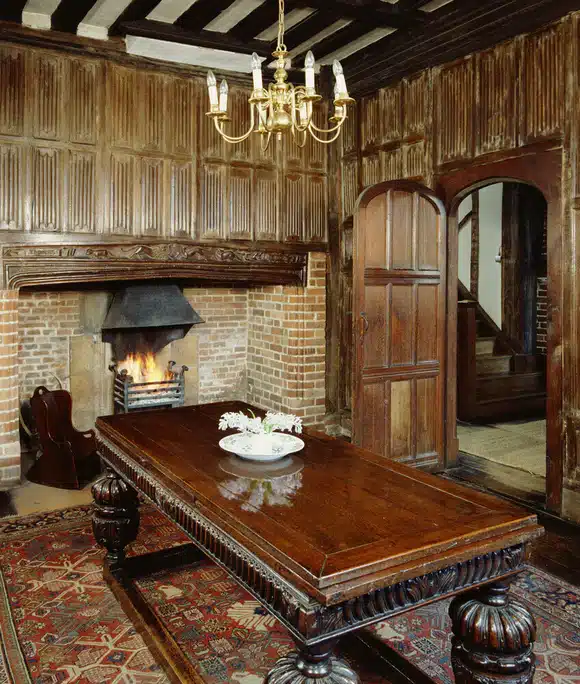
Further enhancing its historical significance, the table was exhibited on long-term loan at Paycocke’s House, Coggeshall, Essex, one of the most celebrated surviving merchant houses of the Tudor period, where it remained on display until October 2025.
A notable survival from the closing years of Elizabeth I’s reign, this table combines strong provenance, exhibition history, and exceptional decorative presence, exemplifying the craftsmanship and durability of late sixteenth-century English furniture.
Provenance
Sir Harry Hague (1881–1960);
thence by descent to the present owner.
Exhibited
On loan to Paycocke’s House, Coggeshall, Essex, until October 2025. (Shown here in the second image)