
Paul Fitzsimmons logo
  • Current Stock
  • Archive
  • Notable Works
  • About Us
  • News
  • Contact
Home / Archive / Monumental Renaissan…
Previous Next
Monumental Renaissance Limewood Sculpture of God the Father Sold

Monumental Renaissance Limewood Sculpture of God the Father

Period
Circa 1600
Origin
Flemish
Dimensions
W 30" × H 55 1/2" × D 17"
Reference
#Marh2934

This piece has been sold. It is shown here for reference in our archive.

Description

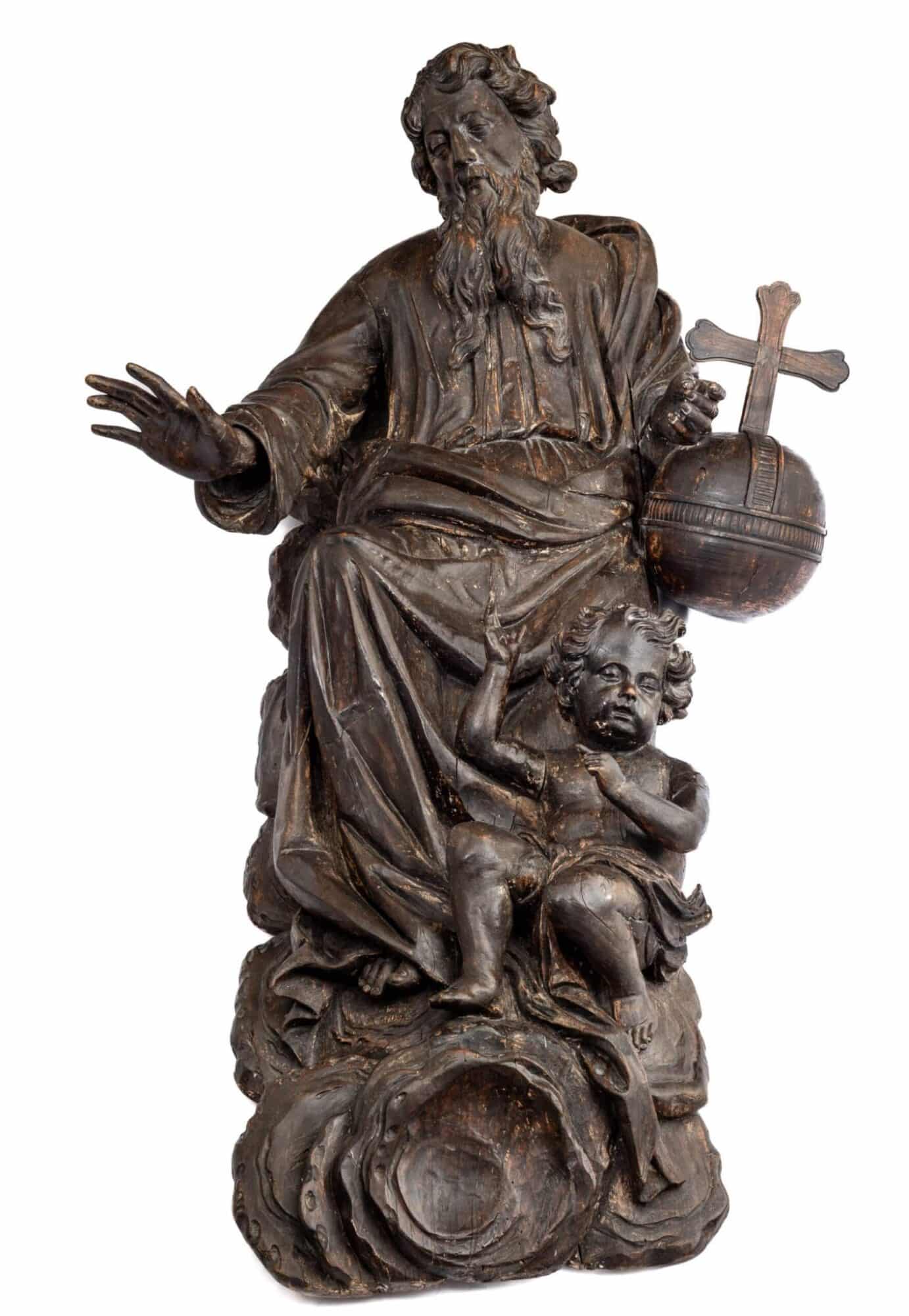
A monumental wall-hung limewood sculpture depicting God the Father, seated amidst swirling clouds, carved with majestic scale and expressive naturalism. He raises his right hand in blessing, while his left holds the globus cruciger — the orb and cross symbolising divine sovereignty over the world.
At his feet sits a child figure, likely representing the infant Christ or an allegorical soul, linking the work to the iconography of the Throne of Grace (Gnadenstuhl), where God the Father presents or supports Christ within the Holy Trinity.
The deep folds of the drapery, flowing beard, and commanding gesture reflect the monumental sculptural language of late Renaissance Flemish church carving. Executed in limewood — a favoured material for large-scale ecclesiastical figures due to its fine grain and lighter weight — this figure was almost certainly created for a major religious setting, possibly crowning an altarpiece or positioned high within a chapel interior.
Surviving Renaissance sculptures of God the Father in this scale are exceptionally rare outside institutional collections.
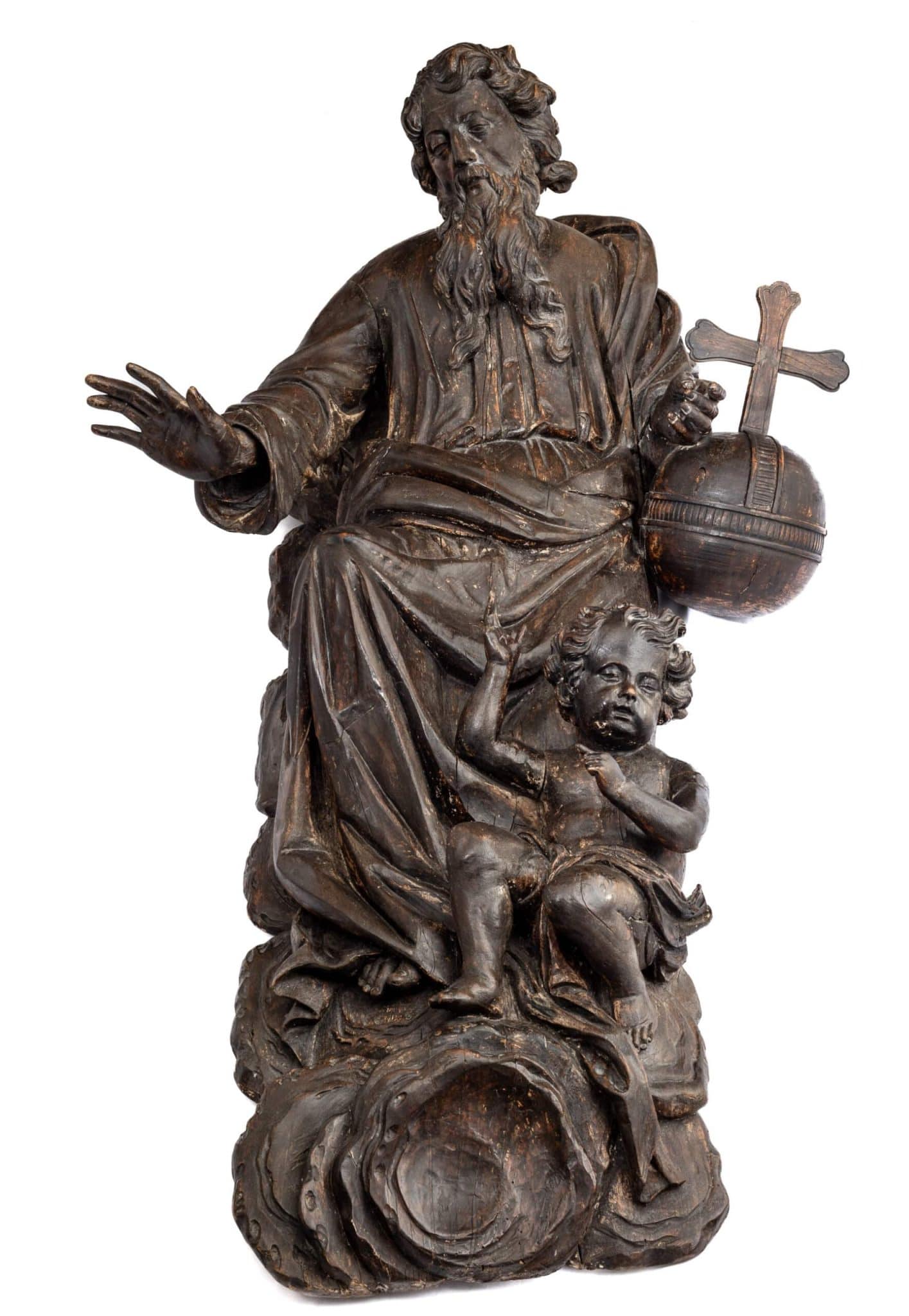
Representations of God the Father on this monumental scale are exceptionally rare survivals. During the Counter-Reformation (after the Council of Trent, 1545–63), Catholic art was charged with reaffirming the authority of the Church and the mystery of the Trinity. Sculptures of God enthroned, blessing with one hand and holding the globus cruciger in the other, proclaimed His absolute sovereignty over both heaven and earth.
Large-scale carvings like this were typically installed high within church interiors — crowning altarpieces, tabernacles, or choir screens — where their commanding presence reminded worshippers of divine judgement, protection, and order. The child at His feet may allude to the Incarnation of Christ or the redeemed soul, reinforcing the idea of salvation through the Trinity.
Because of their scale, subject, and powerful theological role, very few such carvings left ecclesiastical settings. Their survival outside museum or church collections is highly unusual, making this work a significant example of late Renaissance devotional art.

Curator's Note

Previous Charles II Oak Spice… Next Sturton Bronze Cauld…
  • Monumental Renaissance Limewood Sculpture of God the Father

Newsletter

New Stock, Direct to Your Inbox.

Be among the first to hear about new acquisitions and notable works.

Please enable JavaScript in your browser to complete this form.
Loading
Paul Fitzsimmons logo
  • Current Stock
  • Archive
  • Notable Works
  • About Us
  • News
  • Contact

Contact Us

+44 (0)777 903 8891

  • Pinterest
  • Instagram

By Appointment

Devon, England.

Paul Fitzsimmons

Specialist in early oak furniture and works of art.

© 2026 Paul Fitzsimmons | Website by Dancing Badger Ltd

  • Privacy Policy
  • Terms & Conditions

Search the collection

Search in
    1 / 1