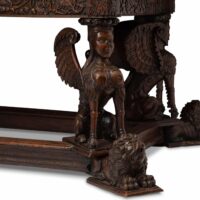
The Lambert Table
- Period
- 1575 - 1600
- Origin
- Yorkshire, England
- Dimensions
- W 82" (lions at base 94 1/2") Table fully extended 156" × H 33 1/4" × D 35 1/4" (lions at base 48")"
- Reference
- #Marh3022
This piece has been sold. It is shown here for reference in our archive.
Description
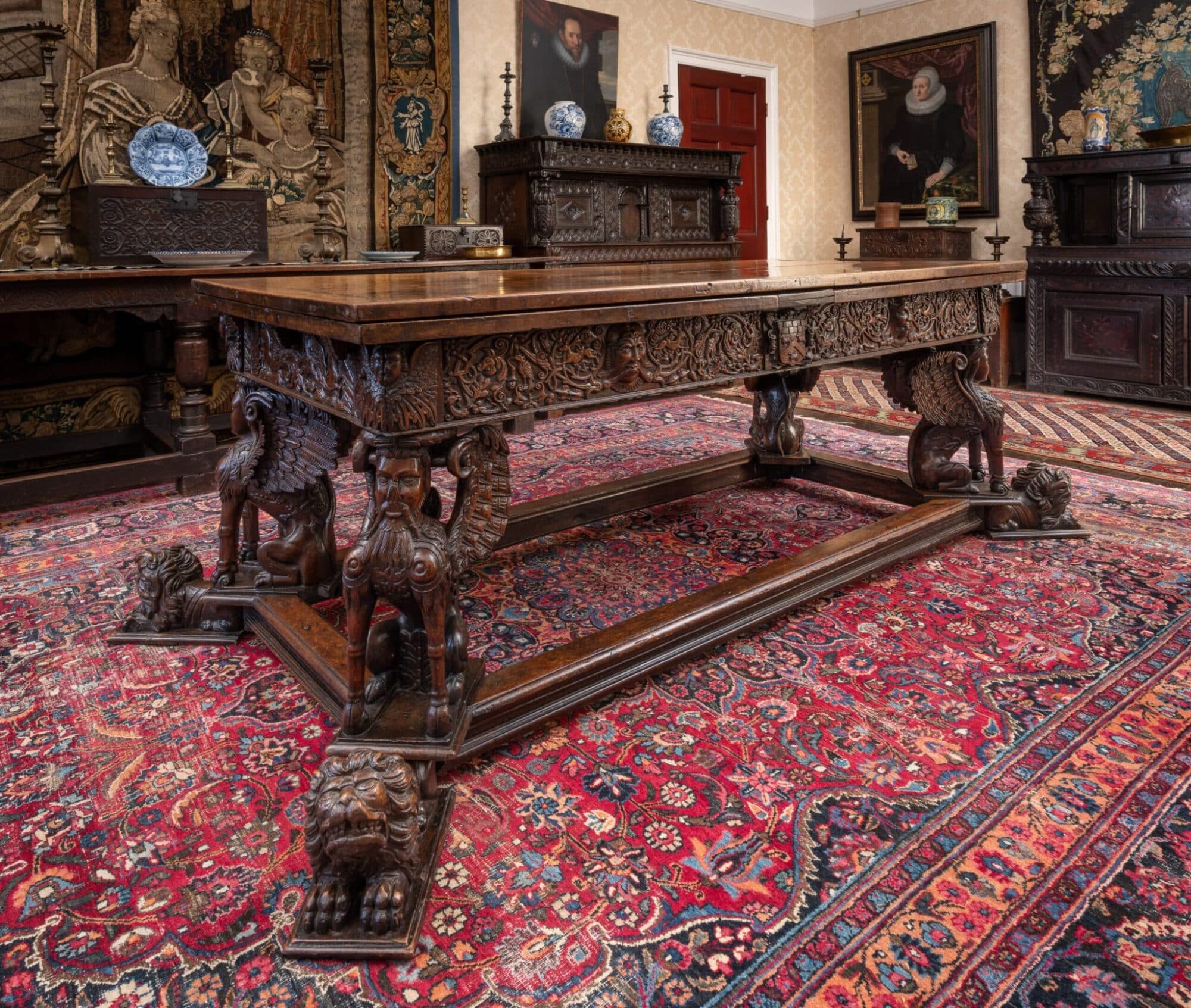
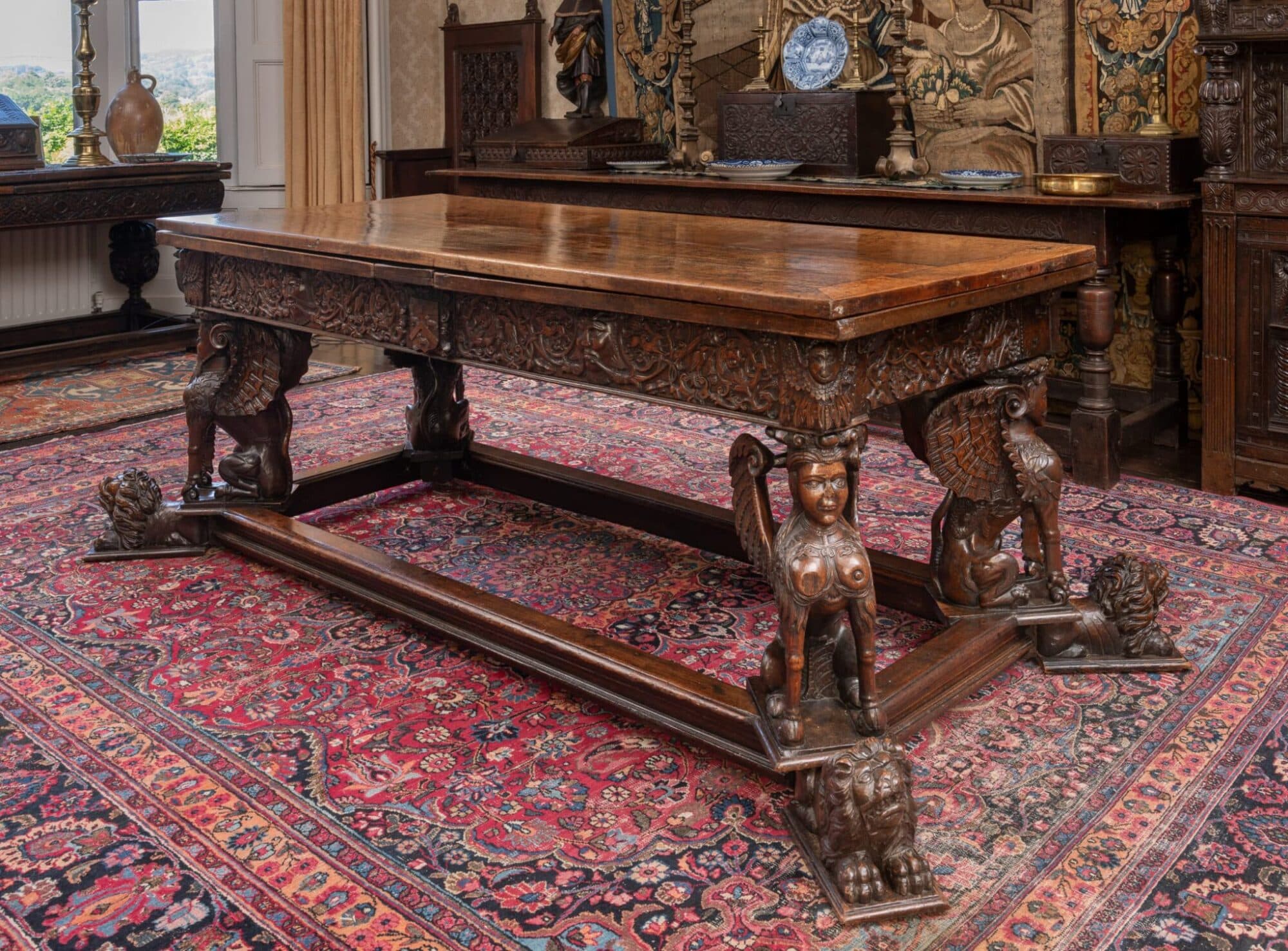
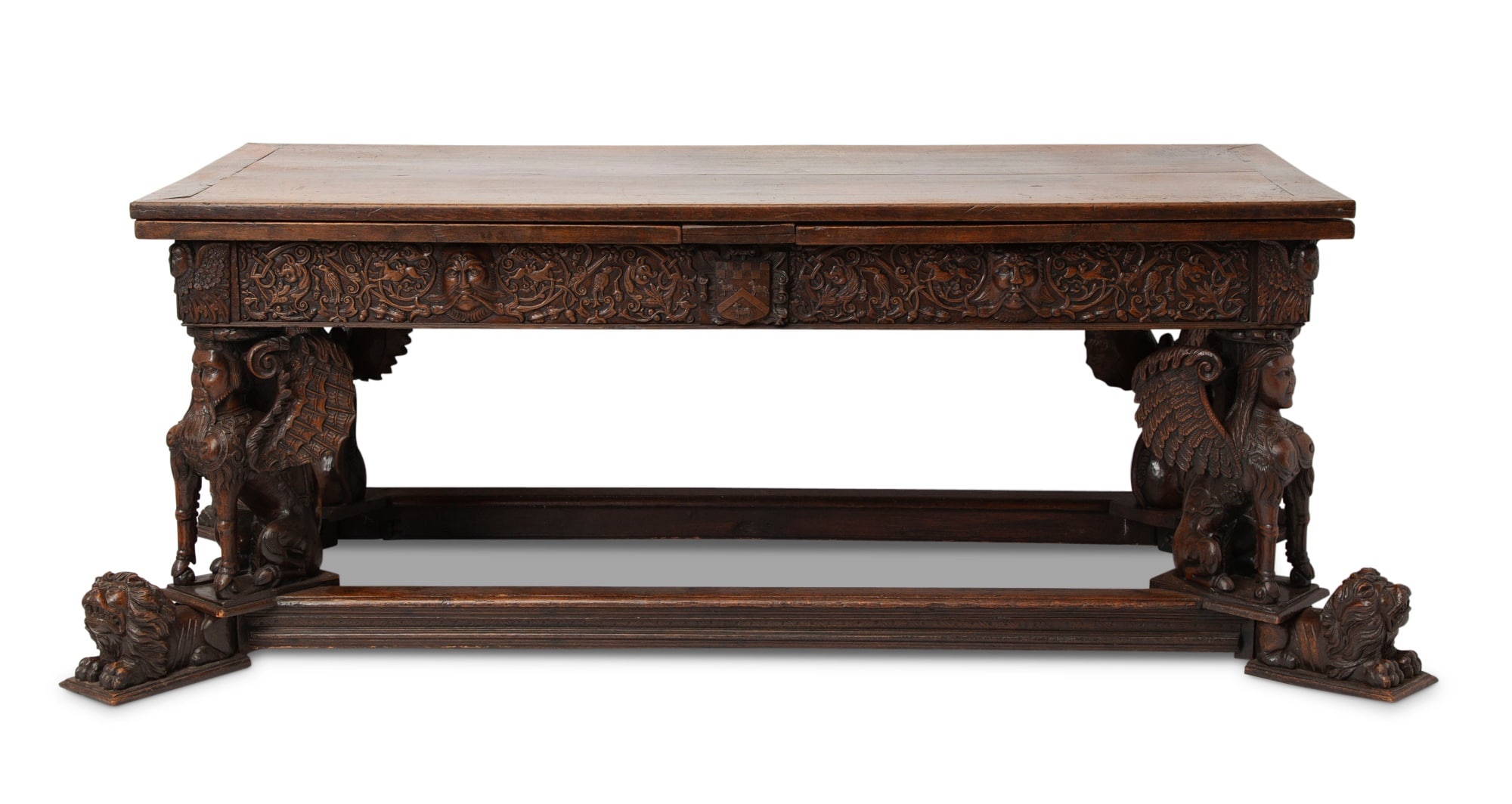
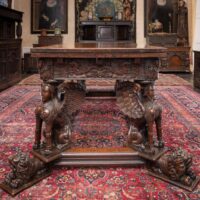
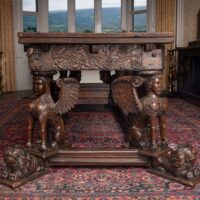
The Lambert Table.
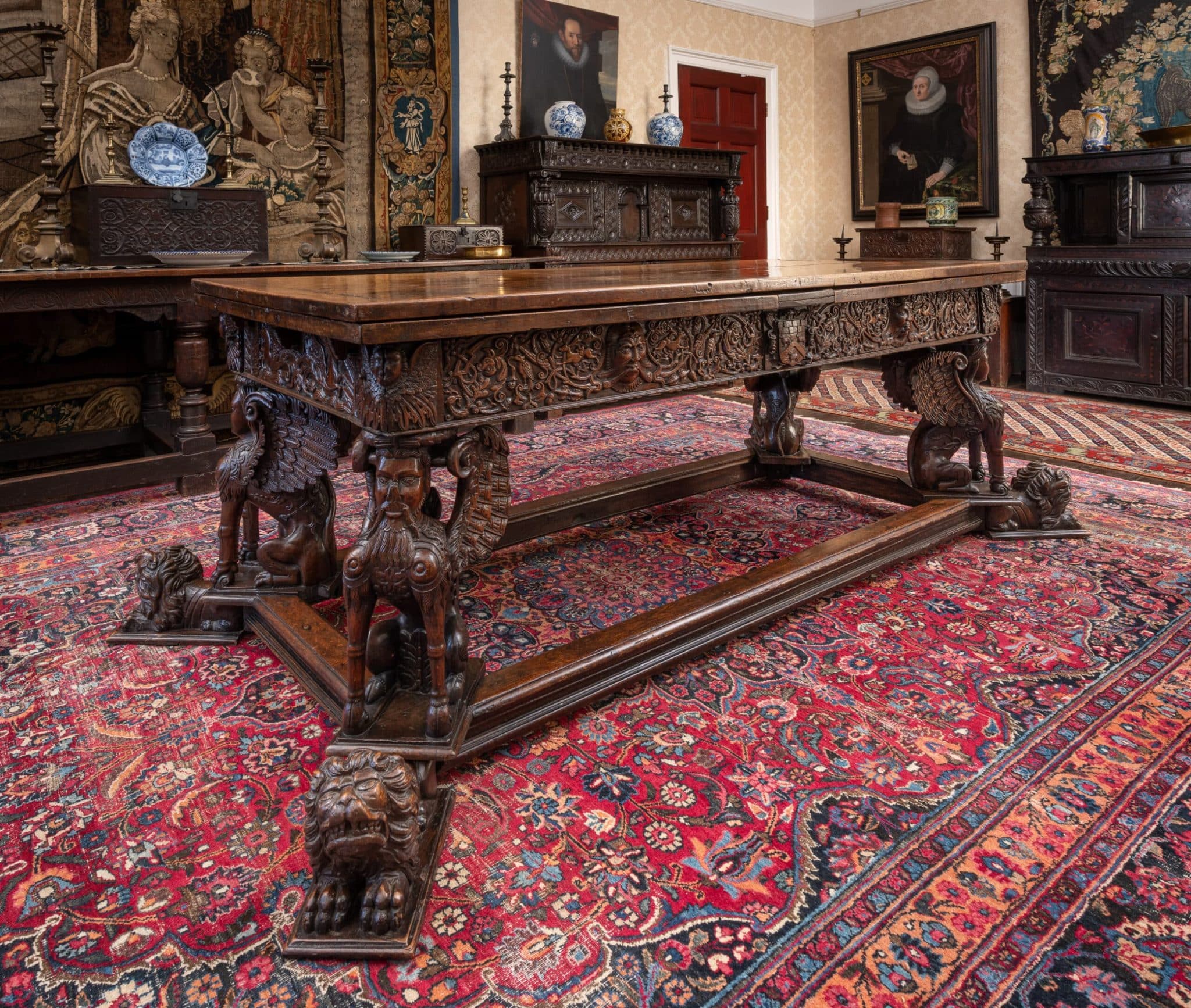
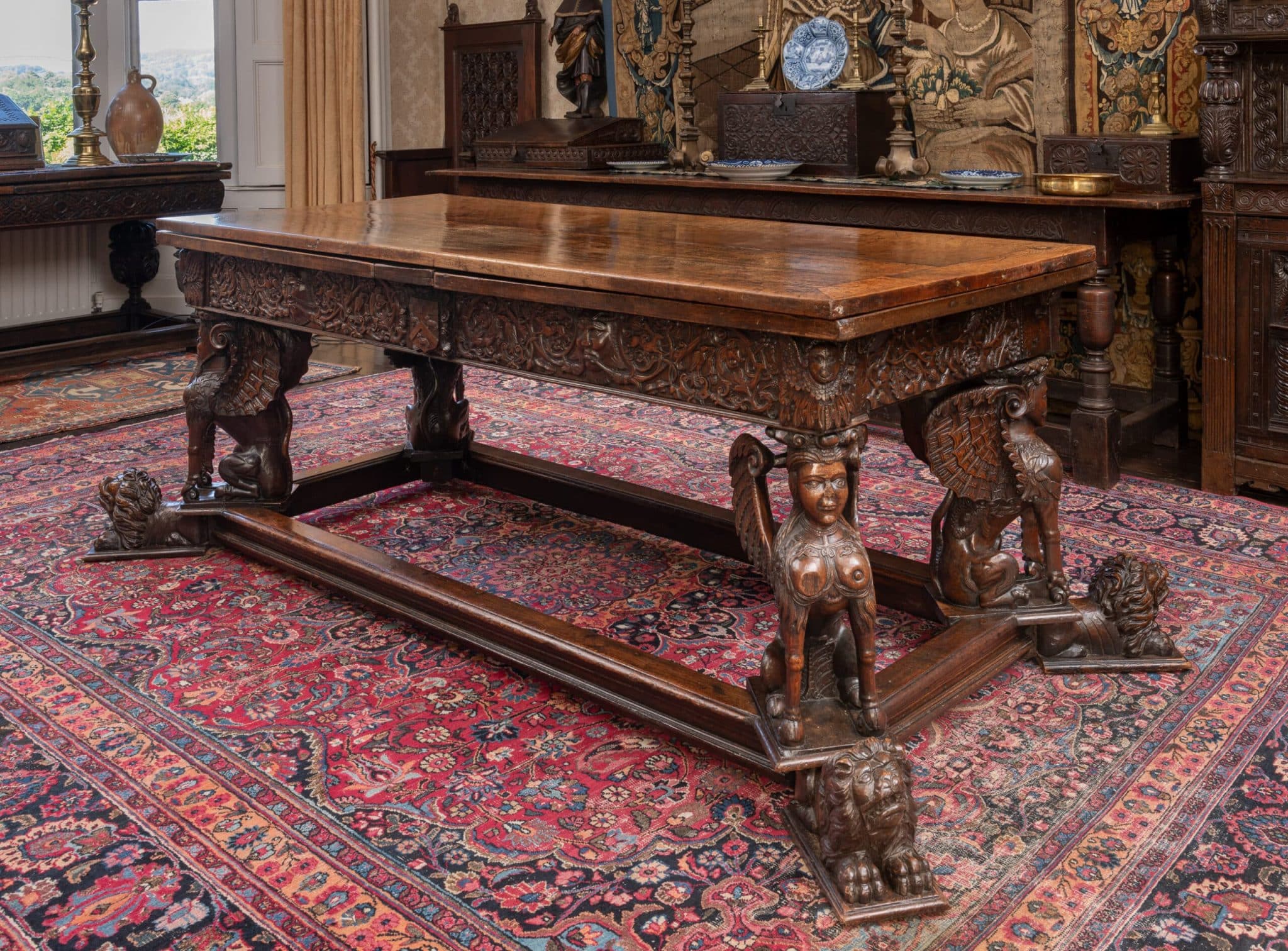
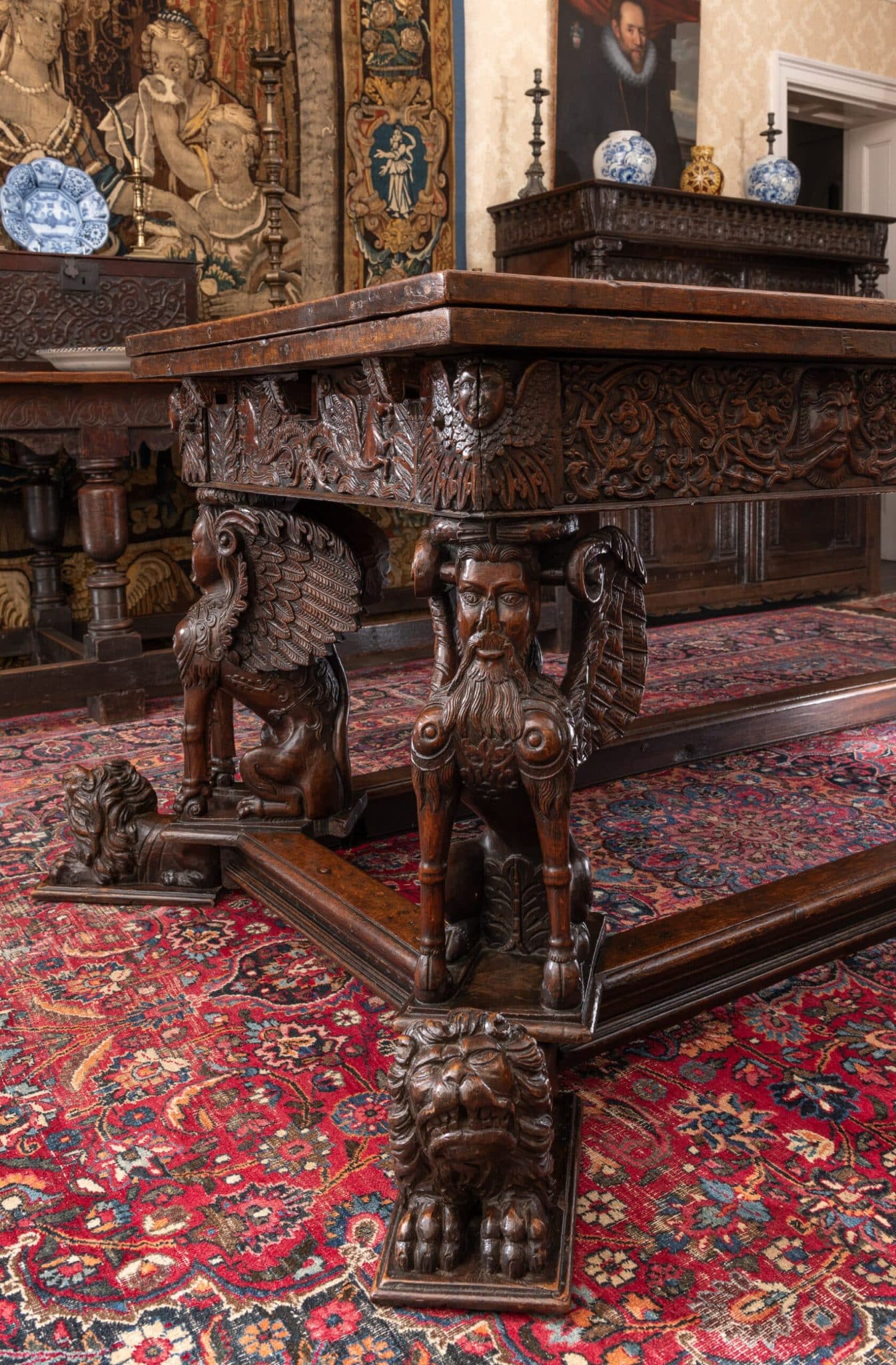
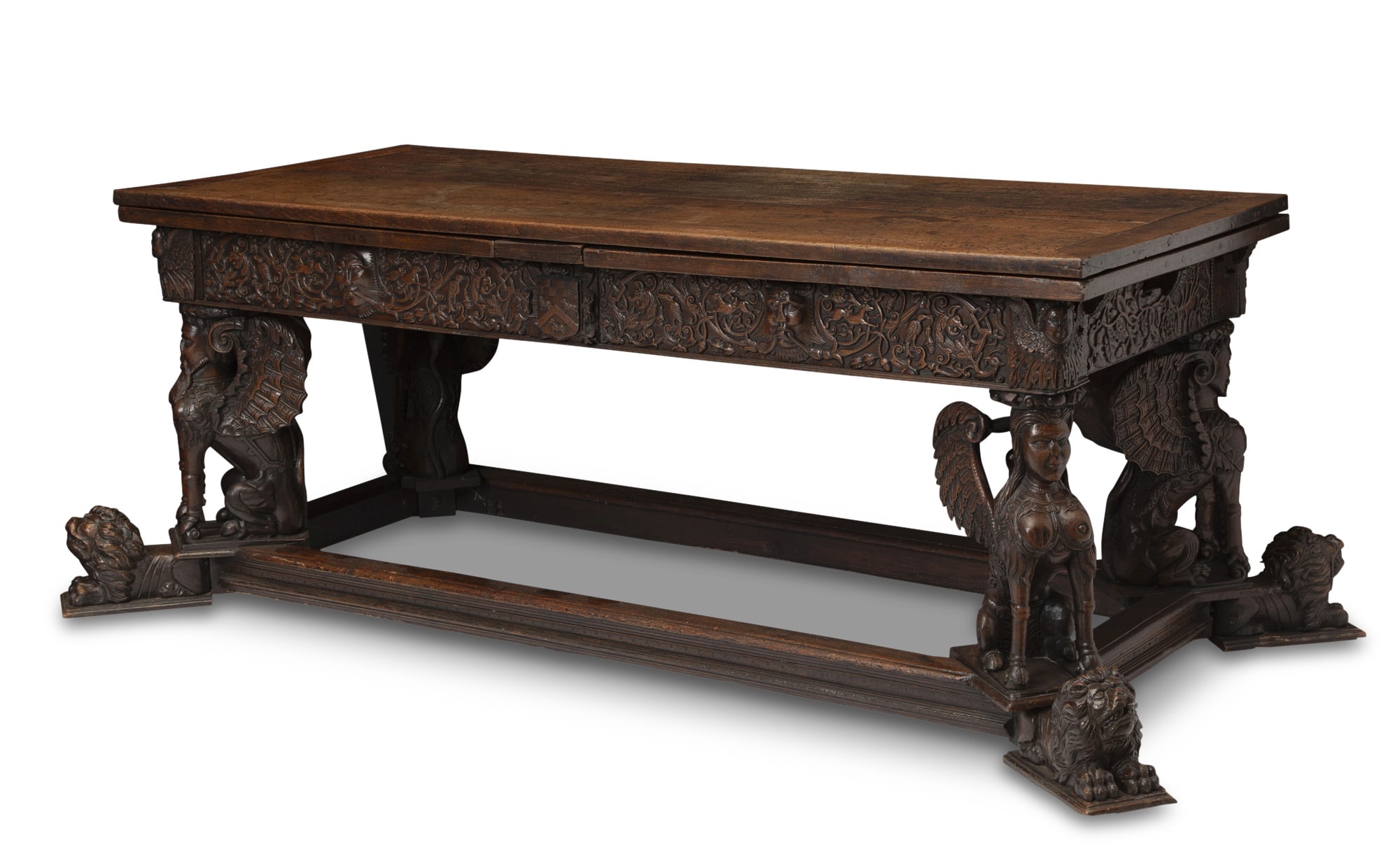
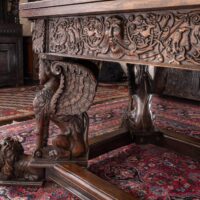
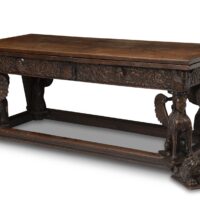
Important and exceptional Elizabeth 1st oak carved draw leaf table of fine form and design made for the Lambert Family in Yorkshire.
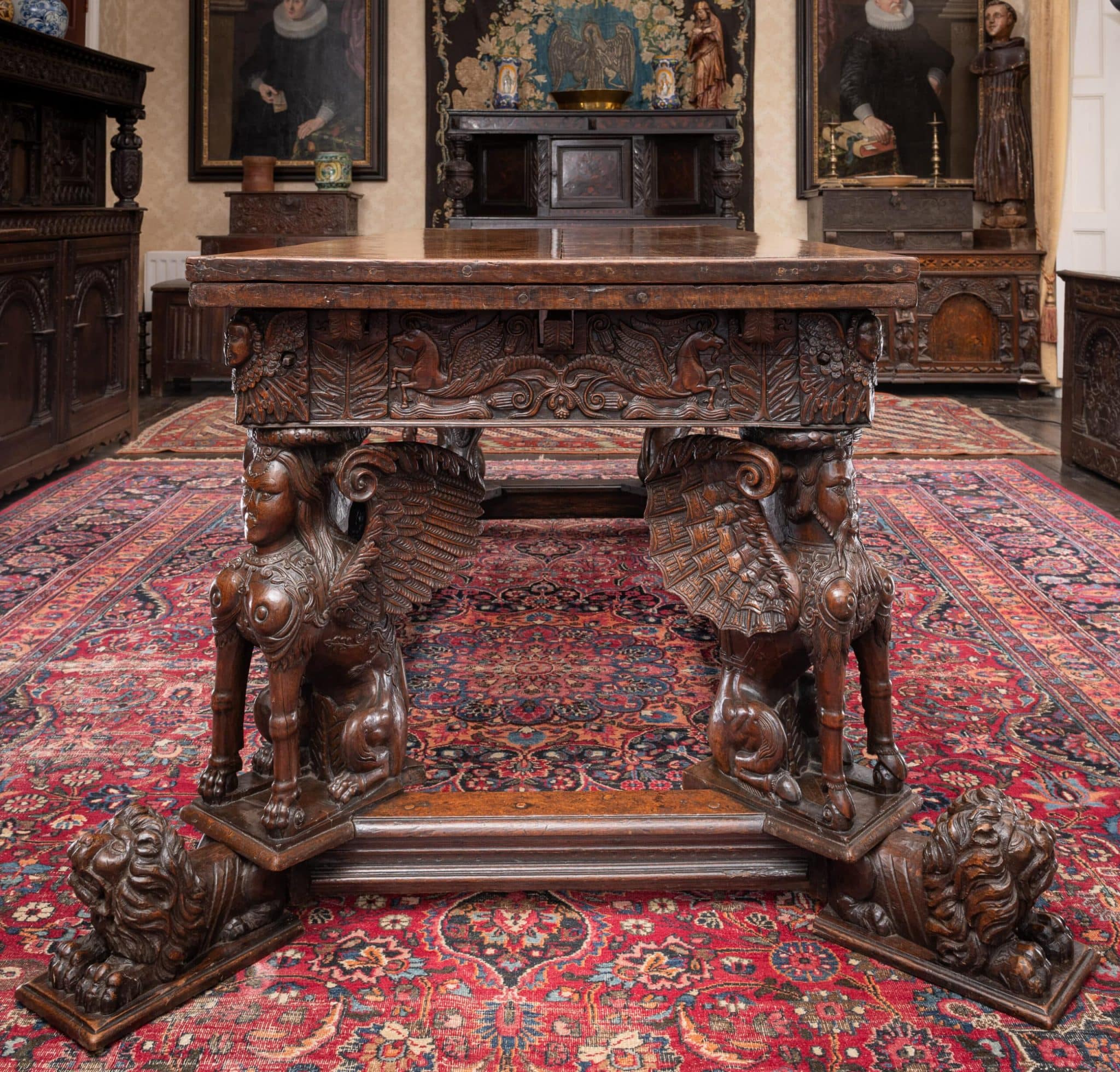
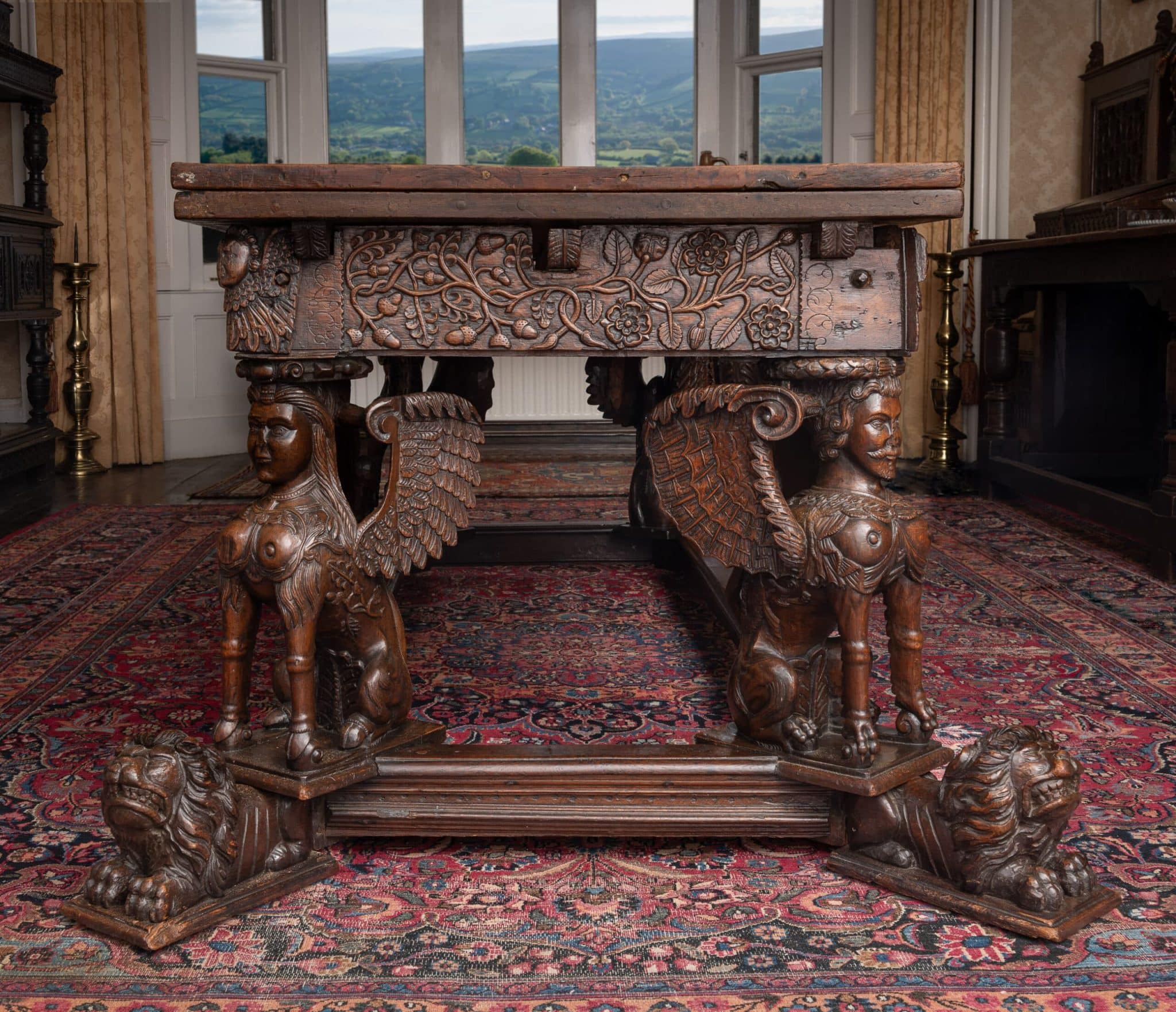
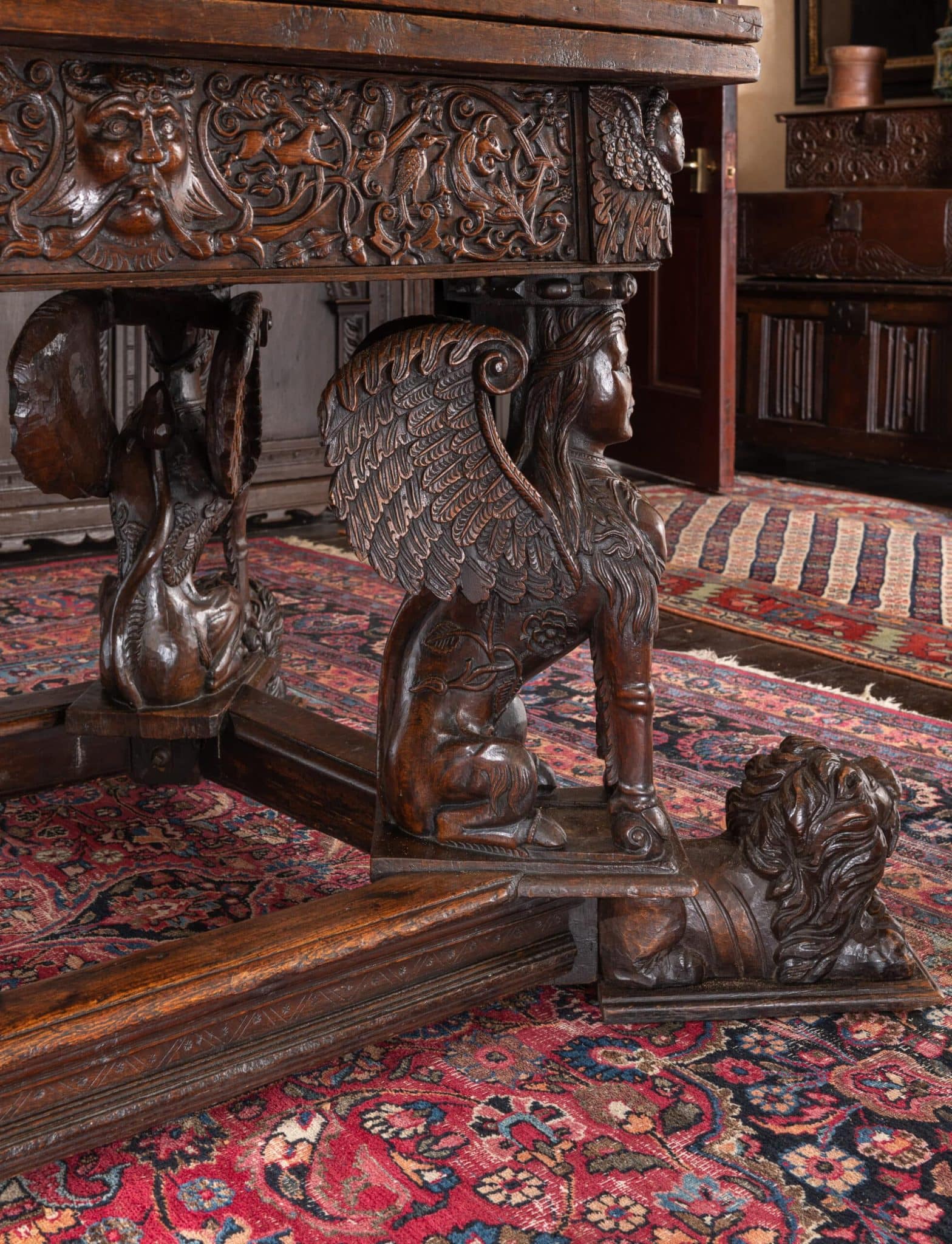
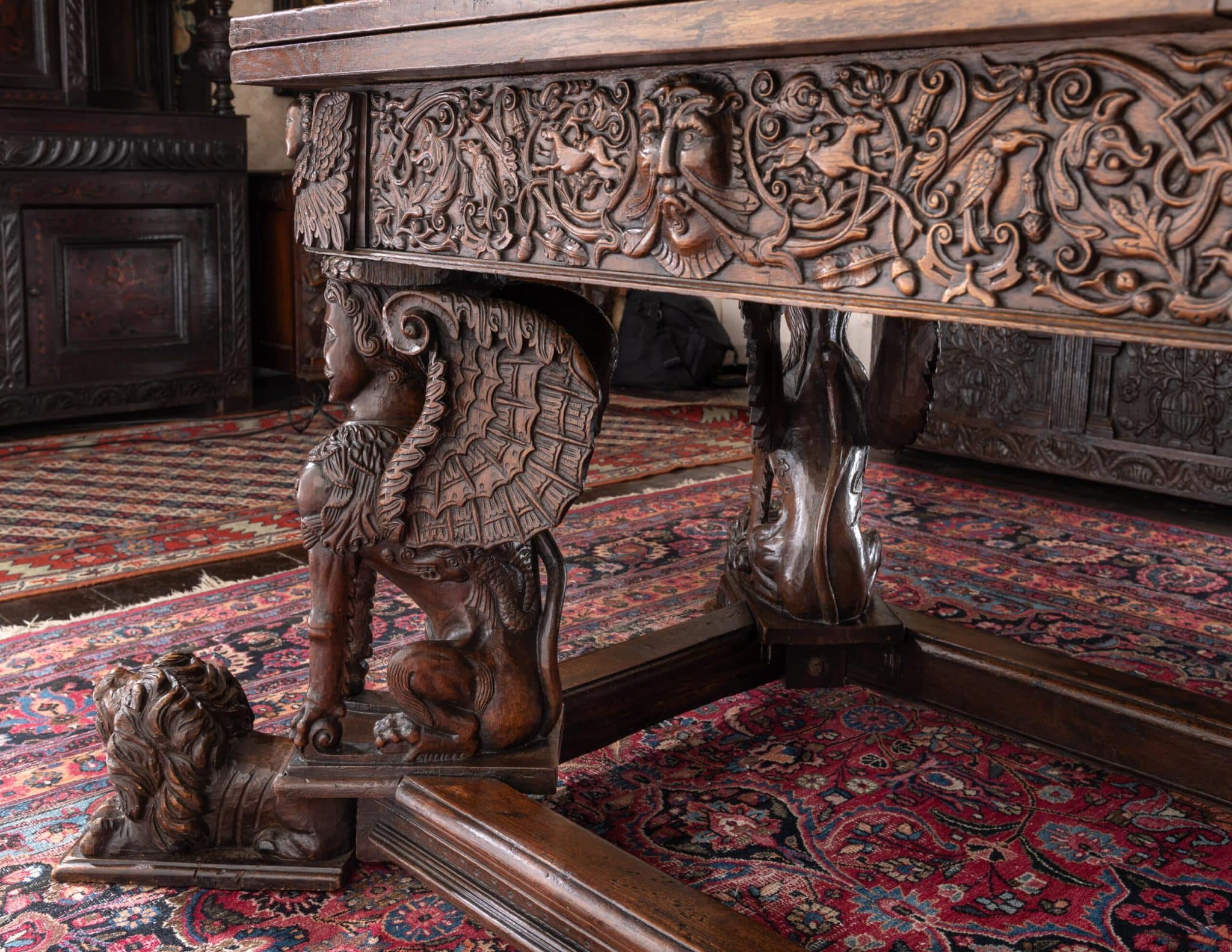
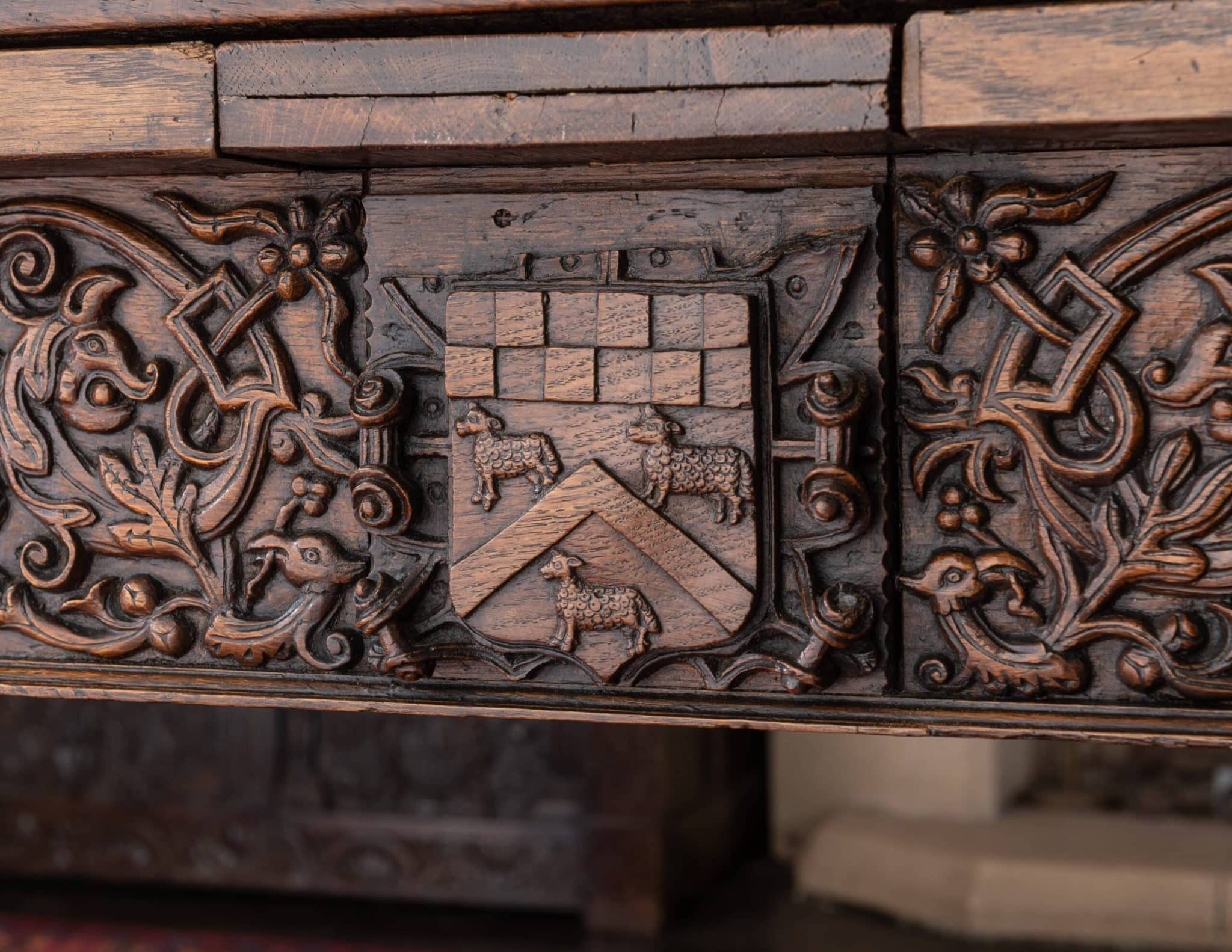
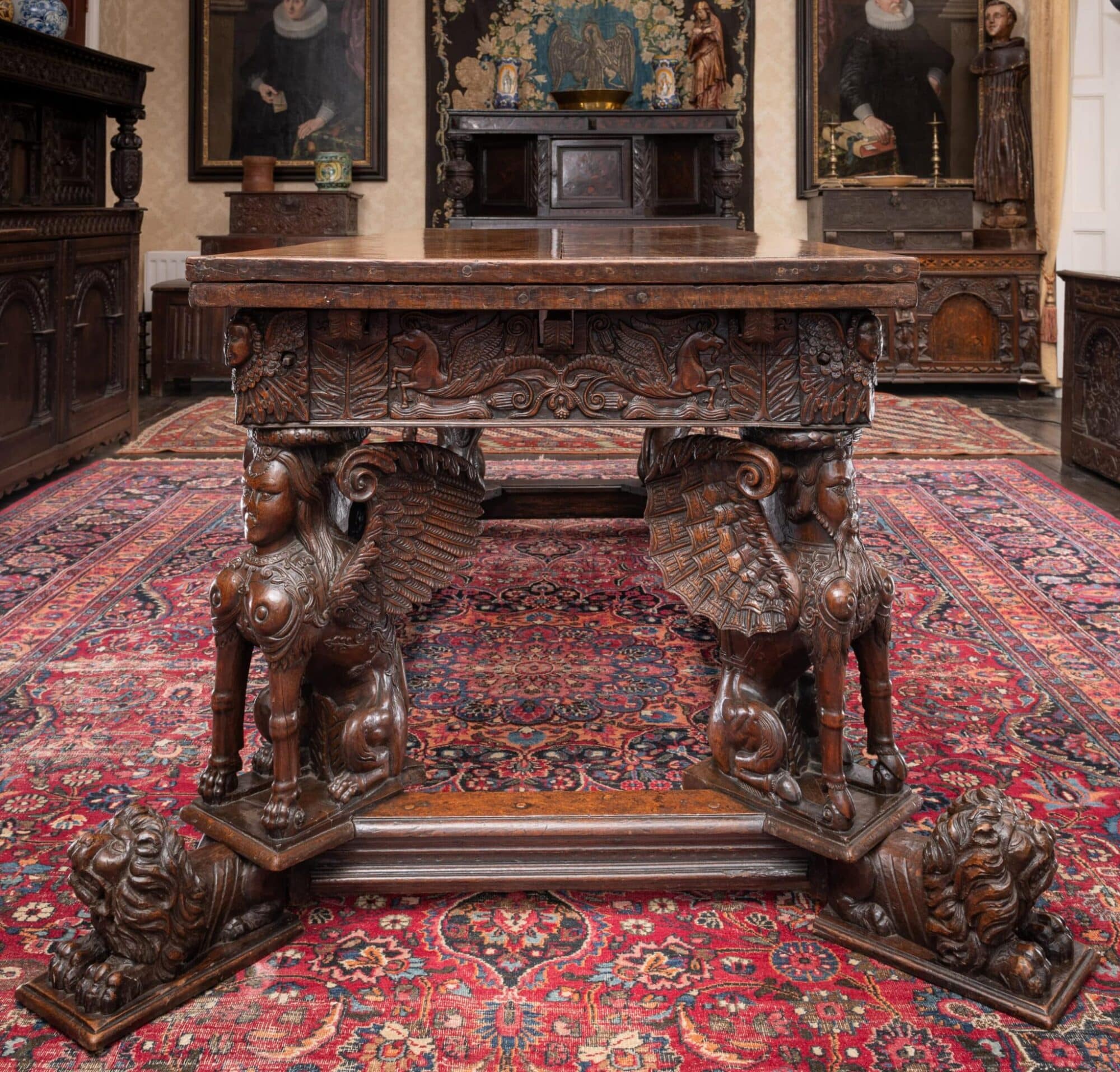
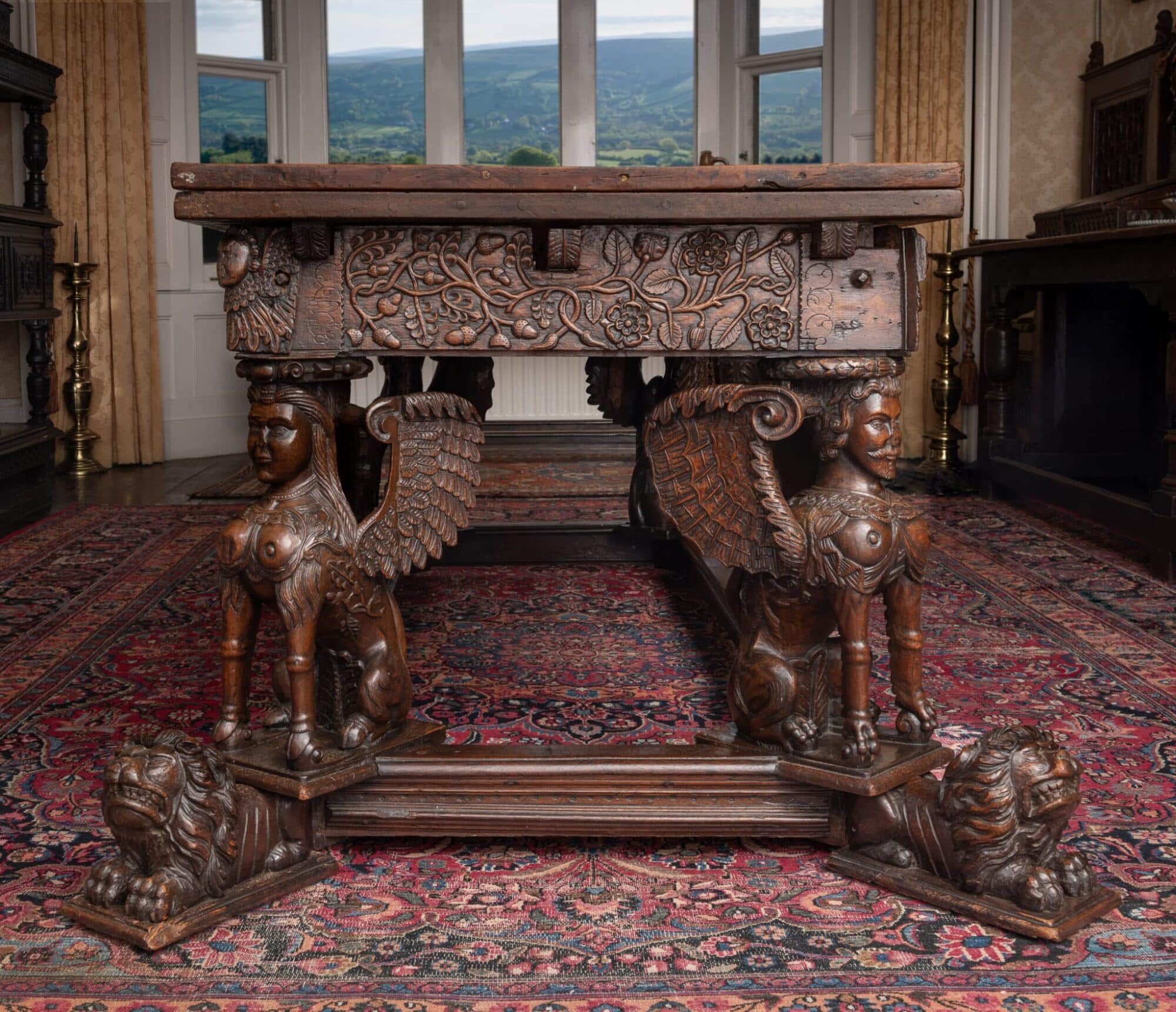
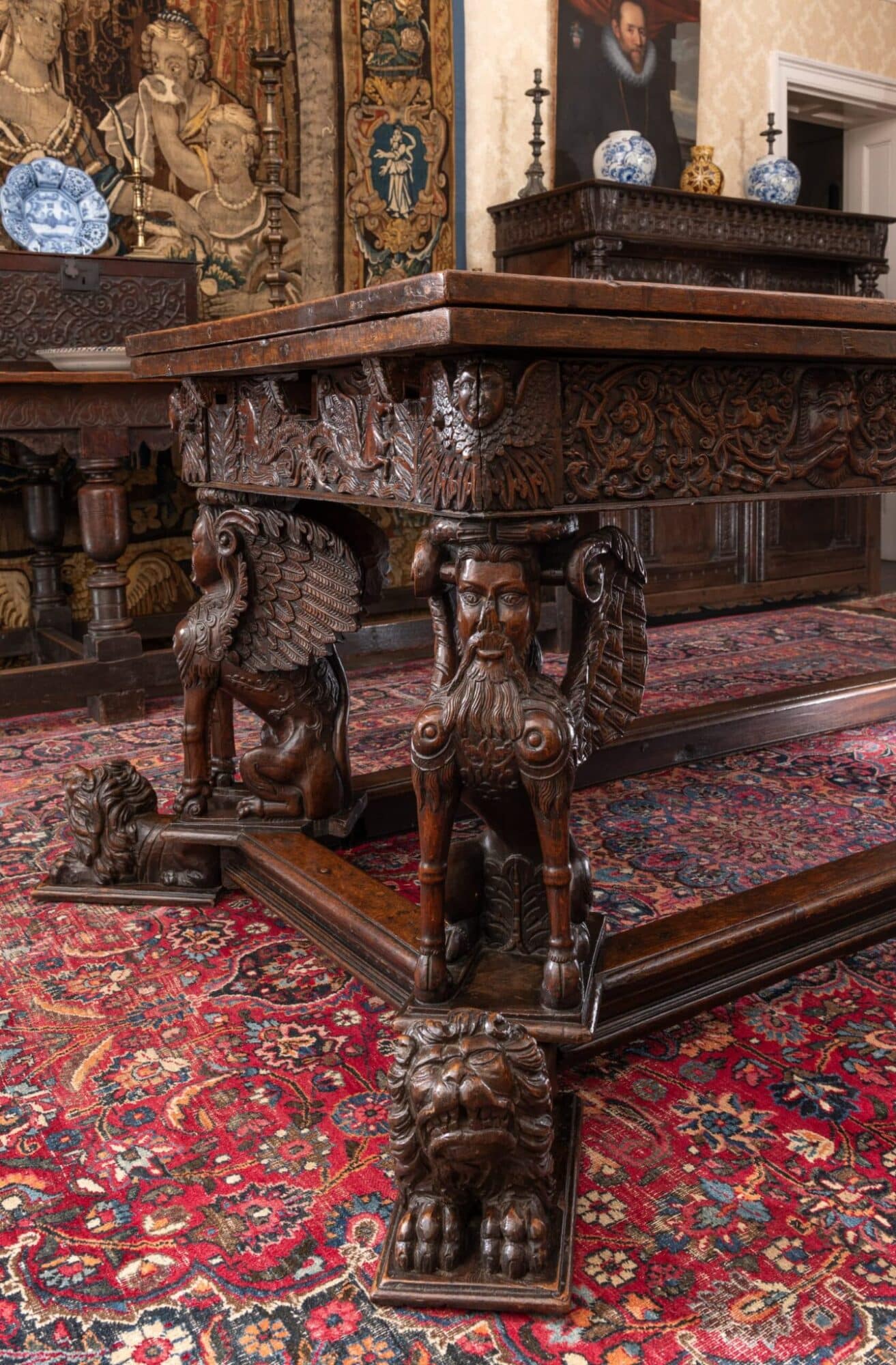
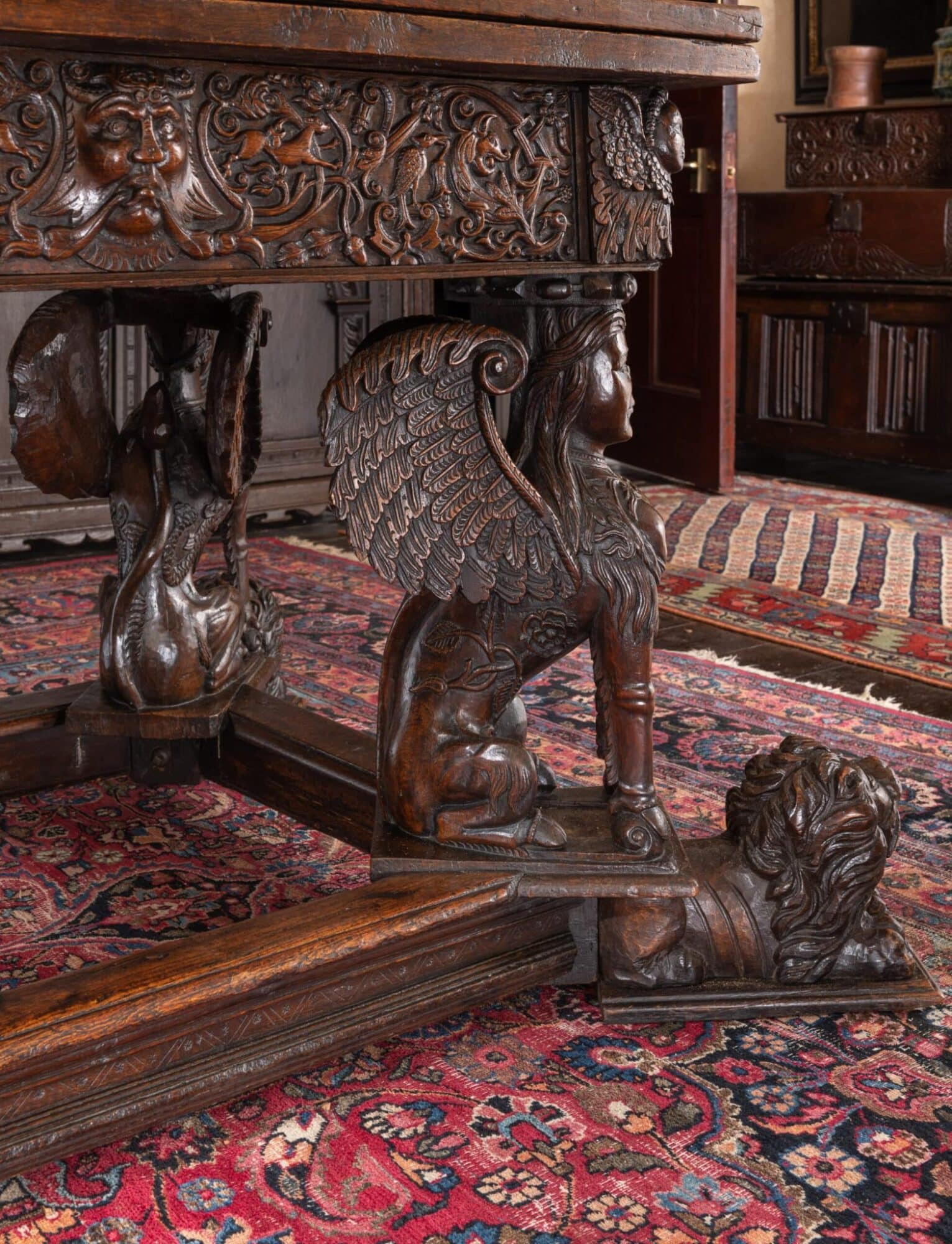
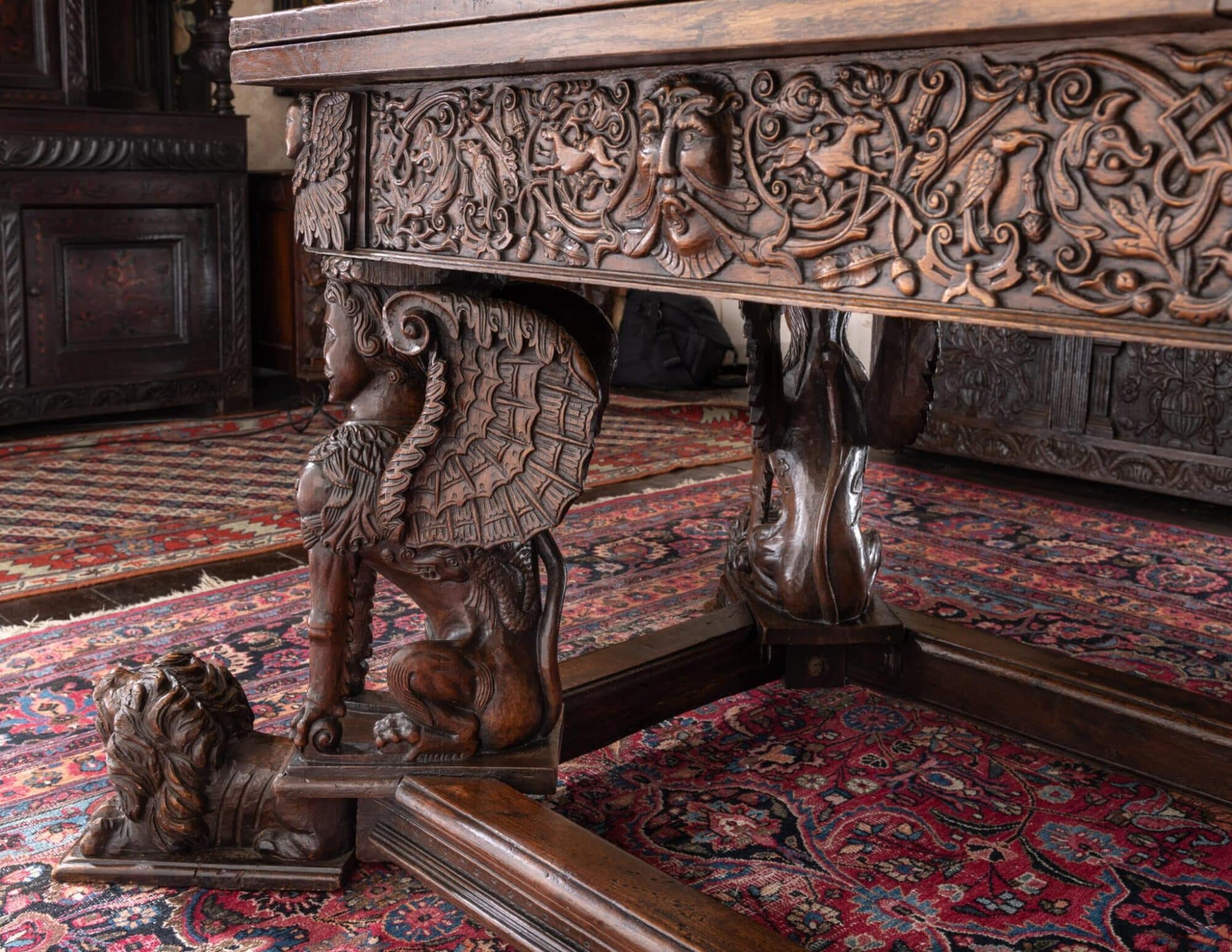
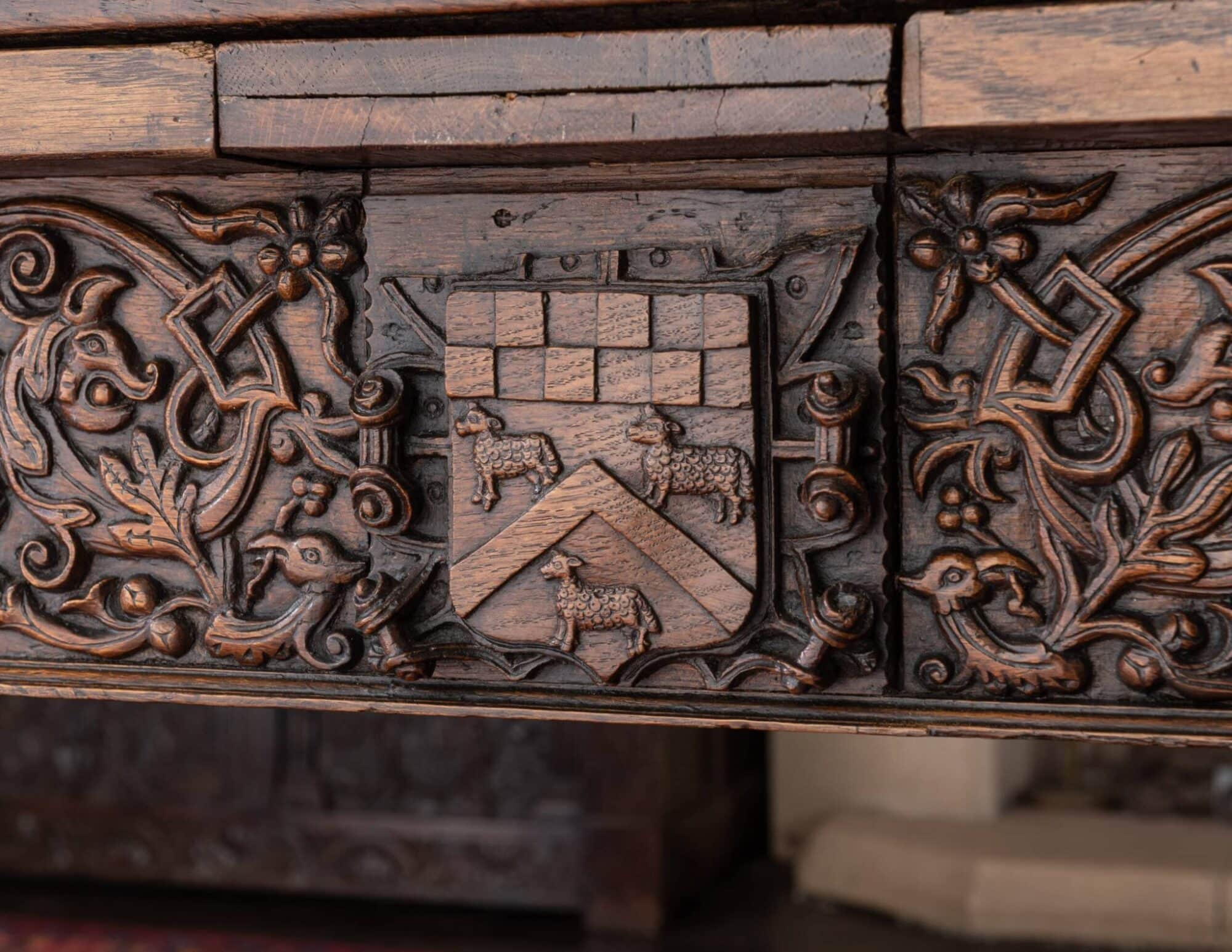
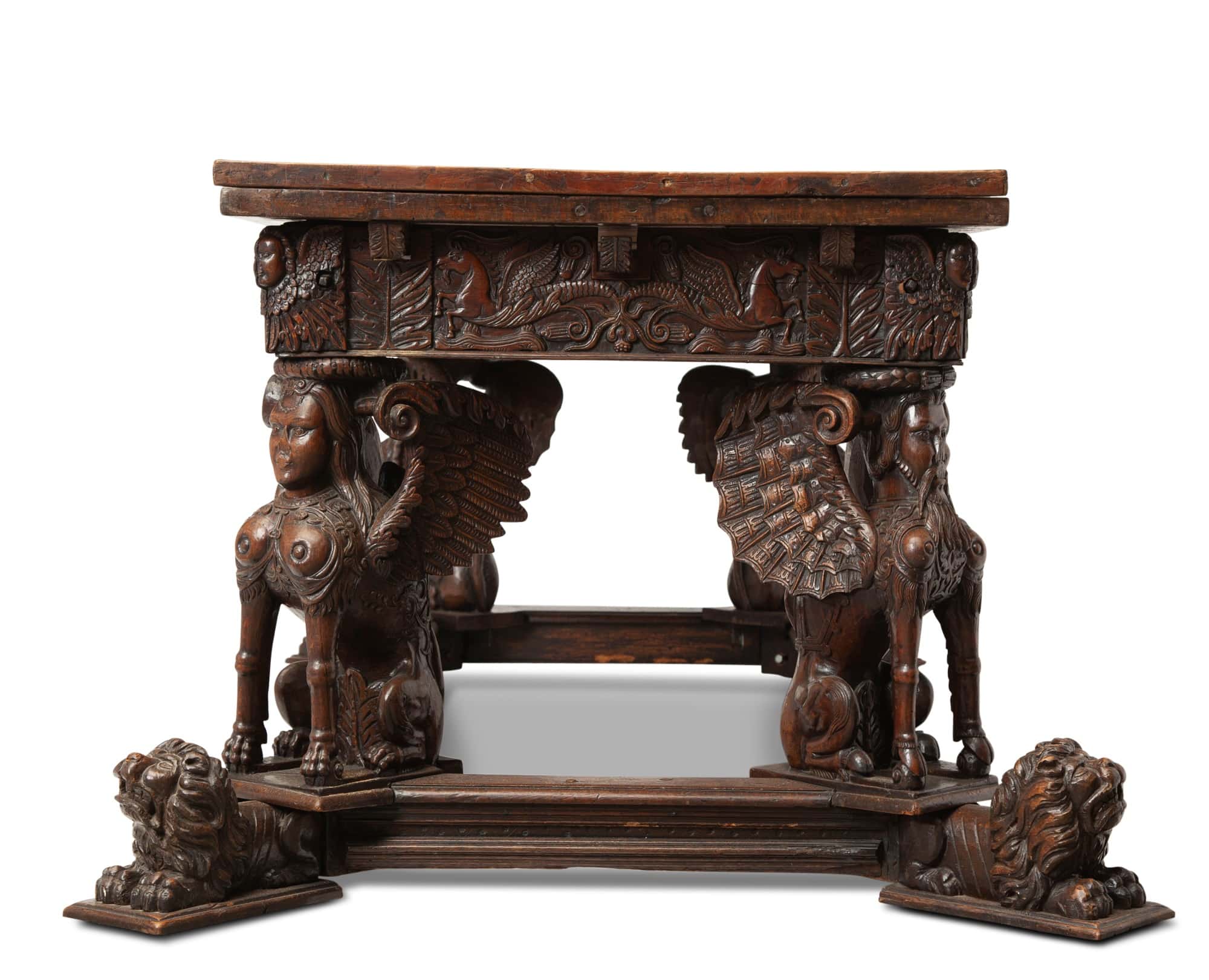
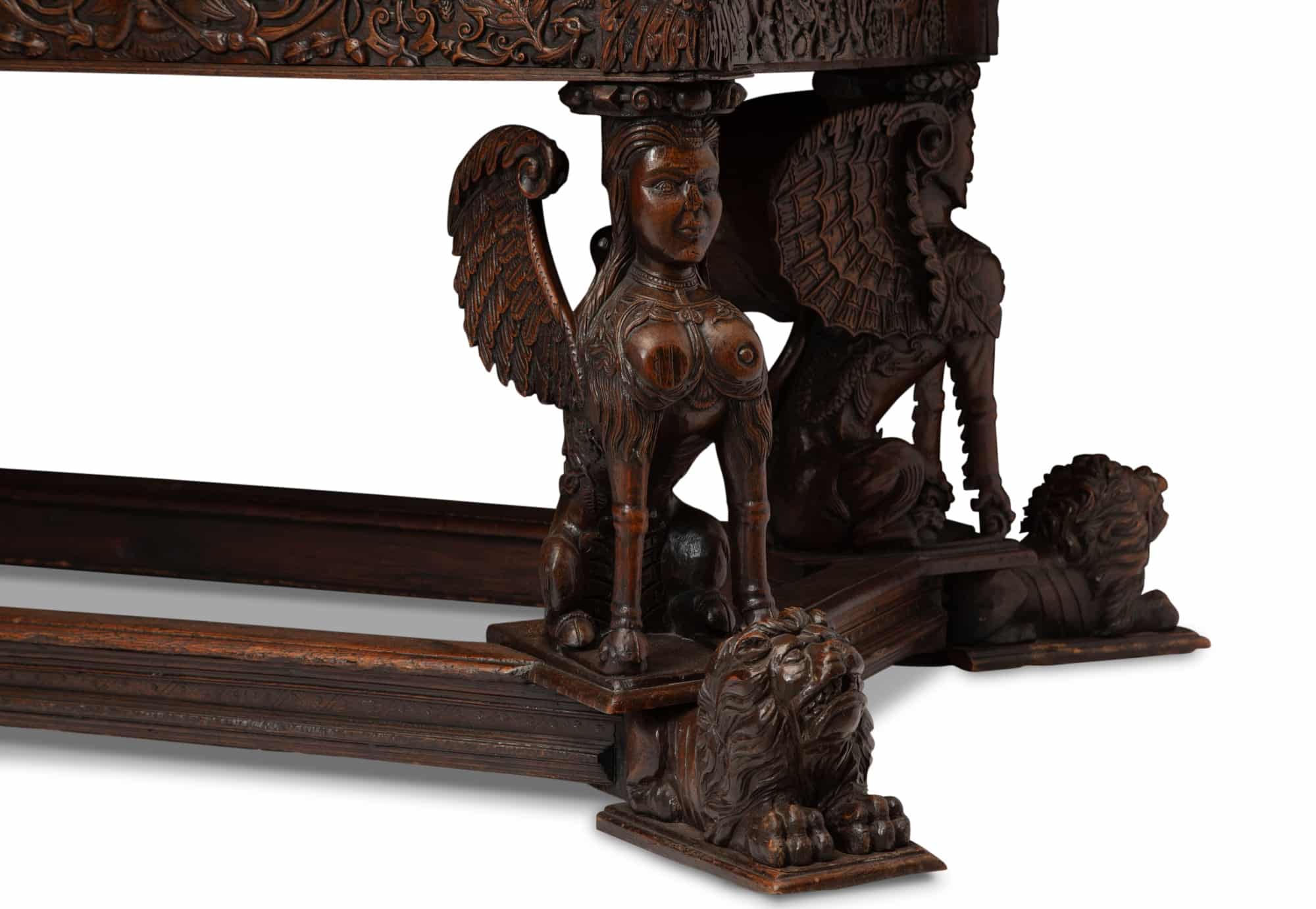
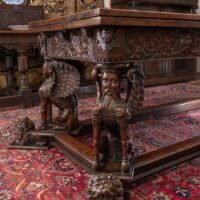
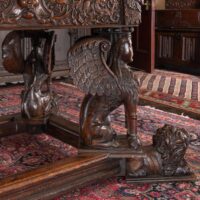
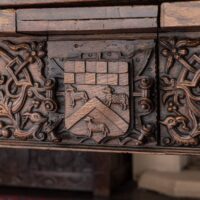
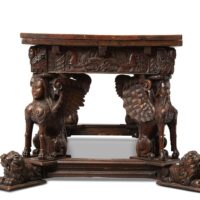
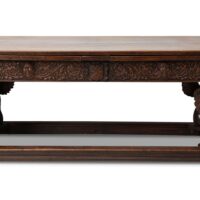
Joined oak table, with heavy and deep moulded lower stretcher rails punch decorated, joined to four legs in the form of highly decorated Sphinx passant gardants, two male and two female, each sphinx winged and with tails and the bodies carved with different devices, the sphinxes resting upon couchant lions, above the richly decorated frieze rails intersected by grotesque masks or green men with scrolling foliate with wildlife throughout, centred with a scrolled cartouche panel blazoned with the Lambert family coats of arms. Each end frieze is different with one end having entwined acorns and leaves with the five petal Tudor rose, and the other end frieze rail having part horse, part bird and part fish beasts flanking acanthus leaves, each outer corner of the frieze rails carved with winged angels and above the draw leaf top.
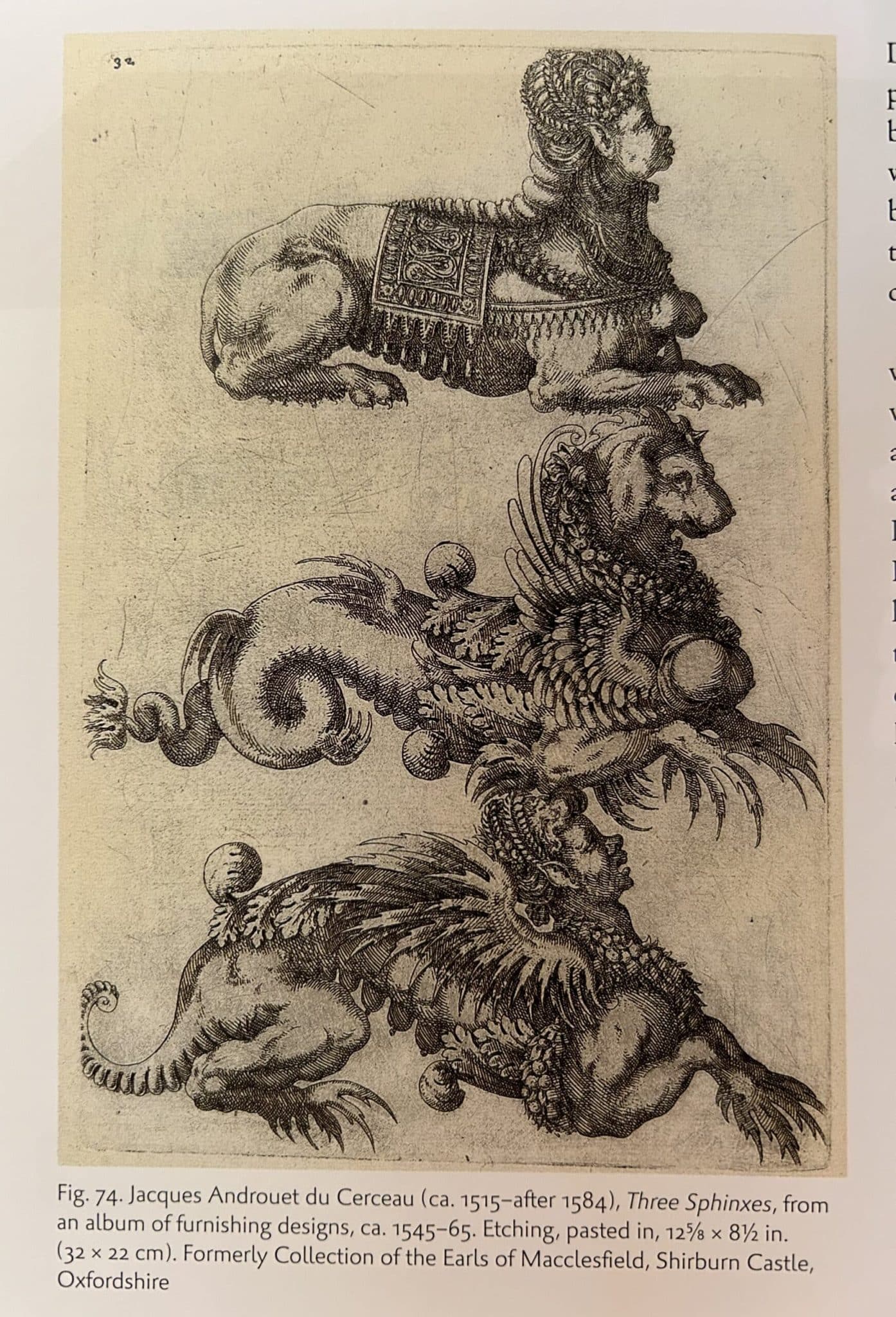
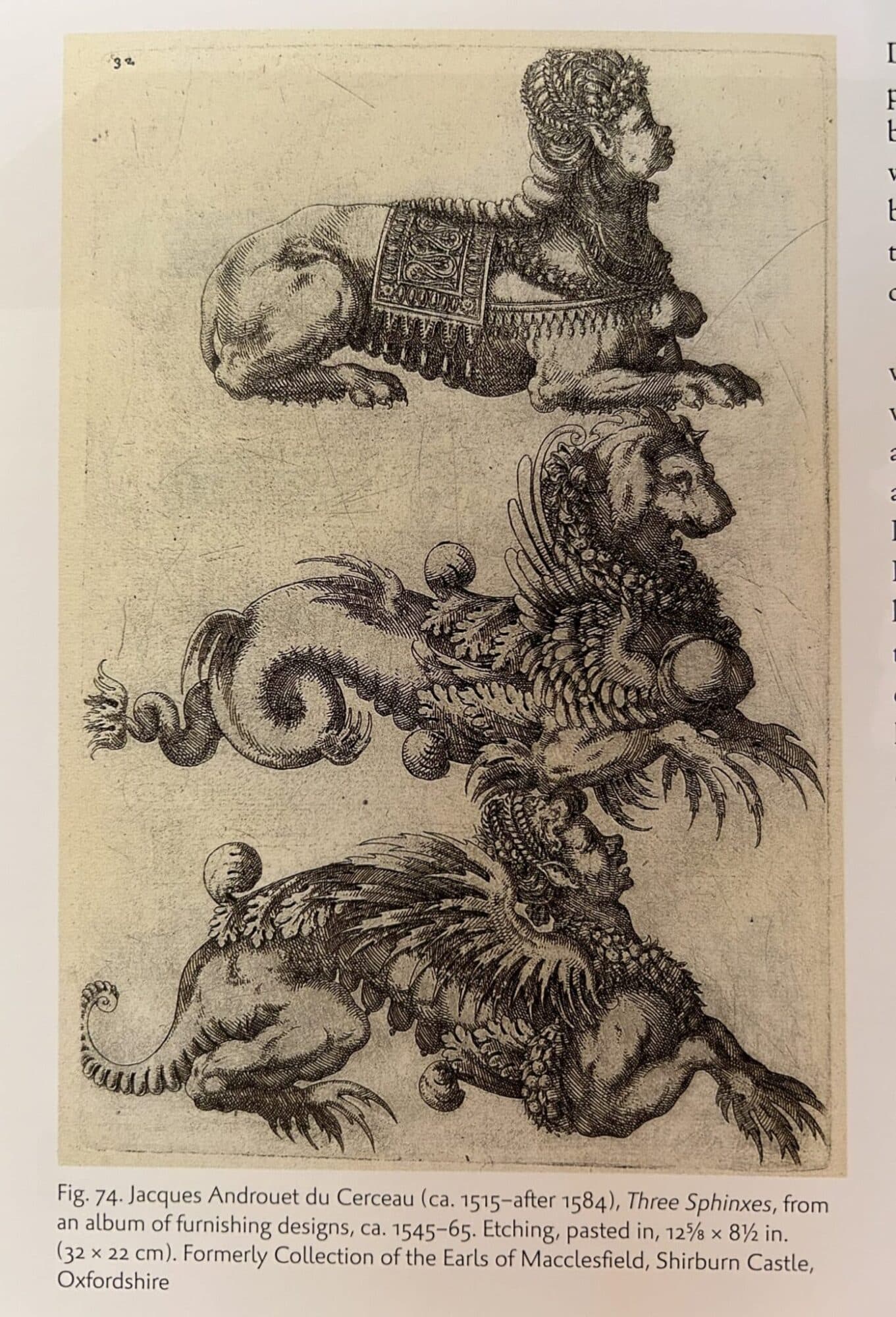
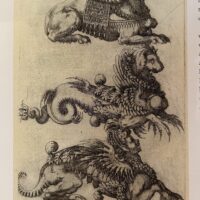
Along with the Lambert coats of arms, the sphinxes are also a family crest. The design and form of the Lambert table is similar to the famous Sea-Dog table in Hardwick Hall, part of the The Devonshire collection and circa 1575 in date. Designs for furniture by Jacques Androuet du Cereau (b.1515 – d.1584) published around 1560, is a page of sphinx and chimera – like figures, both similar to the Sea-Dog and Lambert table.
A table with lion and human legs known as the Armada table, sold at Adams auction in Ireland in 2018 for €430,000 and known to be made from parts in the 17th century, is the only comparable piece to have been sold in the last 50 years.
Provenance:
Lambert Family, Yorkshire.
Sir Archibald Edmonstone, 5th Baronet (1867 – 1954) Dunreath Castle, table can be seen in a photograph dated 1898 insitu in the library.
S W Wolsey Ltd, 71 Buckingham Gate, London (sold via Sothebys London).
Arthur Davidson Limited, London.
Bartlett Burnap collection Florida, USA (purchased from Arthur Davidson Limited on March 6th 1972).
Marhamchurch Antiques Ltd, Devon.
Illustrated:
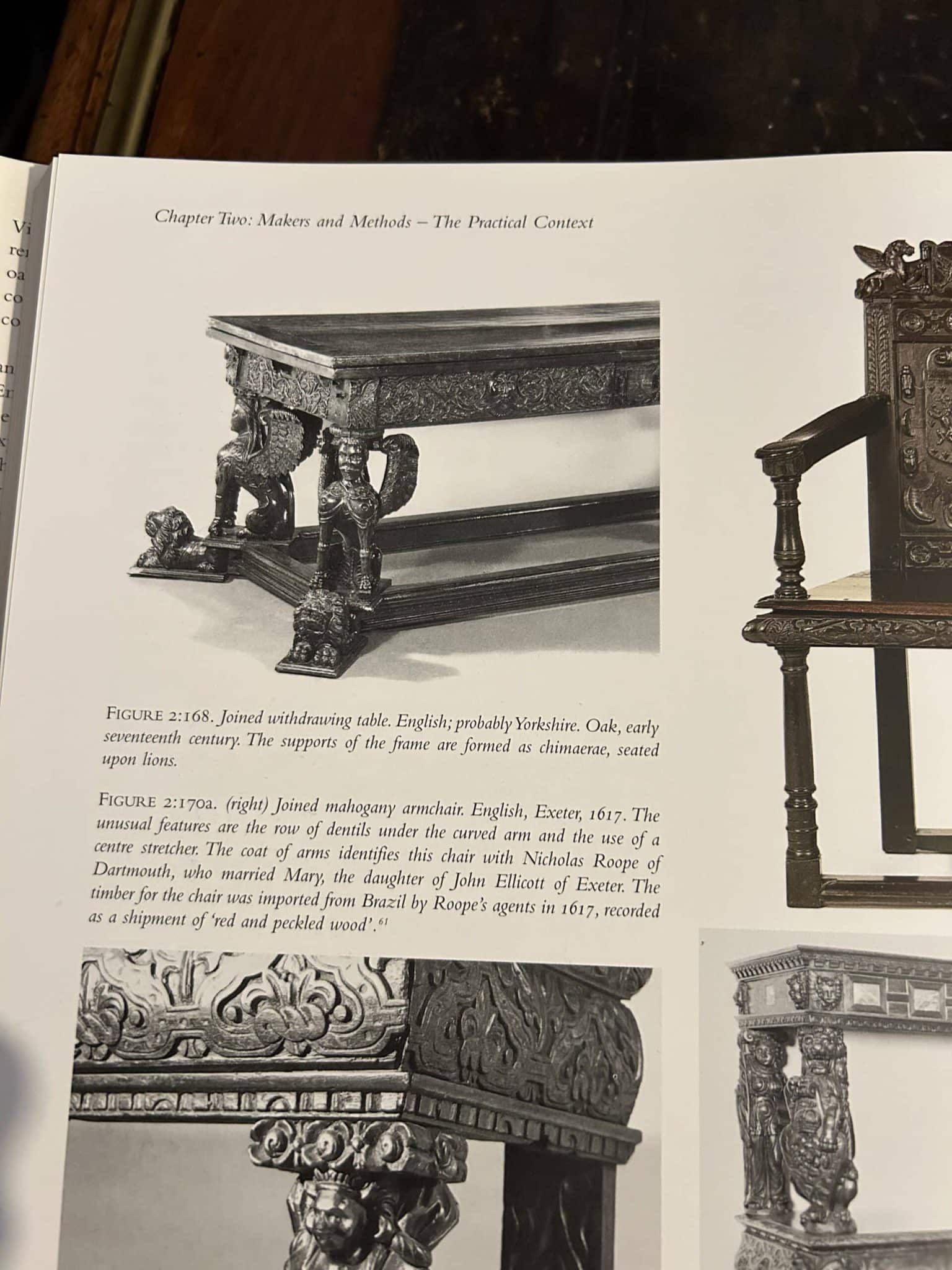
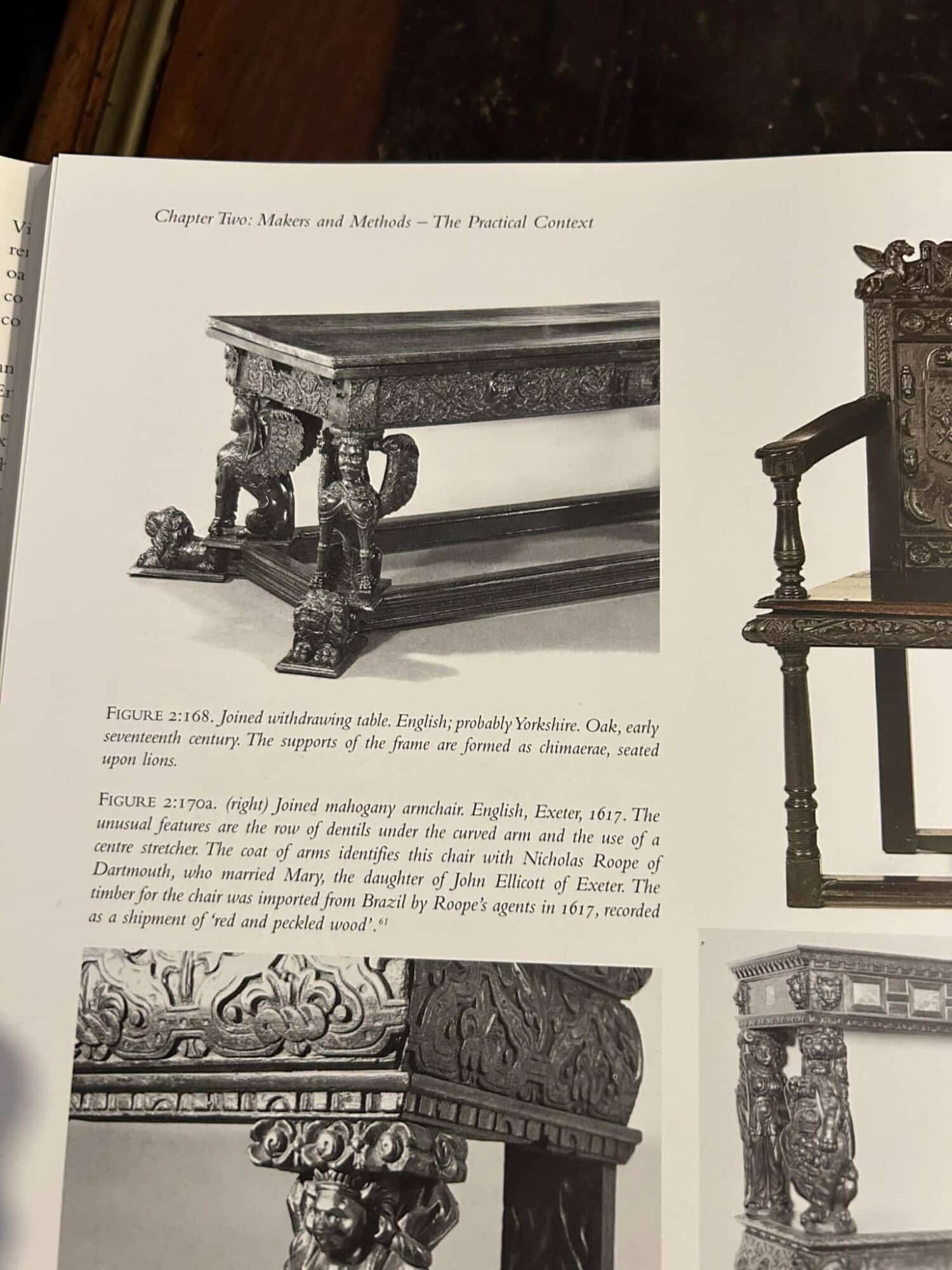
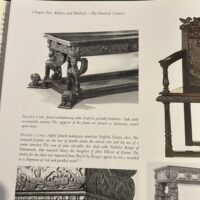
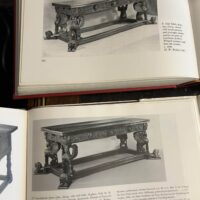
Victor Chinnery, Oak furniture the British tradition: page 170 – figure 2:168.
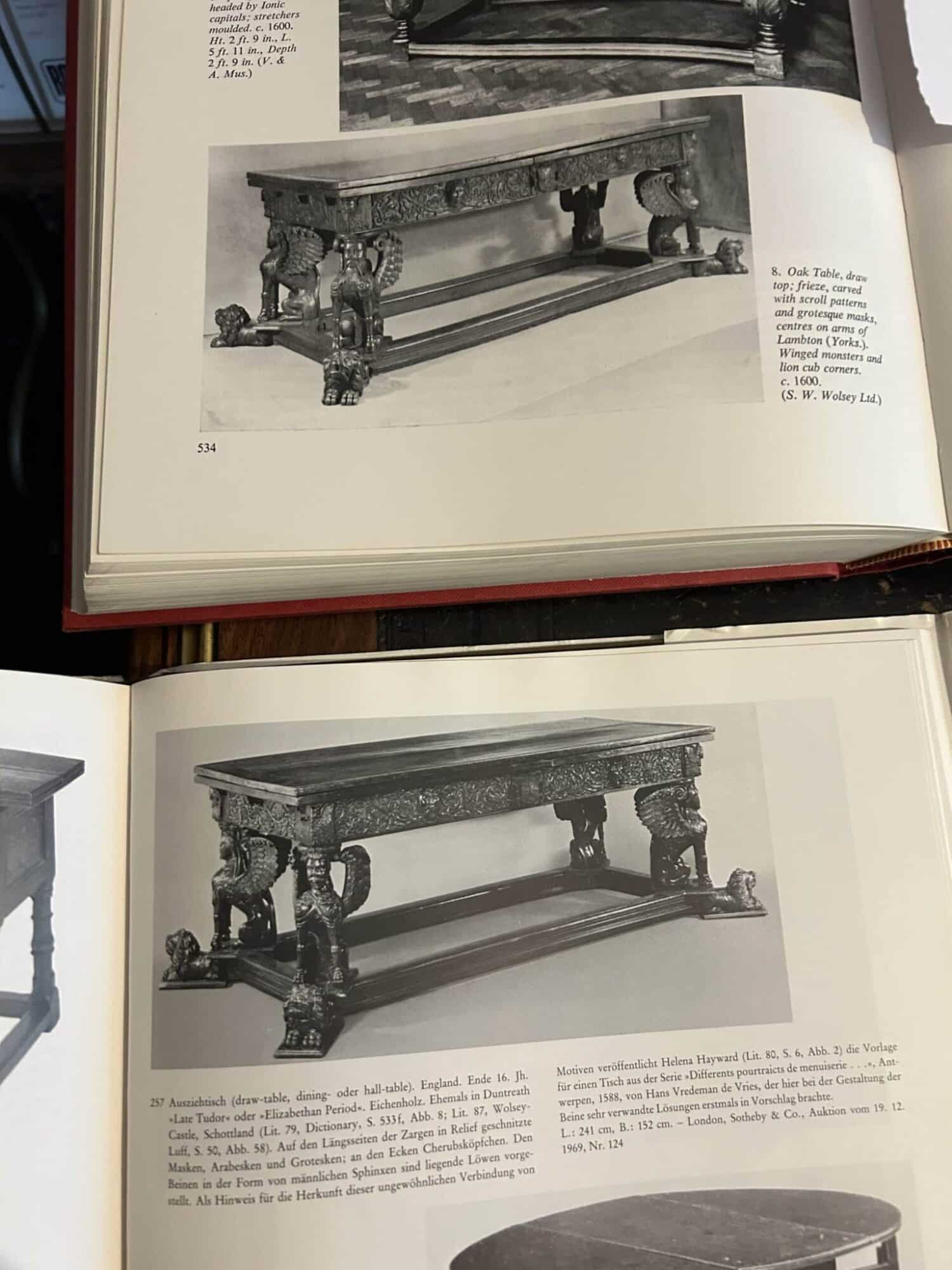
S W Wolsey and R W P Luff, Furniture in England, The age of the joiner: plate 58.
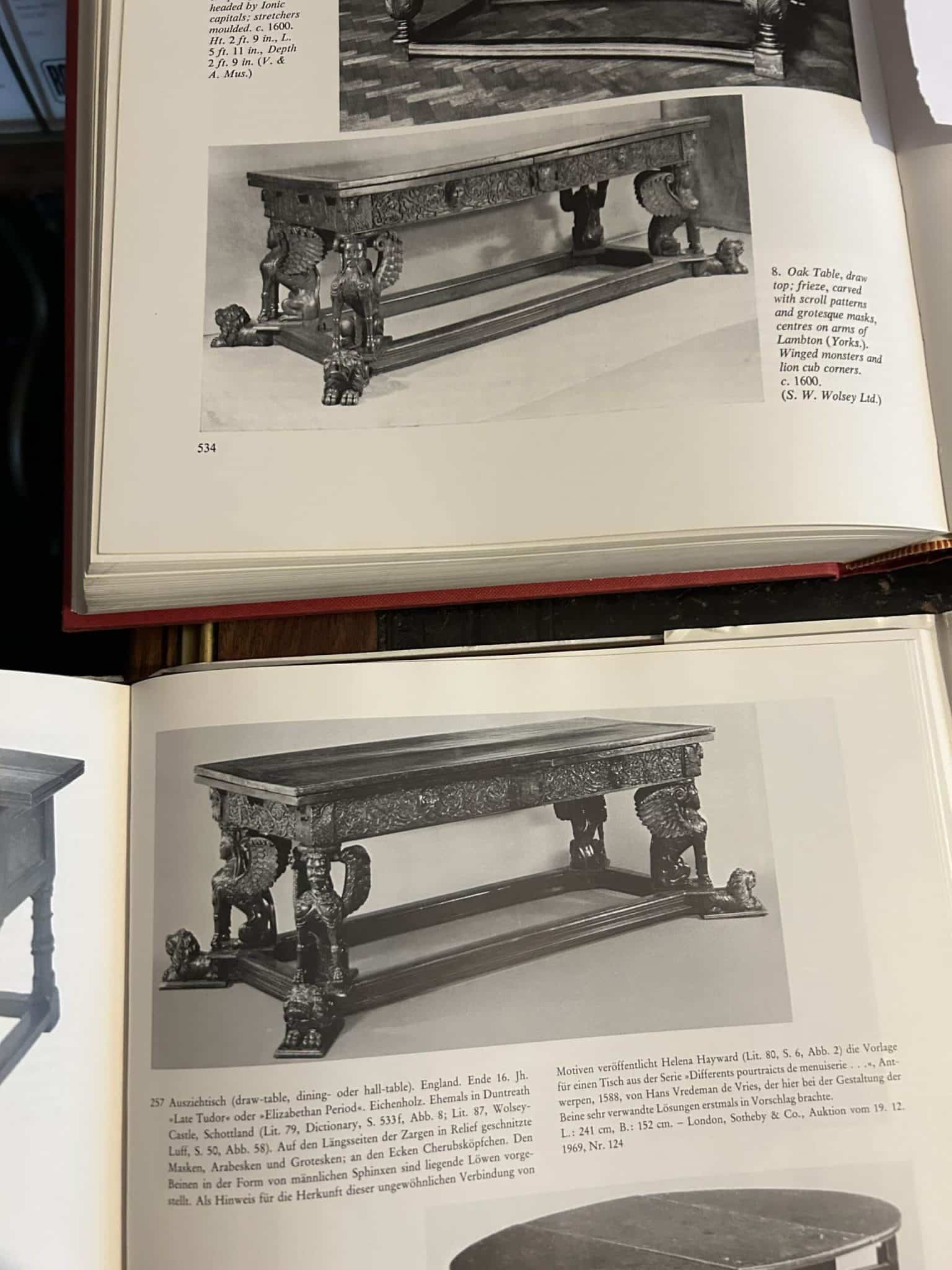
Ralph Edwards, Shorter Dictionary of English Furniture: page 534 – figure 8.
Geoffrey Wills, English furniture 1550 – 1760: page 7.
Franz Windisch-Graetz, Mobel Europas: page 335 – figure 257.
C.I.N.O.A International Art Treasures Exhibition, Victoria & Albert Museum London 1962: plate 42 and listed on page 9 item 62.
Helen Hayward, English and French furniture at the International Arts Treasure Exhibition, Apollo arts magazine, March 1962, pages 5-6 – figure 1.
Report carried out by Beacon genealogical and Heraldic research.
The Arms of Lambert.
The arms as carved upon this English Elizabethan Oak Draw Leaf Table that dates to between circa 1575 and 1600 are those of the family of Lambert. They may be blazoned as follows:
Arms: Gules a chevron between three lambs passant argent a chief chequy or and azure. Given the evidence of the arms as depicted above this table it was in the possession
and undoubtedly commissioned by a gentleman of the Lambert family in the latter part of the reign of Queen Elizabeth I, the leading candidate being John Lambert (born 26th September 1522 died 4th September 1593), of Calton-in-Craven in the County of Yorkshire. He was the eldest son of John Lambert (born 1490 died 3rd September 1562) and his wife, Anne Agnes Midhope (born circa 1490 died circa 1548). The Lamberts, of Calton-in-Craven were a well-established Yorkshire gentry family dating to well before the reign of King Henry II at which time a member of the
family, Thomas Lambert served as the Sheriff of the City of London.A further oblique confirmation of the ownership of this table by the Lamberts is the use of sphinxes as a type of caryatid forming the legs of the table supporting the top of the table and further attached to the stretchers forming the base of the table resting upon four couchant lions for in several printed sources it is recorded that the crest of the Lamberts is blazoned as follows: ‘A sphinx passant guardant or face proper holding in the dexter foot a rose gules seeded and leaved vert’. Now, there is a little ambiguity in respect of the correct crest used by the family – and here we may forgive the family for their heraldic confusion as both the crest and the family’s pedigree of Lambert, of Owton in the County of Durham and subsequently of Calton-in-Craven aforesaid as recorded the Heralds’ Visitation of the County of Yorkshire of 15853 was blazoned as follows: ‘A female centaur proper crined or holding a flower argent leaved and stalked vert’. However, another heraldic writer called this ‘monster’, a ‘lamia’ which would have been undoubtedly a play upon the name of Lambert. A ‘lamia’ is essence is distinct from a sphinx, although both have certain female attributes that may have caused misperception amongst early heralds and heraldic authors between the two. This misconception is further highlighted by the fact when William Camden, Clarenceux King of Arms confirmed these arms and crest to William Lambert in 1613, he incorrectly blazoned the ‘lamia’ as a ‘mantichor’.