
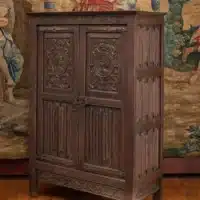
Renaissance Oak Portrait Cupboard, dated 1551
- Period
- 1551
- Origin
- Southern Netherlands (probably Antwerp)
- Dimensions
- W 40" × H 56" × D 17 1/2"
- Reference
- #Marh2744
£14,500
Description
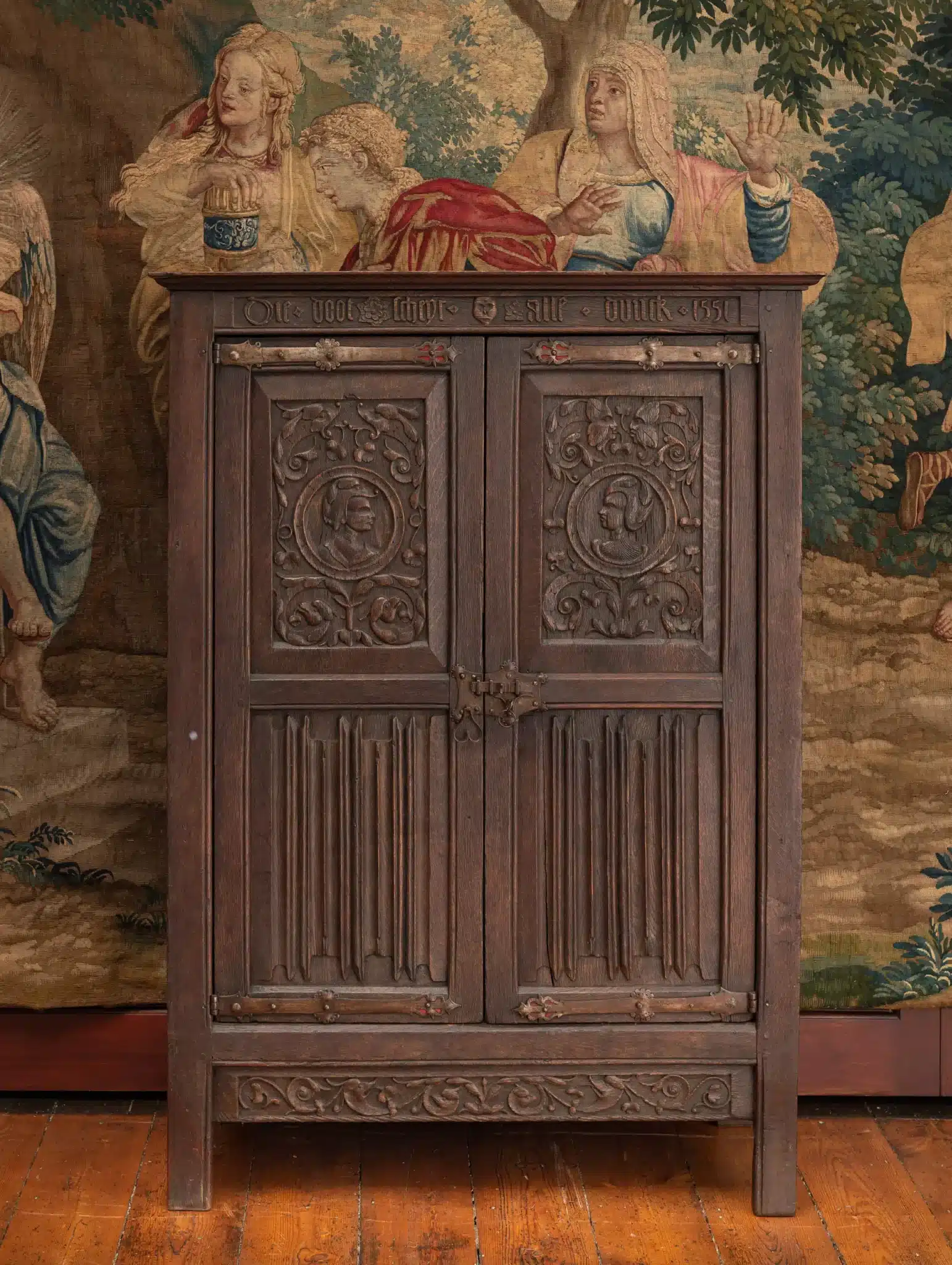
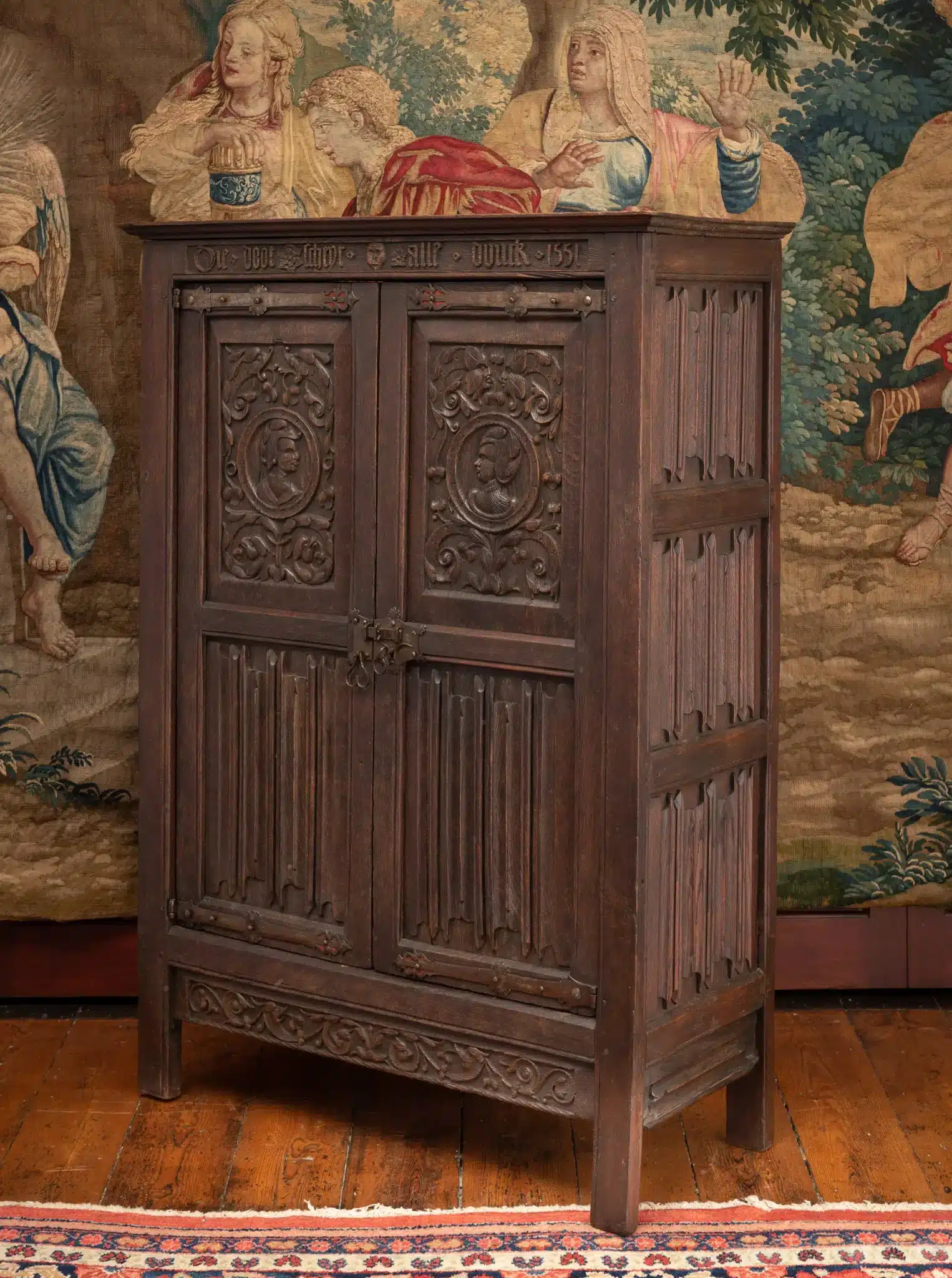
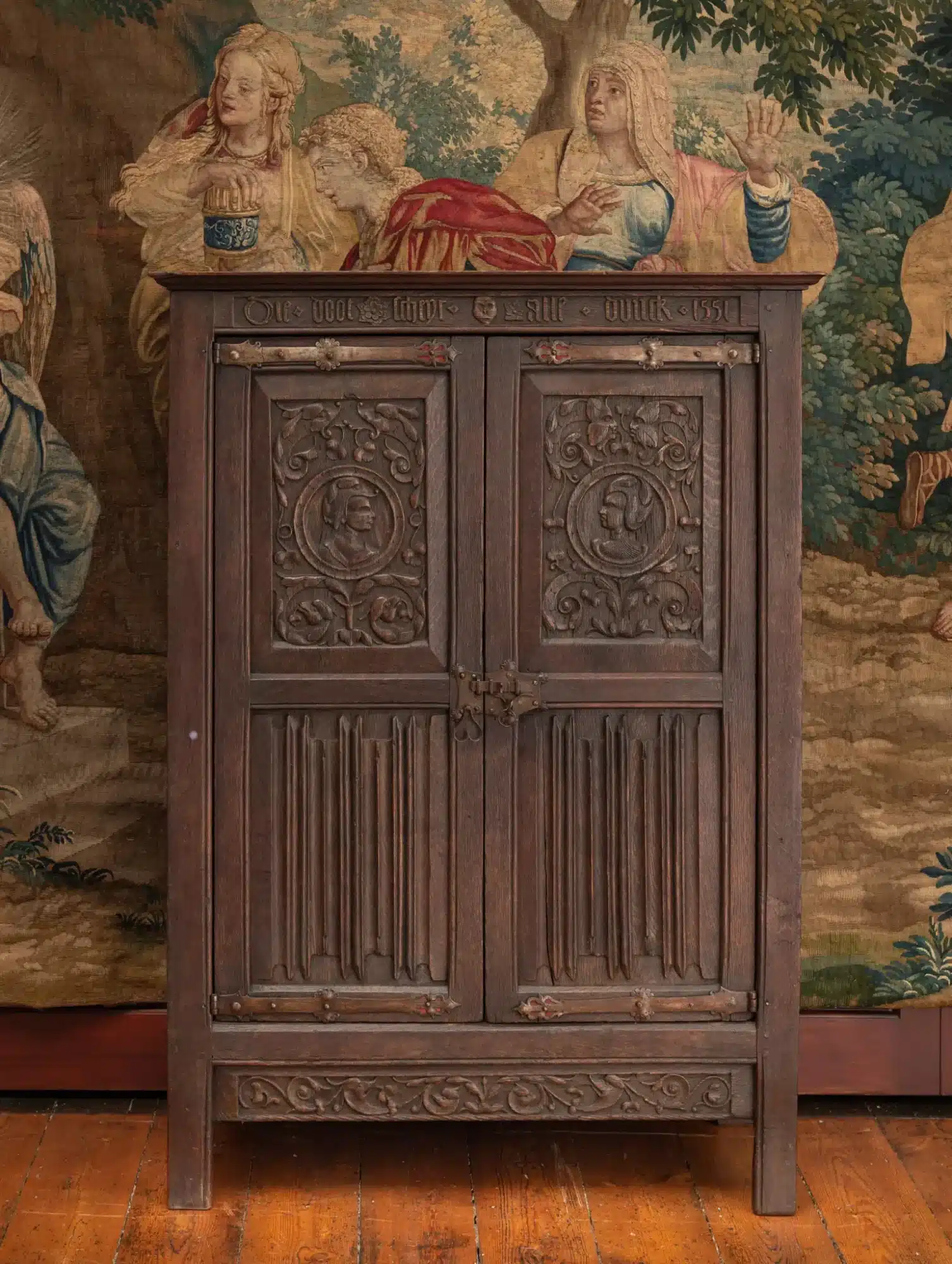
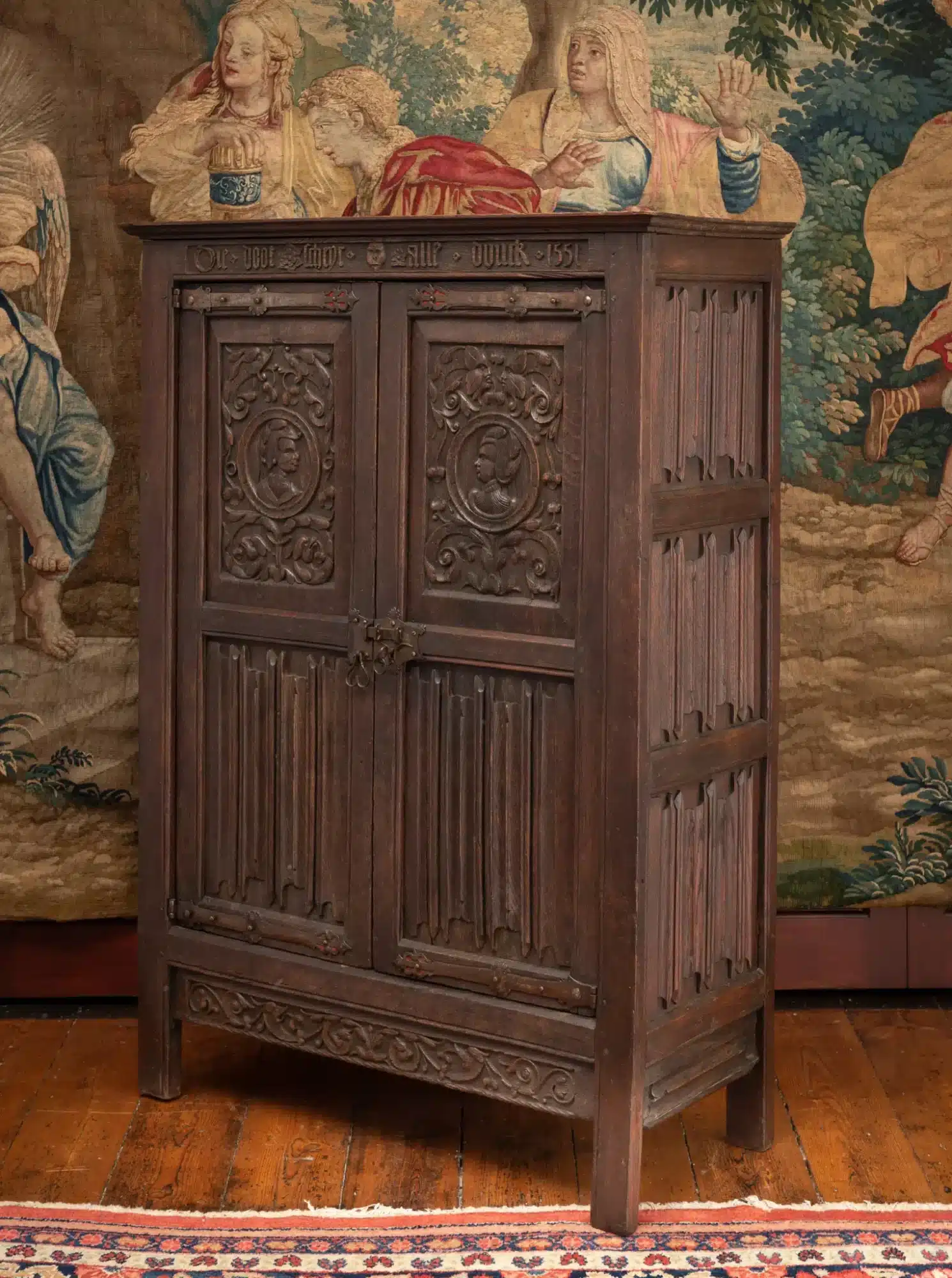
A rare mid-16th century Flemish oak cupboard of architectural form, carved with portrait roundels and inscribed with a moralising memento mori motto. The twin panelled doors each with an upper portrait medallion of a male and female figure framed by scrolling foliate ornament, above boldly executed linenfold panels. The lower section with three further large linenfold panels and a free horizontal panel, the base frieze carved with strapwork foliage.
The frieze rail bears a deeply cut inscription in late-Gothic script, reading: “Die doot kent alle dinck · 1551” — Middle Dutch for “Death knows all things”, an admonitory phrase underlined by the carved skull at its centre. Such mottoes, blending humanist learning with the tradition of memento mori, were a hallmark of Flemish Renaissance domestic furniture.
The cupboard belongs stylistically to the workshops of Antwerp and the Southern Netherlands, where portrait medallions derived from contemporary prints were especially popular between 1520 and 1570. The combination of Renaissance roundels with traditional Gothic linenfold represents the transitional taste of the mid-16th century.
Although of Flemish manufacture, this type of cupboard had a strong presence in England. Tudor England maintained extensive trading links with the Low Countries, particularly through London and East Anglian ports, and inventories from the mid- to late-16th century frequently record “Flanders chests” and cupboards. Many wealthy English households imported Netherlandish furniture, which was prized for its elaborate carving and moral or biblical inscriptions.
This cupboard therefore not only represents the finest Flemish joinery of the Renaissance but also reflects the close commercial and cultural exchange between Tudor England and Holland.
Provenance
Formerly in the collection of Ray Winfield Smith (1897–1982), noted American Egyptologist, archaeologist by avocation, and distinguished collector. A graduate of Dartmouth College (B.S. 1918; Honorary Doctorate 1958), Smith worked in industry, government, and the military, but is best remembered for directing the pioneering Akhenaten Temple Project in the 1960s, which employed early computer technology in collaboration with the University of Pennsylvania Museum, the Smithsonian Institution, the National Geographic Society, and IBM to reconstruct the Aten Temple at Karnak. Smith was also a respected scholar and collector of ancient glass, and a lifelong patron of archaeology.