
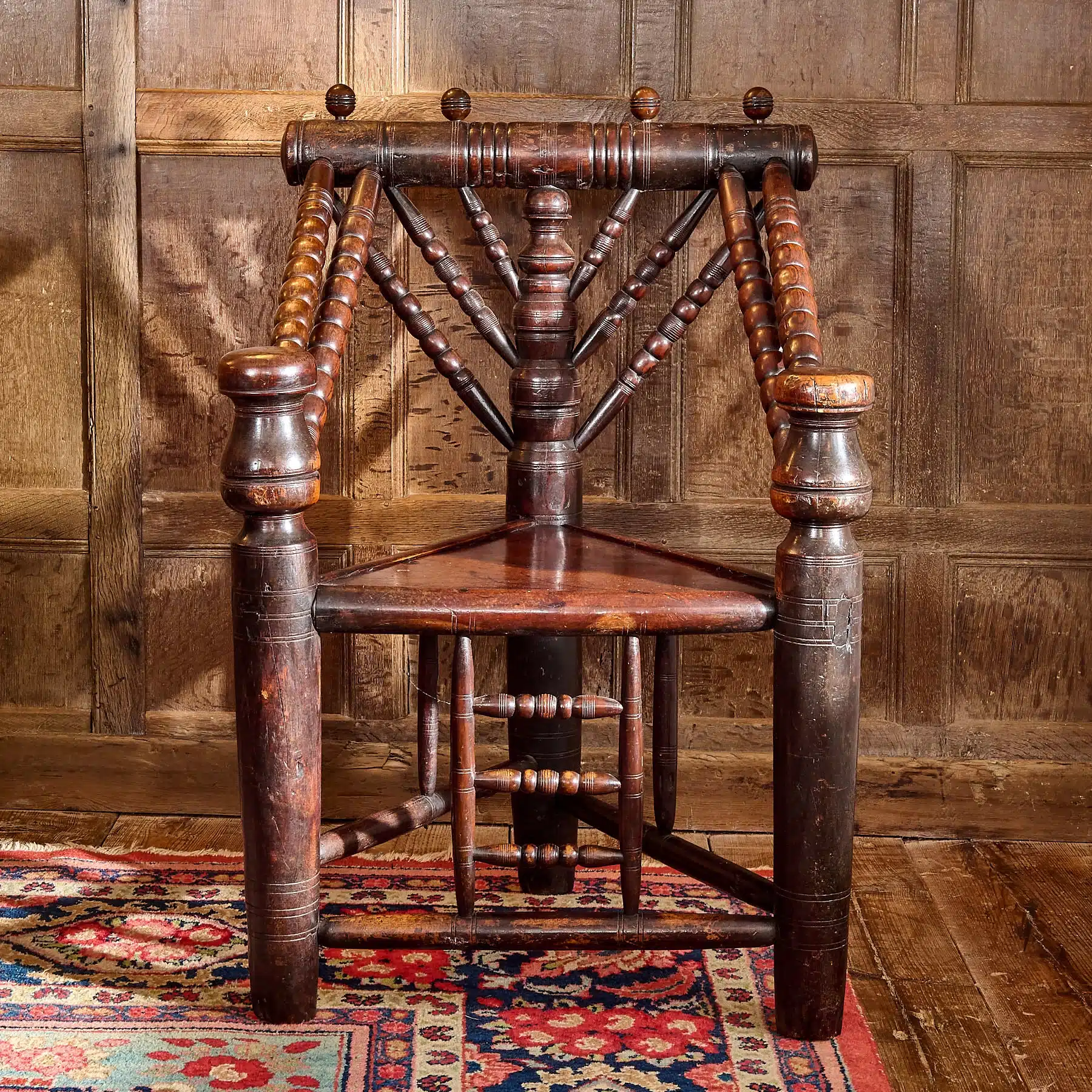
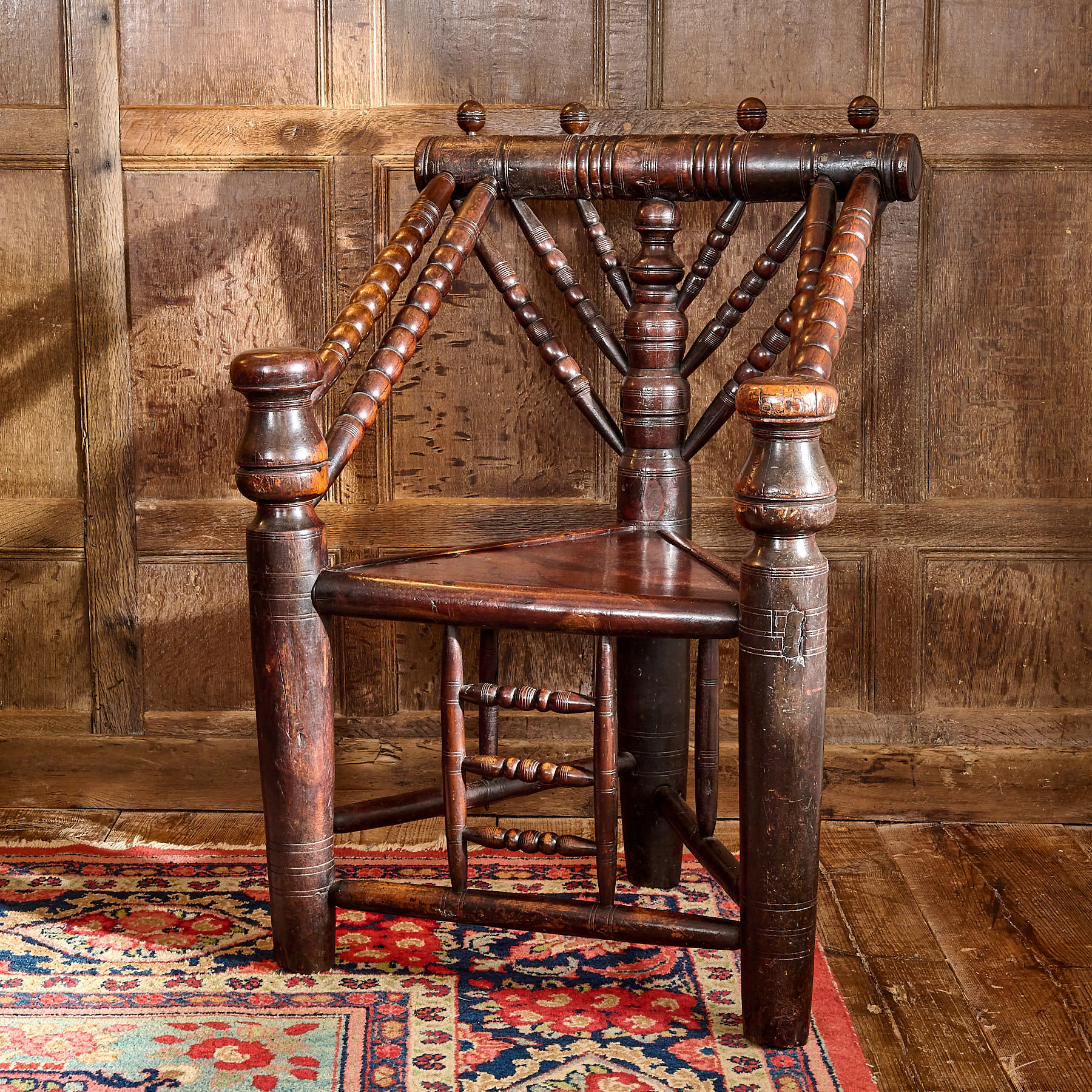
16th Century Welsh Yew Wood Armchair
- Period
- 1500 - 1600
- Origin
- Wales
- Dimensions
- W 26" × H 38 1/2" × D 22 1/2"
- Reference
- #Marh2228
This piece has been sold. It is shown here for reference in our archive.
Description
A Welsh turned armchair of triangular form, constructed in richly patinated native yew wood with a solid walnut seat. The boldly conceived design features heavy turned uprights and splayed triangular seat rails, with three radiating spindle clusters fanning upward to a central baluster support — a highly sculptural arrangement that emphasises both strength and visual rhythm.
Yew wood, deeply symbolic in British culture as a tree of longevity, death, and resurrection, was also closely associated with sacred spaces, churchyards, and continuity of lineage. Its deliberate use here would not only have signified durability and status but may also carry a symbolic charge, placing this chair within a cultural framework of permanence and ancestral memory.
This rare form belongs to the very earliest group of British turned chairs, predating more standard joined oak examples. Comparable armchairs are illustrated in Richard Bebb, Welsh Furniture 1250–1950, Vol. I, p. 138, fig. 216, where they are described as among the most distinctive survivals of Tudor Wales.
The combination of yew, walnut, and triangular geometry gives this piece extraordinary presence and situates it among the most important examples of early vernacular seating furniture to survive in Britain.