
 Sold
Sold
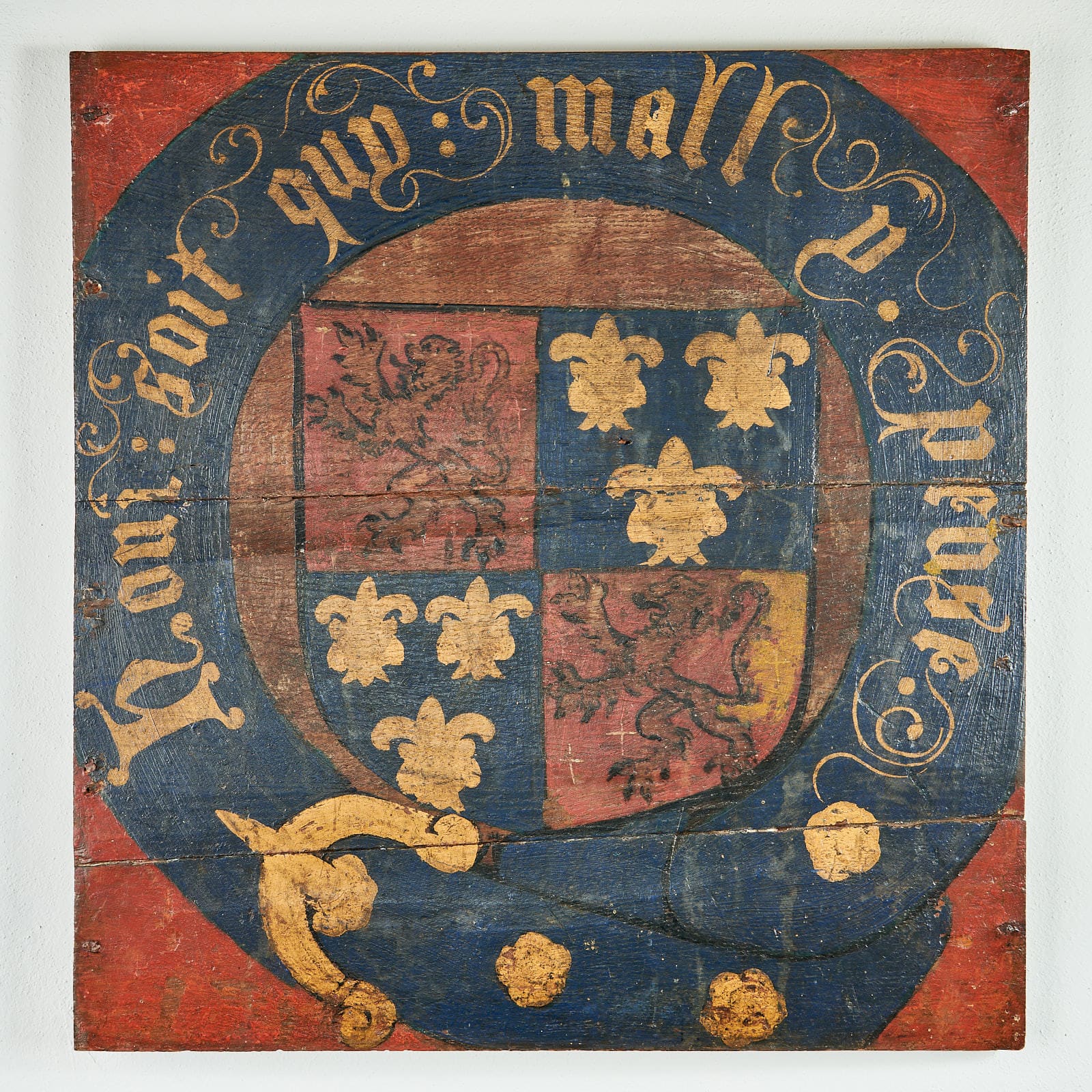
Painted Heraldic Panel with the Royal Arms of England within the Garter
- Period
- Circa 1500 - 1540
- Origin
- England
- Dimensions
- W 17 1/4" × H 18"
- Reference
- #Marh2042
This piece has been sold. It is shown here for reference in our archive.
Description
This painted oak panel depicts the royal arms of England, quarterly France modern and England, encircled by the strap and buckle of the Order of the Garter. The quartered shield shows the fleurs-de-lys of France (1st and 4th) and the lions of England (2nd and 3rd), painted in gold on alternating blue and red grounds, with the Garter motto “Honi soit qui mal y pense” picked out in gilt. The achievement is presented in a restrained heraldic mode, notably without crown or supporters, emphasising the arms themselves and their association with the Garter.
Although the English quarters now appear to show a single lion passant guardant, heraldic convention requires three lions, and this was certainly the intention. On many Tudor painted panels, especially those produced by regional workshops, the rendering of complex arms was often abbreviated for clarity or economy. Lions might be reduced to a single bold figure, while additional beasts were lightly sketched or have since disappeared through pigment loss. The present effect therefore reflects both workshop practice and subsequent surface wear, rather than a deviation from the true royal arms.
The absence of a crown above the shield suggests an early Tudor date, most probably during the reign of Henry VII or the early years of Henry VIII, before the later Tudor taste for more elaborate crowned achievements became widespread. Panels of this type were frequently displayed in civic halls, noble residences, or parish churches, particularly where loyalty to the crown or the symbolism of the Garter was to be made visible.
Comparables include the painted arms within the Garter at St George’s Chapel, Windsor, early 16th century; stained-glass renderings of Henry VIII’s arms with the Garter in the British Museum (c.1540); and the painted boards of Edward VI at St Mary’s, Westerham (c.1547–53). Each shows variations in detail but demonstrates the widespread practice of rendering the royal arms in wood or glass for public and devotional spaces.
This panel is therefore a rare survival of early Tudor royal heraldic display, embodying the intersection of kingship, heraldry, and visual propaganda in the reigns of Henry VII and Henry VIII.