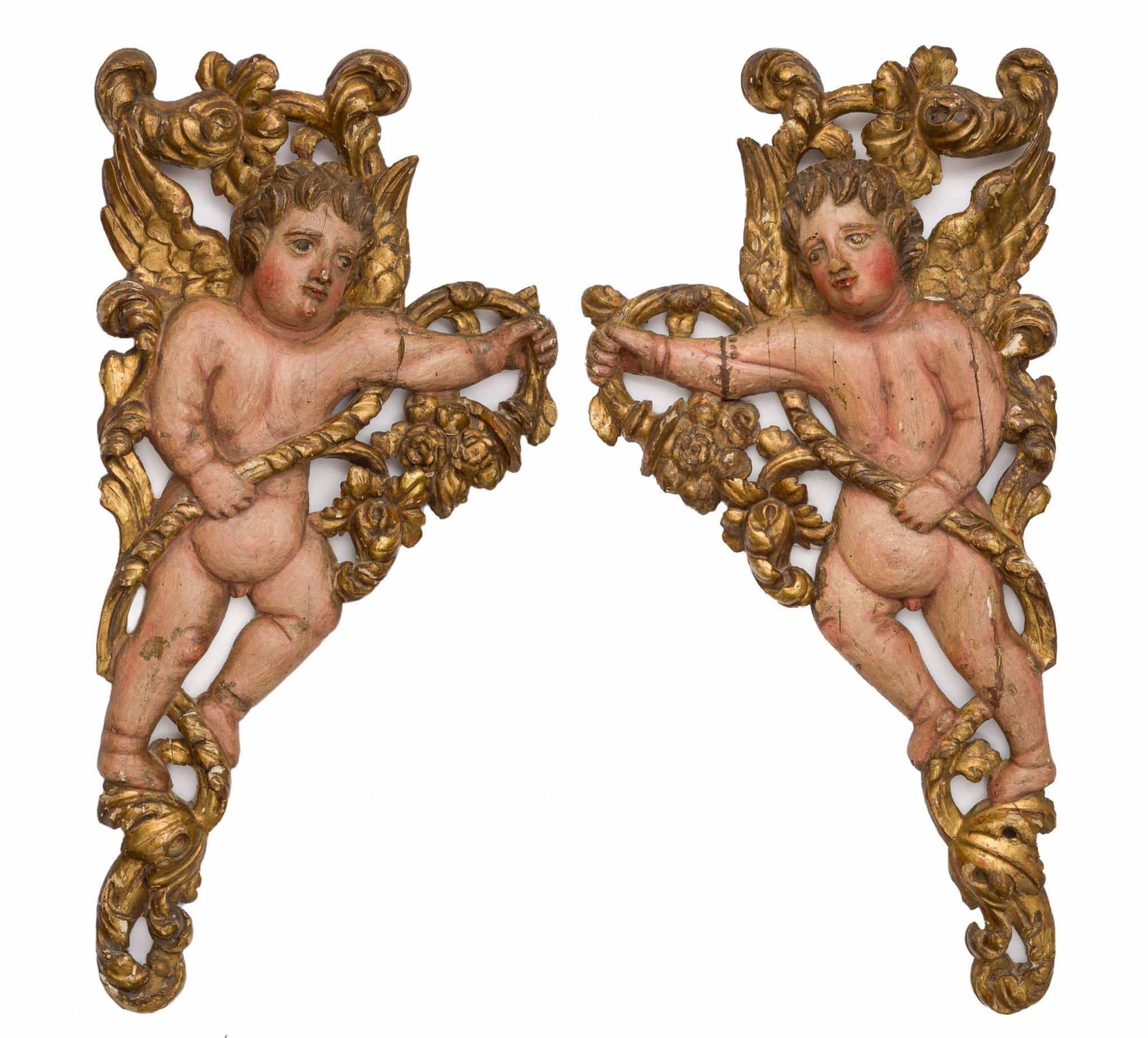
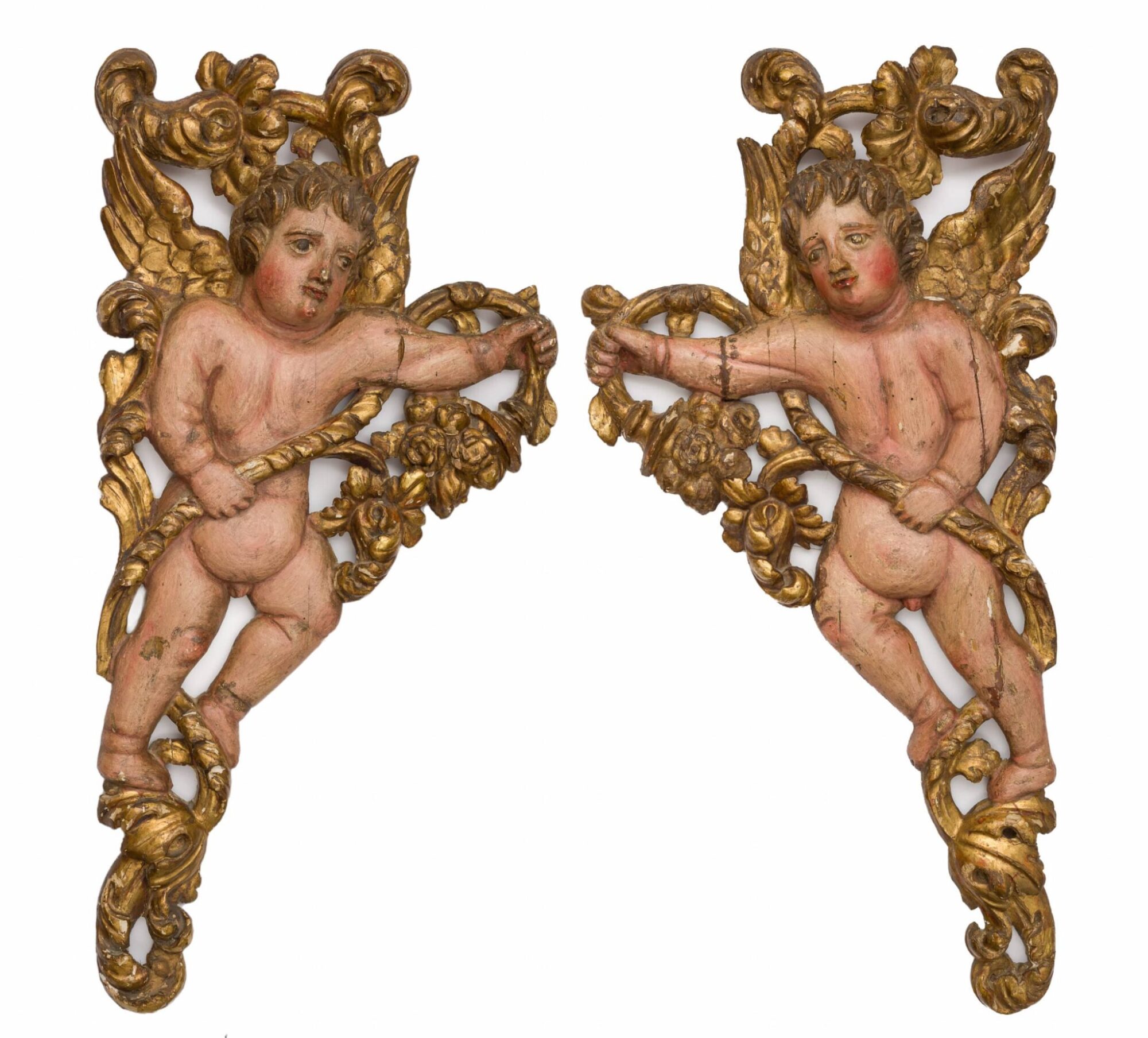
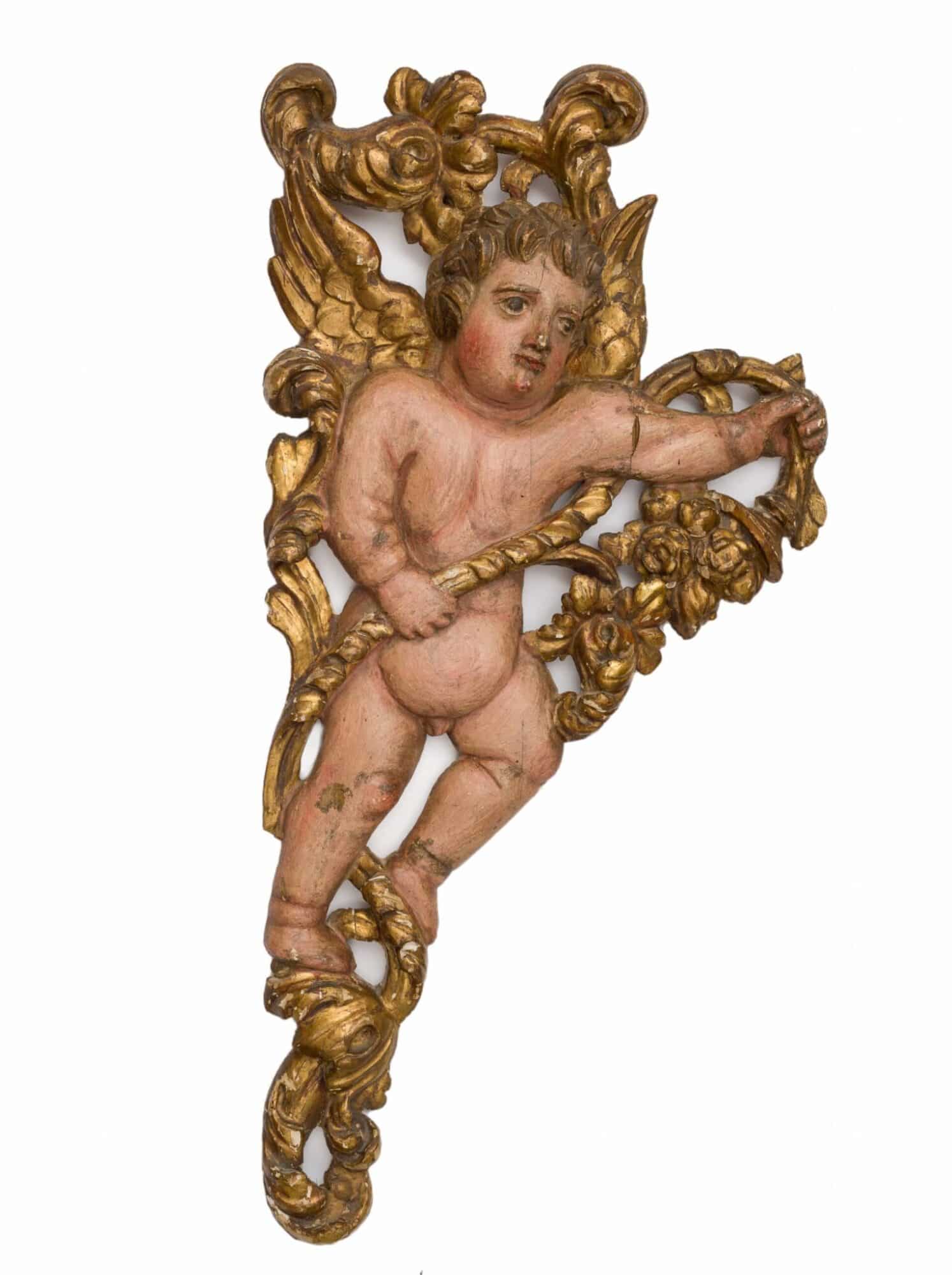
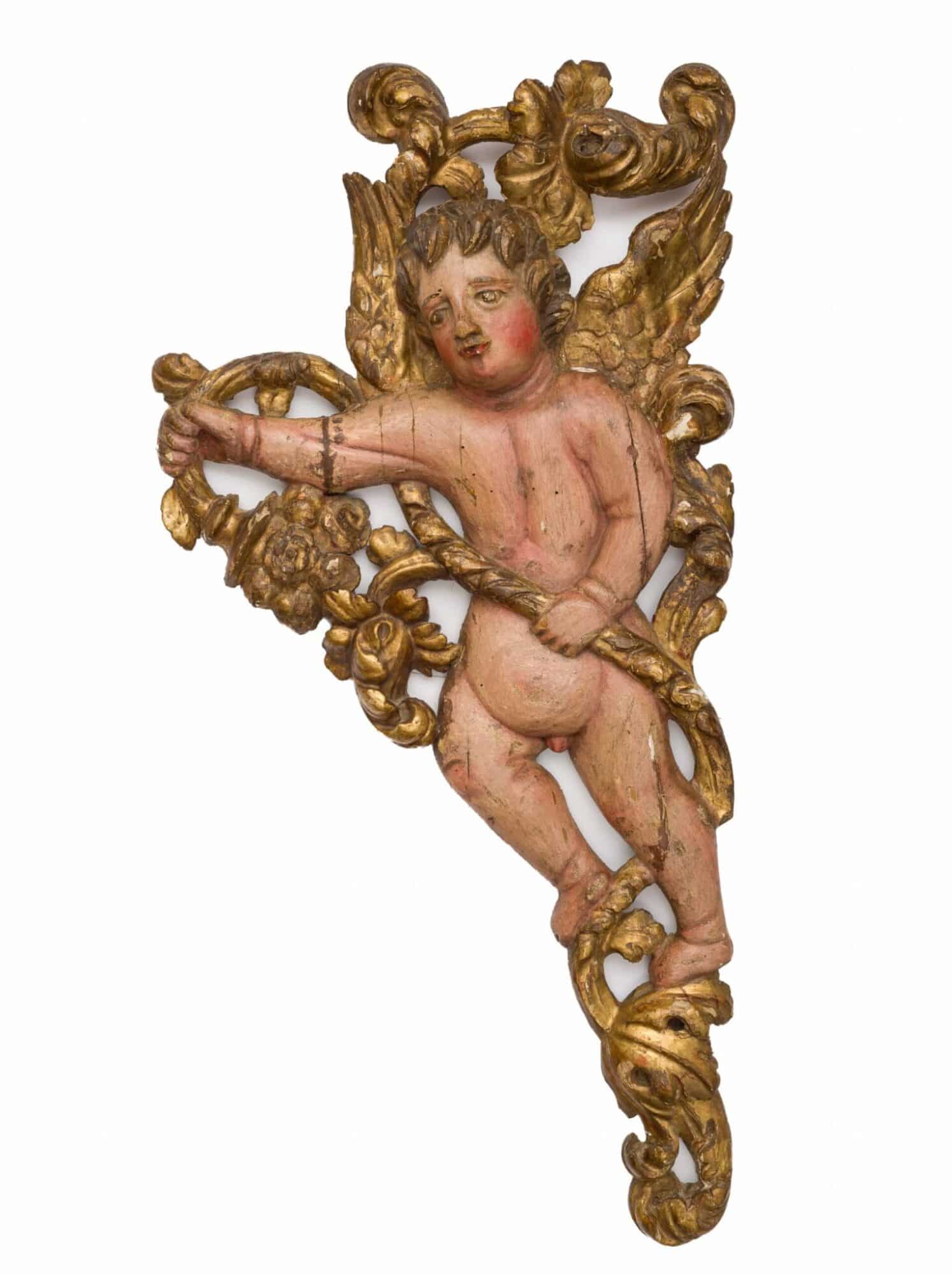
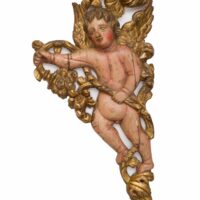
Pair of Baroque winged putti from a retablo
- Period
- 1650 - 1680
- Origin
- Spain
- Dimensions
- W 16 3/4" × H each one measures 35" × D 4 1/2"
- Reference
- #Marh2874
This piece has been sold. It is shown here for reference in our archive.
Description
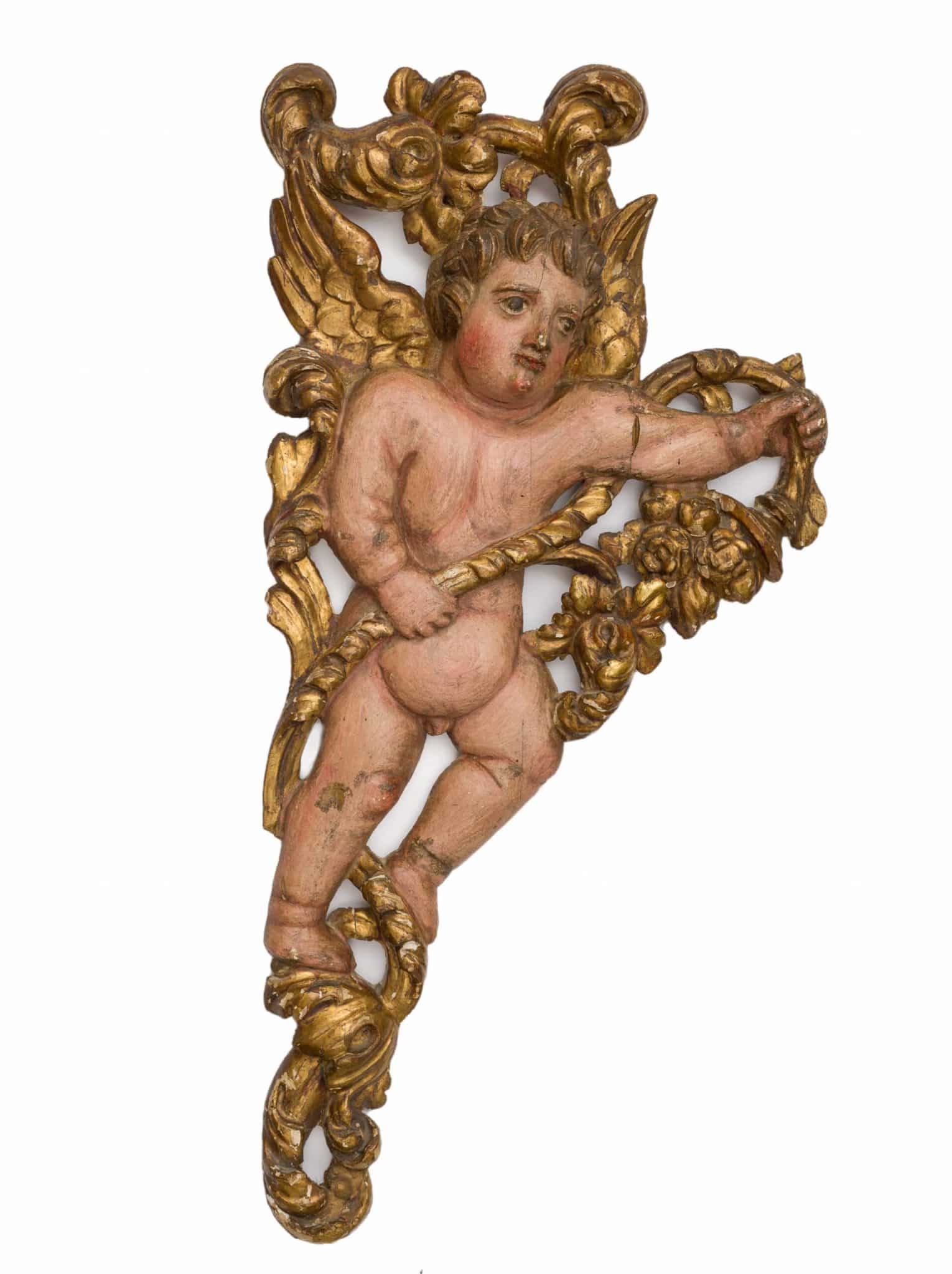
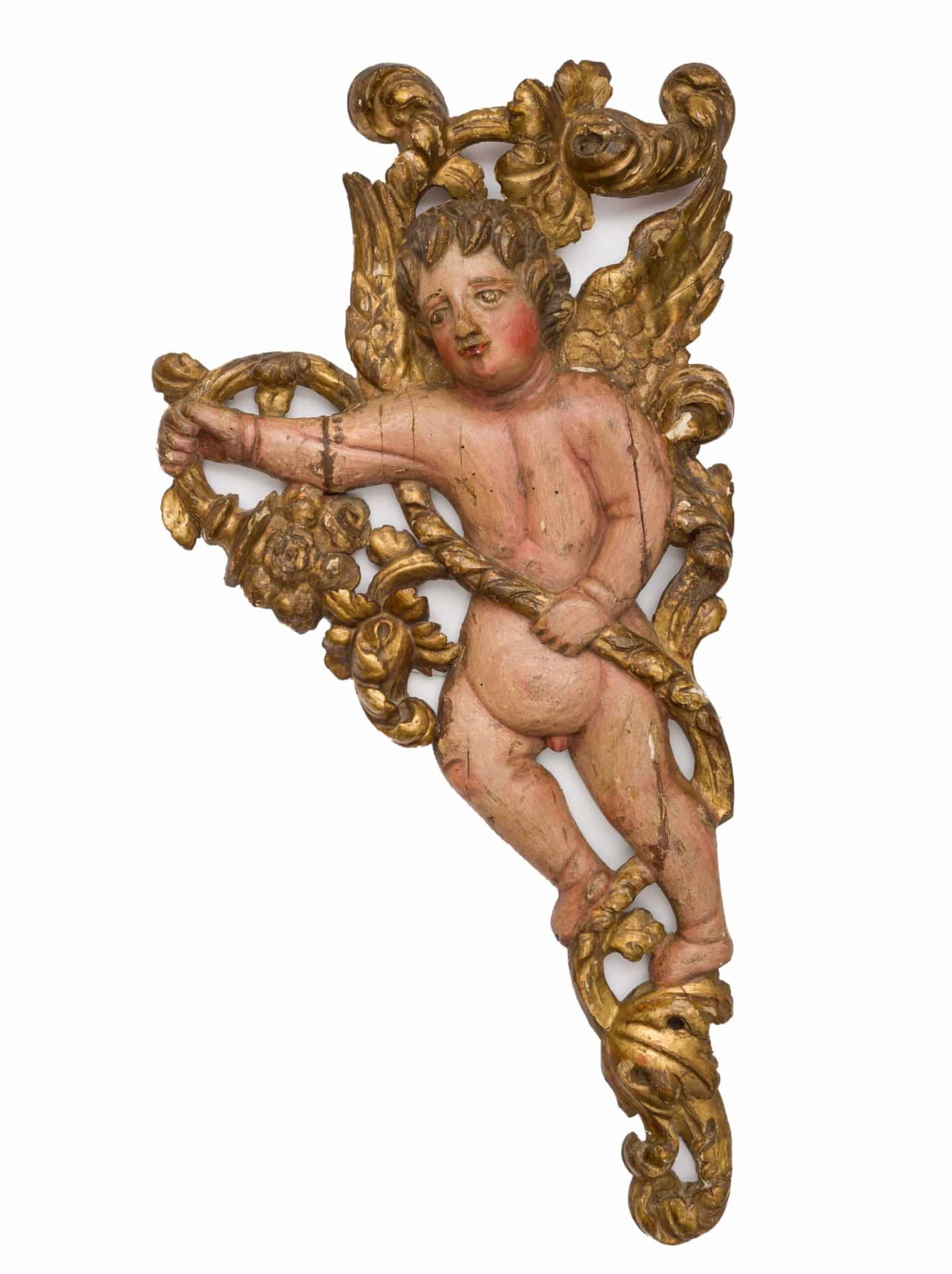
A large and impressive matched pair of winged putti, carved in high relief and entwined within voluted acanthus frames. Each child turns outward with one arm extended to “offer” a floral wreath while the other grasps a spiralled, cornucopia-like stem. Their softly modelled faces, rounded bodies and animated torsion epitomise Spanish Baroque retablo carving, conceived to be read diagonally from below in the upper corners of an altarpiece, chapel niche or over-door.
Function and placement
The angled backs and triangular outer contours identify these as spandrel/cornice ornaments from a large ecclesiastical ensemble. In Iberian practice, such figures rhythmically punctuate the architecture of a retablo, framing saints or Marian images and visually linking narrative panels with a continuous band of foliage and angelic attendants.
Iconography
Putti (often conflated with cherubim) serve as heavenly attendants, heralds of glory and bearers of offerings. Here the garlands/wreaths signal festal honour and Paradise; the spiral horn alludes to the classical cornucopia—a Baroque device frequently adopted in church décor to signify divine abundance and blessing. The combination of wreath and horn reads as an emblem of gratia superabundans: grace overflowing.
Technique
The figures are carved in pine, the standard substrate for Spanish architectural sculpture, prepared with yeso (gypsum gesso) and red bole, then water-gilded and glazed. The flesh is polychromed in warm carnation tones with discrete rouge at the cheeks; the scrolling frames retain rich gilding with age-consistent wear on the high points, typical of long liturgical use.