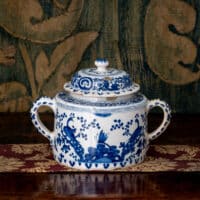
A Dutch Delft Blue and White Posset Pot and Cover
- Period
- 1690 - 1700
- Origin
- Dutch
- Dimensions
- W 10 3/4"" × H 7 1/2"" × D 7" diameter"
- Reference
- #Marh3772
£2,850
Description
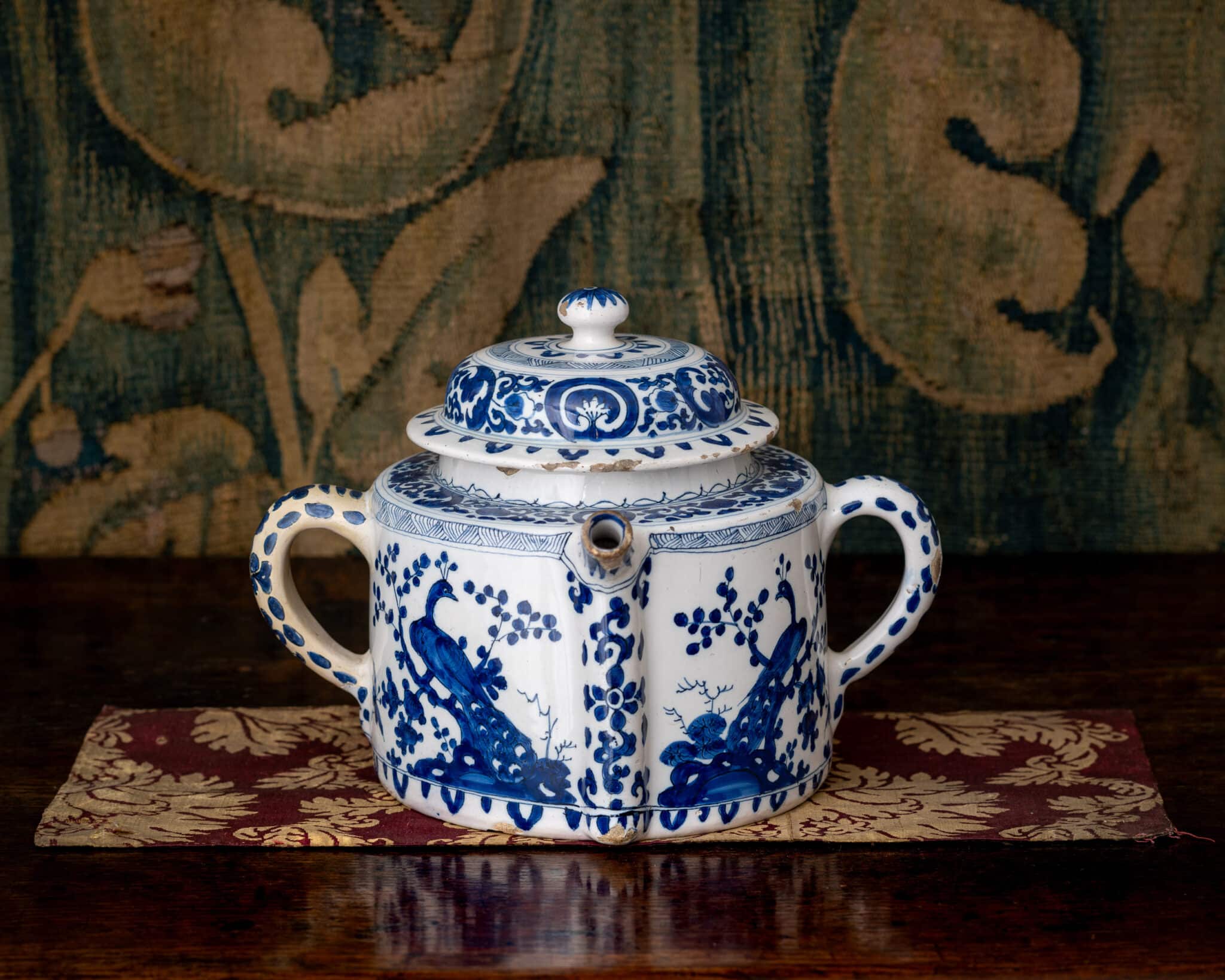
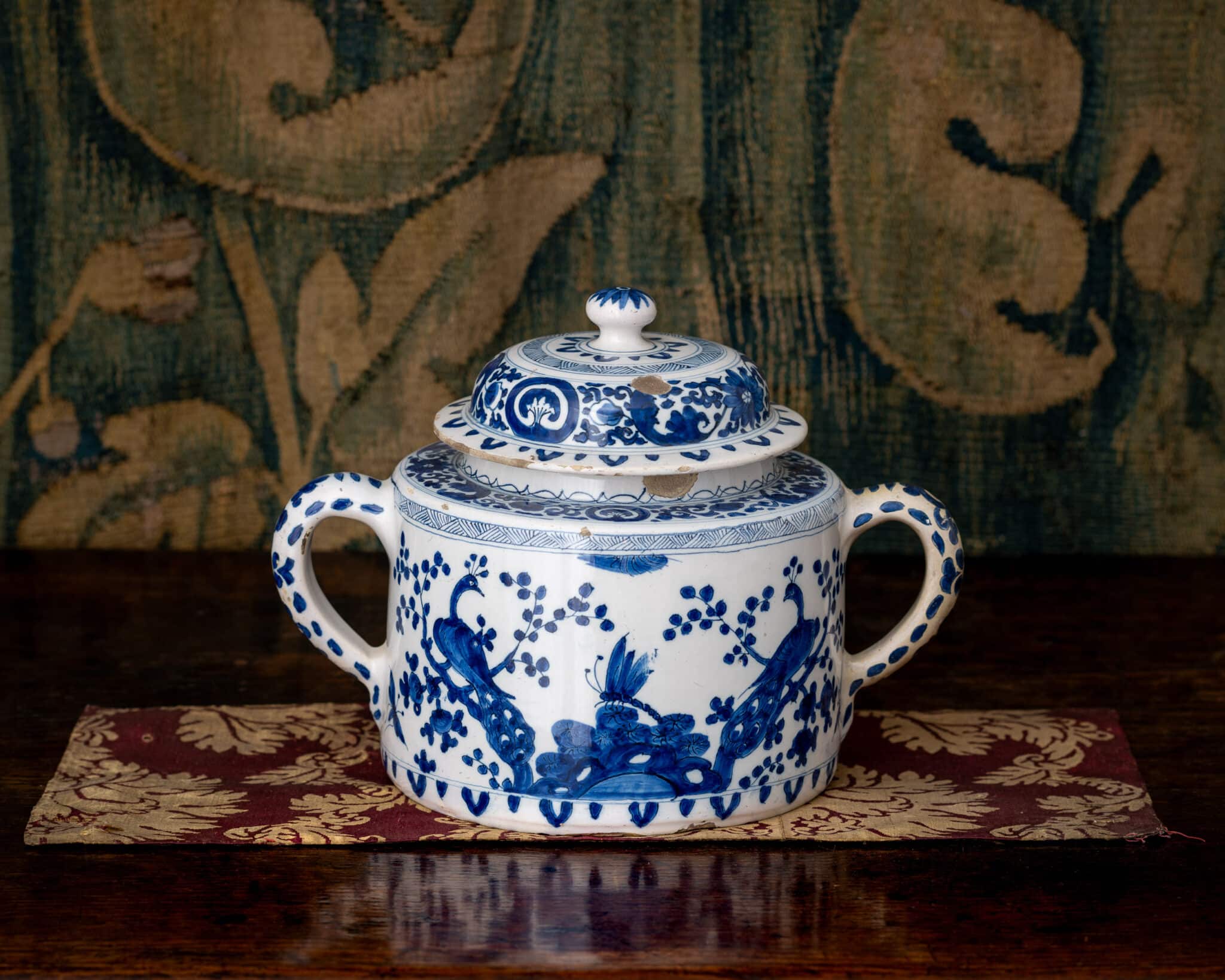
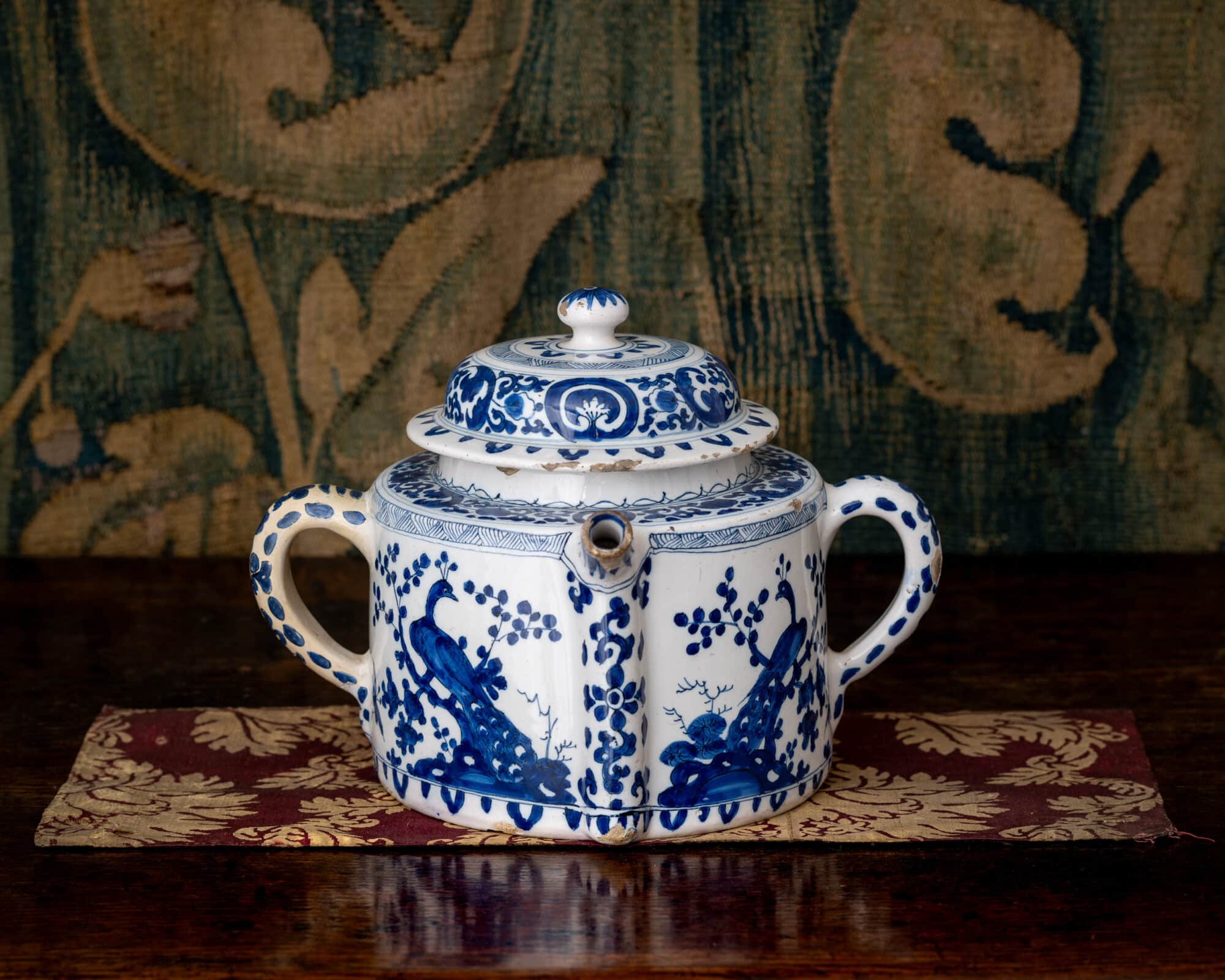
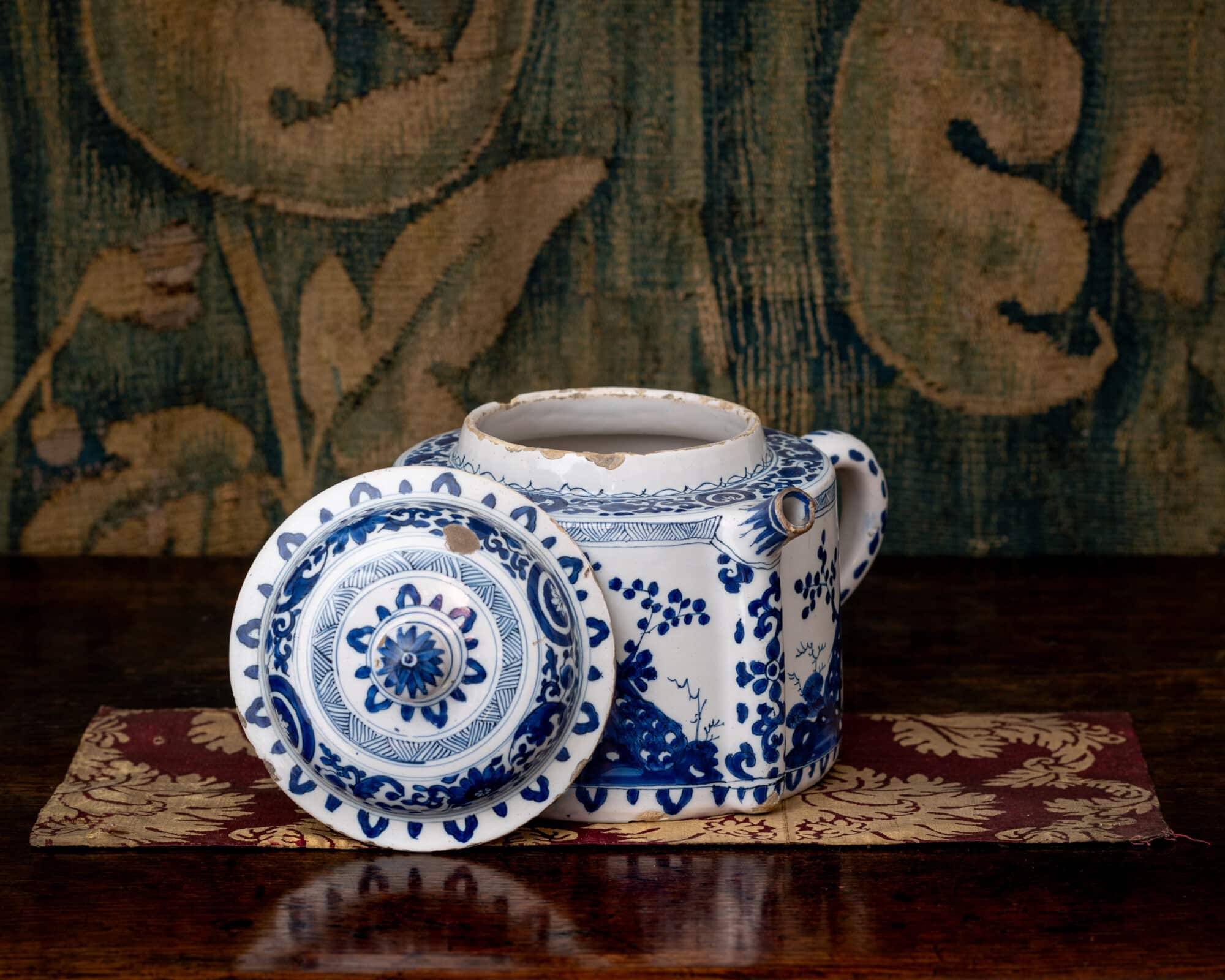
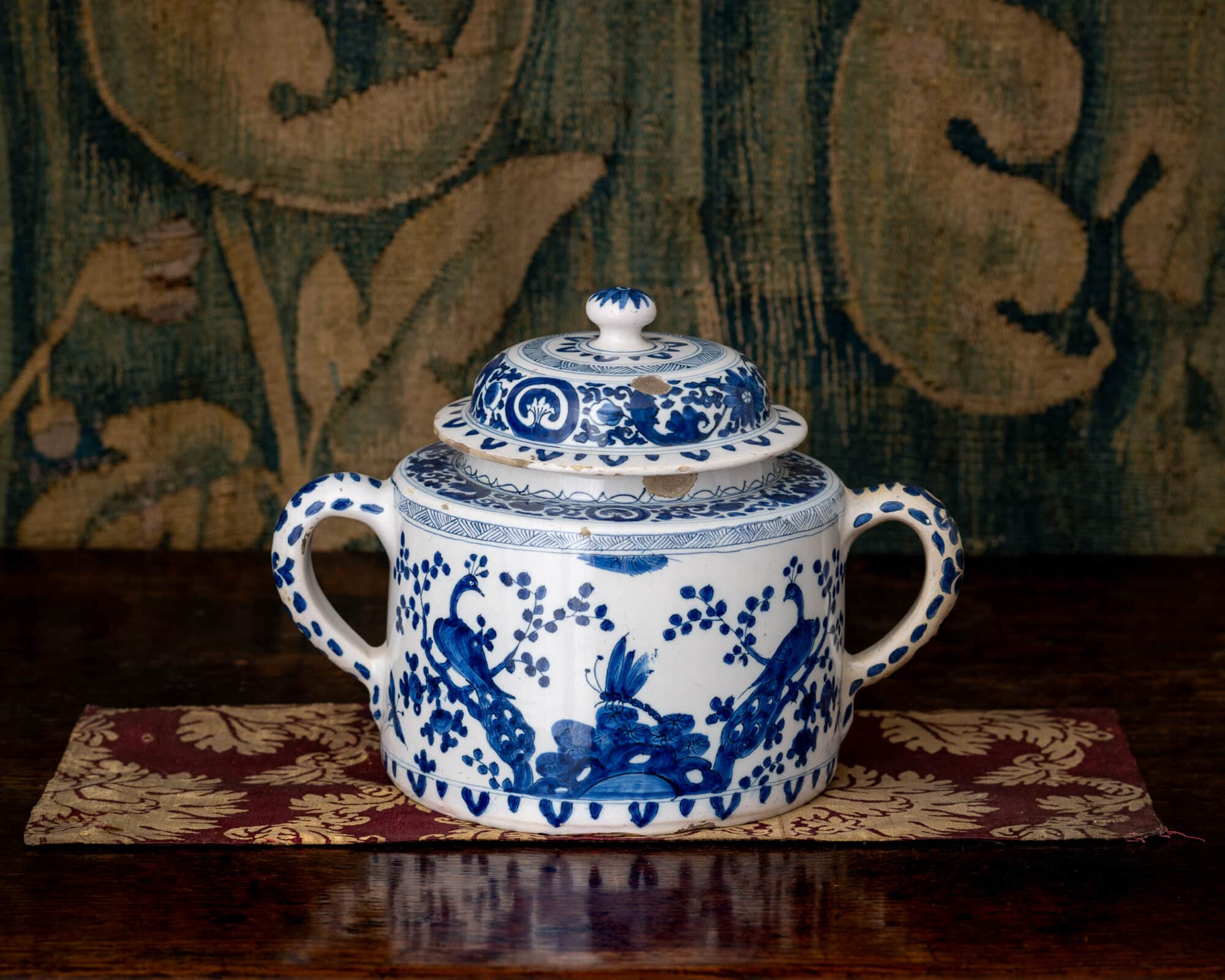
A Dutch Delft blue and white posset pot and cover, of squat cylindrical form with a short projecting drinking spout and a pair of opposed loop handles with rolled terminals. The stepped upper body is fitted with a domed cover, surmounted by a button or mushroom-shaped knop.
The pot is painted in cobalt blue on a white tin-glazed ground with long-tailed exotic birds or peacocks perched amongst flowering plants and stylised rockwork. The principal decoration is framed by subsidiary floral scrollwork and geometrical borders, including a finely drawn hatched band around the shoulder. The handles are ornamented with freely painted spots and foliate devices, while the spout is picked out with radiating blue strokes.
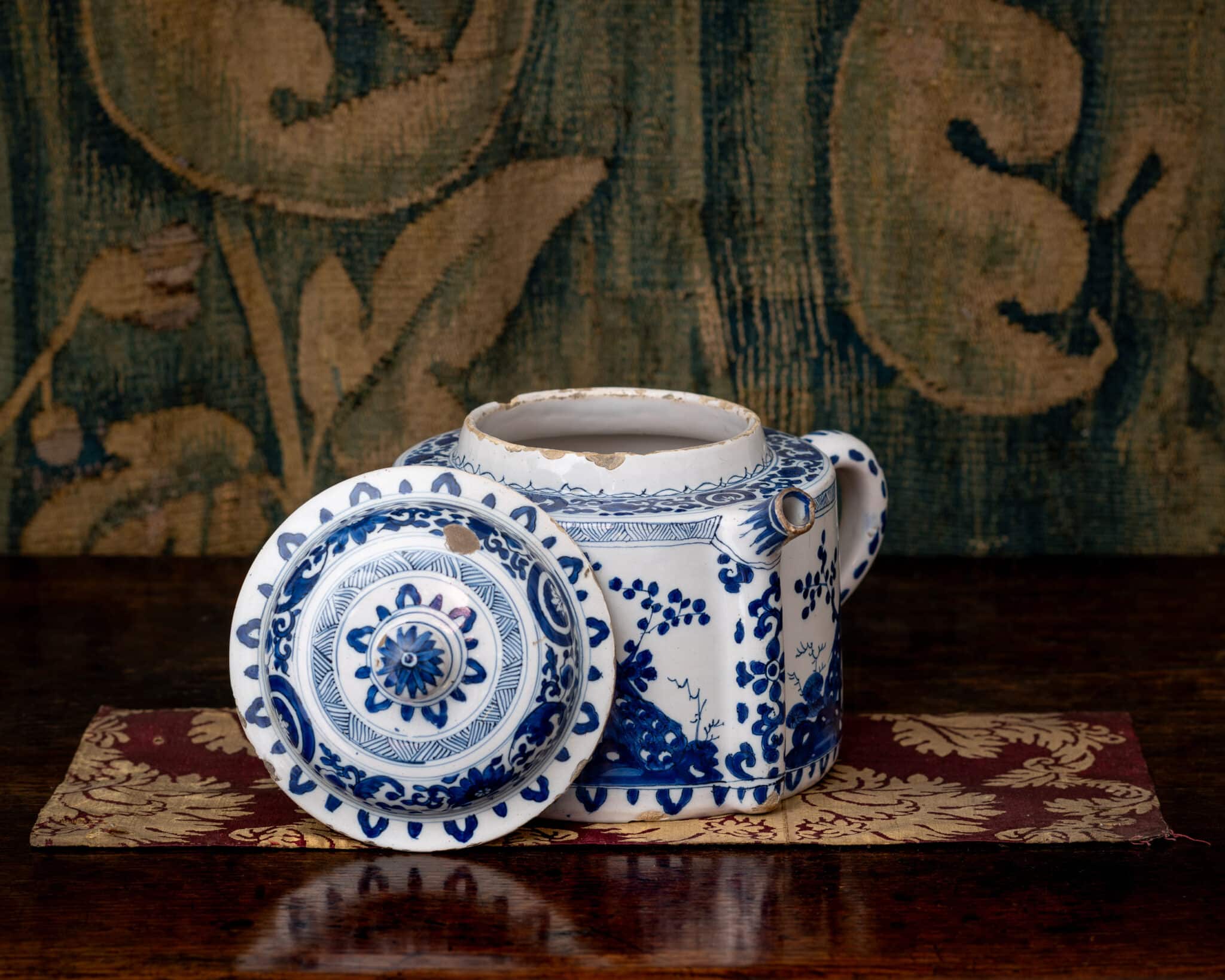
The cover is particularly richly decorated, with concentric bands of stylised flowers, scrolling foliage, geometric ornament and petal-shaped motifs surrounding the central knop. The combination of exotic birds, flowering plants and Chinese-derived ornamental borders reflects the profound influence of late Ming and Transitional-period Chinese porcelain on Delft pottery during the later seventeenth century.
Of particular interest are the small underglaze-blue marks resembling the numeral 8, found internally on both the pot and cover. These invite comparison with the numbered factory marks employed by the Delft pottery De Paauw (The Peacock). A closely related blue and white posset pot and cover attributed to De Paauw and dated circa 1690–1700 was sold at Christie’s bearing DAPW monogram and 8 marks on both pot and cover. That example is likewise of cylindrical form with a short angular spout and loop handles and is painted with a peacock and other birds amongst flowers and grasses within scroll-pattern borders. The present marks do not, however, appear to preserve an unequivocal DAPW monogram, and the attribution to De Paauw should therefore remain tentative.
Condition
The pot and cover retain characteristic age-related wear and glaze losses, including chipping and flaking around the rims and other projecting areas. One handle has undergone old restoration, readily visible on close examination, with restoration extending over part of the handle and differing in surface and tone from the original tin-glazed body. There are further chips and losses to the glaze, including around the cover, rim, handles and spout, together with hairline cracking and general wear consistent with age and use. The end of the drinking spout has losses. The cover has corresponding age-related chipping and glaze loss.