
A Flemish Oak Panel Depicting The Annunciation
- Period
- Circa 1580–1595
- Origin
- Antwerp School
- Dimensions
- W 8 1/4" (frame 11 3/4")" × H 10 3/4" (frame 14 1/4")" × D 1""
- Reference
- #Marh3792
£3,850
Description
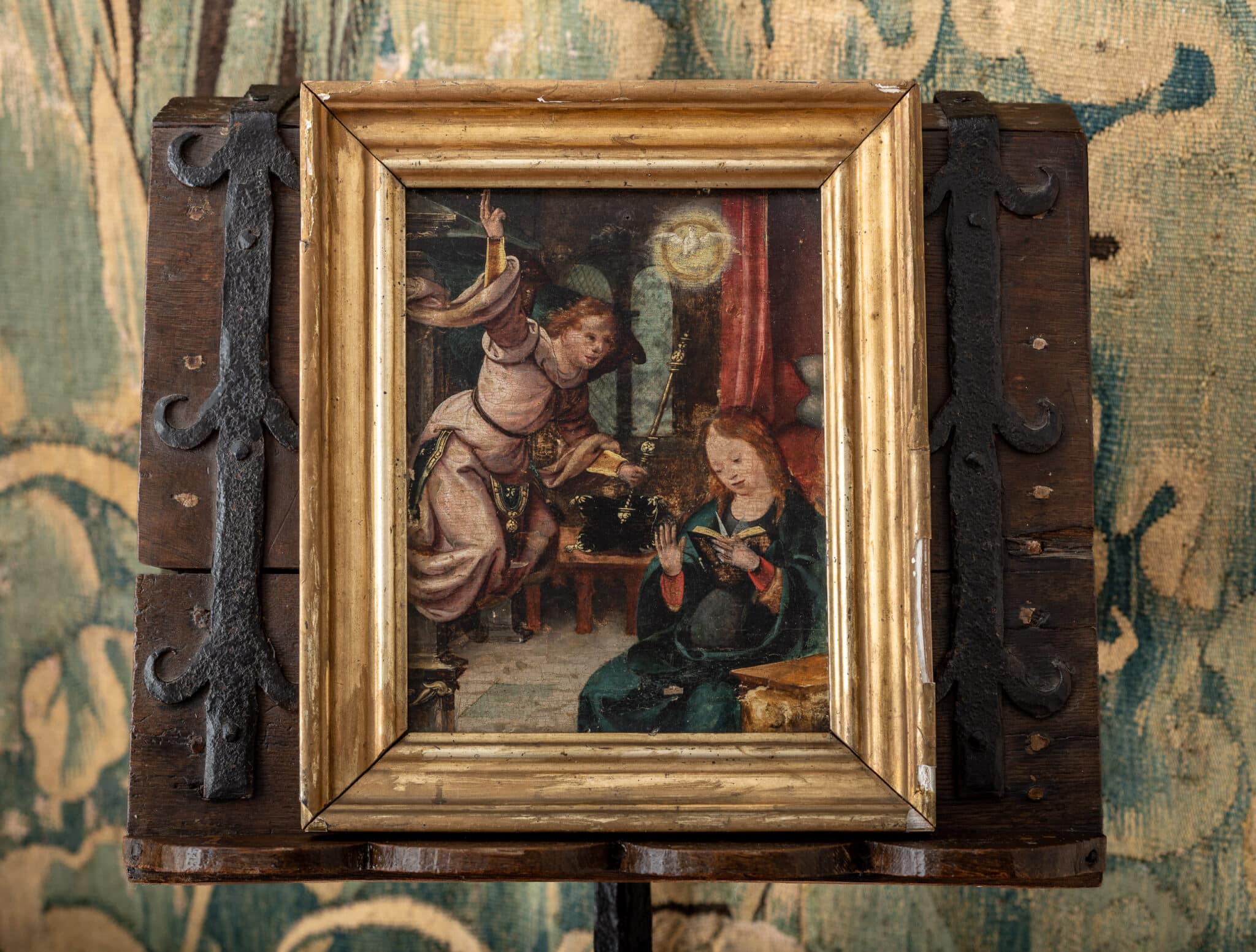
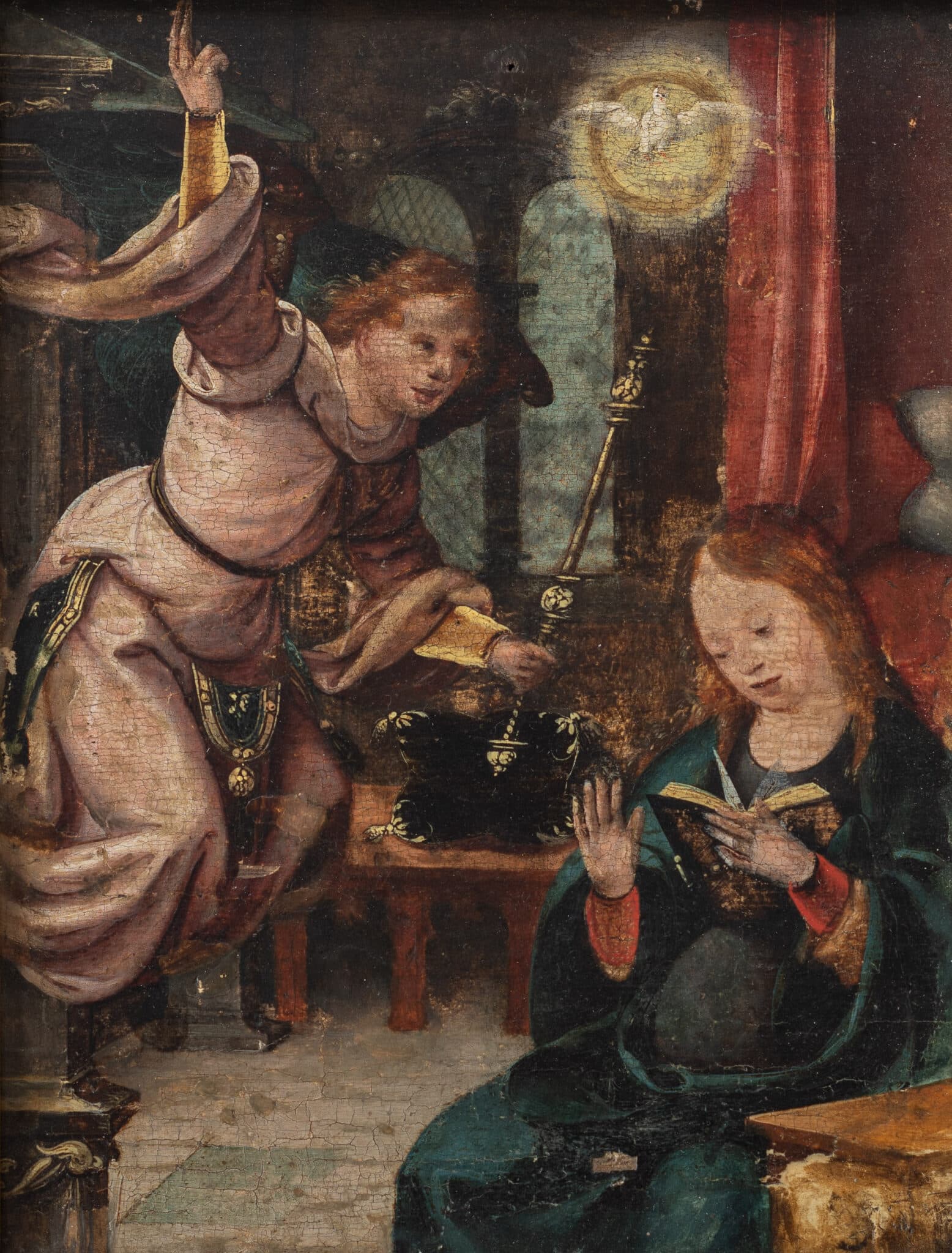
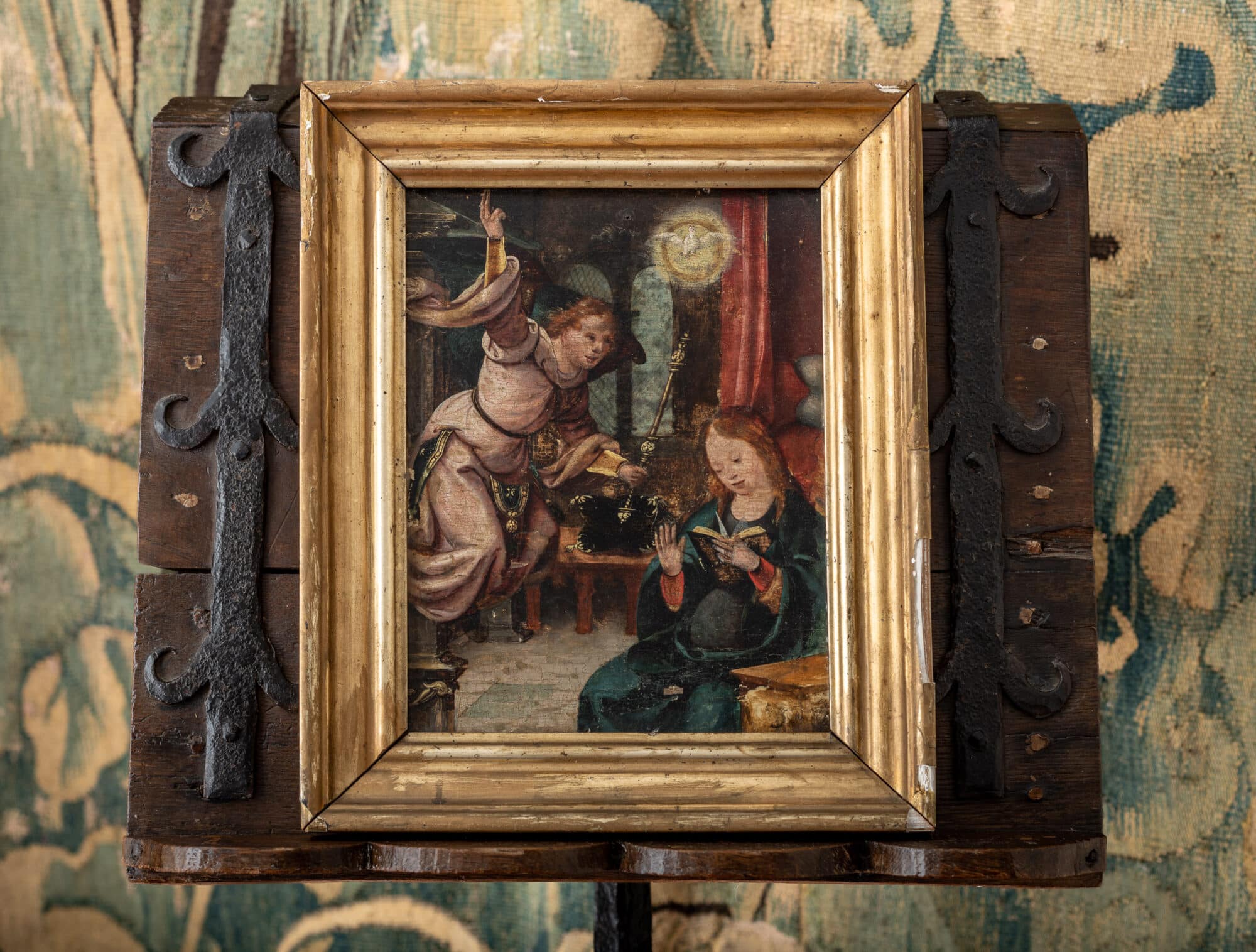
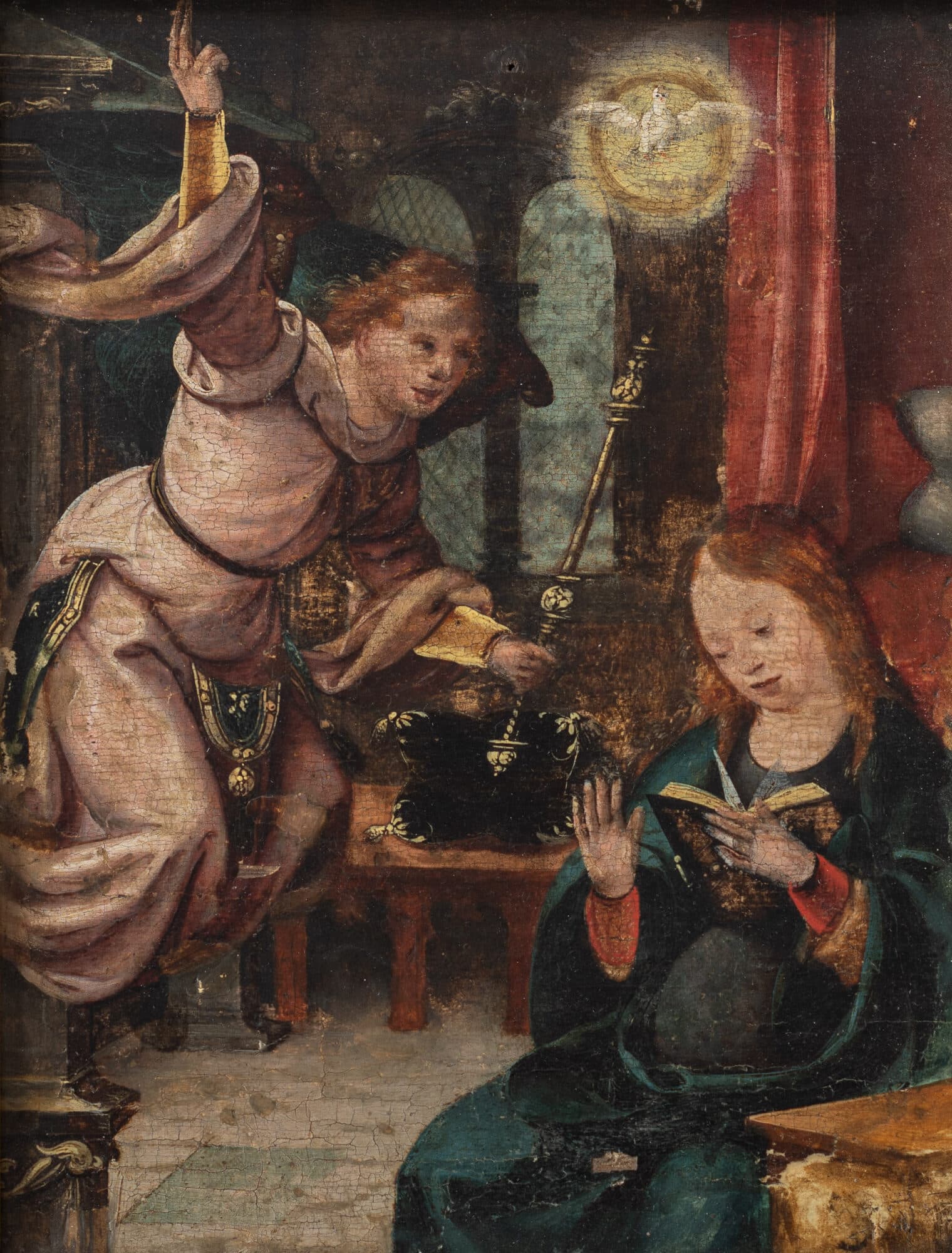
A late sixteenth-century Flemish devotional painting depicting The Annunciation, painted in oil on a small oak panel and attributable to the Antwerp School, circa 1580–1595.
The Virgin is shown seated within a richly furnished domestic interior, interrupted in her reading by the sudden appearance of the Archangel Gabriel. She holds an open book in her left hand while raising her right in a restrained gesture of surprise and acceptance. Gabriel approaches dynamically from the left, his body leaning into the composition and his right arm dramatically raised. Above, the dove of the Holy Spirit appears within a radiant aureole, directing the viewer towards the divine nature of the encounter.
The composition retains characteristics of the late Antwerp Mannerist tradition, particularly apparent in Gabriel’s elongated figure, animated pose and sweeping draperies. These more theatrical elements are deliberately contrasted with the quiet composure of the Virgin. The strong colours—deep greens, reds, pinks and golden yellows—together with the carefully articulated interior and small scale are characteristic of Flemish cabinet and devotional painting during the closing decades of the sixteenth century.
Particular attention has been given to the setting. The tiled pavement establishes a convincing recession into the room, while an arched opening, curtained bed and various domestic objects create the impression of a contemporary Netherlandish household. Between Gabriel and the Virgin is a table bearing carefully observed vessels and objects, forming an intimate still-life passage within the larger sacred narrative. The artist thus places the miraculous event within a recognisable domestic environment, a long-established convention in Netherlandish representations of the Annunciation.
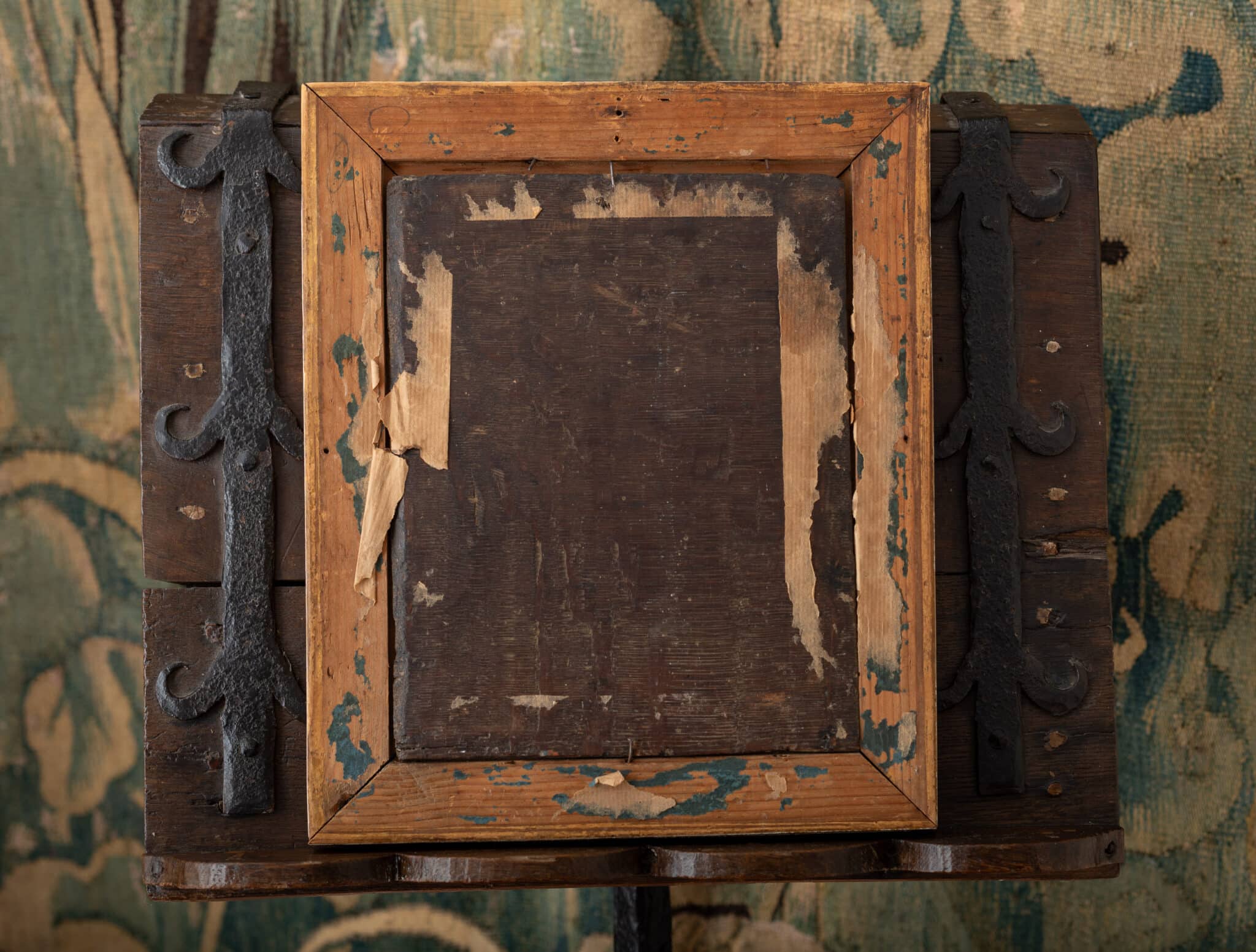
The modest dimensions of the oak panel suggest that the painting was intended for private devotion, where its closely worked details could be examined at intimate range rather than viewed from a distance as part of an ecclesiastical altarpiece.