A Gothic Polychrome and Gilt Wood Sculpture of the Virgin and Child Enthroned (Sedes Sapientiae)
- Period
- Circa 1300–1350
- Origin
- Northern Spain, possibly Catalonia or Aragón
- Dimensions
- W 12 1/2"" × H 26"" × D 8""
- Reference
- #Marh3843
Price on application
Description
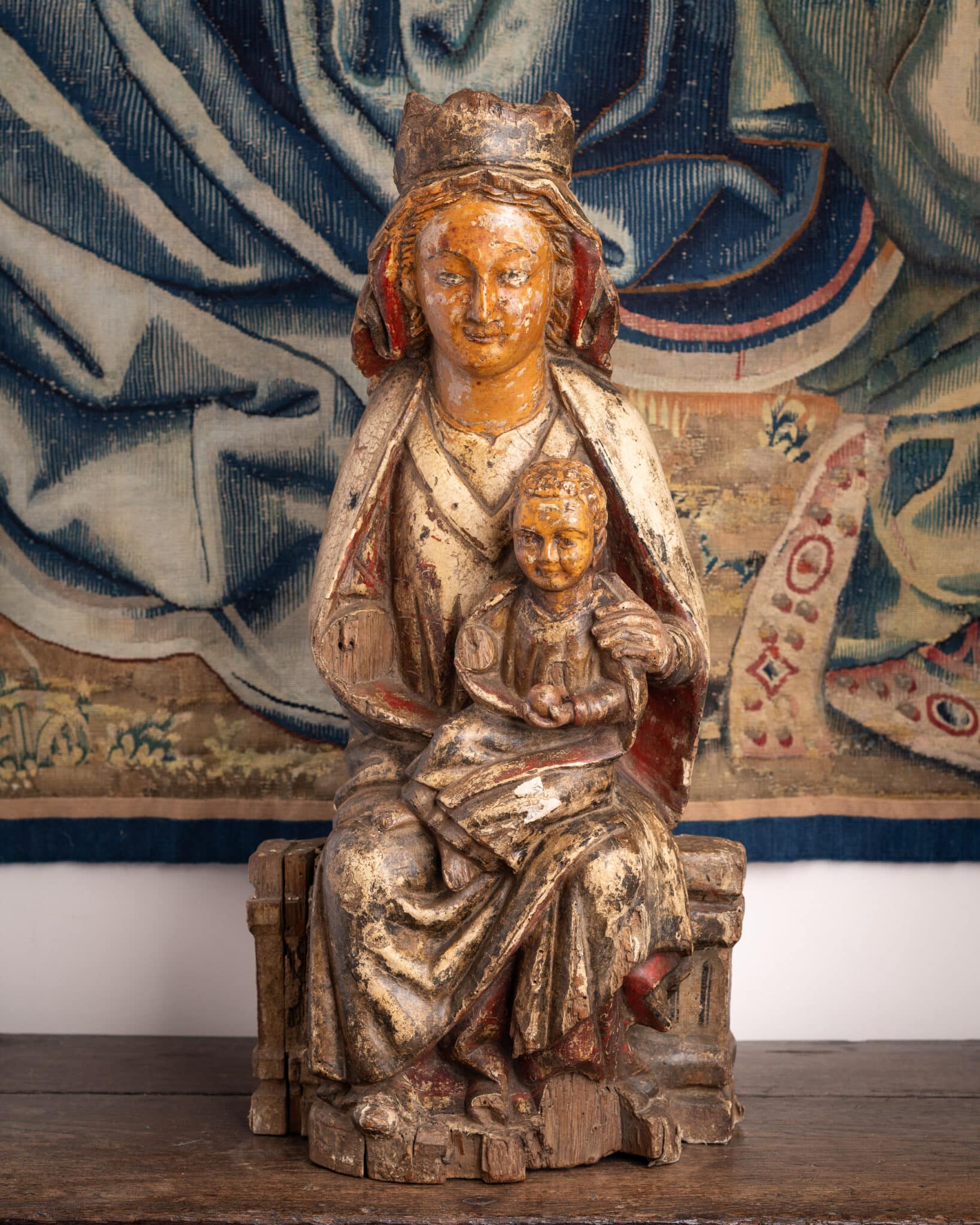
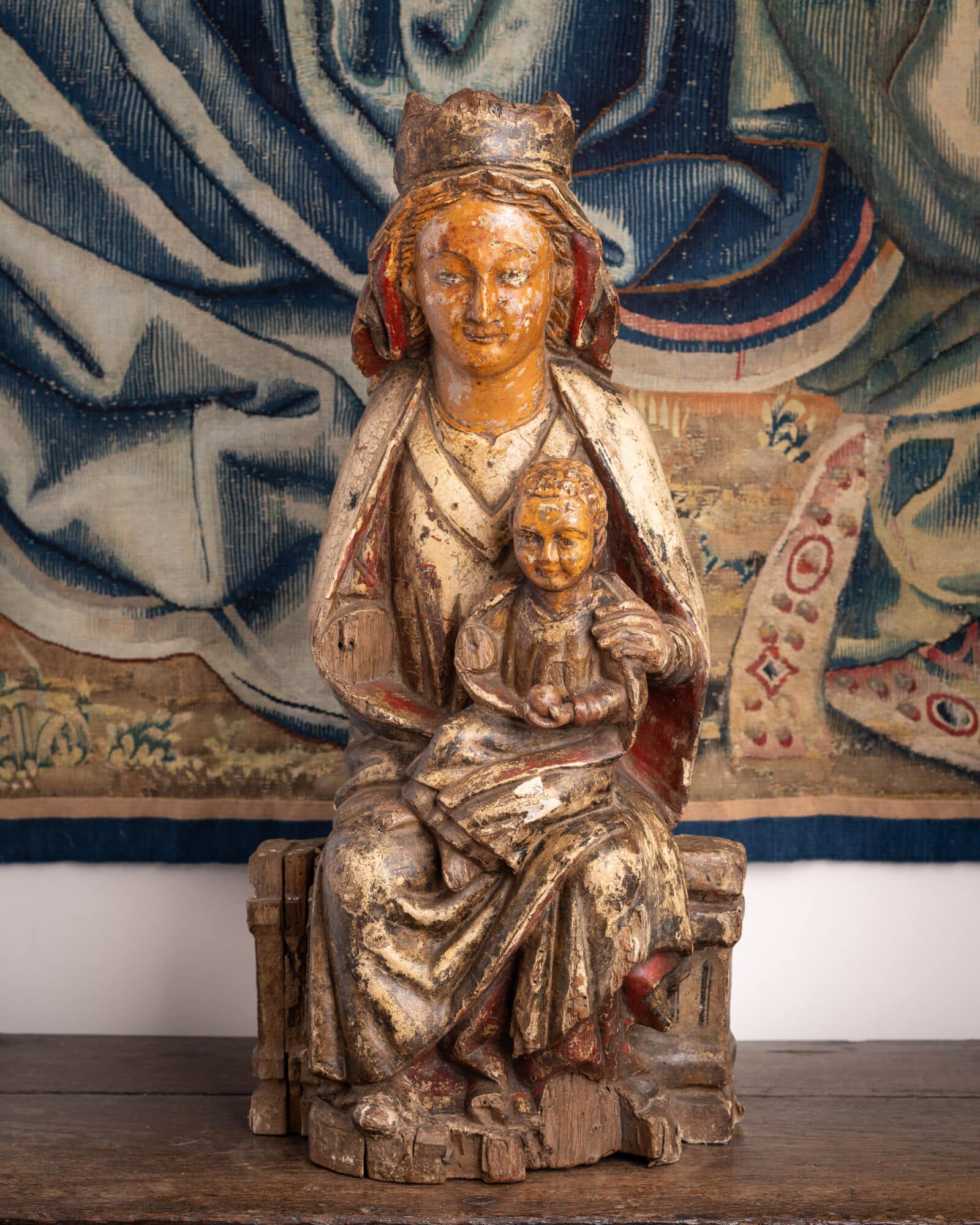
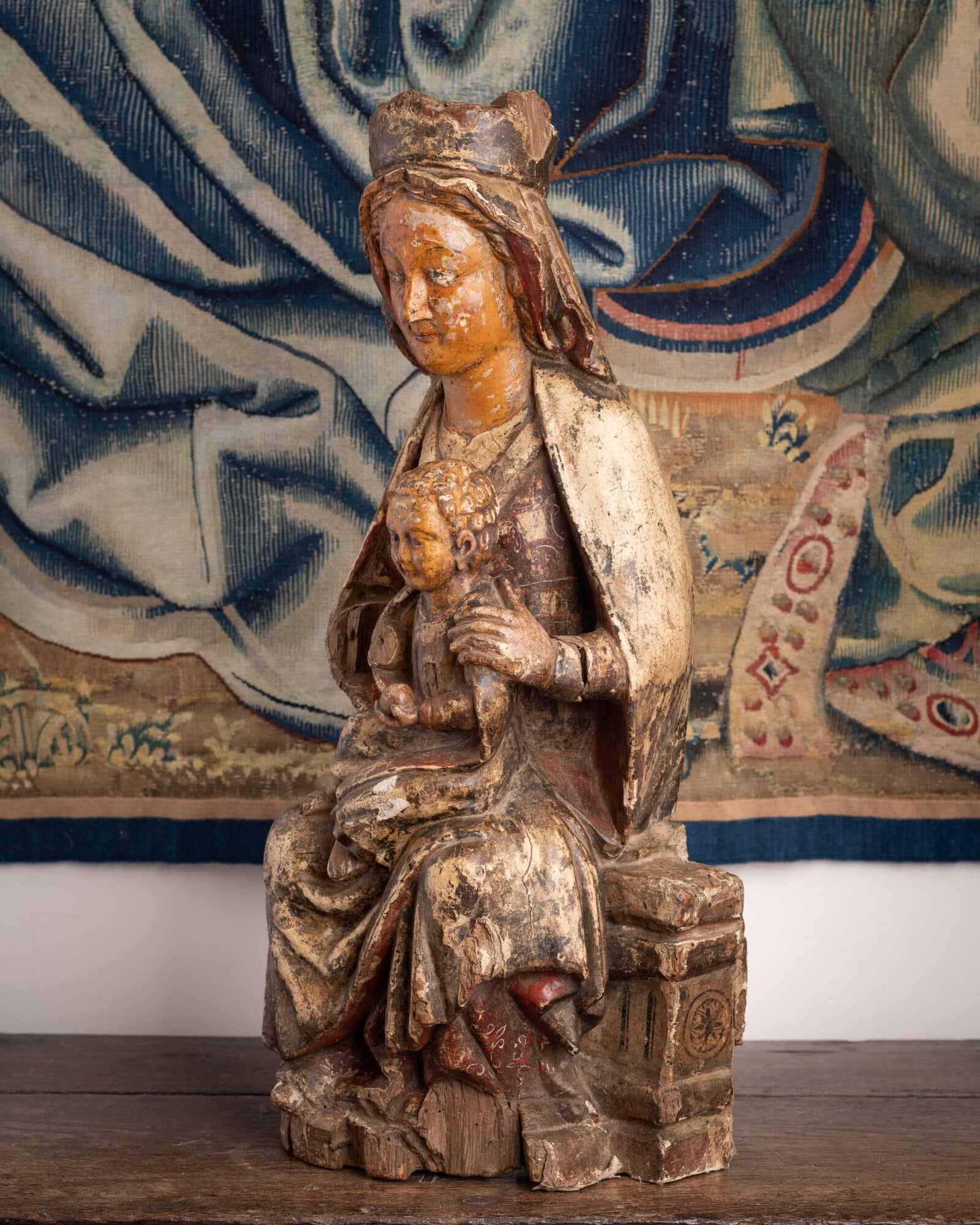
An early Gothic carved wood sculpture depicting the Virgin and Child enthroned, traditionally known as the Sedes Sapientiae, or Seat of Wisdom. The composition retains the hieratic and architectural character of the Romanesque tradition whilst incorporating the greater naturalism and human interaction associated with Gothic sculpture of the late 13th and 14th centuries.
The Virgin is represented seated upon a substantial architectural throne, crowned and wearing a veil beneath a long mantle which descends over her shoulders and envelops much of the figure. Her elongated torso, upright posture and restrained modelling preserve the formal monumentality characteristic of earlier Iberian representations of the Virgin in Majesty.
The facial features are carefully articulated, with almond-shaped eyes, a long, straight nose, a high forehead and a small, gently smiling mouth. The expression is composed and introspective, reflecting the gradual transition from the impersonal solemnity of Romanesque sculpture towards the more individualised treatment of the human figure during the Gothic period.
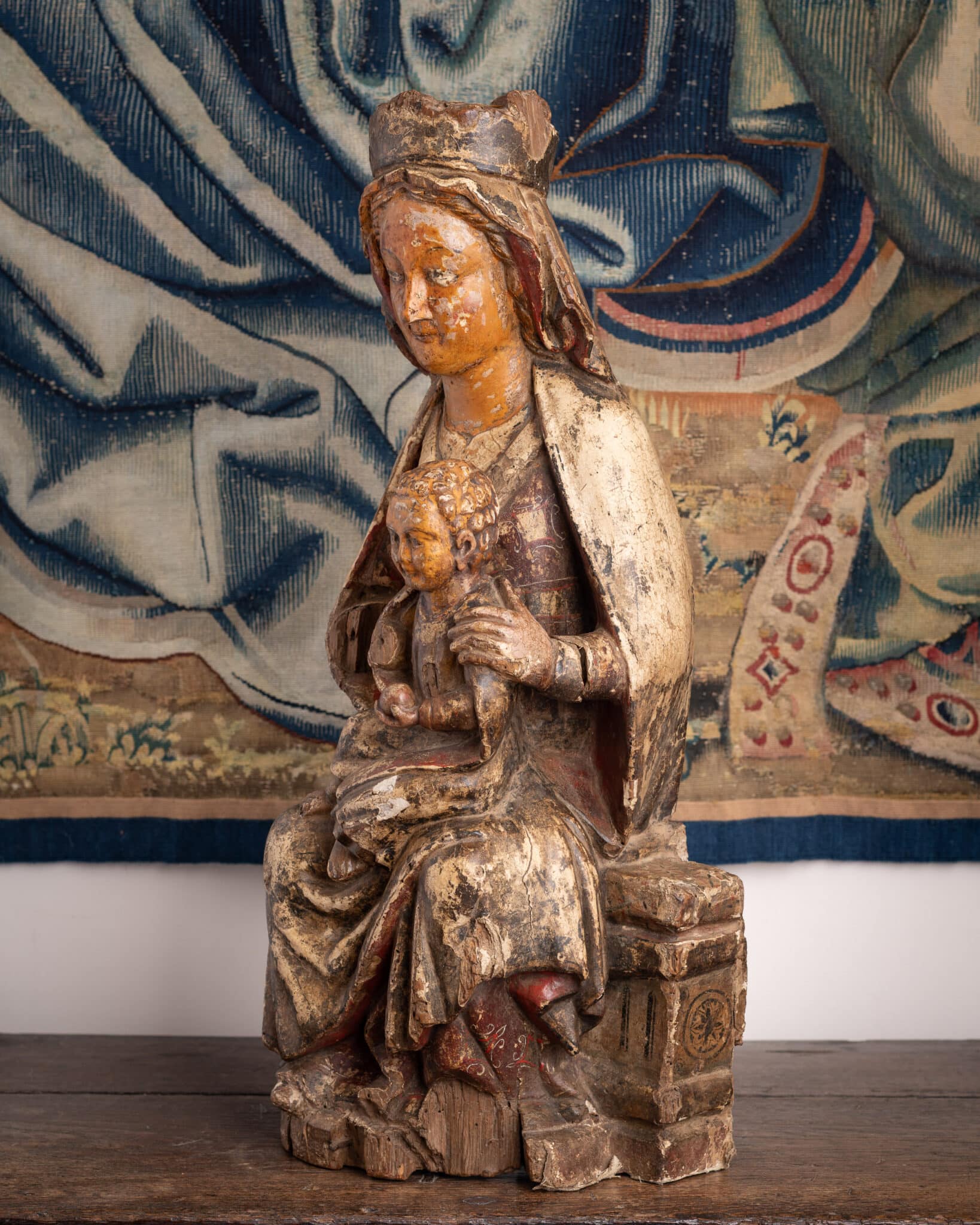
The Christ Child is seated upon the Virgin’s left knee, supported by her left hand, which rests upon his shoulder. His body is turned slightly away from the central axis, with his legs arranged across the Virgin’s lap. The Child’s closely defined curls, prominent ears and mature facial expression retain conventions established in earlier medieval sculpture, whilst his positioning introduces a greater sense of movement and interaction between the two figures.
The Virgin’s mantle falls in broad, relatively shallow folds, with more angular and overlapping passages across the knees and lower body. The treatment of the drapery combines the structural simplicity of the Romanesque tradition with the increasingly complex arrangement of garments characteristic of Gothic carving.
Particularly noteworthy is the architectural throne, formed with substantial rectangular side supports and retaining painted circular ornaments enclosing radiating, rosette-like designs. These geometric motifs, together with traces of decorative painting upon the Virgin’s garments, form an integral part of the sculpture’s visual conception. The surviving polychromy includes areas of red, white, ochre and dark pigmentation, with gilding and evidence of subsequent repainting and restoration.
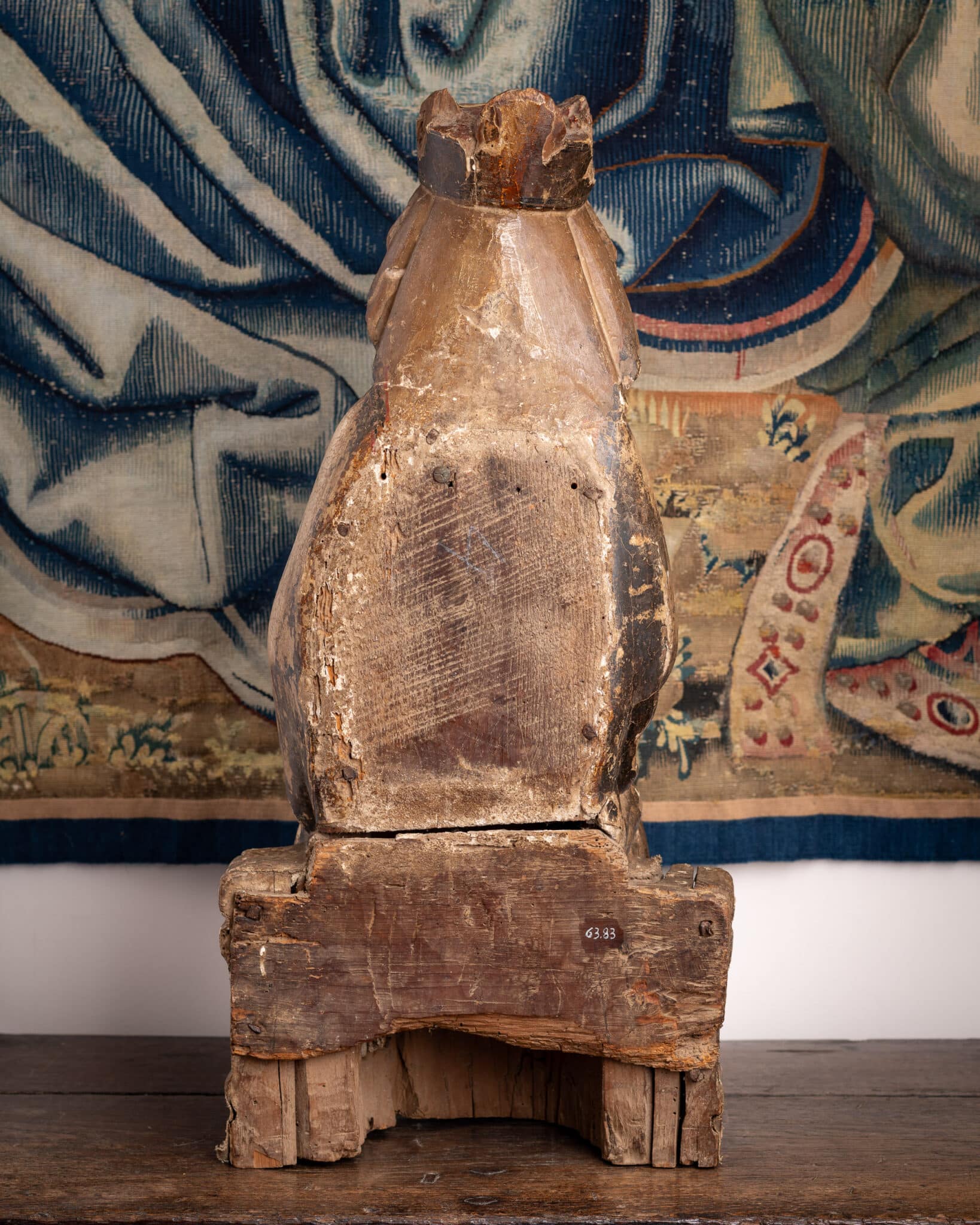
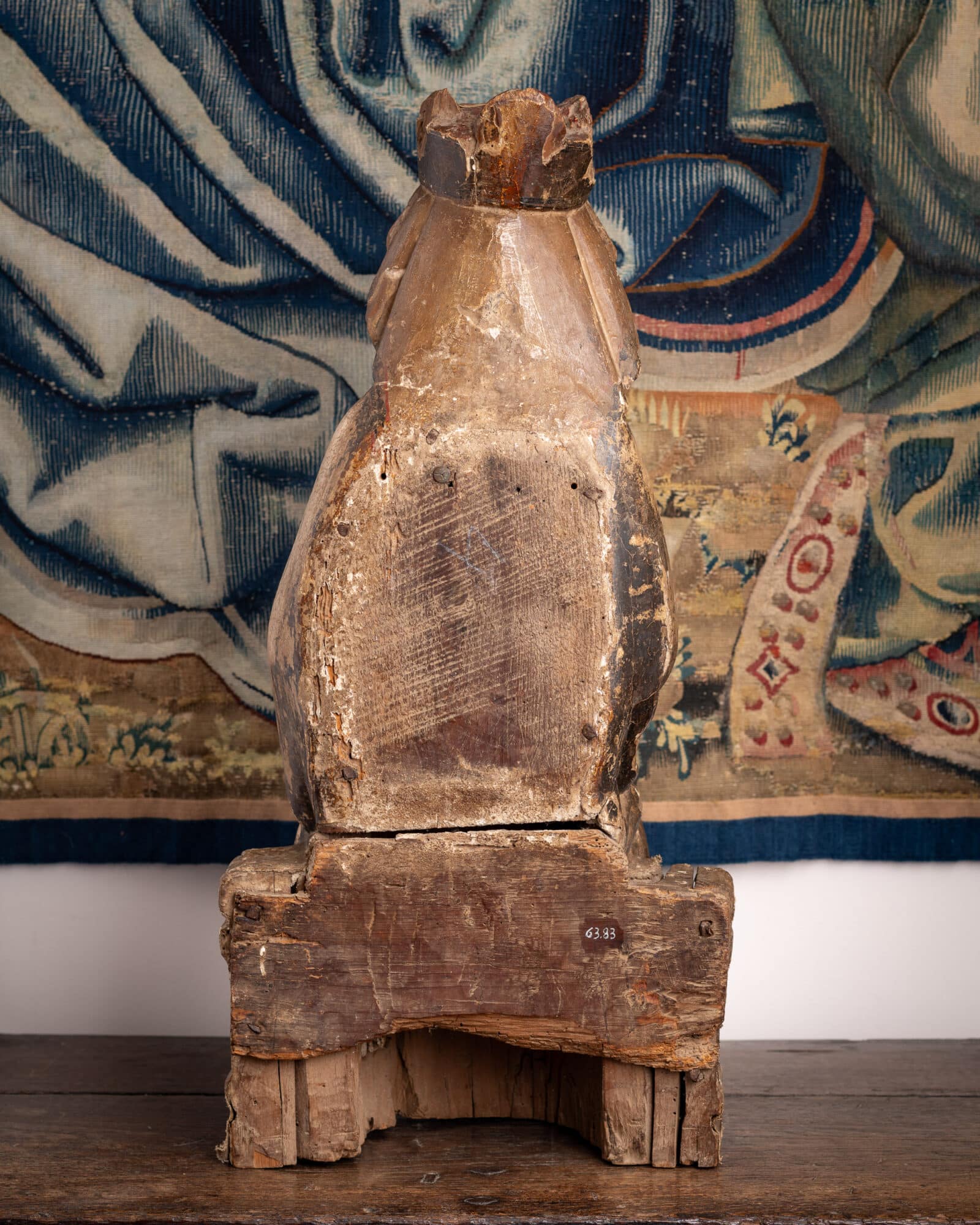
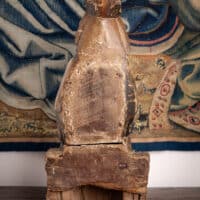
The reverse of the Virgin is extensively hollowed, exposing the worked timber and aspects of the sculpture’s construction. The throne incorporates separately worked wooden elements and displays evidence of historic repairs and alterations. This construction is consistent with medieval practices employed in the production of substantial devotional sculpture, in which the removal of timber from the reverse helped reduce weight and the risk of splitting
The sculpture retains extensive areas of historic polychromy, including decorative passages on the throne and garments. The painted rosettes upon the throne supports are of particular interest, as is the surviving linear and ornamental decoration of the Virgin’s clothing.
The surface displays evidence of more than one decorative campaign. Certain passages, particularly the flesh tones and portions of the mantle, appear to have undergone later intervention. Technical examination would be required to establish the stratigraphy of the painted surfaces and determine the extent of surviving medieval decoration.
The reverse retains an inventory number, 63.83, painted in white upon the timber of the throne. This is consistent with the numbering convention associated with the founding collection of the Bass Museum of Art, Miami Beach, established through the donation of the John and Johanna Bass Collection in 1963. The number may correspond to museum accession number 1963.083, although confirmation from the original museum records remains outstanding.
Provenance
John and Johanna Bass Collection, New York, prior to 1963.
Bass Museum of Art, Miami Beach, Florida, associated with the founding collection of 1963; probable inventory number 1963.083, inscribed 63.83 to the reverse.