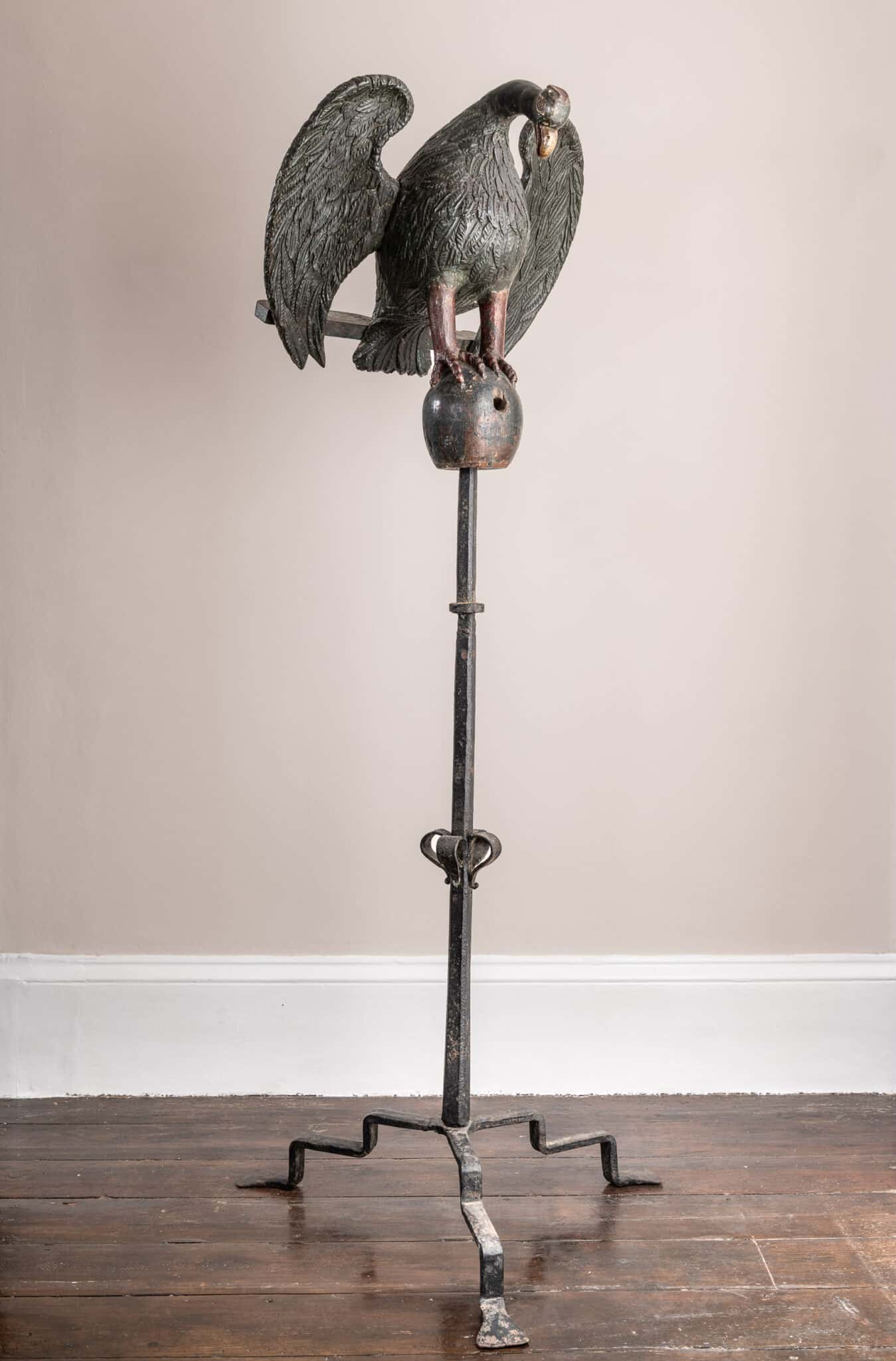
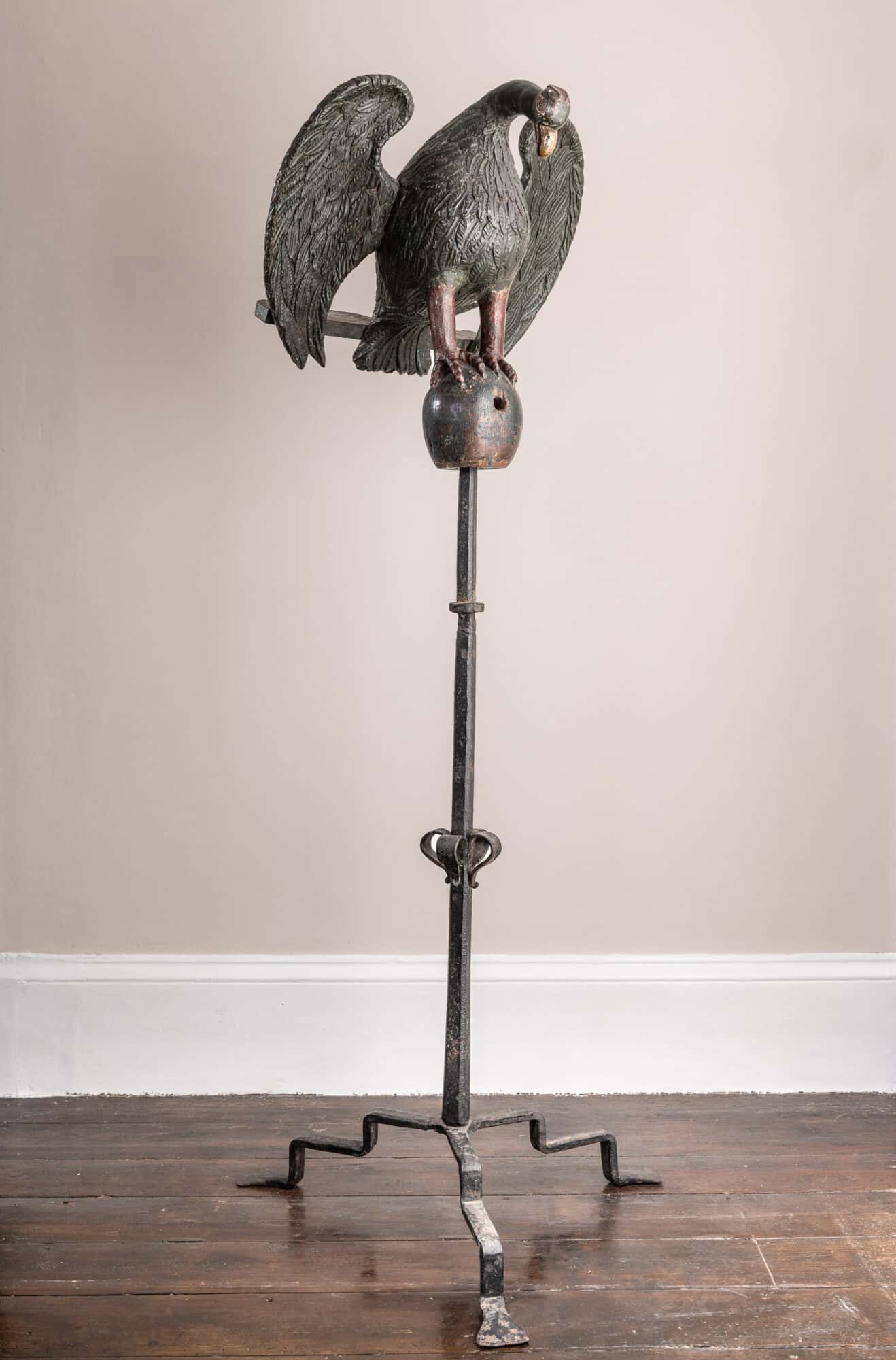
A Late Gothic Polychrome Oak Eagle Lectern
- Period
- late 15th or early 16th century, circa 1480–1520
- Origin
- Probably Flemish or Lower Rhenish
- Dimensions
- W 23"" × H 72"" × D 21""
- Reference
- #Marh3844
Price on application
Description
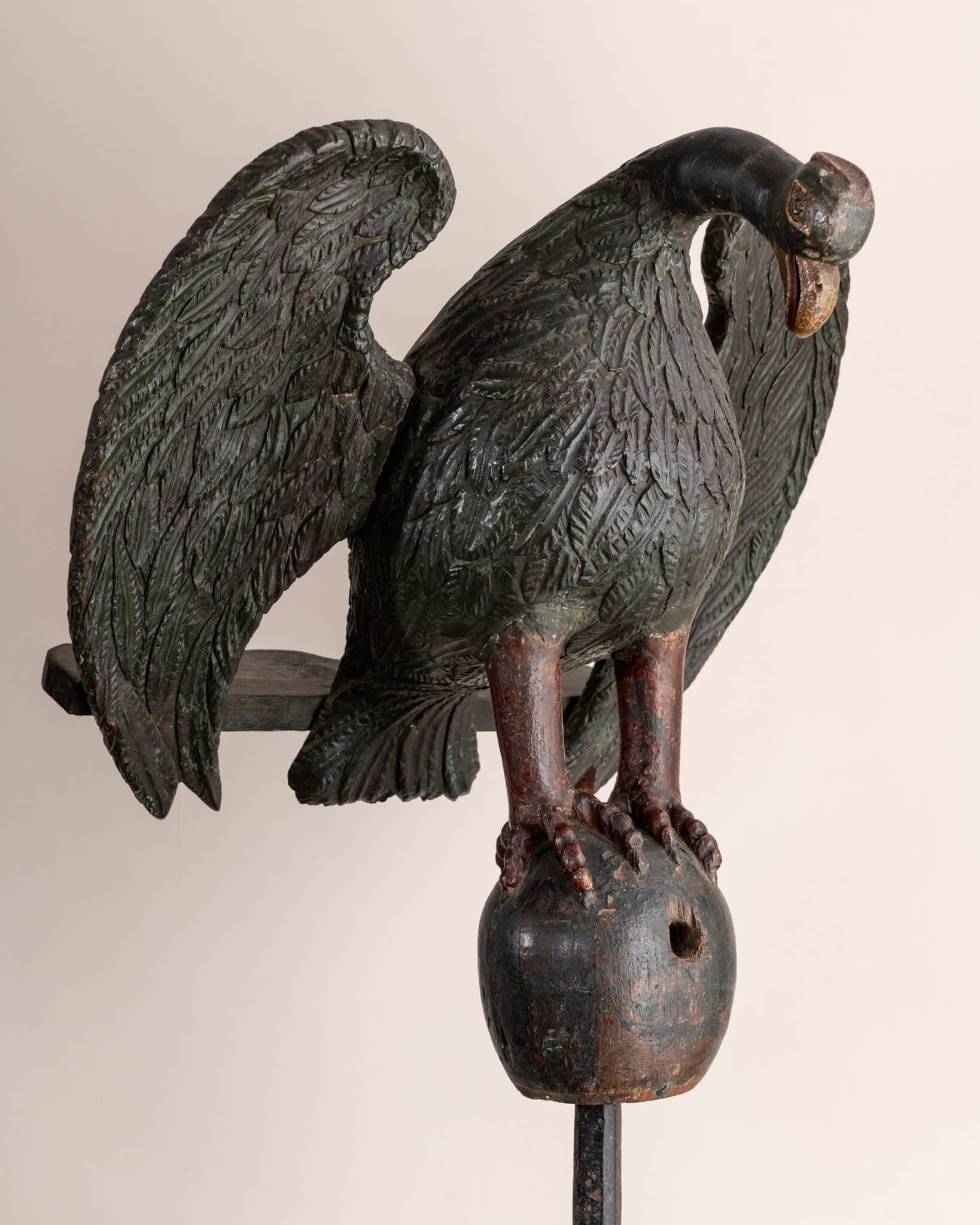
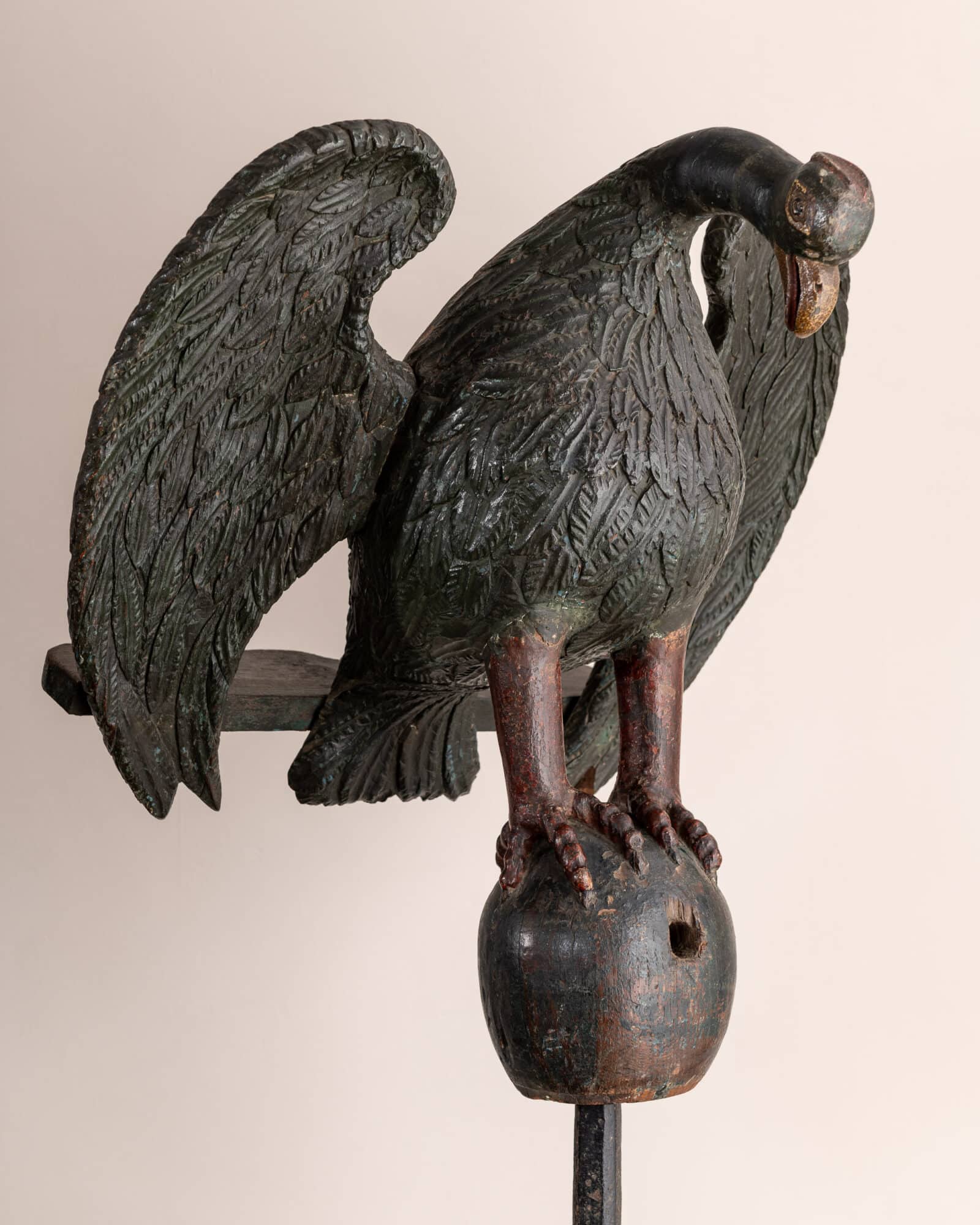
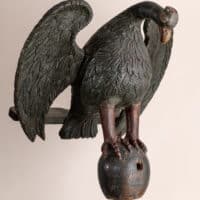
The eagle carved in oak, depicted with its wings raised and head inclined downwards, standing upon a globe. The plumage is worked in overlapping layers of individually delineated feathers, with incised detailing to the wings, breast and tail. The elongated neck terminates in a pronounced hooked beak, while the substantial legs and articulated talons grasp the surface of the globe.
The carving retains extensive historic polychromy, with dark greenish-black colouring to the plumage, reddish-brown decoration to the legs and talons, and traces of ochre colouring to the beak and eyes. Areas of wear and minor losses reveal the underlying oak and carved detail.
To the reverse is a wooden book-rest, with the wings and other projecting elements constructed from separately carved sections of timber. The underside of the tail incorporates a carved scrolling motif.
The eagle lectern was a familiar furnishing of medieval churches, traditionally associated with the reading of the Gospels. The eagle, emblematic of St John the Evangelist, was frequently represented with outstretched or raised wings, supporting a book-rest for the reading of liturgical texts.
The treatment of the plumage, pronounced curvature of the neck and overall sculptural form are consistent with late Gothic woodcarving traditions of northern Europe, particularly those of the Low Countries and Lower Rhine during the late 15th and early 16th centuries.
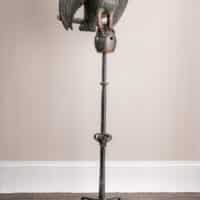
The lectern is now supported upon an associated wrought-iron tripod stand, probably dating from the 16th century, with a square-section upright, forged decorative details and three splayed feet.