A Pair of Spanish Renaissance Brass Capstan Candlesticks
- Period
- Circa 1550–1580
- Origin
- Spain
- Dimensions
- W 5 3/8" diameter" × H 5 1/4""
- Reference
- #Marh3845
£3,850
Description
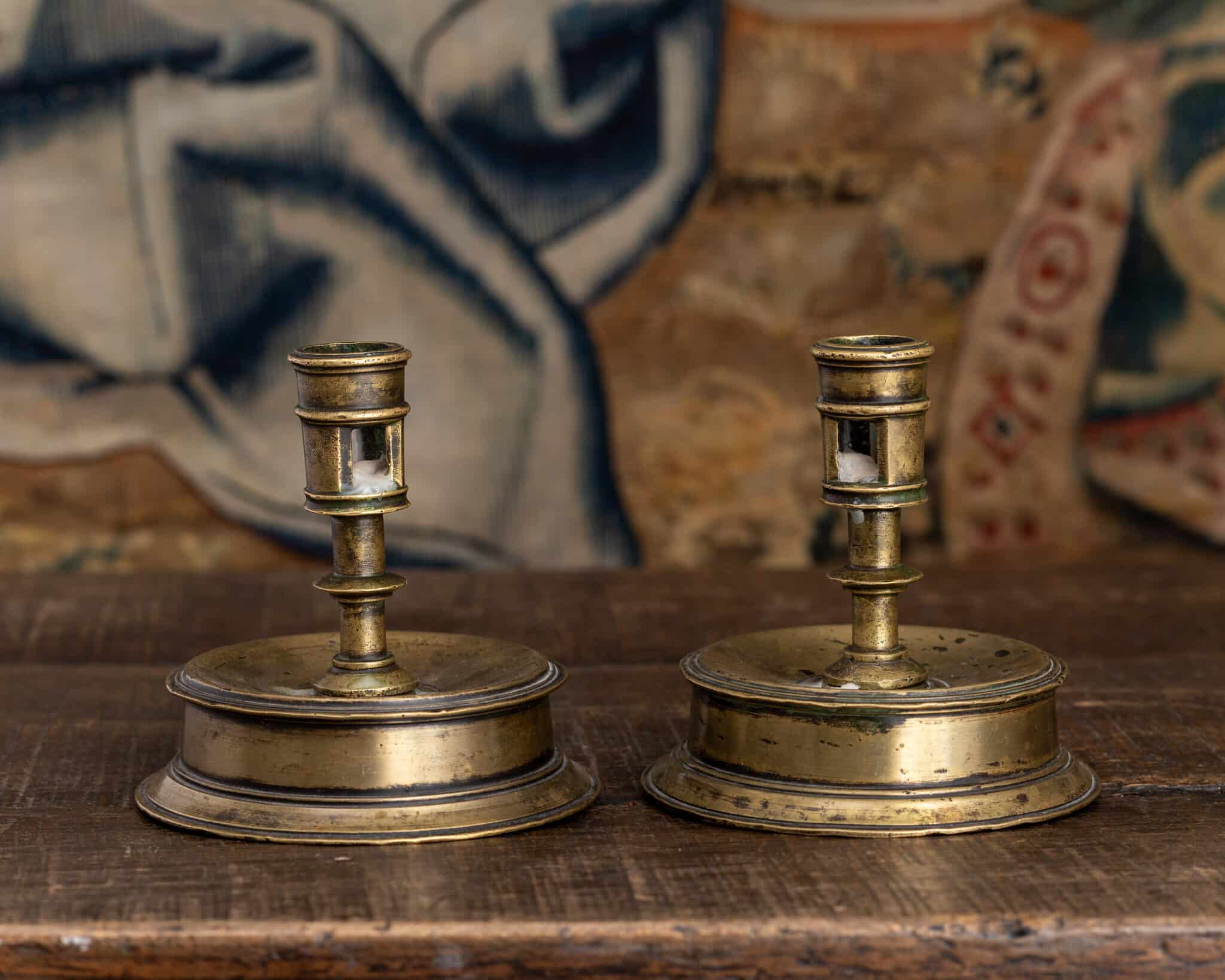
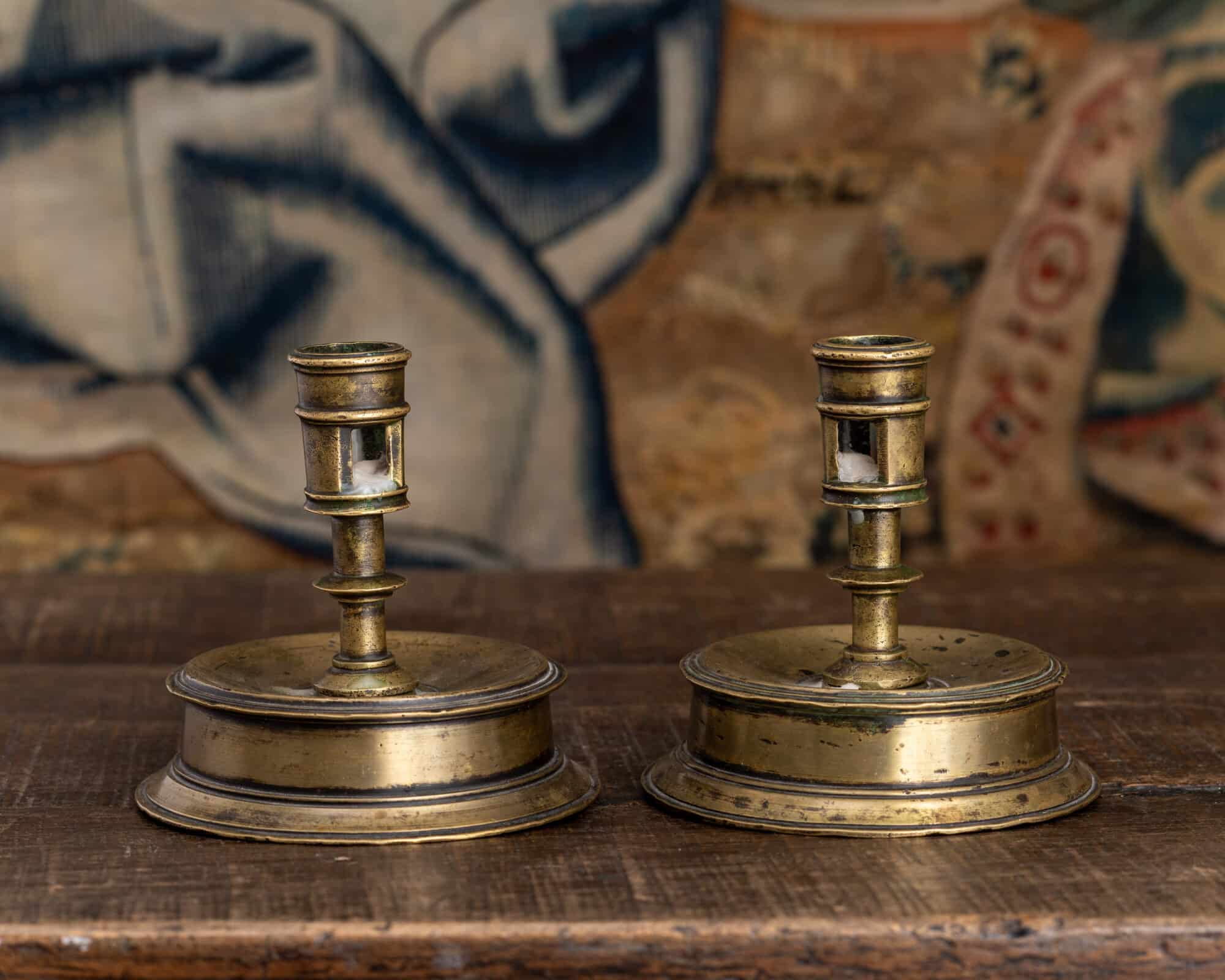
A pair of 16th-century Spanish Renaissance capstan candlesticks, cast and turned in brass, each with a broad circular drum-shaped base supporting a short, moulded stem and cylindrical candle socket.
The substantial circular bases are formed with a raised central platform, a pronounced vertical drum and a series of concentric mouldings around the upper and lower edges. Rising from the centre is a short baluster-form stem incorporating a projecting circular knop, above which sits a cylindrical socket with a moulded upper rim and rectangular apertures to facilitate the removal of candle stubs.
The candlesticks display the restrained architectural character associated with Spanish metalwork of the 16th century. Their low proportions, broad circular bases and emphasis on horizontal mouldings are characteristic of the capstan form, a type produced in Spain and elsewhere in continental Europe during the Renaissance.
The construction is consistent with contemporary brass-foundry practice, combining cast elements with lathe-turned finishing. The undersides of the bases are deeply recessed and retain concentric turning marks, while the individual components are secured through a central attachment. The surfaces exhibit variations in colour, wear and oxidation associated with age and use.
The term capstan derives from the resemblance of these candlesticks to the cylindrical winding mechanisms employed aboard ships, although the form itself was intended for domestic and potentially ecclesiastical use.
Comparable Spanish capstan candlesticks dating from the second half of the 16th century have been recorded with similarly broad bases, short stems and pierced cylindrical sockets.