A Large Gothic Oak Panel Depicting the Crucifixion
- Period
- Circa 1450–1480
- Origin
- Northern France, possibly Normandy, or Flanders
- Dimensions
- W 24 3/4"" × H 40 1/4" "
- Reference
- #Marh3824
£7,250
Description
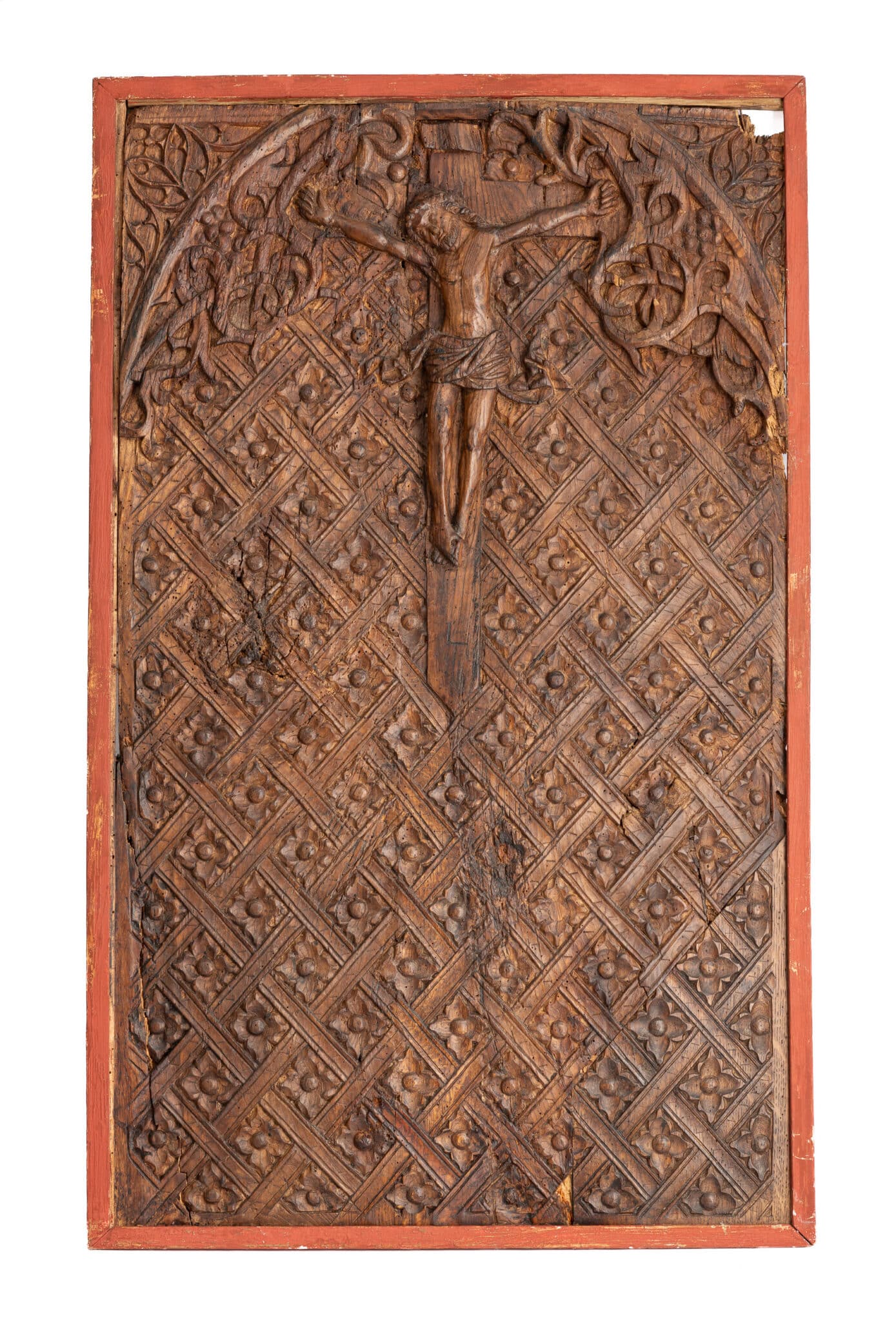
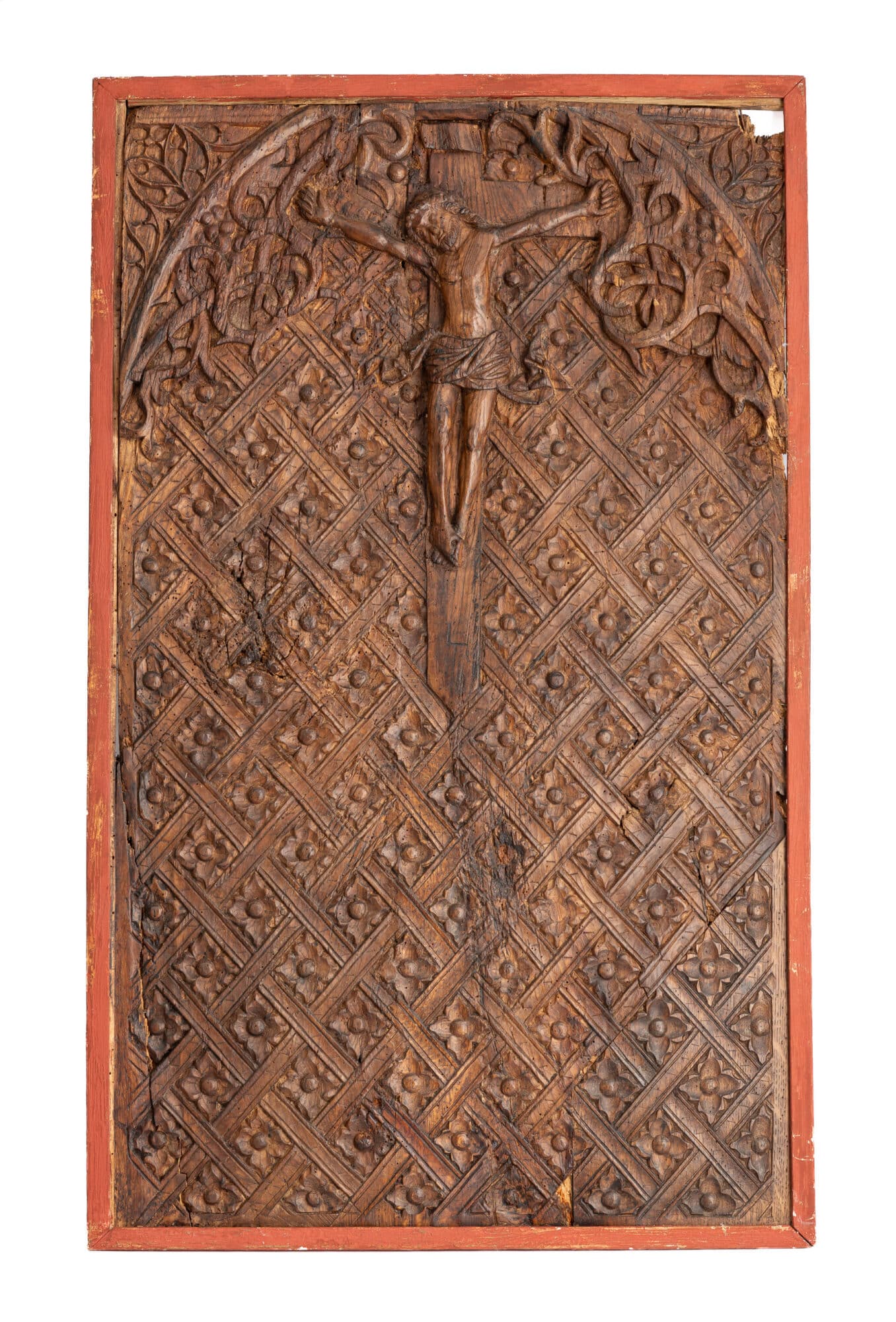
A substantial fifteenth-century oak relief panel depicting the Crucifixion, the figure of Christ set against an extensively carved floral diaper ground and enclosed beneath a pointed Gothic arch enriched with scrolling foliage, flowers and fruiting branches.
The composition is distinguished by its elaborate geometric background, formed from intersecting diagonal moulded bands creating a continuous arrangement of lozenge-shaped compartments. Each contains an individually carved four-petalled flower with a prominent central boss. The disciplined repetition of this ornament, extending across almost the entire surface, creates a richly textured architectural setting for the Crucifixion.
Christ is represented with outstretched arms, his head inclined towards his right shoulder and his slender body suspended upon a simply formed cross. The carefully modelled anatomy, expressive facial features and deeply folded perizonium demonstrate the carver’s understanding of the late Gothic sculptural tradition. Particular attention has been given to the treatment of the hair and beard, the articulation of the torso and the overlapping folds of the drapery.
Above, the pointed arch is enriched with vigorously carved foliage, incorporating curling stems, pointed leaves, flowers and clusters of fruit. The contrast between the freely worked naturalistic ornament of the upper section and the ordered geometry of the diapered field is characteristic of the decorative vocabulary employed in northern European ecclesiastical woodwork during the fifteenth century.
The panel is carved from a single substantial board of oak, its reverse retaining the broad adze marks and undulating surface associated with traditional timber preparation. This method of construction, together with the scale and devotional subject, suggests that the relief originally formed part of a larger ecclesiastical furnishing, possibly a retable or other fixed architectural arrangement within a church.
Stylistically, the carving belongs to the late Gothic traditions of northern France and the southern Netherlands, where closely related forms of architectural ornament and religious sculpture developed throughout the fifteenth century. The bold foliate decoration, extensive floral diapering and treatment of the figure suggest a possible origin in Normandy, although the artistic traditions of Flanders and the adjoining northern French regions provide equally relevant comparisons.
Condition
The oak retains a deeply aged surface, with the natural variations in colour and texture associated with prolonged use and exposure. Areas of historic wear, localised losses and practical patch repairs form part of the panel’s surviving character, reflecting the continued maintenance and preservation of ecclesiastical furnishings over successive generations. These interventions have been retained and remain visually sympathetic to the original carving.
The panel is housed within a later painted wooden frame.