South Netherlandish Late Gothic Bronze Candlestick with Twelve-Sided Base
- Period
- Circa 1500 - 1525
- Origin
- South Netherlands
- Dimensions
- W 6 1/2" diameter " × H 8 1/2""
- Reference
- #Marh3823
£4,250
Description
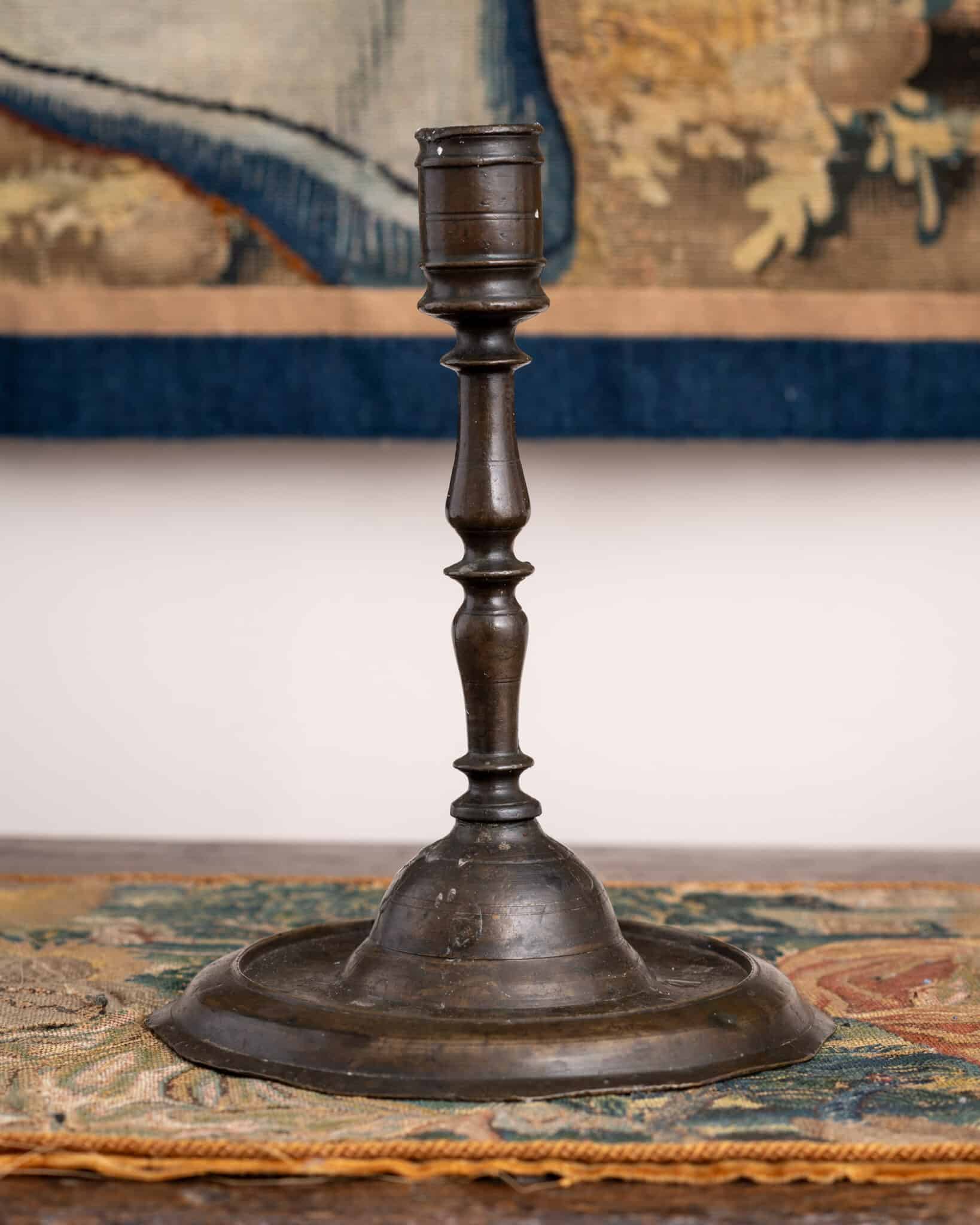
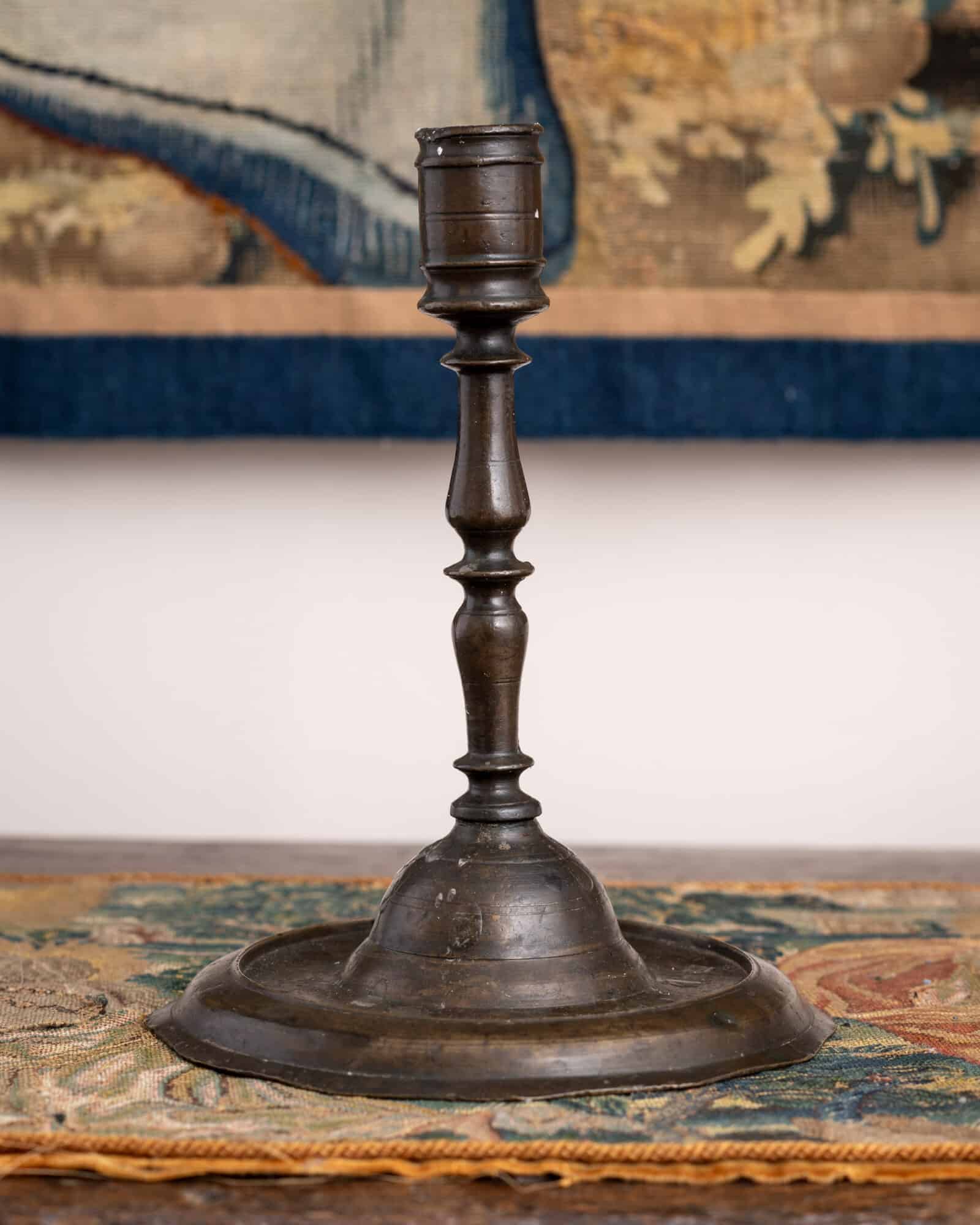
A late Gothic bronze candlestick, probably originating from the Southern Netherlands during the opening decades of the 16th century, distinguished by its broad twelve-sided base, elongated baluster stem and substantial cylindrical candle socket.
The candlestick stands upon a broad, shallow drip pan, its perimeter formed with twelve flat sides rather than the more conventional circular outline. Rising from the centre is a pronounced conical boss supporting a slender stem composed of successive baluster elements, narrow necks and sharply defined annular mouldings. The upper section terminates in a cylindrical socket, encircled by horizontal mouldings and retaining an old candle within.
The relationship between the broad, low base and the comparatively slender stem creates a distinctive architectural silhouette. Its restrained ornamentation, dependent upon carefully considered changes of profile rather than applied decoration, reflects the metalworking traditions of the late medieval Netherlands.
Of particular interest is the twelve-sided configuration of the base. Although polygonal forms occur throughout medieval European metalwork, the combination of a dodecagonal drip pan, raised central boss and elongated baluster stem represents an unusual variation upon established late Gothic candlestick types.
The underside reveals a recessed central section with concentric lathe-finishing marks. The stem appears to be secured to the base by a threaded connection, suggesting the separate manufacture and mechanical assembly of the components. The twelve-sided perimeter contrasts with the circular tooling marks beneath the base, illustrating the combination of casting and lathe-finishing techniques employed in its production.
Stylistically, the candlestick belongs to the transitional period between late Gothic and early Renaissance design. Its pronounced mouldings, slender proportions and architectural articulation retain the visual vocabulary of medieval metalwork, while the regularity of its baluster forms anticipates developments in 16th-century decorative design.
Condition
The candlestick retains a dark, aged surface with variations in colour and texture associated with prolonged use and handling, together with an old candle surviving within the unpierced socket.