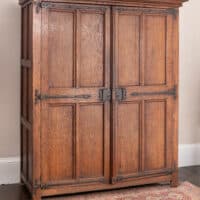
A Late Gothic Oak Press Cupboard
- Period
- Circa 1500–1520
- Origin
- Flemish, probably Brabant
- Dimensions
- W 68 3/4"" × H 80 1/2"" × D 30 3/4""
- Reference
- #Marh3810
£14,500
Description
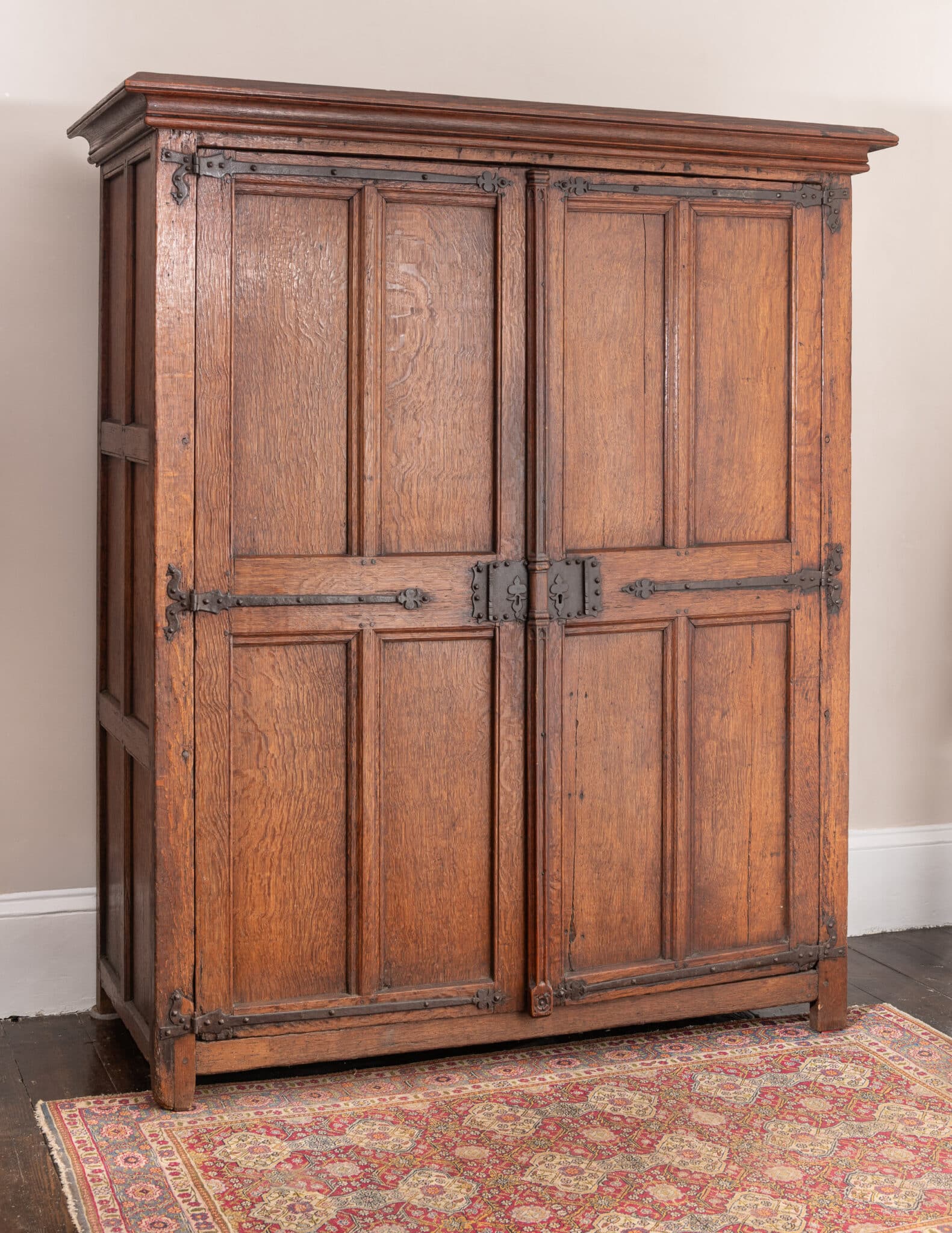
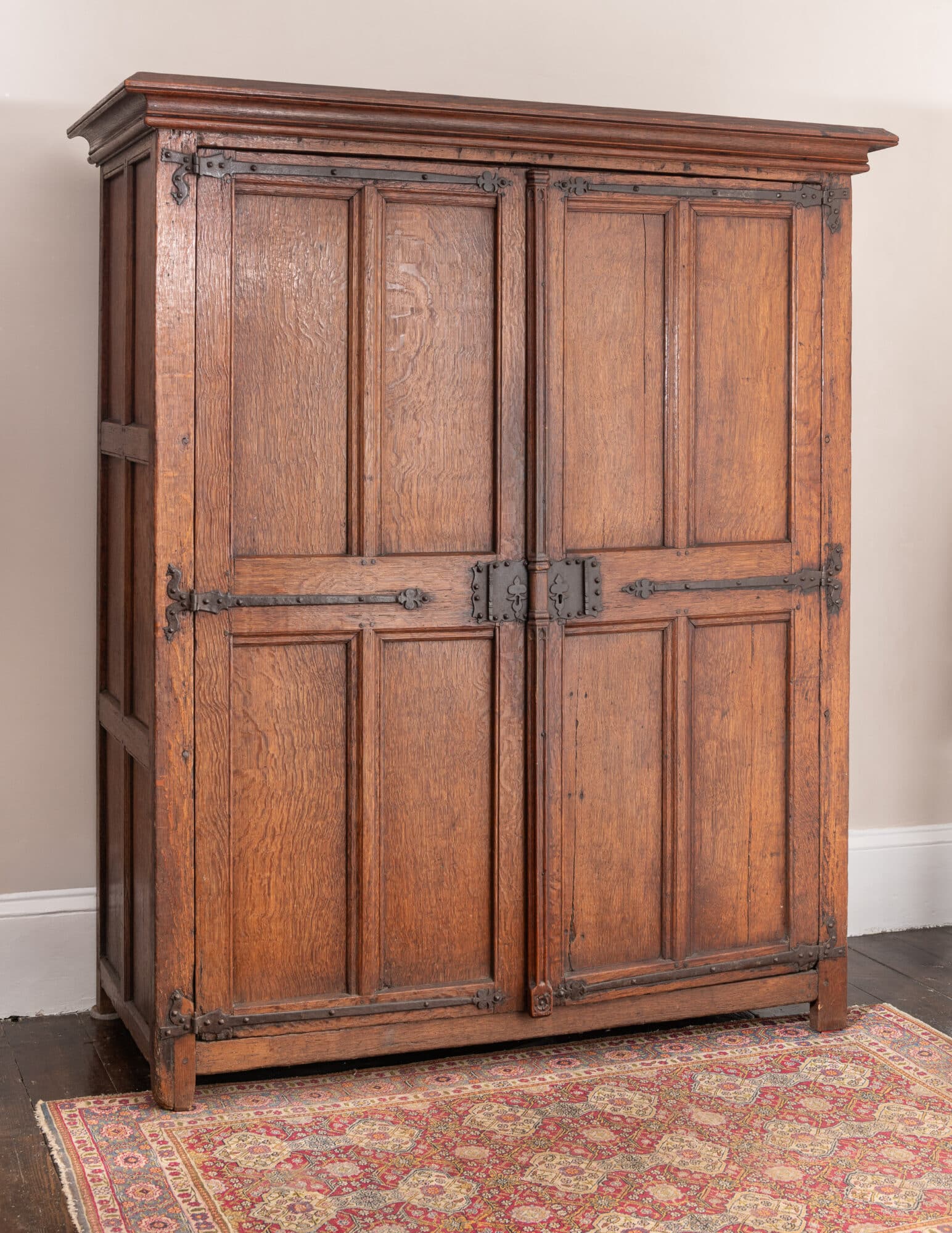
An imposing late Gothic oak press cupboard of architectural form, constructed with a pair of tall doors, each divided into four rectangular panels, flanked by substantial upright stiles and with corresponding panelled sides. The façade retains an extensive assemblage of wrought-iron fittings, including long strap hinges with shaped foliate terminals and a pair of pierced central lock plates.
Of particular distinction is the carved and moulded central architectural muntin, which rises between the two doors. Treated in the manner of a miniature Gothic architectural shaft, with moulded collars and carved ornament, it introduces a strong vertical emphasis to the otherwise restrained panelled façade and reflects the close relationship between late medieval furniture-making and contemporary architectural joinery.
The ironwork forms an important element of the cupboard’s decorative character. Rather than being concealed, the hinges and lock furniture are deliberately displayed across the broad oak surfaces, their shaped and foliate terminals creating a rhythmic counterpoint to the severe geometry of the eight panels.
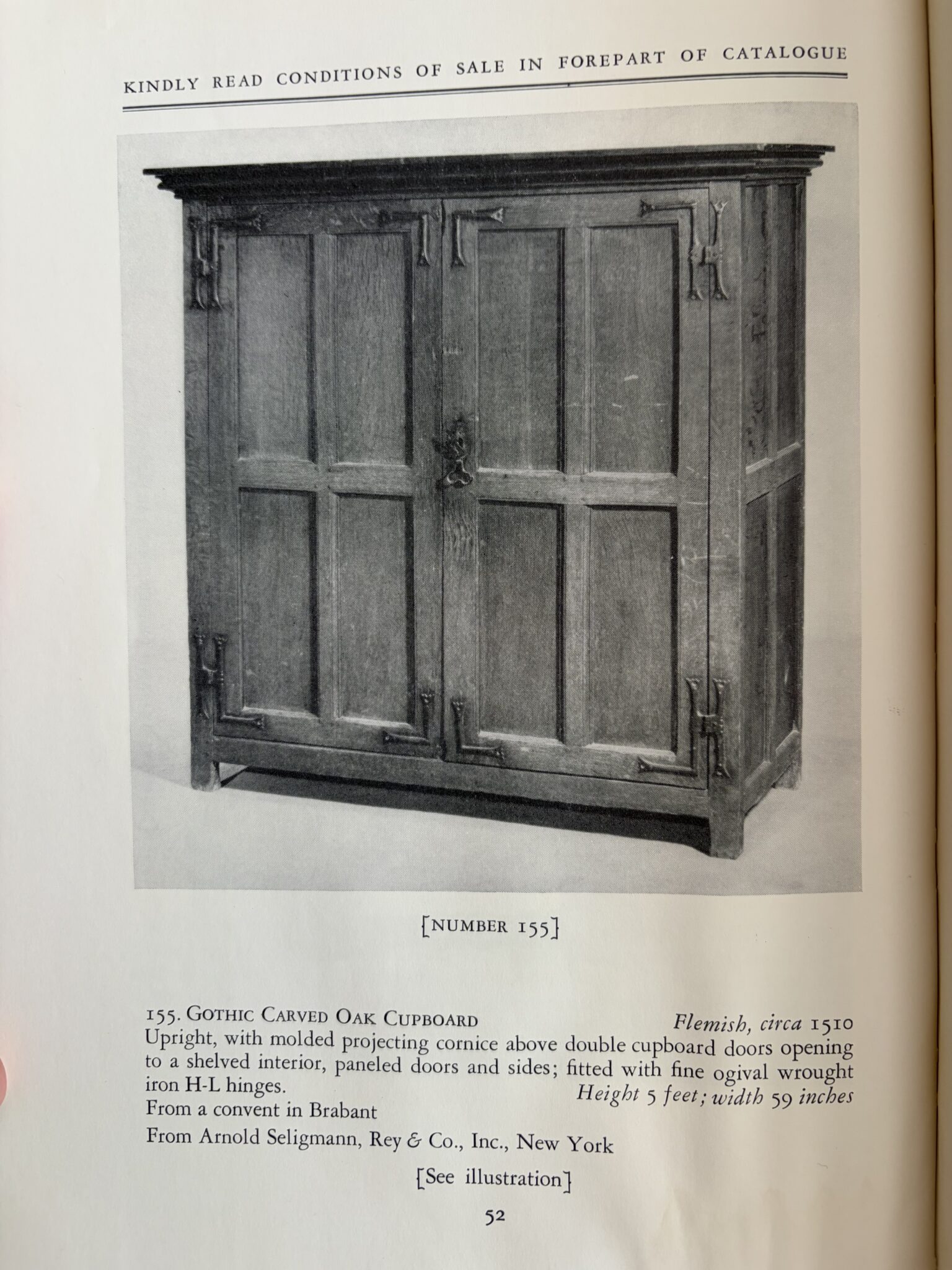
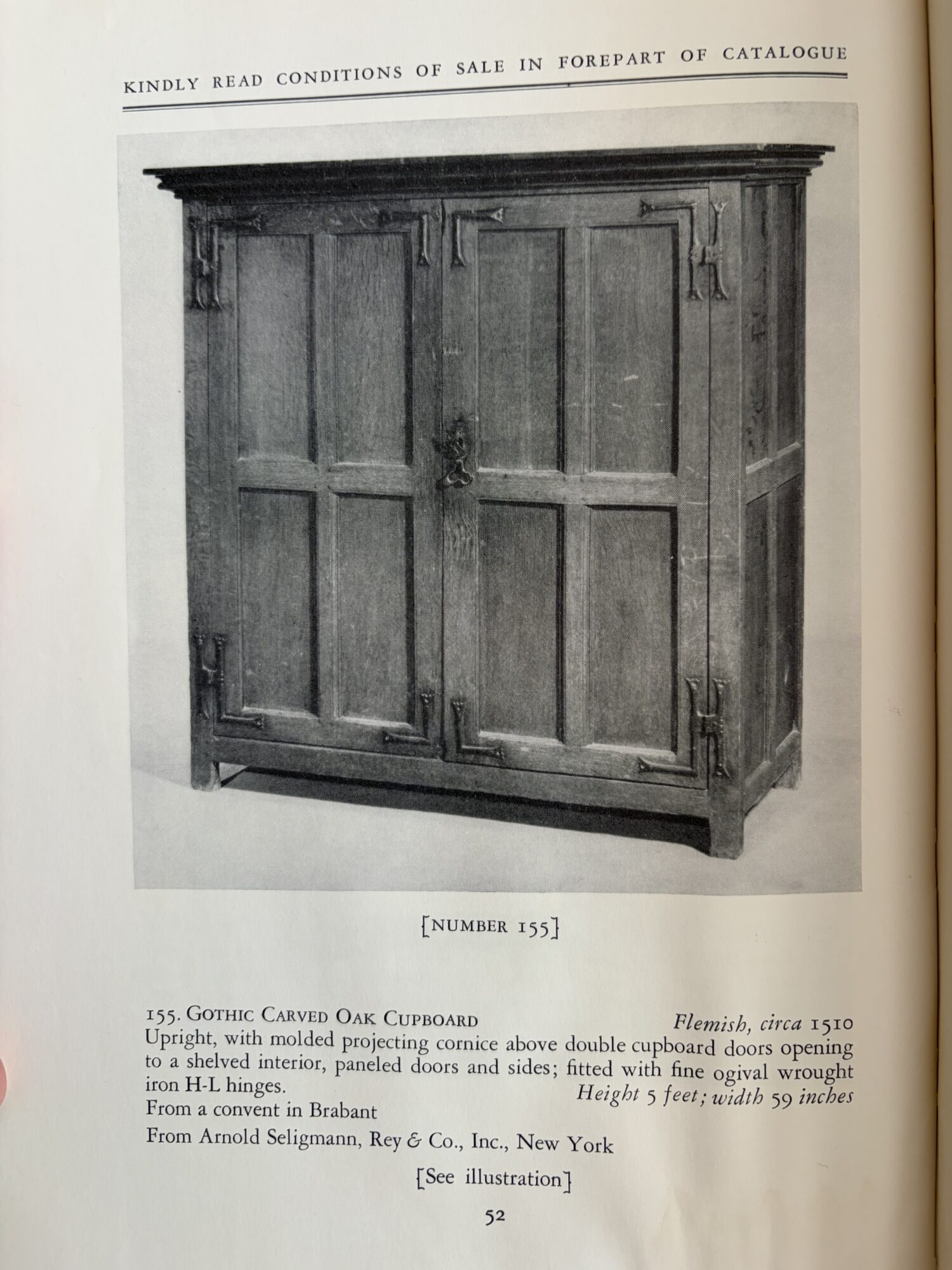
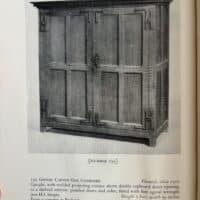
A particularly relevant comparison was formerly in the collection of William Randolph Hearst and was sold by Parke-Bernet Galleries, New York, 5–6 April 1963, lot 155. Catalogued as a “Gothic Carved Oak Cupboard, Flemish, circa 1510,” it was recorded as having come “from a convent in Brabant” and subsequently from Arnold Seligmann, Rey & Co., Inc., New York.
The Hearst cupboard shares the essential characteristics of the present example: a pair of tall, multi-panelled doors, panelled sides, monumental rectilinear construction and prominent externally mounted Gothic ironwork. The comparison provides useful evidence for placing the present cupboard within the furniture traditions of the southern Netherlands, and probably Brabant, during the opening decades of the sixteenth century, although it should not be taken as evidence for a common workshop or institutional origin.
The present cupboard is distinguished by the survival of its carved Gothic central muntin, giving the façade a particularly pronounced architectural quality. The substantial projecting moulded cornice is a later sympathetic replacement, while the feet have undergone minor historic repairs consistent with the age and continued use of the cupboard. These interventions do not detract from the survival of the principal late Gothic structure, panelled doors, architectural detailing and extensive ironwork.
Comparative literature:
Works of Art: Furniture & Architectural Elements Collected by the Late William Randolph Hearst, Parke-Bernet Galleries, Inc., New York, 5–6 April 1963, lot 155, illustrated p. 52.