A late Gothic Polychrome and Giltwood Architectural Tabernacle
- Period
- Circa 1475–1500
- Origin
- Castile, Spain
- Dimensions
- W 39 1/2"" × H 42 1/2"" × D 18""
- Reference
- #Marh3798
Price on application
Description
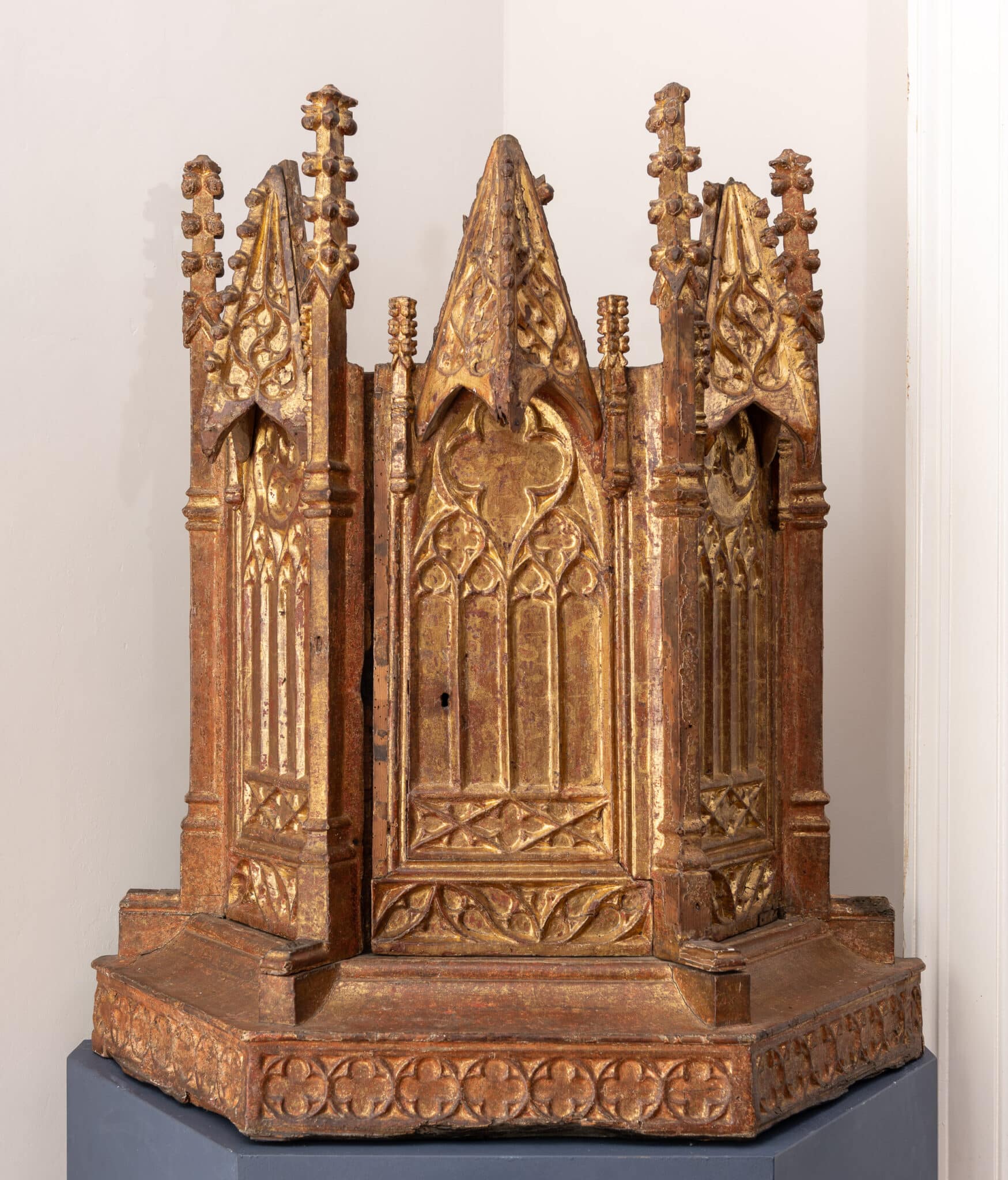
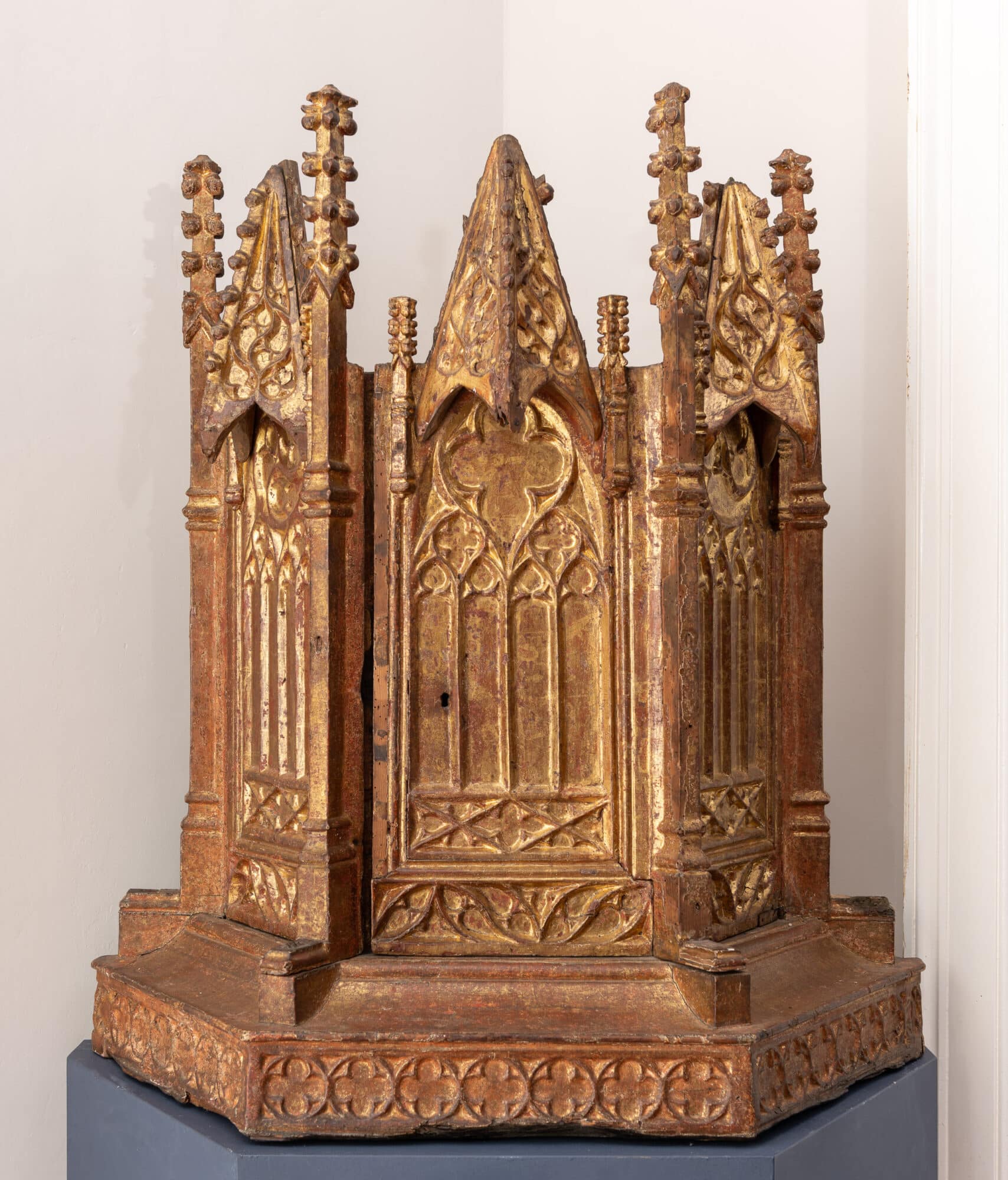
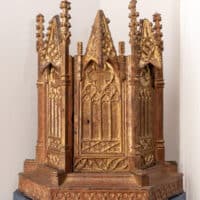
A late fifteenth-century Spanish architectural tabernacle or devotional cabinet, conceived in the form of a miniature Gothic structure and retaining a remarkably extensive scheme of historic gilding and polychromy.
The tabernacle is constructed upon a broad polygonal plinth, its moulded apron carved continuously with a repeated sequence of quatrefoil motifs. Rising from this architectural base is a faceted enclosure composed of tall, narrow Gothic bays divided by slender buttresses and colonnettes. Each face is articulated as a miniature ecclesiastical elevation, with elongated blind tracery, cusped lancets and geometrically carved lower registers. Above, steeply pitched crocketed gables and tall finials create a strongly vertical silhouette characteristic of the final flowering of the Gothic style in late fifteenth-century Spain.
Particularly impressive is the survival of the original decorative surface. Much of the exterior retains its gilded finish over a warm reddish preparation, the age and wear of the gold allowing the underlying layers to emerge and giving the architecture an exceptionally rich and complex surface. The gilding was not merely ornamental but integral to the original conception: illuminated by candlelight, the numerous projecting mouldings, crockets, cusps and tracery would have produced a continually changing play of reflected light appropriate to an object intended for a sacred interior.
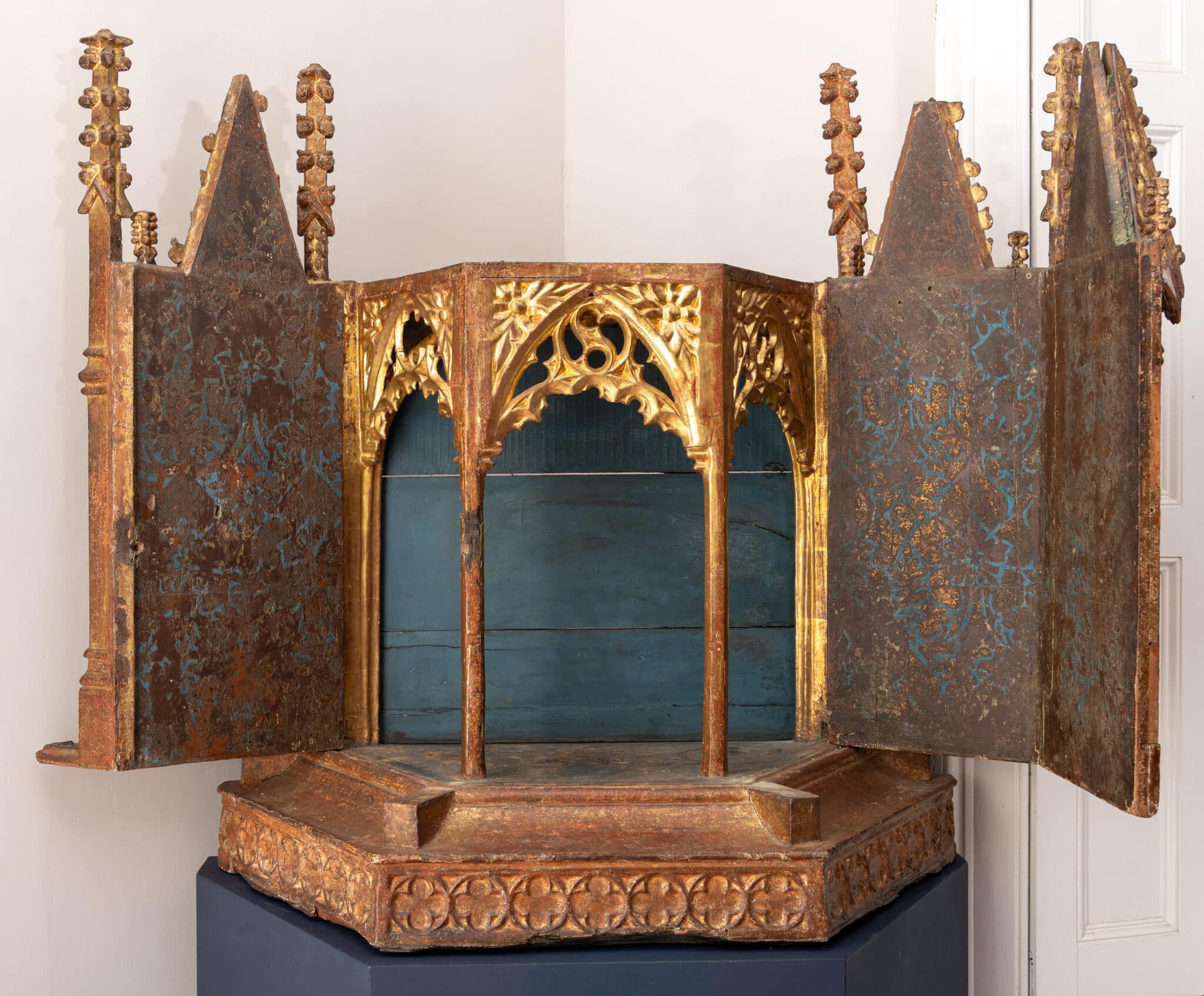
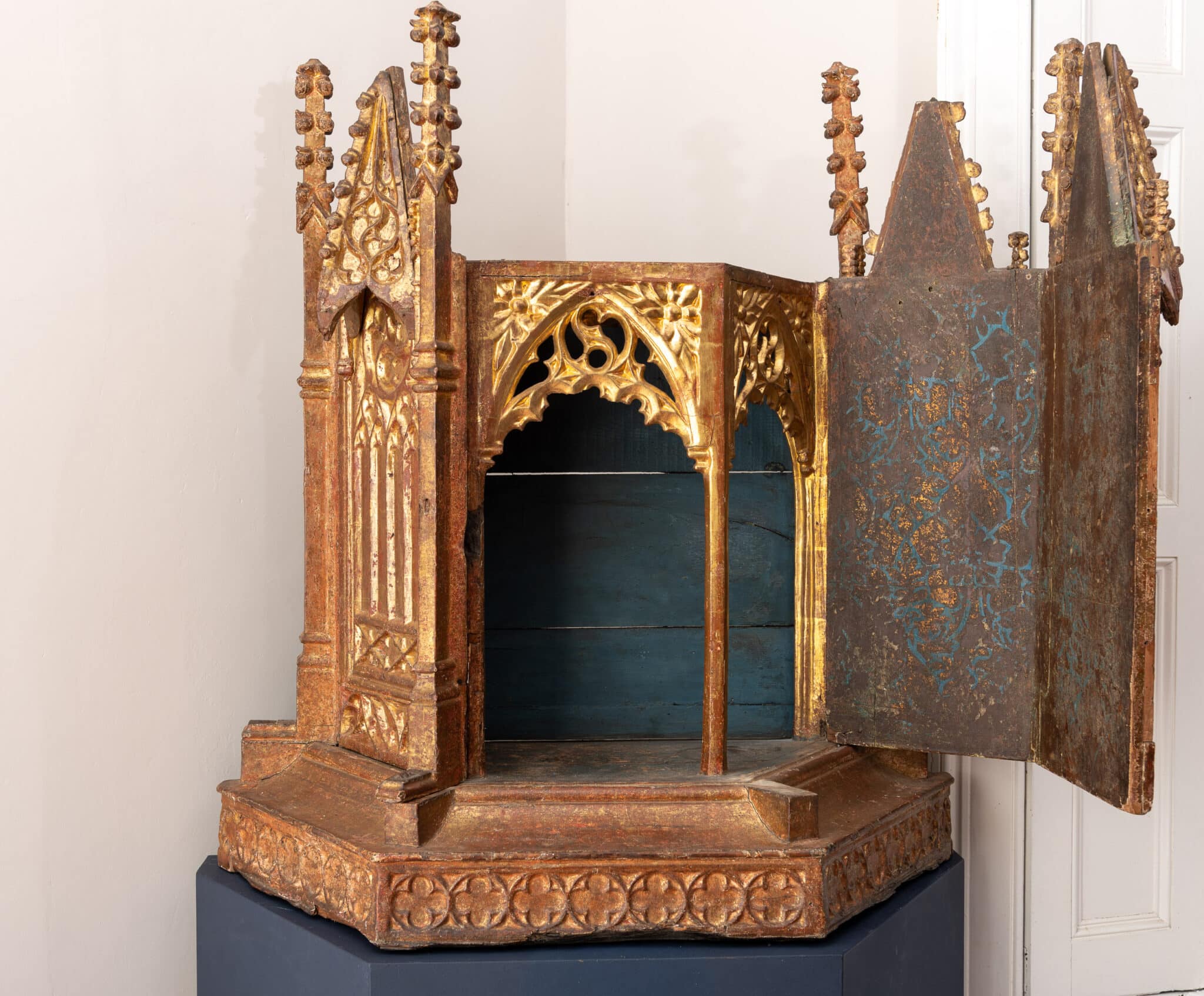
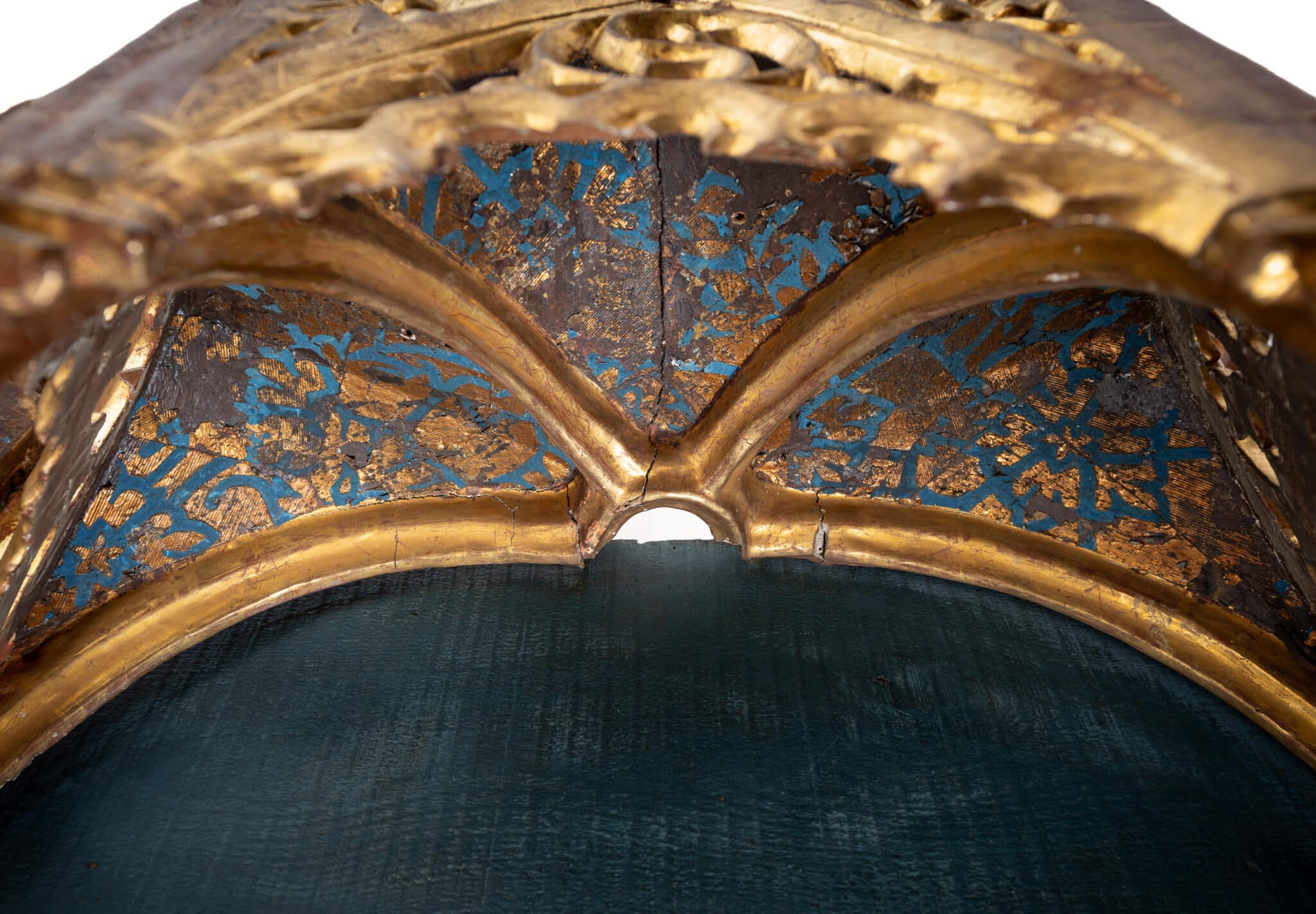
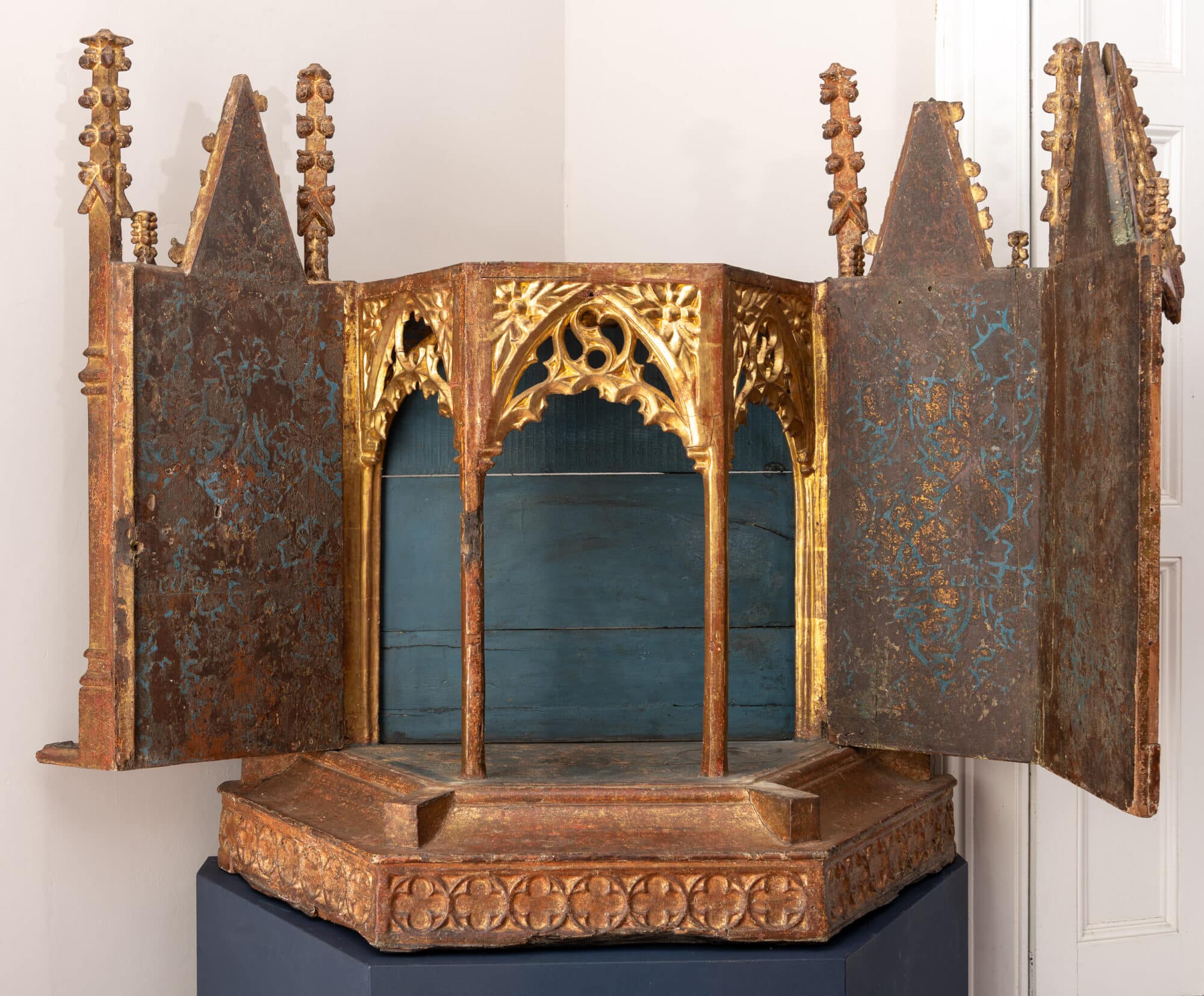
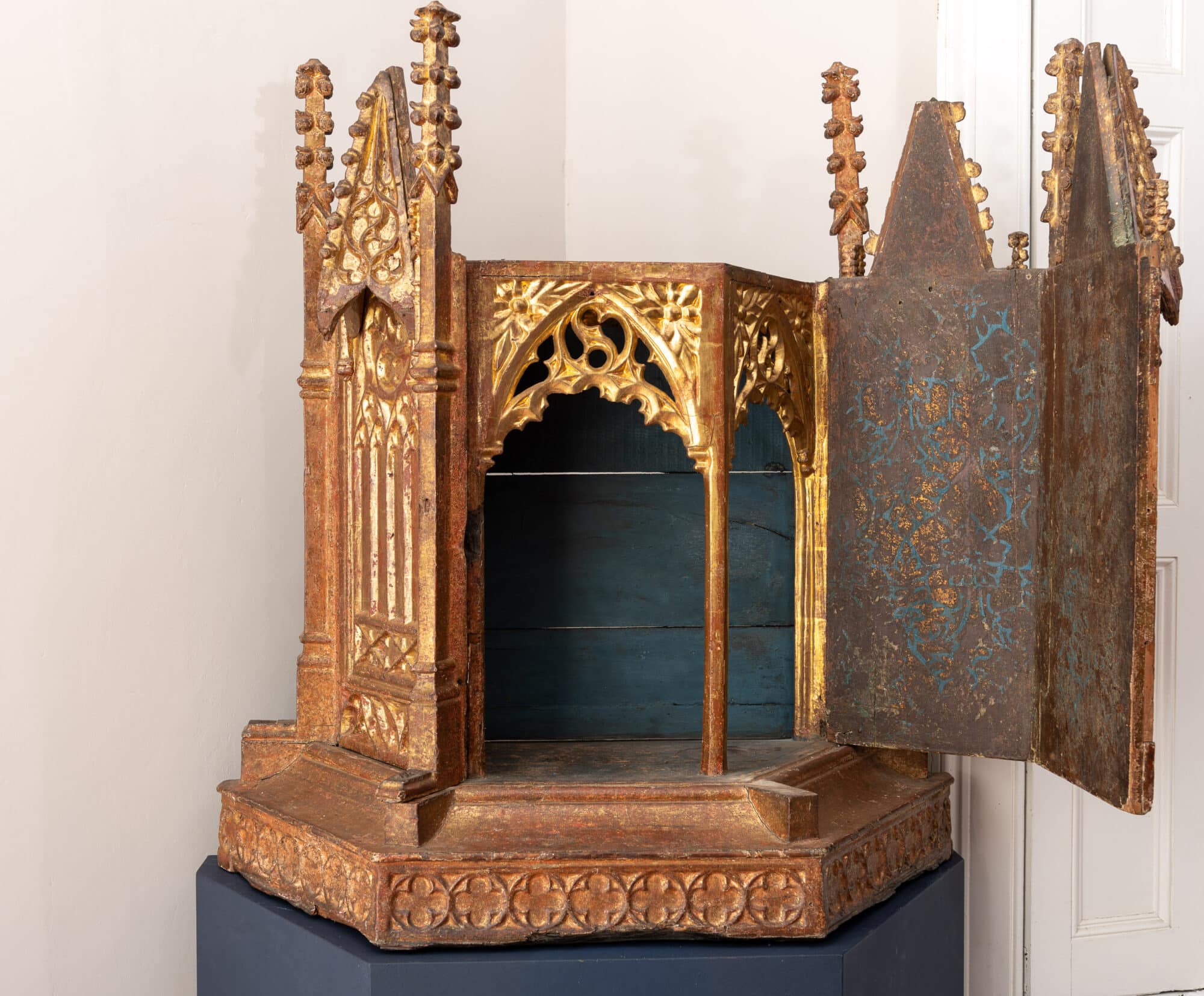
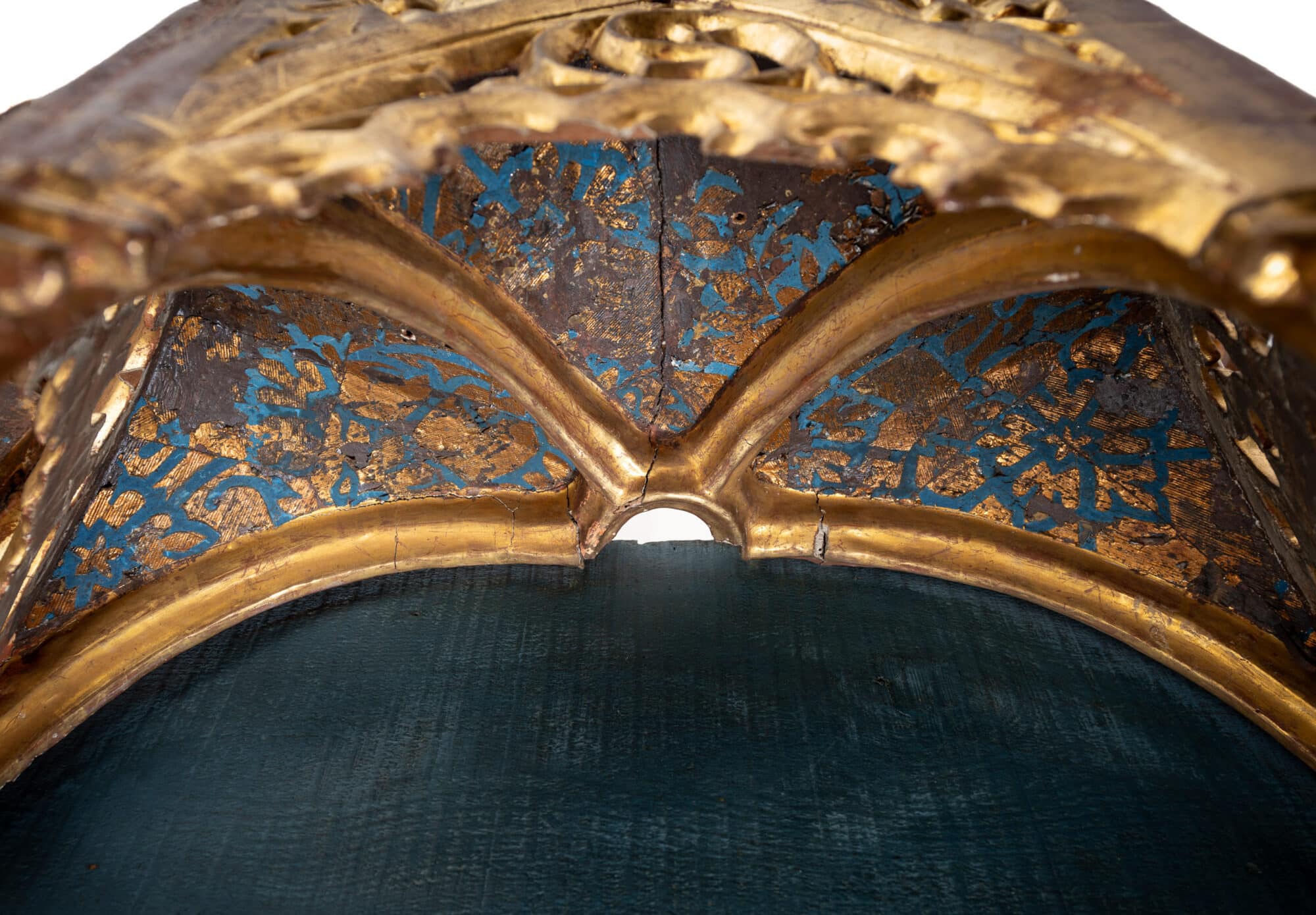
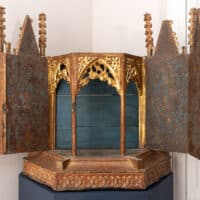
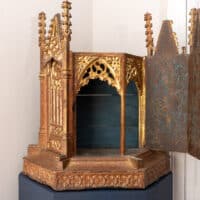
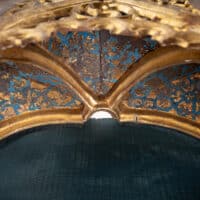
The hinged sections open to reveal a markedly different decorative treatment. Their inner faces preserve extensive traces of blue polychromy combined with gilded foliate ornament, arranged as dense scrolling vegetation. The survival of this painted decoration is particularly significant. Rather than treating the reverse of the doors as secondary surfaces, the maker transformed the opened tabernacle into a richly coloured devotional interior. The juxtaposition of blue and gold has an explicitly sumptuous character and recalls the colouristic vocabulary employed throughout late medieval Spanish ecclesiastical furnishings, retables and architectural woodwork.
When opened, the doors reveal a central Gothic arcade formed by slender supports carrying elaborately cusped and pierced arches. The upper sections incorporate carved foliage and flower heads, while the tracery is pierced through rather than merely incised upon the surface. This creates genuine architectural depth and reinforces the impression that the object was conceived as a miniature sacred building.
The repeated tracery patterns are particularly characteristic of the late Gothic vocabulary: elongated lancets terminate in trefoiled and quatrefoiled forms, while the steep gables are enriched with vigorously carved crockets. These elements belong to the international late Gothic tradition but their exuberant combination with extensive gilding and painted decoration is entirely consistent with the extraordinarily rich tradition of ecclesiastical woodwork produced in Castile during the later fifteenth century.
Its precise original function deserves some caution. It may have formed an independent tabernacle or eucharistic cupboard, or alternatively have constituted the architectural central element of a larger retable or devotional ensemble. The polygonal platform and architectural completeness of the surviving structure, however, strongly suggest that it was intended to operate as a coherent object rather than merely as a fragmentary piece of decorative panelling. The enclosing doors and elaborate treatment of their inner surfaces further indicate that the act of opening and closing the structure formed an important part of its original devotional function.