A Late Gothic Polychromed Limestone Figure of a Gentleman or Civic Dignitary
- Period
- Circa 1480–1520
- Origin
- Burgundian Netherlands or Northern France
- Dimensions
- W 7 1/4"" × H 18 1/4"" × D 5""
- Reference
- #Marh3828
£9,500
Description
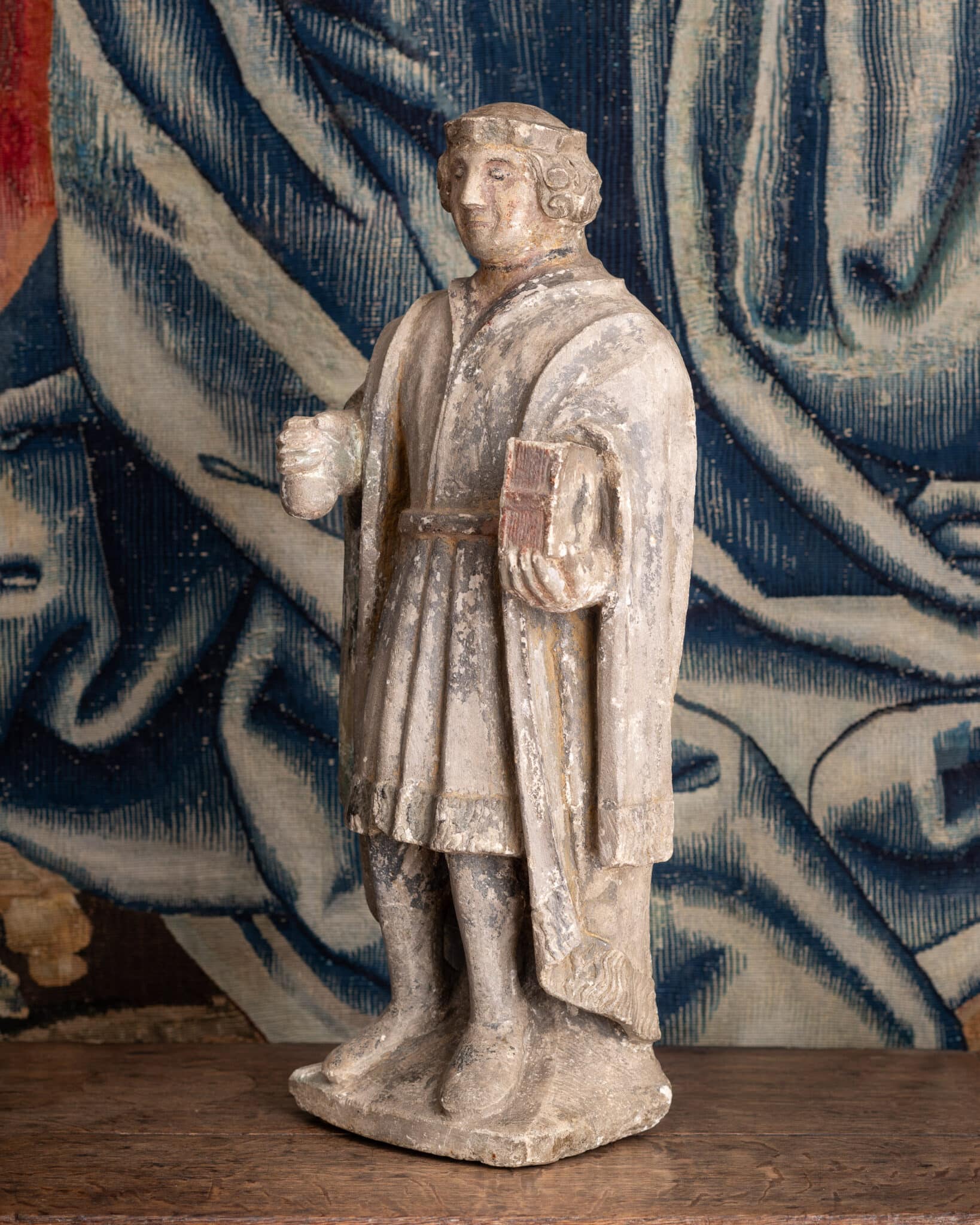
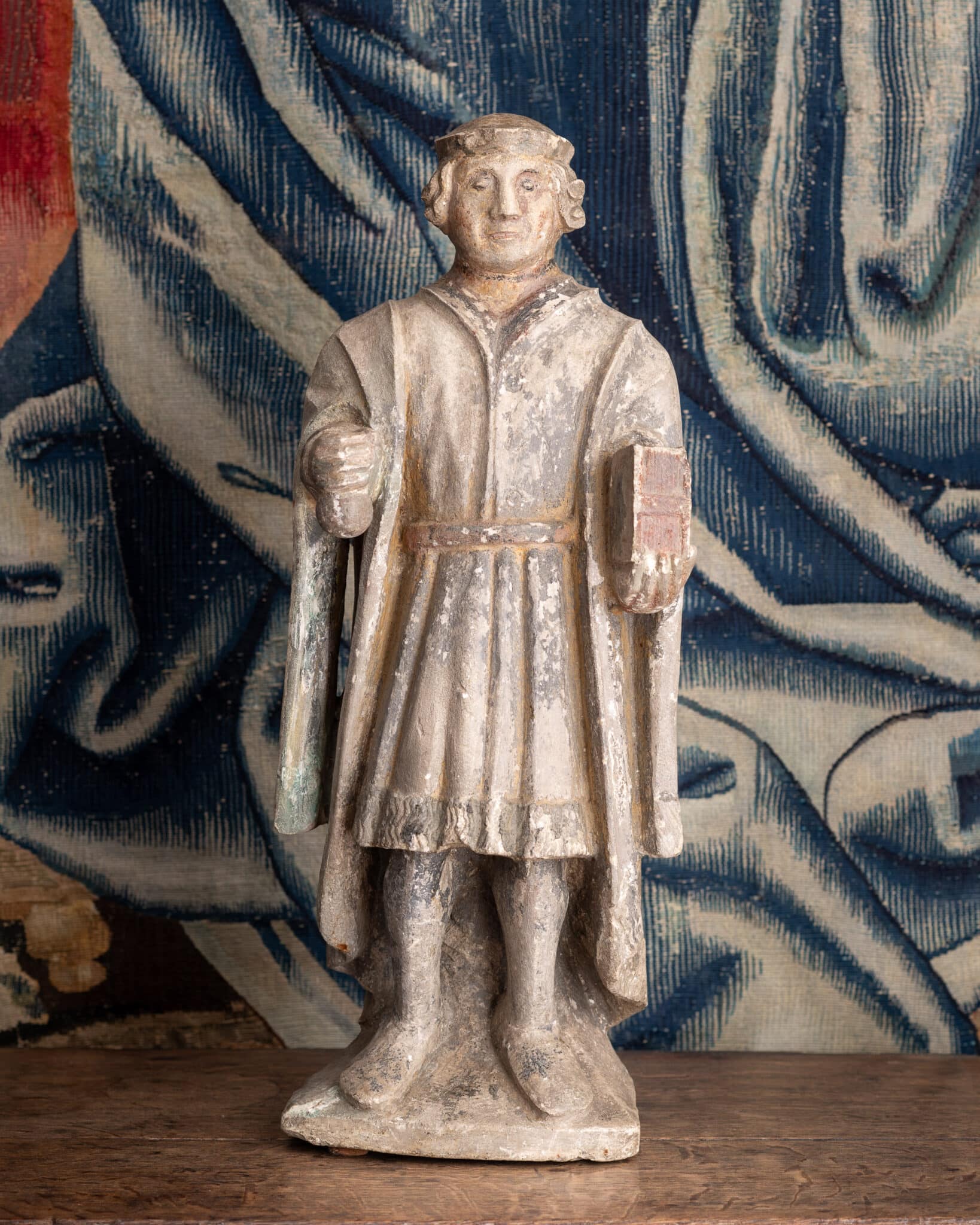
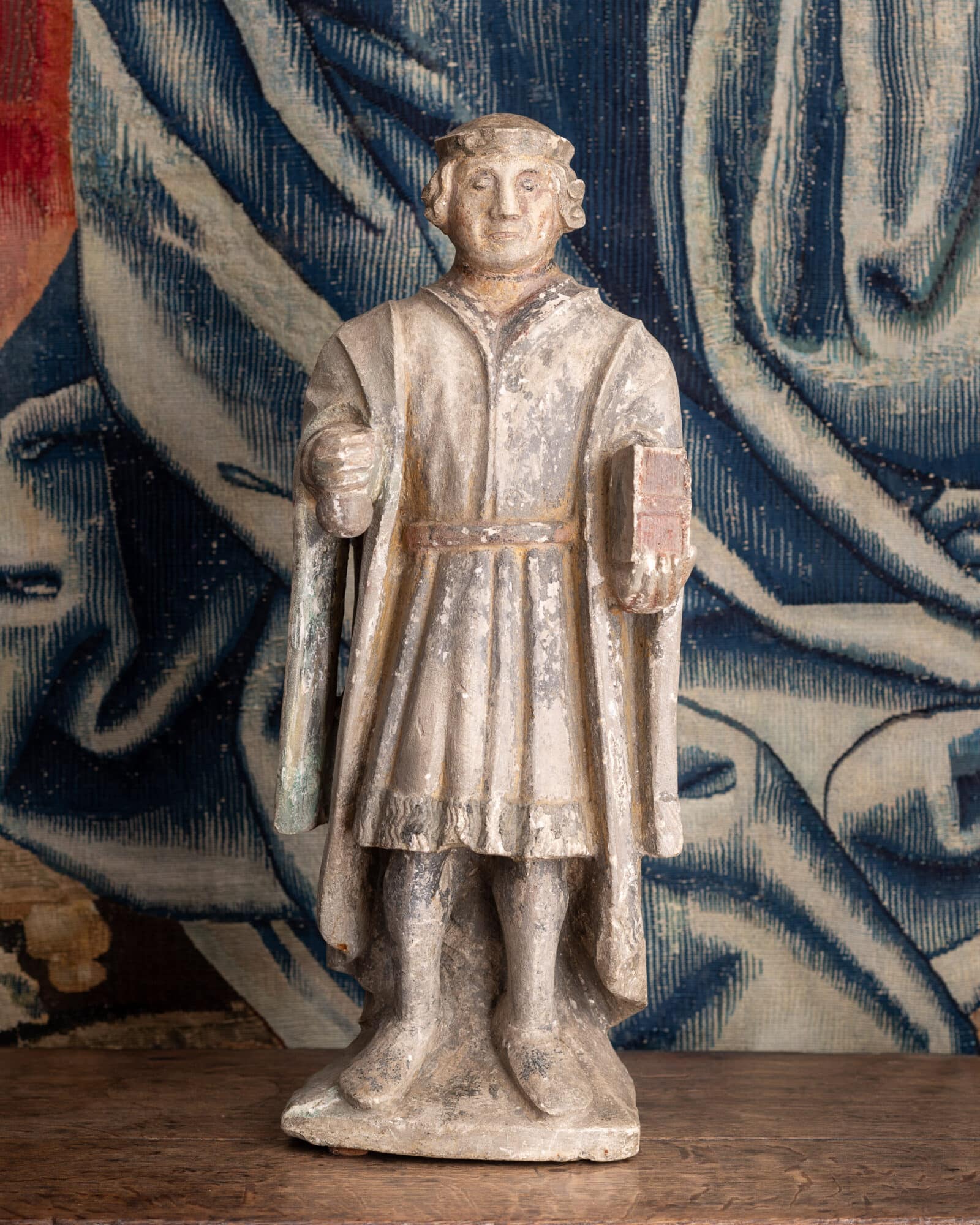
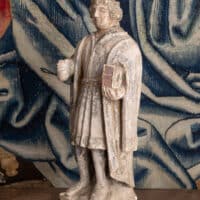
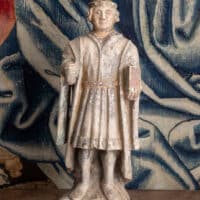
An engaging late Gothic limestone sculpture depicting a standing gentleman or civic dignitary, dressed in the fashionable attire of the Burgundian Netherlands during the closing decades of the fifteenth century and the beginning of the sixteenth century.
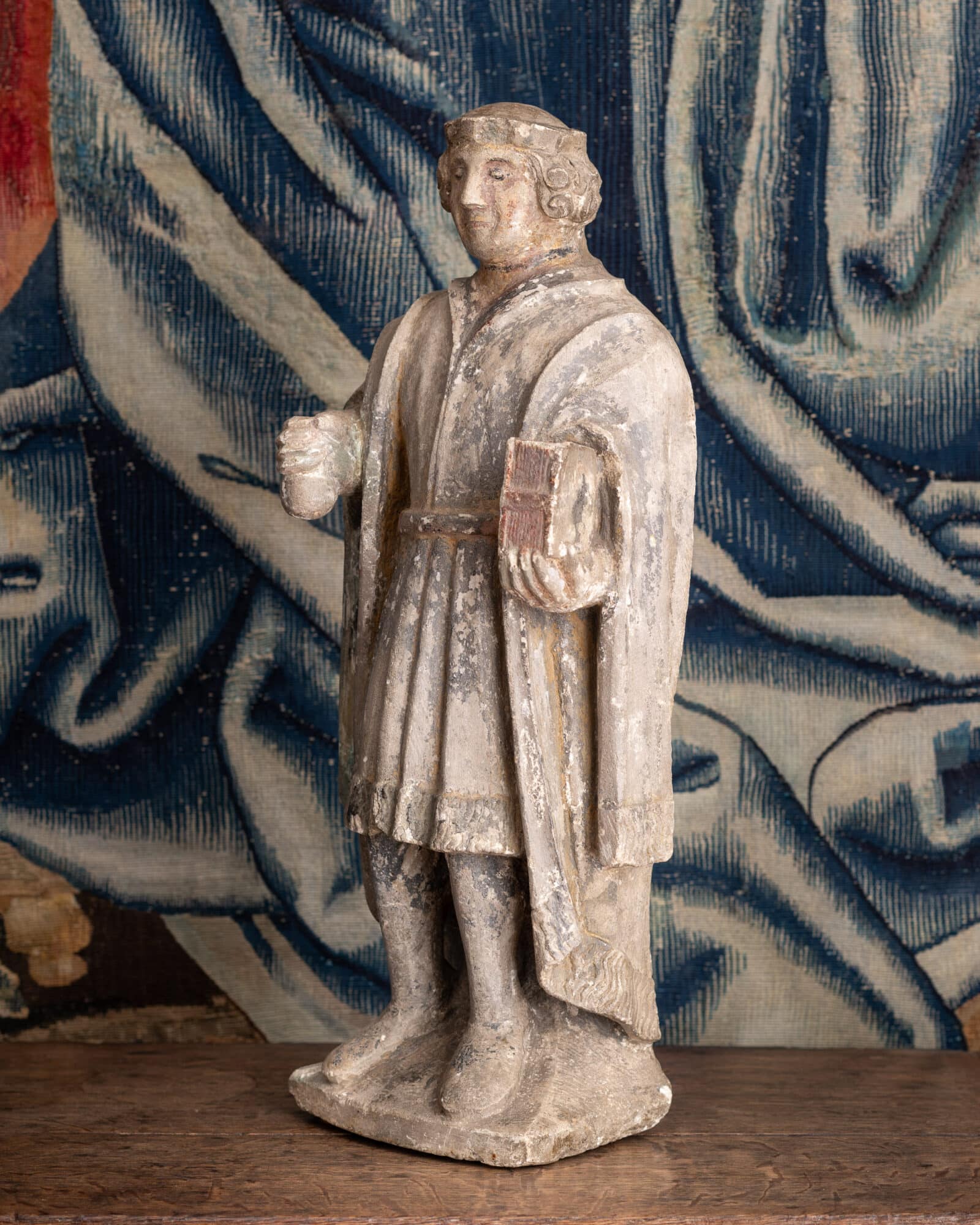
The figure stands upright upon an integral, irregularly shaped base, his feet positioned slightly apart beneath a short, pleated tunic. Over this he wears a generously proportioned mantle, falling from the shoulders in long, restrained folds and extending almost to the ground. The tunic is gathered at the waist by a narrow belt, while its deeply defined vertical pleats terminate in a decorative lower border. Close-fitting hose and broad, rounded shoes complete the costume.
The head is particularly expressive, with a broad, softly modelled face, prominent nose, heavy eyelids and a small, delicately defined mouth. His hair is arranged in short, tightly curled locks beneath a shallow cap with a turned brim. The individuality of the facial features, together with the formal, frontal presentation, lends the figure a distinctly portrait-like character.
In his left hand he supports a substantial closed book, its binding carefully delineated and retaining traces of red pigment. His right hand is extended forward, grasping what appears to be a small purse or money bag. A deliberately drilled aperture in the upper surface of the hand indicates that an additional component, now lost, was originally fitted to the sculpture. The precise form of this attribute remains uncertain.
The combination of book and purse invites consideration of the figure’s original identity. Both objects were associated with literacy, administration, commerce and financial responsibility in late medieval society. They may suggest a prosperous merchant, civic official or individual associated with the administration of a religious or charitable institution. Equally, the book and missing attribute leave open the possibility of a saint represented in contemporary secular dress.
The sculpture belongs stylistically to the artistic traditions that flourished across the Burgundian Netherlands and neighbouring northern French territories during the late fifteenth century. Under Burgundian patronage, centres such as Brussels, Leuven, Bruges and Dijon developed sophisticated traditions of sculpture, characterised by increasingly naturalistic representations of the human figure and close observation of contemporary costume.
The present figure reflects aspects of this tradition in the careful articulation of the clothing, the individualised treatment of the head and the restrained, architectural character of the composition. Particularly characteristic is the contrast between the comparatively broad, simplified planes of the mantle and the more closely worked folds of the tunic and sleeves.
The reverse is fully worked, although treated with greater economy than the front. Long, shallow folds descend across the back of the mantle, suggesting that the sculpture was intended to be viewed principally from the front, possibly within an architectural niche or as part of a larger decorative or devotional ensemble.
Considerable traces of historical polychromy survive across the surface, including pale tones on the garments, red on the book and belt, darker outlining around the neckline, greenish pigment on the mantle and flesh colouring on the face. These surviving colours preserve an important aspect of the sculpture’s original visual conception, when the painted surfaces would have contributed to the definition of the costume and the individuality of the figure.
The combination of contemporary dress, expressive facial modelling and carefully arranged attributes places the sculpture within the visual culture of the late medieval Burgundian world, where the representation of secular identity and religious devotion frequently intersected.