A Monumental Late Gothic Carved Oak Eagle Lectern
- Period
- Circa 1500–1530
- Origin
- Southern Netherlands or Lower Rhine
- Dimensions
- W 29"" × H 75 3/4"" × D 20""
- Reference
- #Marh3826
£15,000
Description
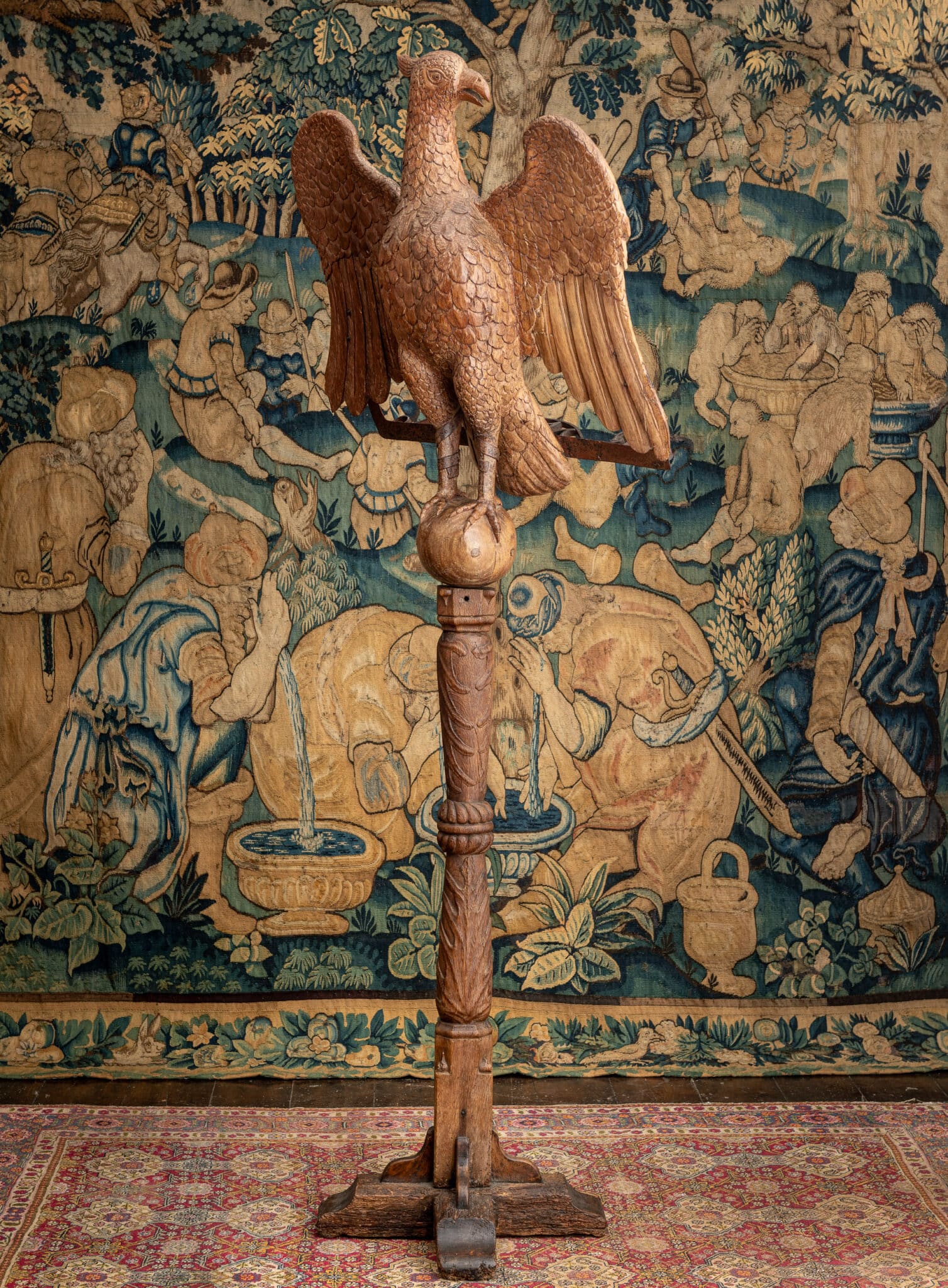
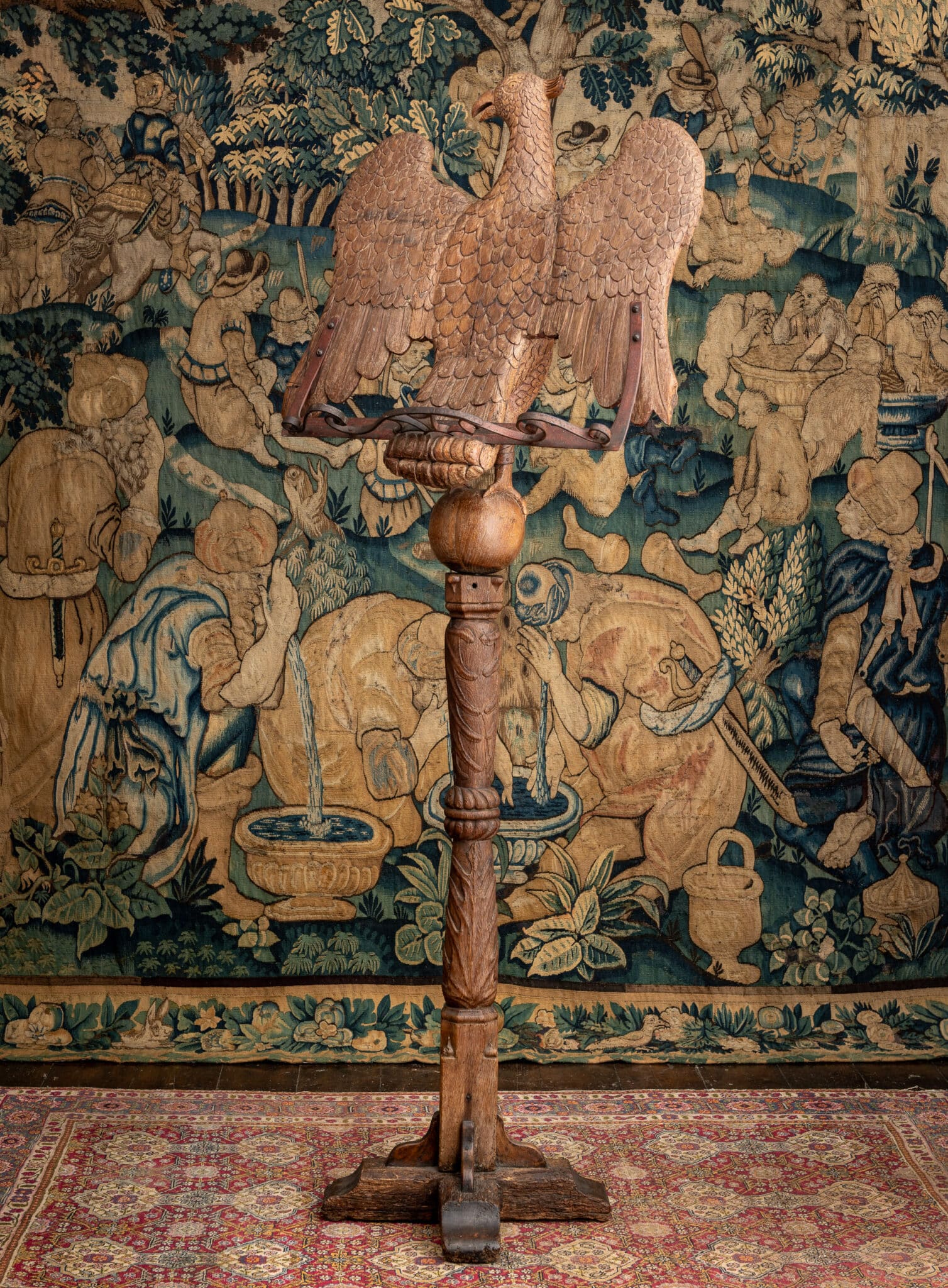
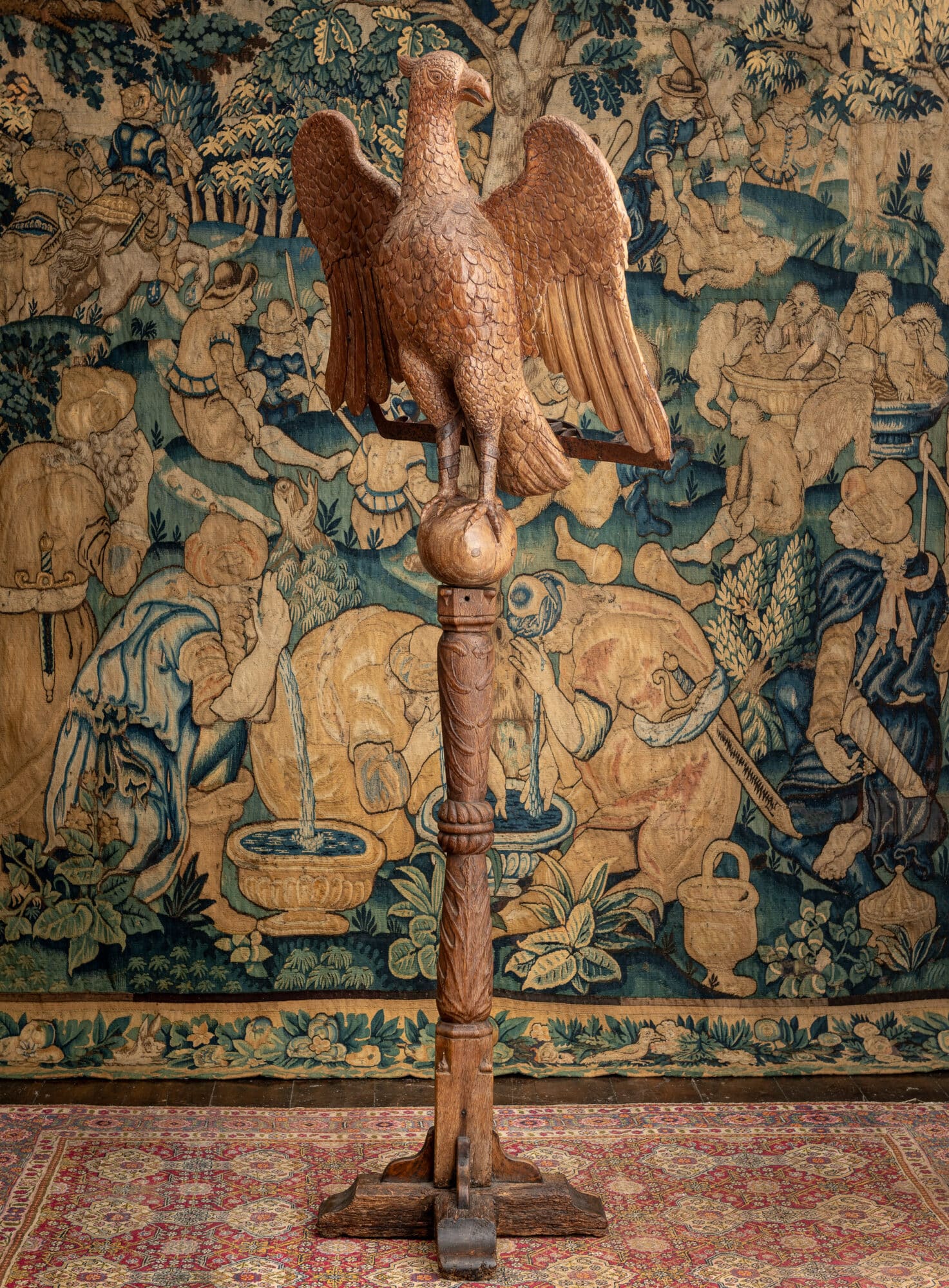
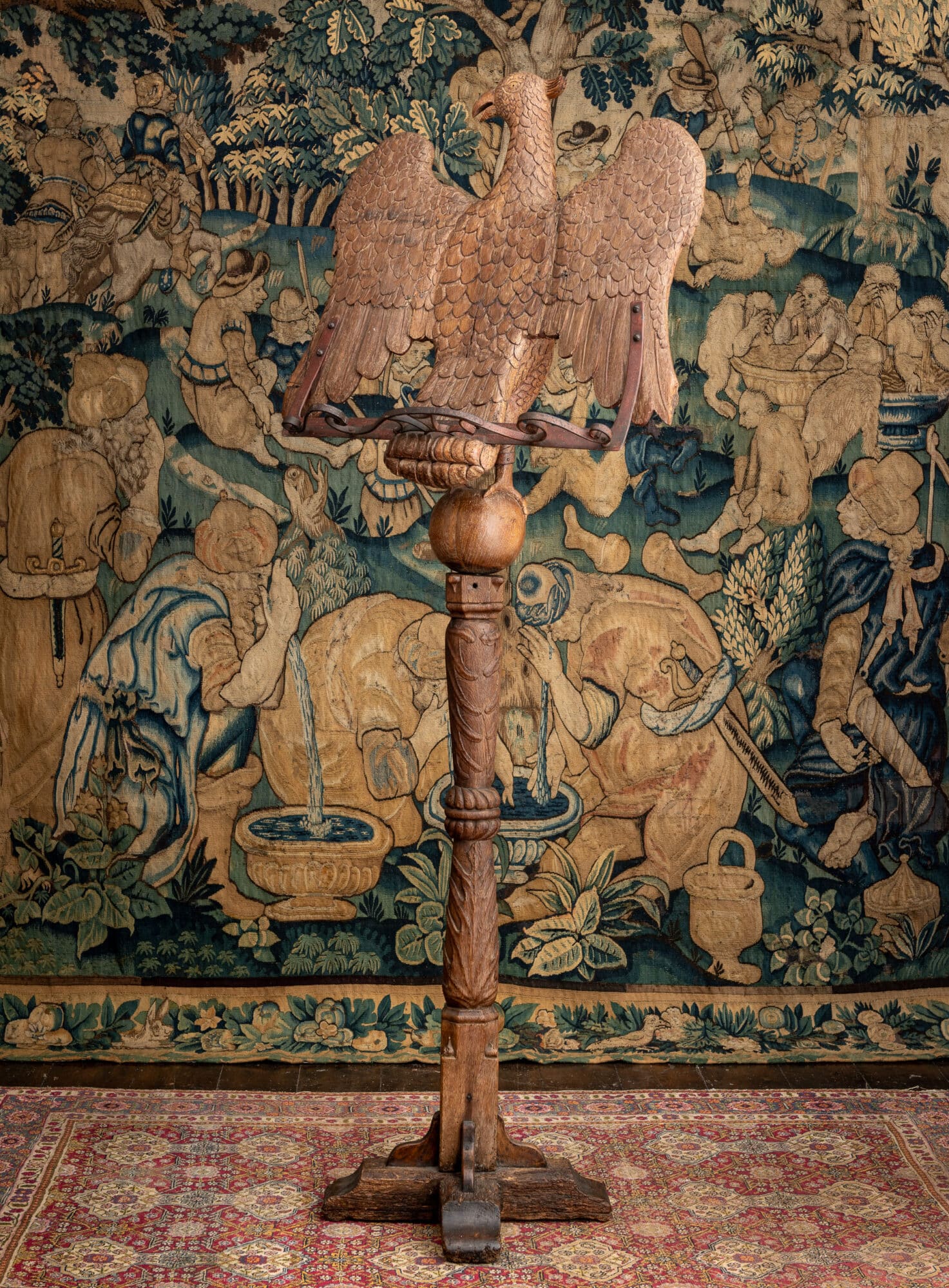
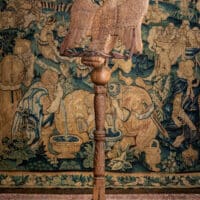
A monumental early sixteenth-century carved oak eagle lectern, the eagle depicted with outstretched, elevated wings, its powerful talons resting upon a globe, supported on a tall, foliate-carved pedestal terminating in a substantial cruciform base.
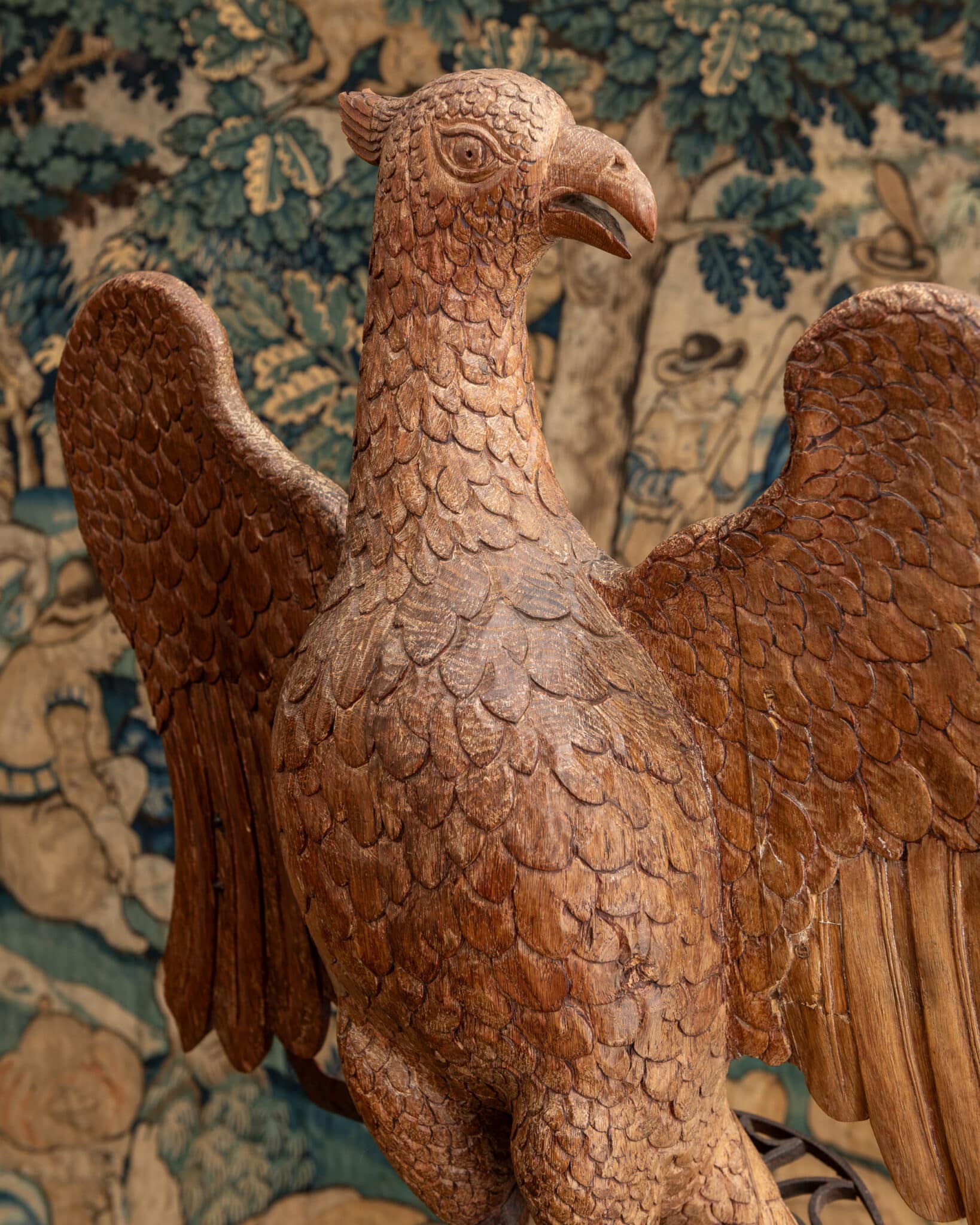
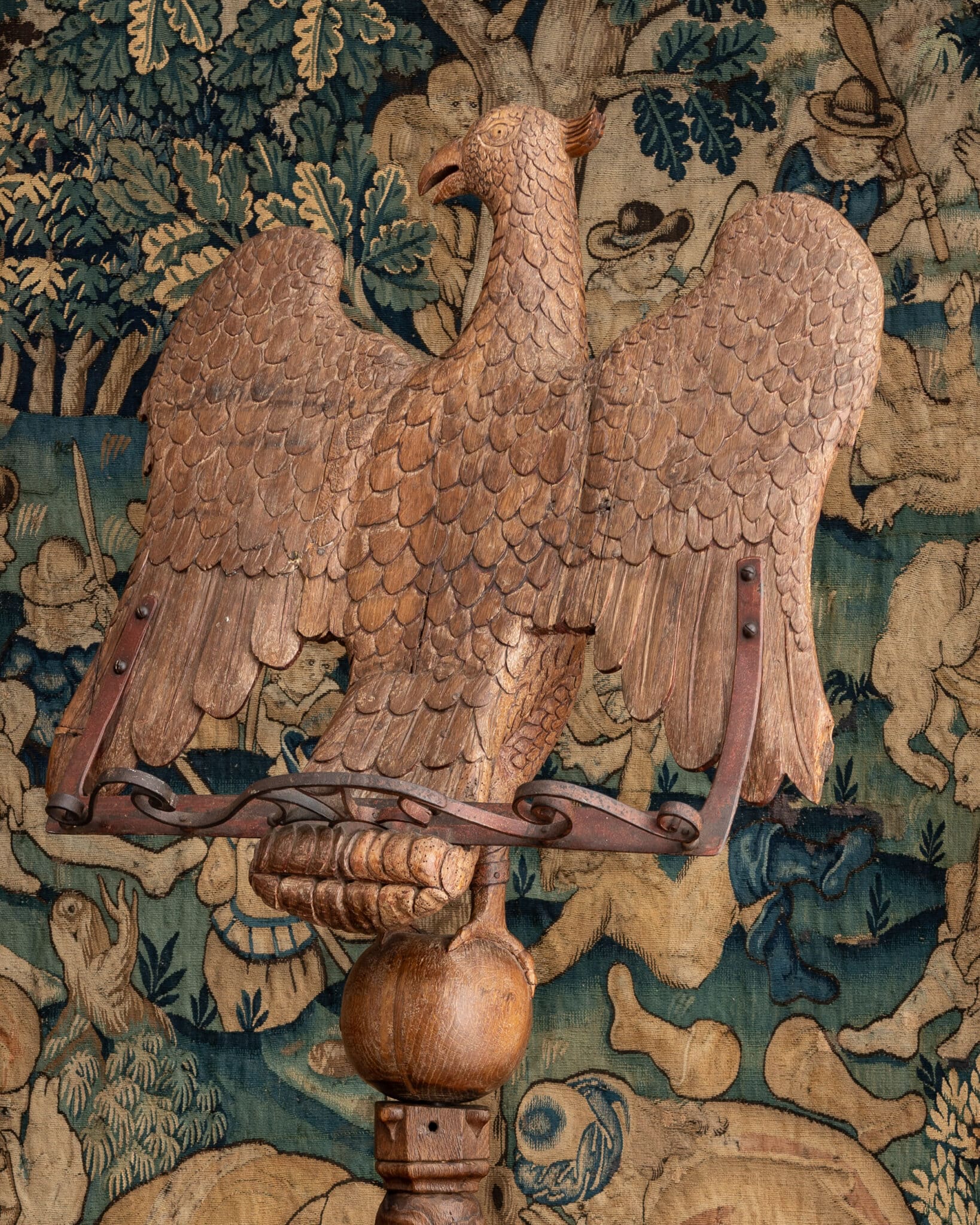
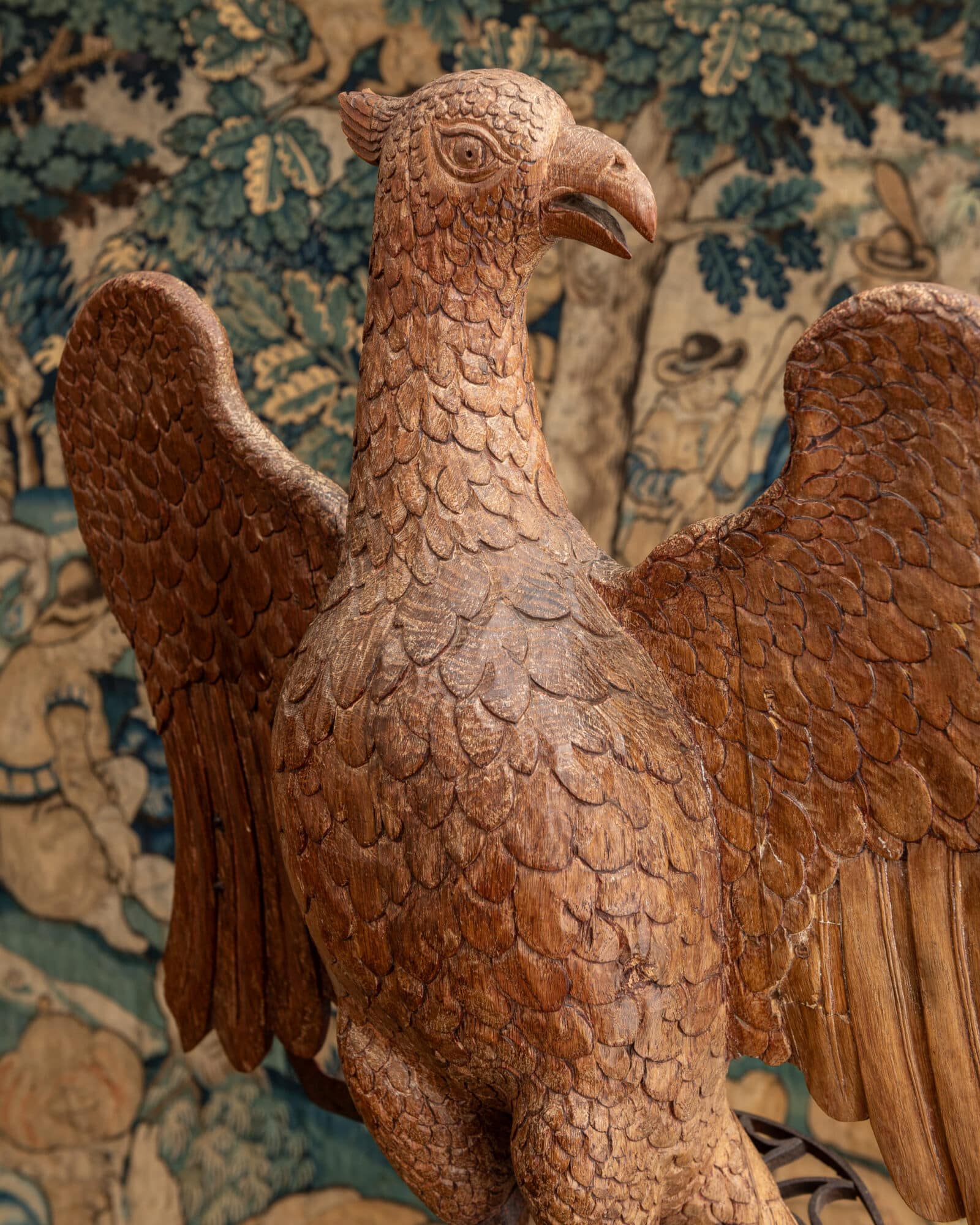
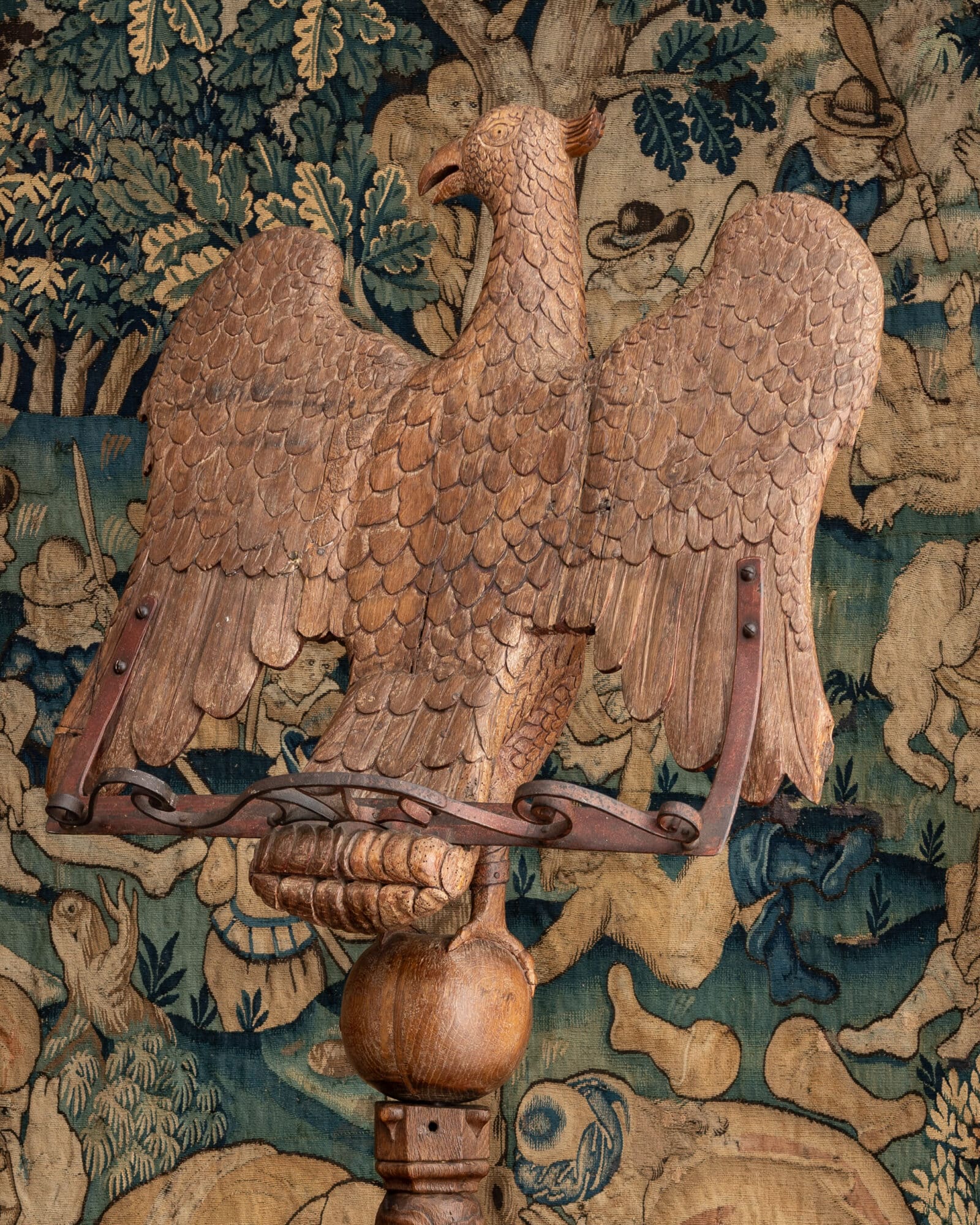
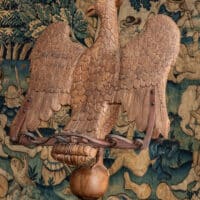
The eagle is naturalistically conceived, with a strongly modelled breast, elongated neck and boldly articulated head, the sharply hooked beak partially open and the prominent eyes deeply defined. The entire surface is enriched with individually carved overlapping feathers, varying in scale and treatment across the breast, neck, wings and tail. The upper wings are densely worked with successive rows of rounded plumage, contrasting with the elongated flight feathers descending towards their outer extremities. This careful differentiation of the feathering lends the sculpture both texture and a pronounced sense of volume.
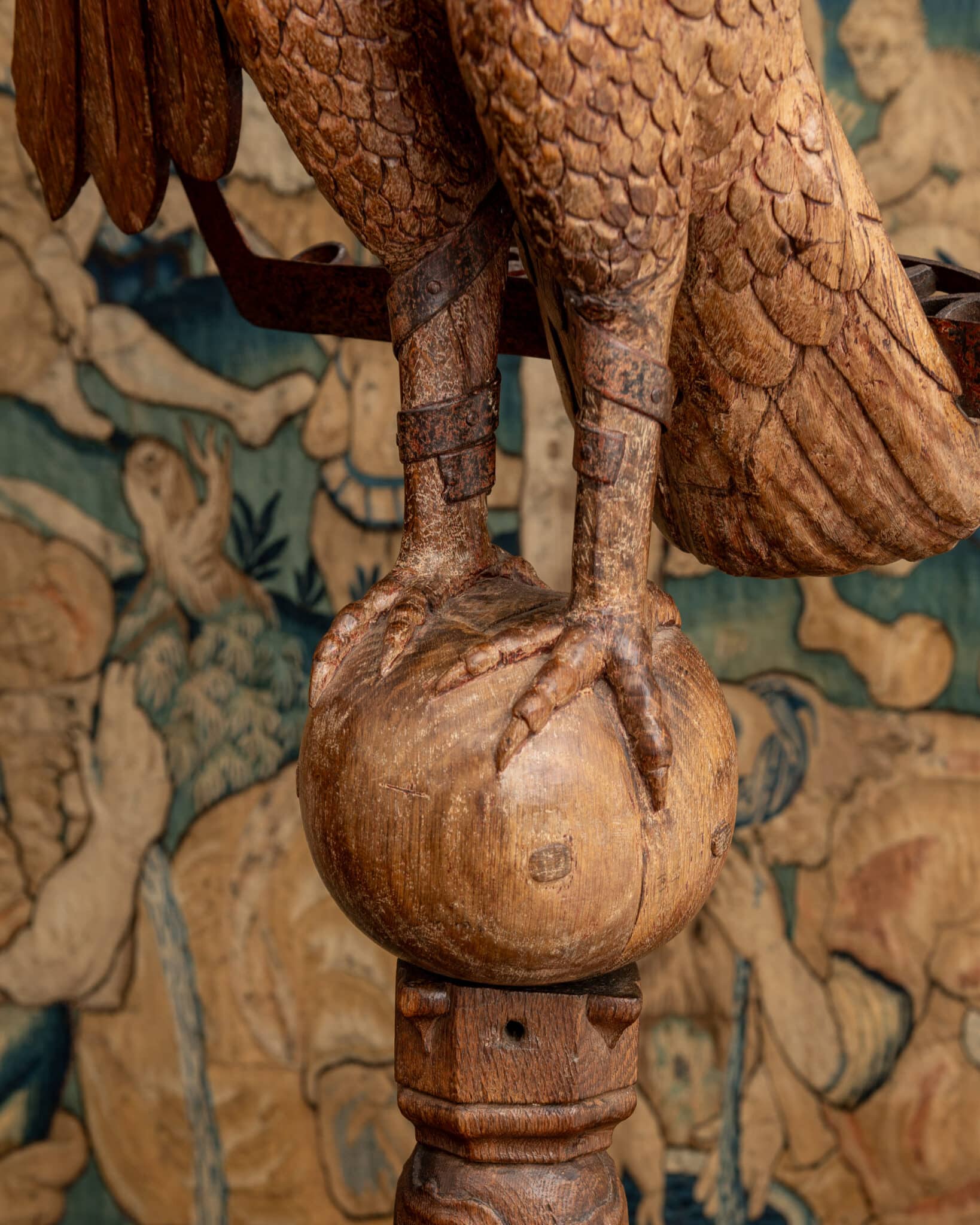
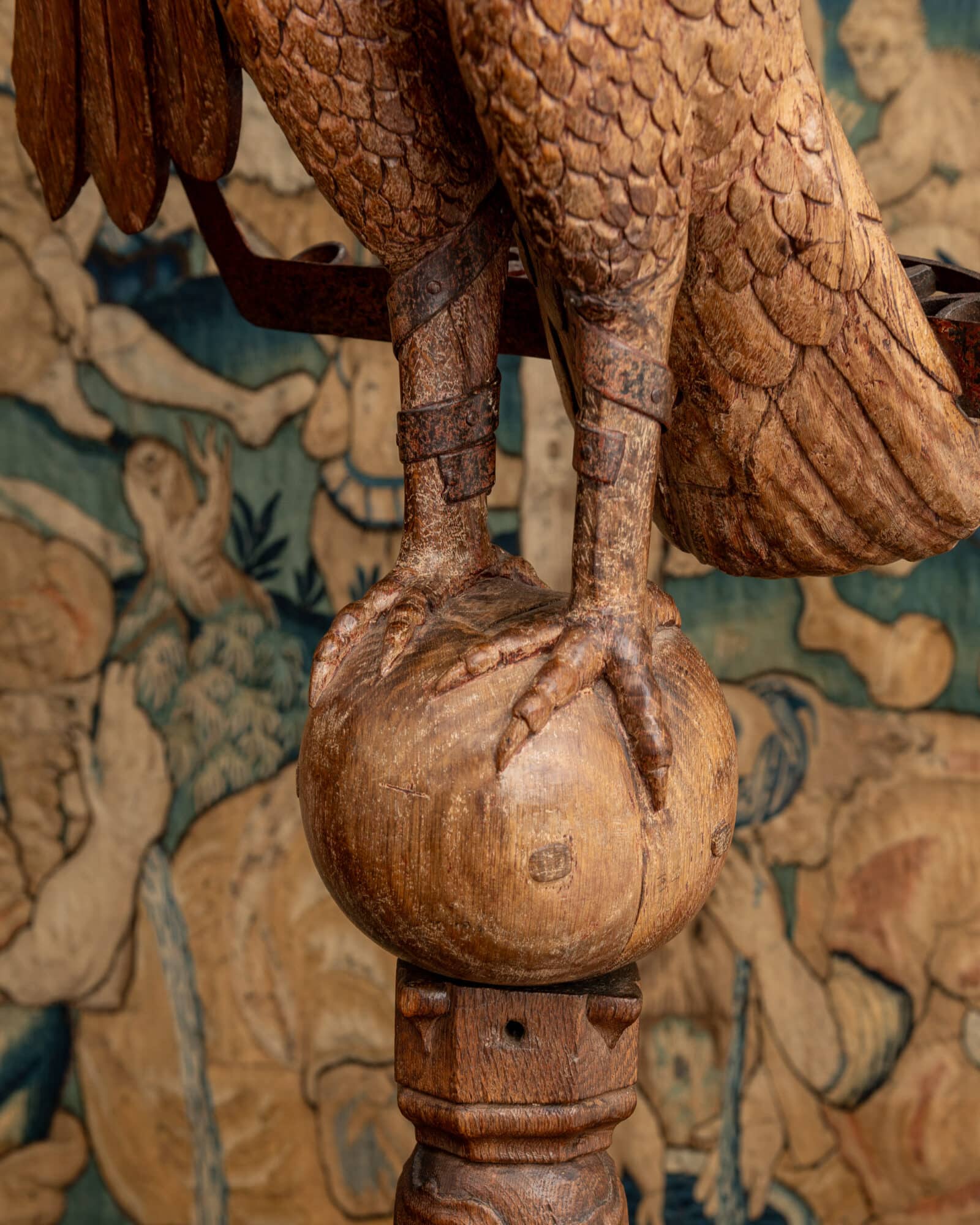
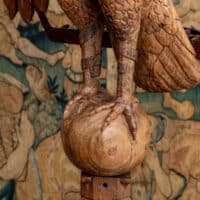
The bird stands upon a spherical globe, its substantial legs terminating in powerful, individually articulated talons which extend across the curved surface. The globe forms the visual and structural transition between the sculptural eagle and the supporting pedestal.
The tall oak pedestal is decorated with flowing foliate ornament carved in low relief, the elongated leaves arranged in a continuous, spiralling composition around the shaft. Moulded collars interrupt the decoration at intervals, while the lower section terminates in a substantial cruciform foot, its projecting members providing stability to the elevated structure.
The carved eagle and pedestal are consistent in period and regional character, although their original association cannot presently be established. The wrought-iron book support fitted behind the eagle, together with the iron straps securing its legs, are later additions
The present example belongs stylistically to the closing phase of the Gothic tradition and the opening decades of the sixteenth century.
The strongly defined silhouette, elevated wings and emphatic treatment of the head preserve the expressive character of late Gothic sculpture. At the same time, the comparatively regular arrangement of the plumage, the rounded modelling of the body and the carefully controlled surface decoration reflect the increasingly naturalistic tendencies of sculpture around 1500.
The foliate ornament of the pedestal is similarly consistent with late Gothic woodcarving, its flowing, asymmetrical leaves recalling the vegetal decoration employed in contemporary ecclesiastical furniture, choir stalls and architectural woodwork.
The combination of sculptural naturalism and ornamental Gothic detail suggests a date within the first three decades of the sixteenth century, with the Southern Netherlands or Lower Rhine providing a plausible geographical context.
The lectern retains a substantial proportion of its carved oak structure, with later ironwork reflecting alterations to its practical arrangement and continued use.