A Pair of Late Gothic Brass Pricket Candlesticks
- Period
- Circa 1500–1520
- Origin
- South Netherlandish,
- Dimensions
- W 6 1/4" diameter" × H 17 3/4""
- Reference
- #Marh3808
£5,850
Description
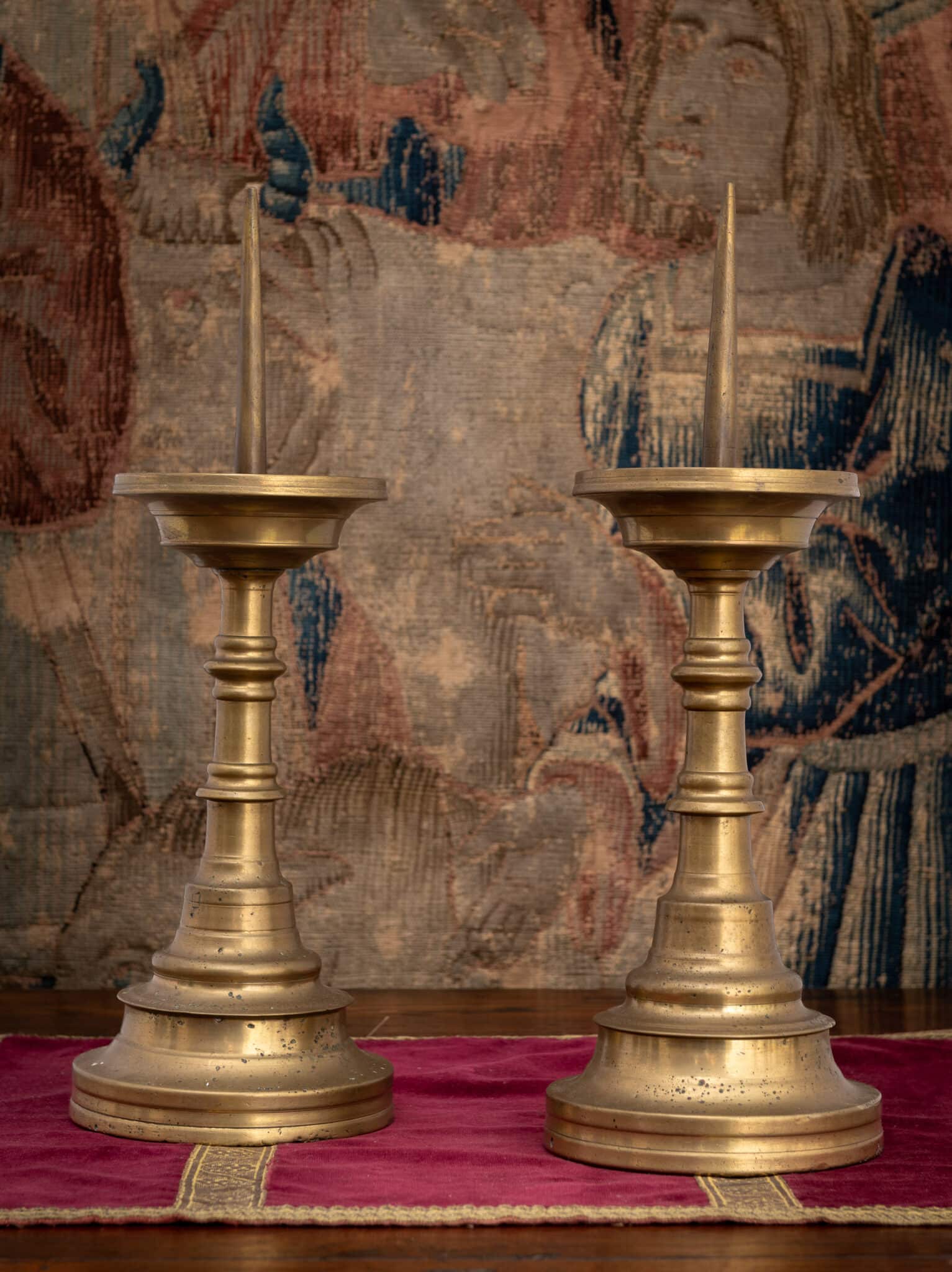
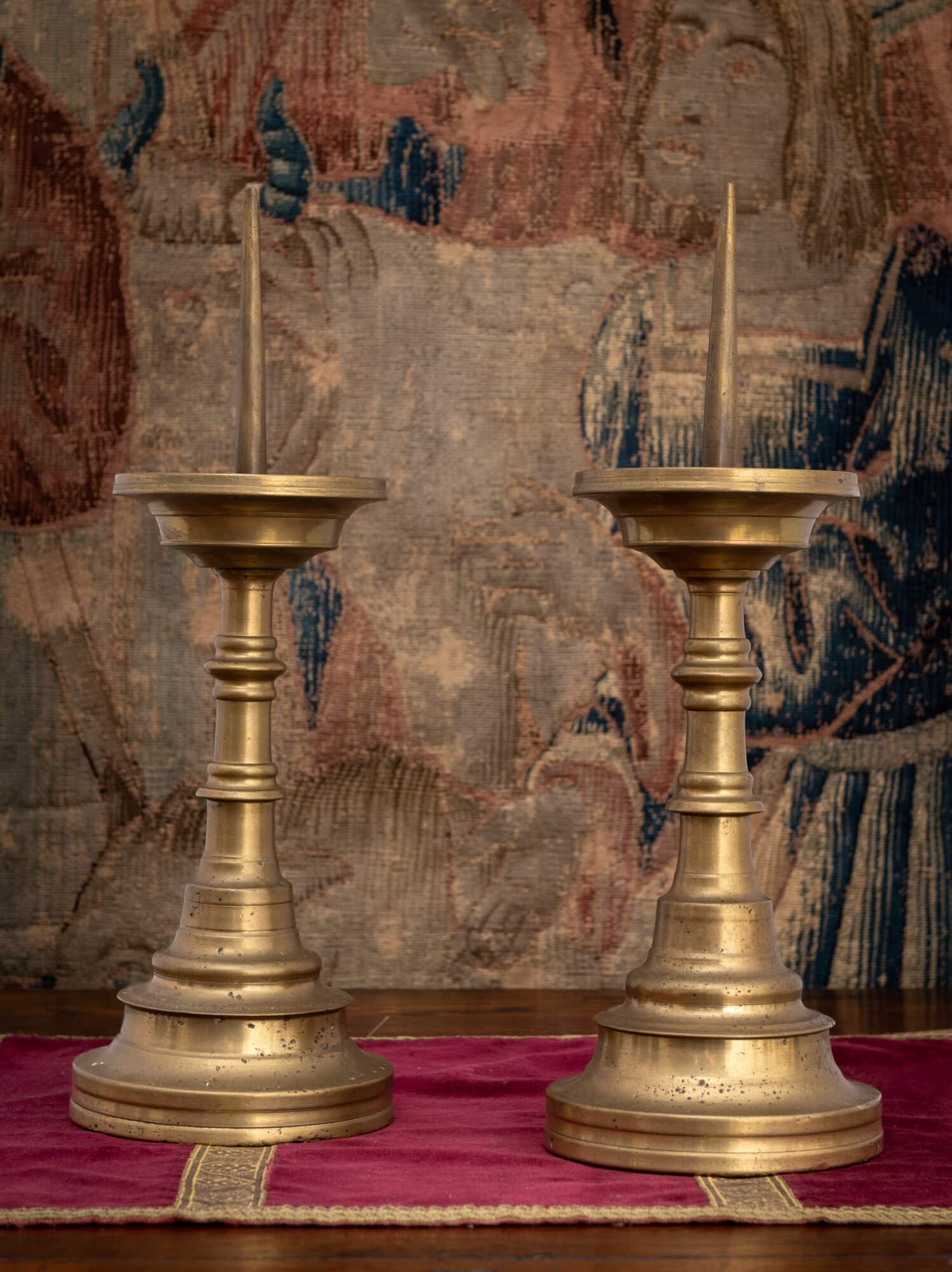
A substantial pair of late Gothic brass pricket candlesticks, probably produced in the Meuse Valley during the opening decades of the sixteenth century.
Each candlestick rises from a broad circular foot formed from a succession of stepped and spreading mouldings. The tall, strongly architectural stem is articulated by pronounced collars and compressed knop-like mouldings, terminating in a wide circular wax pan from which rises a long brass pricket designed to secure the candle.
The restrained architectural character of the pair is typical of late medieval South Netherlandish metalwork. Decoration is achieved almost entirely through proportion and the rhythmic sequence of moulded profiles, creating a particularly strong silhouette. The deeply stepped bases remain essentially Gothic in character, while the increasingly regular and columnar treatment of the stems anticipates the developing Renaissance vocabulary of the early sixteenth century.
The candlesticks belong to the important tradition of brass manufacture generally known as Dinanderie, named after Dinant on the River Meuse, one of the great centres of medieval European brass production. Related workshops operated throughout the Meuse Valley and neighbouring regions, and as surviving candlesticks are generally unmarked, a broader Meuse Valley attribution is often preferable to assigning an individual piece specifically to Dinant.