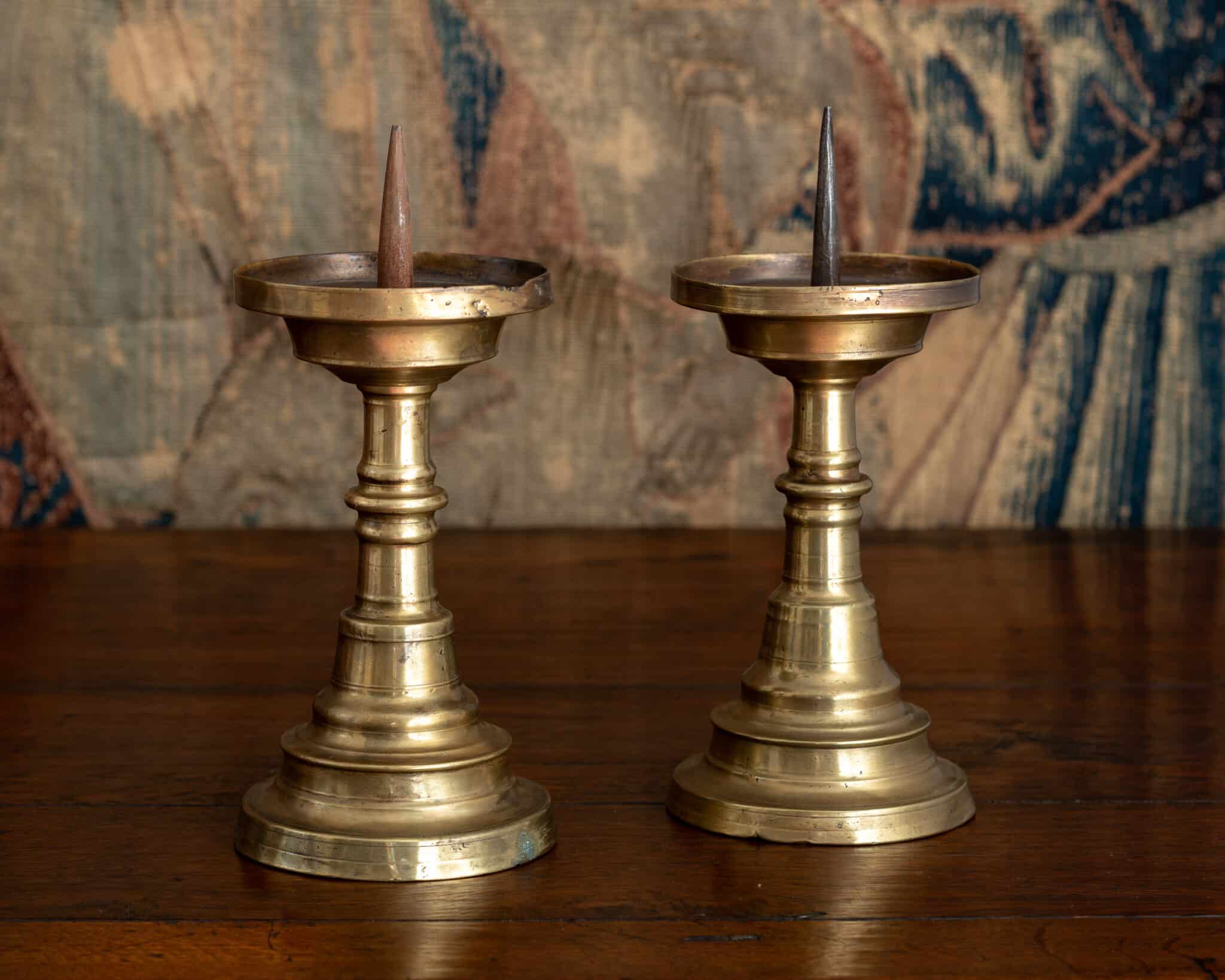
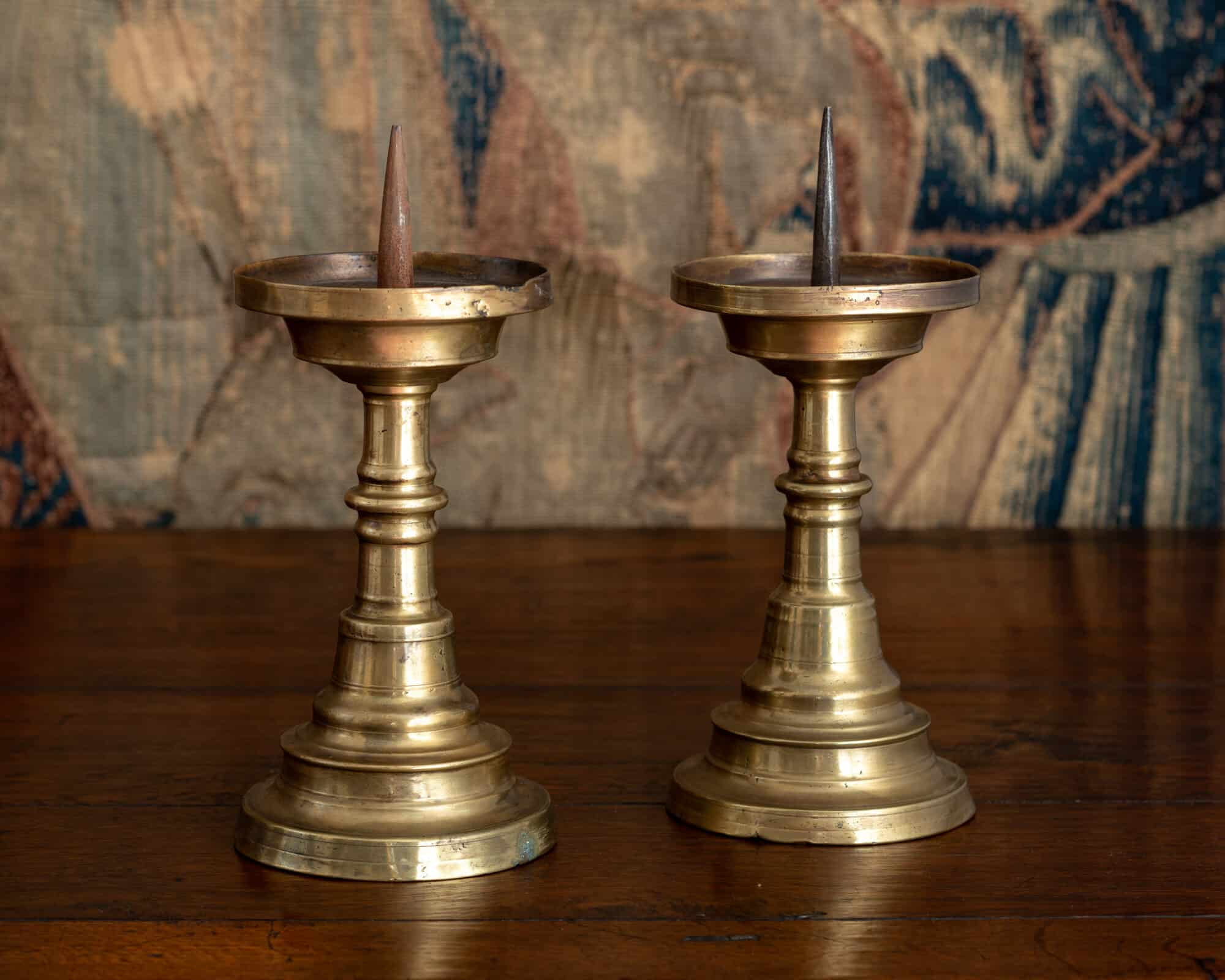
A Pair of Late Gothic Brass Pricket Candlesticks
- Period
- Circa 1480–1500
- Origin
- South Netherlandish, Meuse Valley, probably Dinant
- Dimensions
- W 5" diameter" × H 11""
- Reference
- #Marh3795
£4,250
Description
A pair of late Gothic brass pricket candlesticks, attributed to the important metalworking tradition of the Meuse Valley and probably associated with the workshops of Dinant.
Each is formed with a broad, deeply dished circular drip-pan centred by its original tapering wrought-iron pricket. The pan rises above a tall, strongly articulated stem composed of cylindrical sections divided by pronounced annular mouldings, descending through a succession of stepped and rounded profiles to a broad spreading circular base.
The restrained architectural quality of the design is characteristic of late medieval South Netherlandish brasswork. Ornament is achieved entirely through proportion and the rhythmic arrangement of the mouldings: the considerable weight of the spreading base contrasting with the narrower shaft before expanding again into the broad candle pan above. The resulting profile has the monumental quality associated with late Gothic ecclesiastical metalwork.
The candlesticks are hollow cast, their undersides retaining the irregular surfaces characteristic of the casting process. Slight variations between the two in their profiles and finishing are entirely consistent with individually cast and hand-finished medieval objects. Both retain their long wrought-iron prickets, an important survival and integral to their original function.
Condition
The candlesticks survive in remarkably complete condition for their age, retaining both original wrought-iron prickets. There is expected surface wear, oxidation and minor irregularity consistent with their considerable age and prolonged use. One base displays historic repair and strengthening, together with small associated losses and irregularities to the brass; there are further minor knocks and areas of wear to the drip-pan edges. These early repairs form part of the candlesticks’ long working history and have been sympathetically retained. Both remain sound, stable and particularly impressive when displayed together.