A Renaissance Carved Oak Panel Depicting the Judgement of Solomon
- Period
- Circa 1580
- Origin
- Southern Netherlands
- Dimensions
- W 22 1/2"" × H 10"" × D 1""
- Reference
- #Marh3836
£3,250
Description
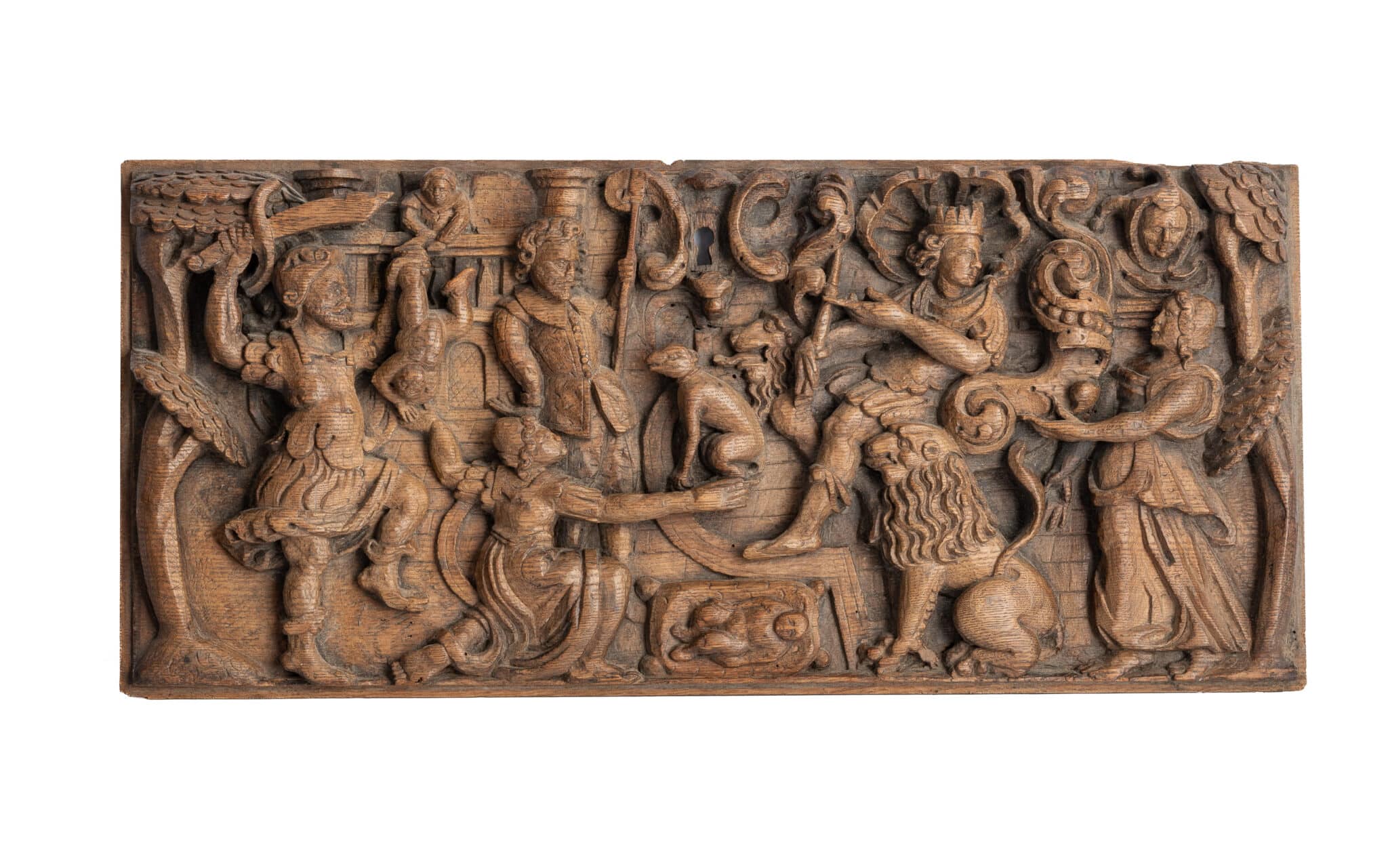
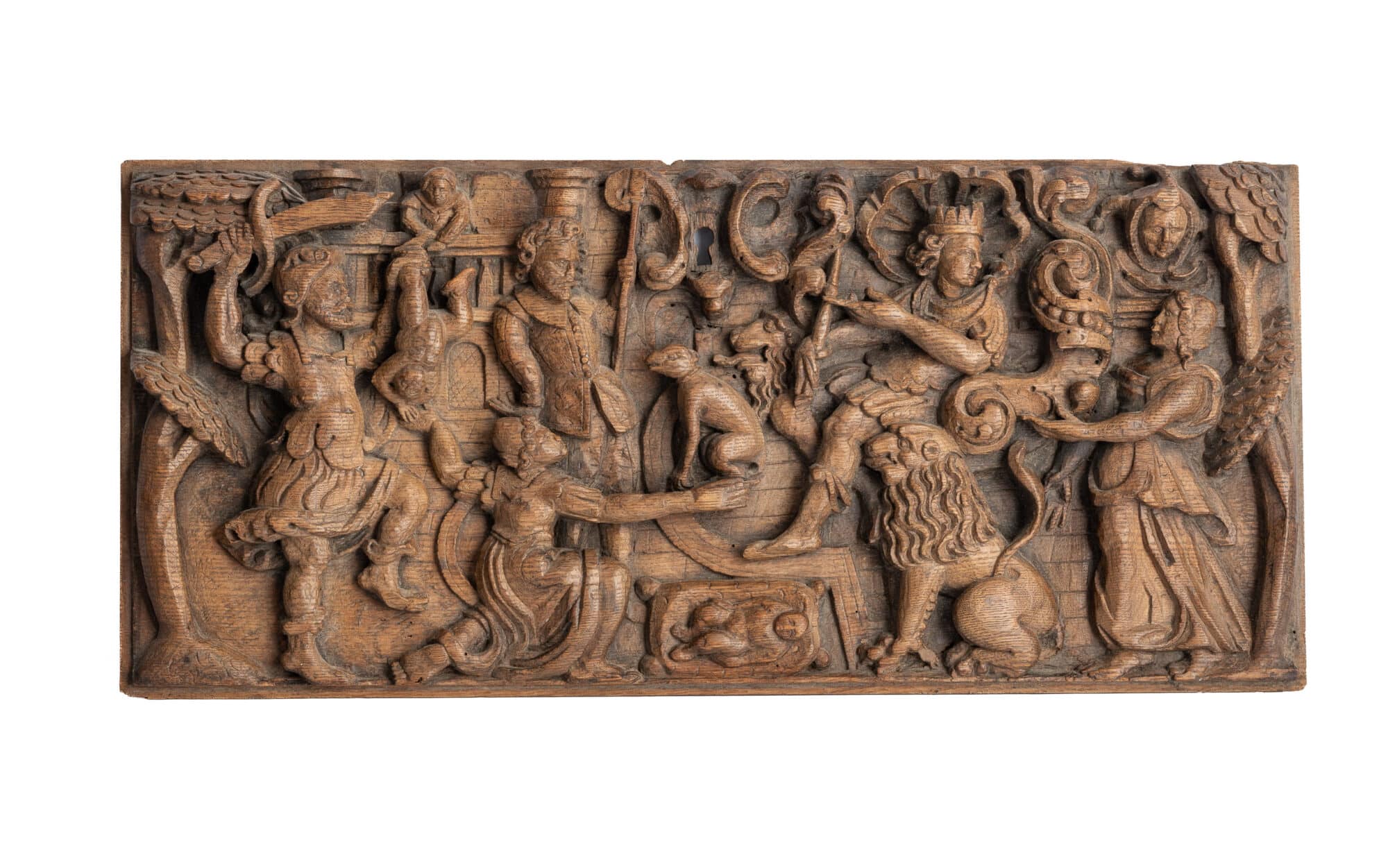
A Flemish Renaissance oak panel depicting the biblical Judgement of Solomon, taken from the First Book of Kings (3:16–28). The composition is arranged within a rectangular field and incorporates an elaborate architectural setting, richly dressed figures, animals and ornamental scrollwork, characteristic of Netherlandish decorative carving during the second half of the sixteenth century.
The biblical account describes two women who appeared before King Solomon, each claiming to be the mother of the same surviving infant. To establish the child’s parentage, Solomon ordered that the child be divided between them. The true mother immediately begged that the infant be spared and given to the other woman, thereby revealing her identity through her compassion. The episode became an established representation of wisdom, justice and sovereign authority.
The composition is dominated on the right by the crowned figure of Solomon, seated upon an elaborate throne embellished with volutes and supported by a prominently carved lion. The inclusion of the lion recalls the biblical description of Solomon’s throne in the First Book of Kings (10:18–20), where lions symbolise royal magnificence and authority.
The figures occupying the centre and left form a densely arranged narrative group. Their animated gestures, elaborate costumes and contrasting postures convey the dramatic nature of the dispute. A standing male figure, dressed in contemporary Renaissance attire and holding a staff or weapon, occupies a prominent position near the centre. The two women are represented through expressive gestures and movement, directing attention towards the contested child and the judgement being delivered.
Of particular iconographic interest is the apparent representation of a jester within a circular medallion in the upper right of the composition. In sixteenth-century Netherlandish art, the figure of the fool frequently symbolised human folly, ignorance and the failure of judgement. Its inclusion alongside the biblical King Solomon may have been intended to establish a deliberate contrast between foolishness and divine wisdom, reinforcing the moral significance of the narrative. Such visual juxtapositions were characteristic of Renaissance allegorical imagery, in which apparently incidental figures could contribute to the wider meaning of a composition.
The scene is framed by classical architectural elements, trees and foliate ornament, while scrolling forms, ornamental cartouches and flowing draperies contribute to the complexity of the composition.
The carving reflects the Renaissance ornamental vocabulary that developed throughout the Southern Netherlands during the sixteenth century. Classical architectural forms are combined with elaborate scrollwork and densely populated narrative relief, demonstrating the influence of Italian Renaissance design upon established Netherlandish woodcarving traditions.
The elongated proportions, animated movements and carefully articulated costumes of the figures correspond with the Mannerist tendencies evident in Netherlandish painting, engraving and decorative sculpture during the later sixteenth century.
Engraved compositions played an important role in disseminating biblical subjects among craftsmen working in the Netherlands. The theatrical arrangement of the present relief suggests an awareness of this graphic tradition, although a specific engraved prototype has yet to be identified.
The Judgement of Solomon was an appropriate subject for civic and domestic interiors, symbolising wise judgement, justice and moral responsibility. The horizontal format and carefully organised composition of the present panel are consistent with decorative reliefs incorporated into Netherlandish Renaissance furniture and architectural woodwork.