A Set of Four Elizabeth I Carved Oak Atlantes and Caryatids
- Period
- 1580 - 1600
- Origin
- English, West Country
- Dimensions
- W 4 3/4"" × H 21 1/2"" × D 2 1/4""
- Reference
- #Marh3876
£4,850
Description
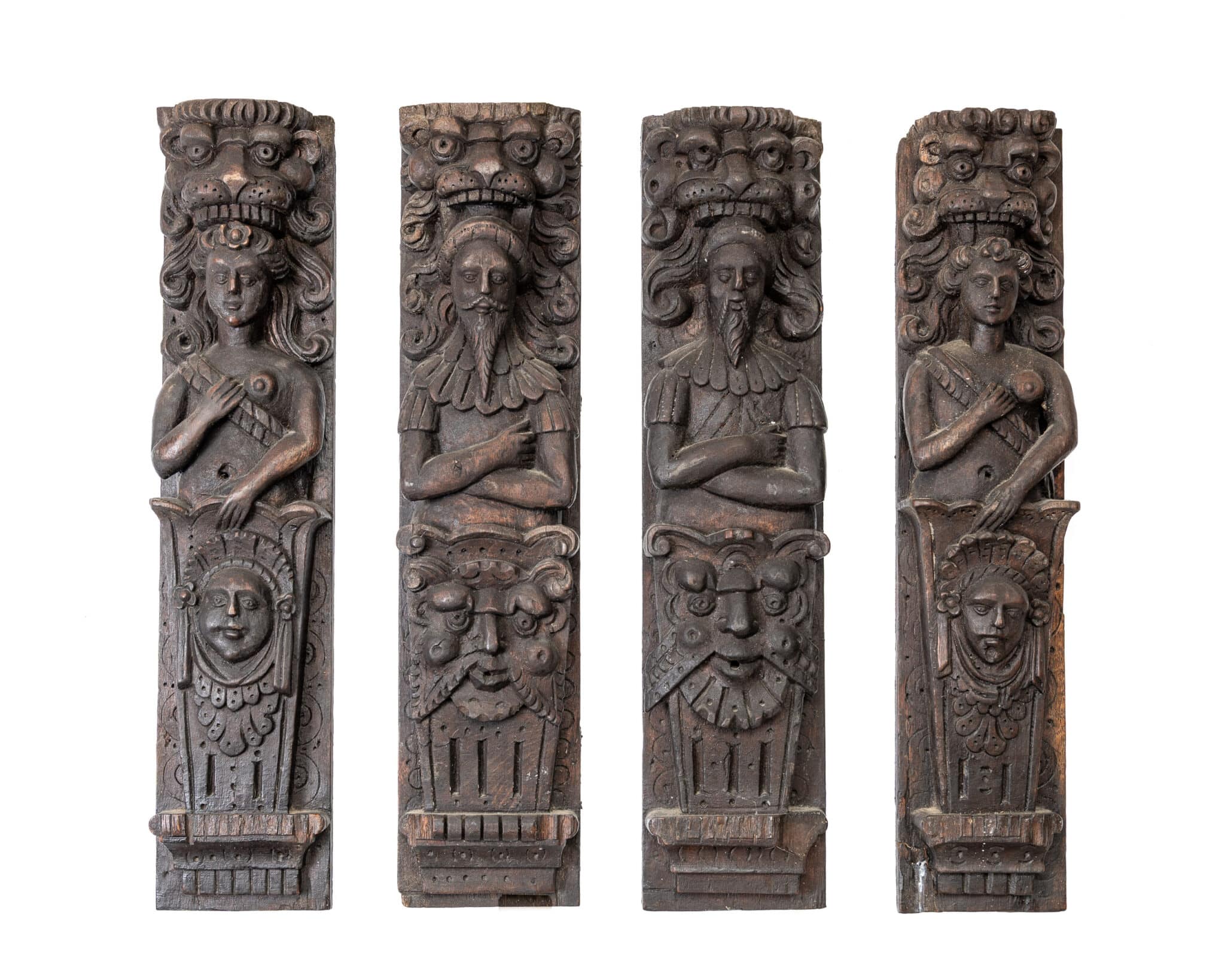
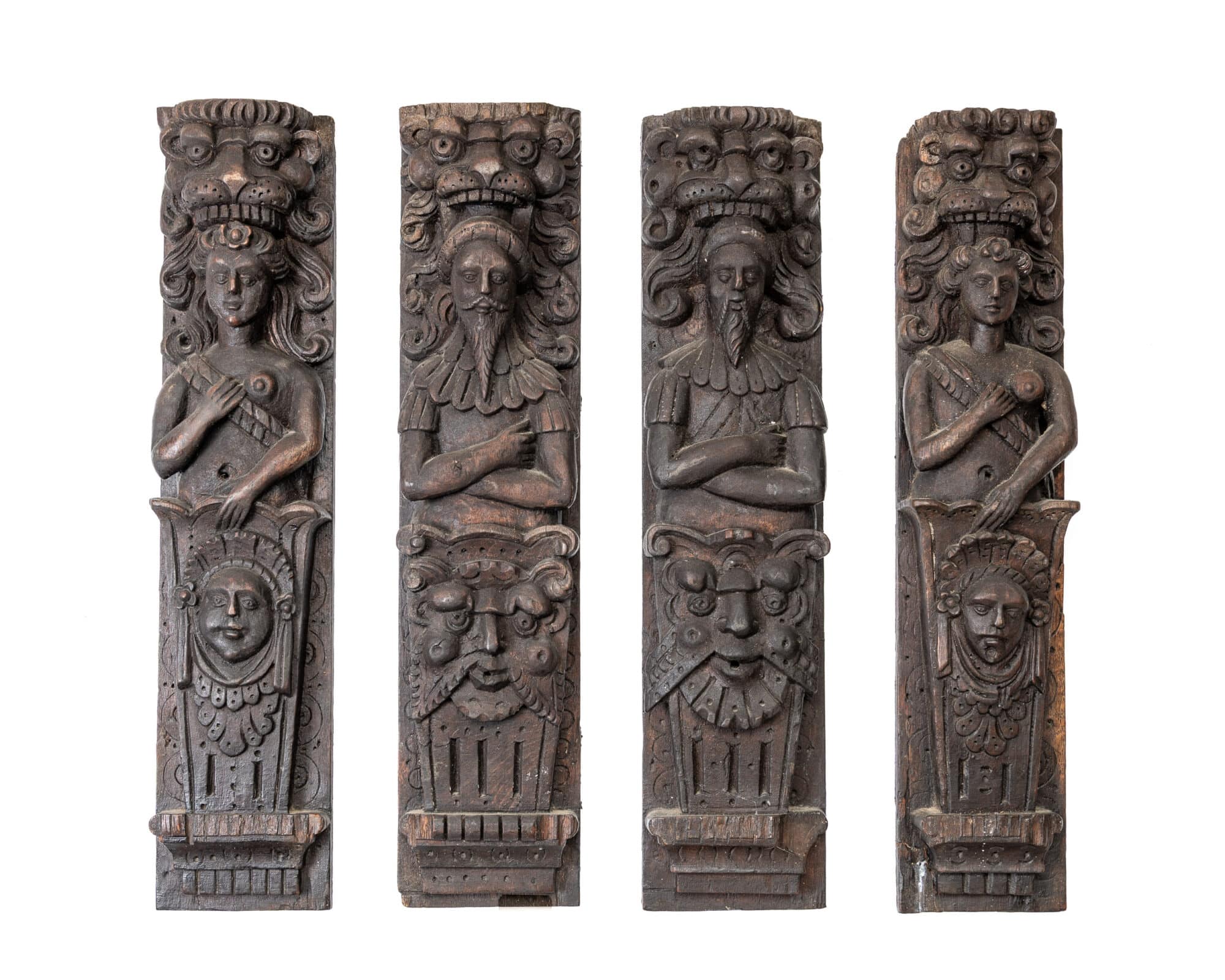
An exceptionally accomplished set of four Elizabethan carved oak architectural figures, comprising two male atlantes and two female caryatids, originally forming part of an elaborate overmantel from a substantial West Country house.
Each figure is surmounted by a boldly carved lion mask with prominent eyes, exposed teeth and flowing mane, beneath which emerges a finely modelled human figure. The two female caryatids are depicted with flowing hair, partially exposed breasts and diagonal bands crossing their torsos, while the male atlantes are represented as bearded figures wearing elaborate collars, their arms folded across their bodies.
The lower sections incorporate a series of human and grotesque masks framed by architectural ornament, terminating in projecting moulded bases. Although conceived as a unified decorative scheme, each carving displays individual variations in the treatment of the facial features, hair and ornamental detail.
The combination of atlantes, caryatids, lion masks and grotesque ornament reflects the influence of Continental Renaissance design upon English architectural woodcarving during the second half of the sixteenth century. Such ornament was disseminated through printed designs, particularly those originating in France and the Low Countries, and subsequently adapted by English craftsmen working within established regional traditions.
The lion masks, traditionally associated with strength, vigilance and authority, reinforce the architectural character of the figures beneath them. Their integration with the human forms is characteristic of the imaginative treatment of classical and grotesque ornament found in ambitious Elizabethan interior woodwork.
The quality and depth of the carving, together with the sophisticated arrangement of the figures and their architectural ornament, suggest an overmantel commissioned for a house of considerable standing.
Carved throughout in oak, the four figures retain a deeply established, darkened surface, with accumulated deposits consistent with prolonged exposure to smoke and the atmospheric conditions associated with an early domestic interior. This undisturbed appearance contributes significantly to their historic character.
The group represents a particularly accomplished example of late Elizabethan West Country architectural carving, demonstrating the assimilation of Renaissance ornament into the English tradition of decorative oak woodwork during the closing decades of the sixteenth century.
Literature for comparison:
Victor Chinnery, Oak Furniture: The British Tradition (Woodbridge, 1979; revised edition, 2016).
Anthony Wells-Cole, Art and Decoration in Elizabethan and Jacobean England: The Influence of Continental Prints, 1558–1625 (New Haven and London, 1997).