 Sold
Sold
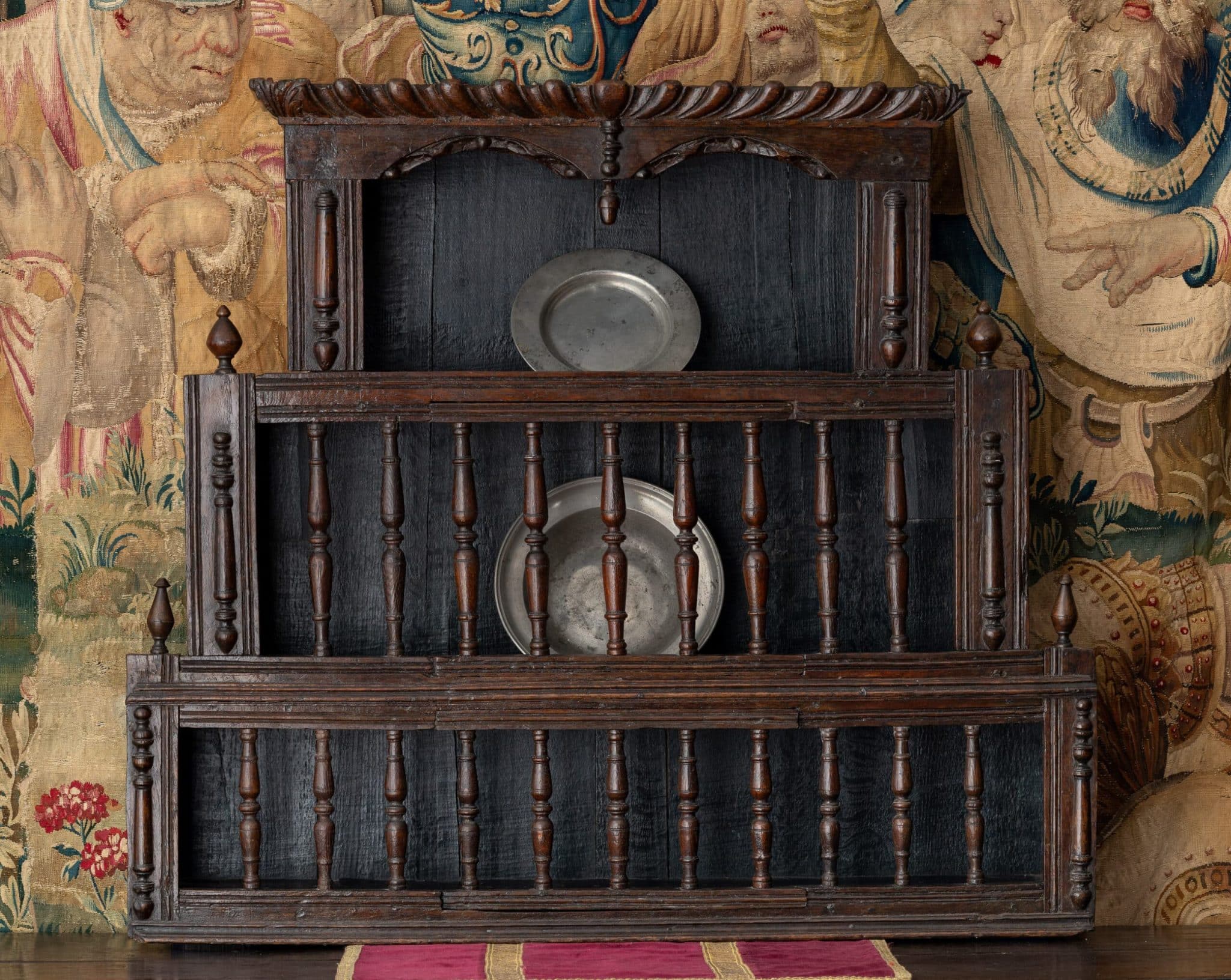
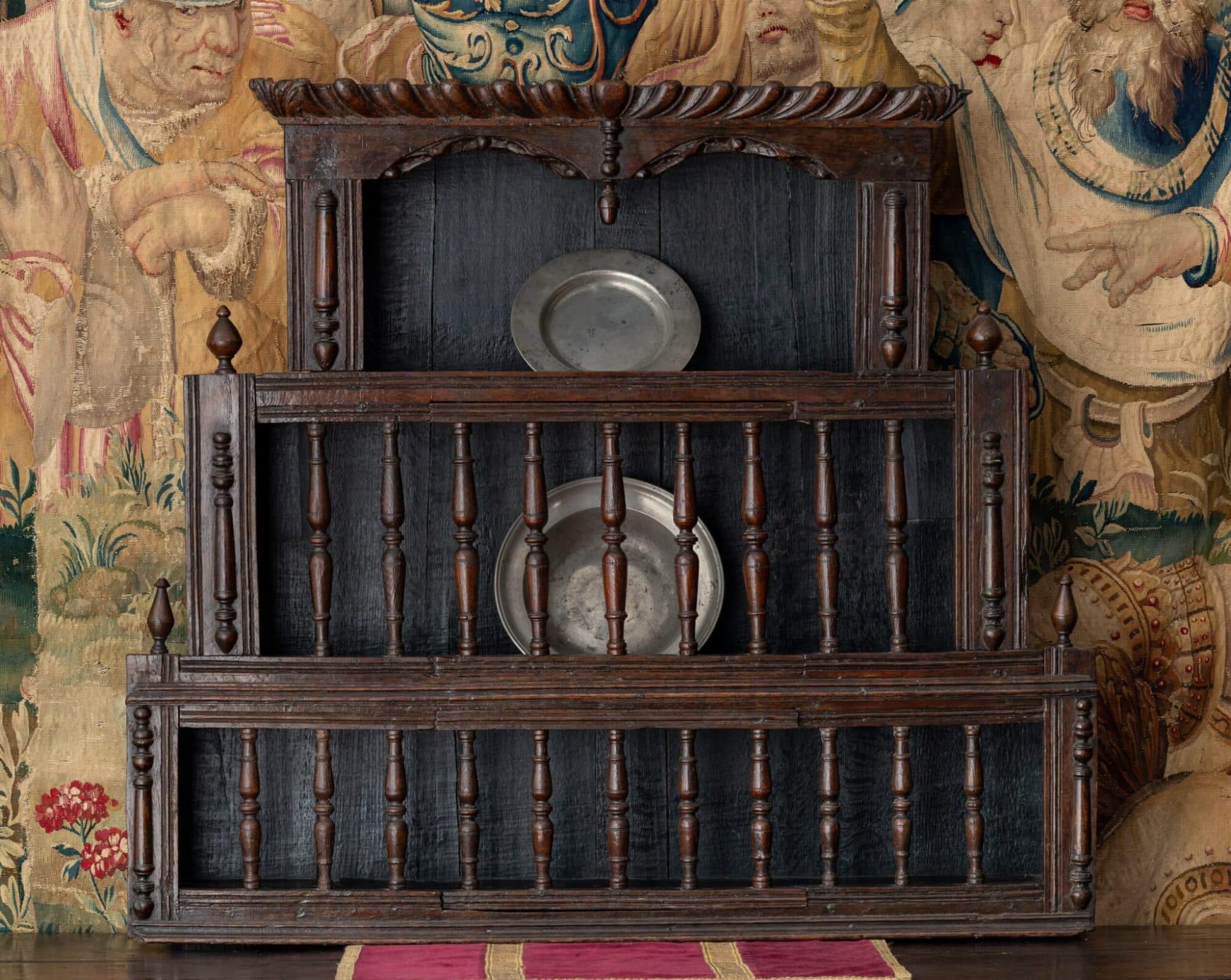
Charles I Oak Trencher Spindle Case
- Period
- Circa 1630 - 1640
- Origin
- England
- Dimensions
- W 40 1/4" × H 35 3/4" × D 6 1/2"
- Reference
- #Marh3000
This piece has been sold. It is shown here for reference in our archive.
Description
A rare and exceptionally well-preserved Charles I three-tiered oak trencher case, designed for the display and storage of tableware. The stepped arrangement of three graduated shelves is enclosed at the front by turned spindle galleries, each tier framed with applied split mouldings, and the upper stage crowned with a carved arcaded frieze rail surmounted by a boldly cut ogee cresting.
The dark, rich surface and finely turned spindles are characteristic of the early Stuart period, while the architectural framing and arcade carving recall the decorative vocabulary of contemporary court cupboards and livery cupboards of the same date. The original backboards remain intact, worn smooth and patinated from centuries of use.
Although traditionally described as a “trencher case” — a term used for the storage of wooden eating plates or trenchers — examples of this type were more broadly employed for the keeping of pewter, glassware, delftware and treen. As Victor Chinnery notes in Oak Furniture: The British Tradition, these cases represent a transitional form between the open dresser and the enclosed court cupboard, often made for the upper middling and wealthier households in early 17th-century England. Their spindled fronts not only protected the vessels within but also allowed them to be displayed, reflecting both function and status.
Comparable examples survive in the collections of the Victoria and Albert Museum, the Museum of English Rural Life, and in a number of historic houses where they are frequently recorded in probate inventories as “cases for trenchers and pewter.”