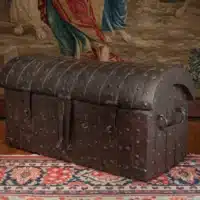
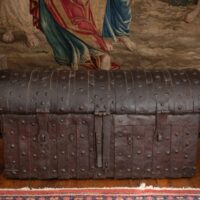
Gothic Iron-Bound Chest (Armoured Strongbox)
- Period
- 1450 - 1500
- Origin
- England or Low Countries
- Dimensions
- W 44 1/2" × H 22 1/2" × D 19"
- Reference
- #Marh3701
This piece has been sold. It is shown here for reference in our archive.
Description
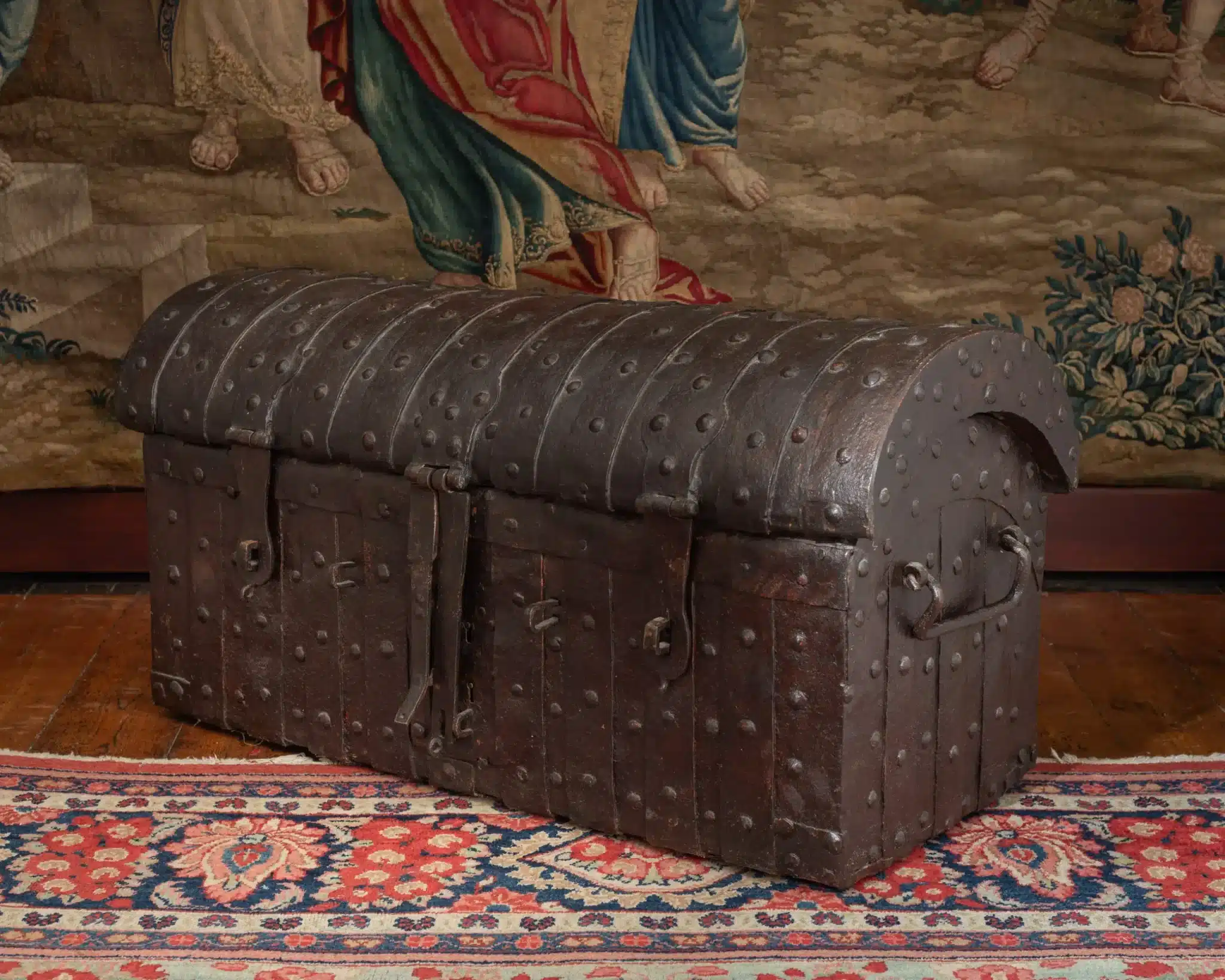
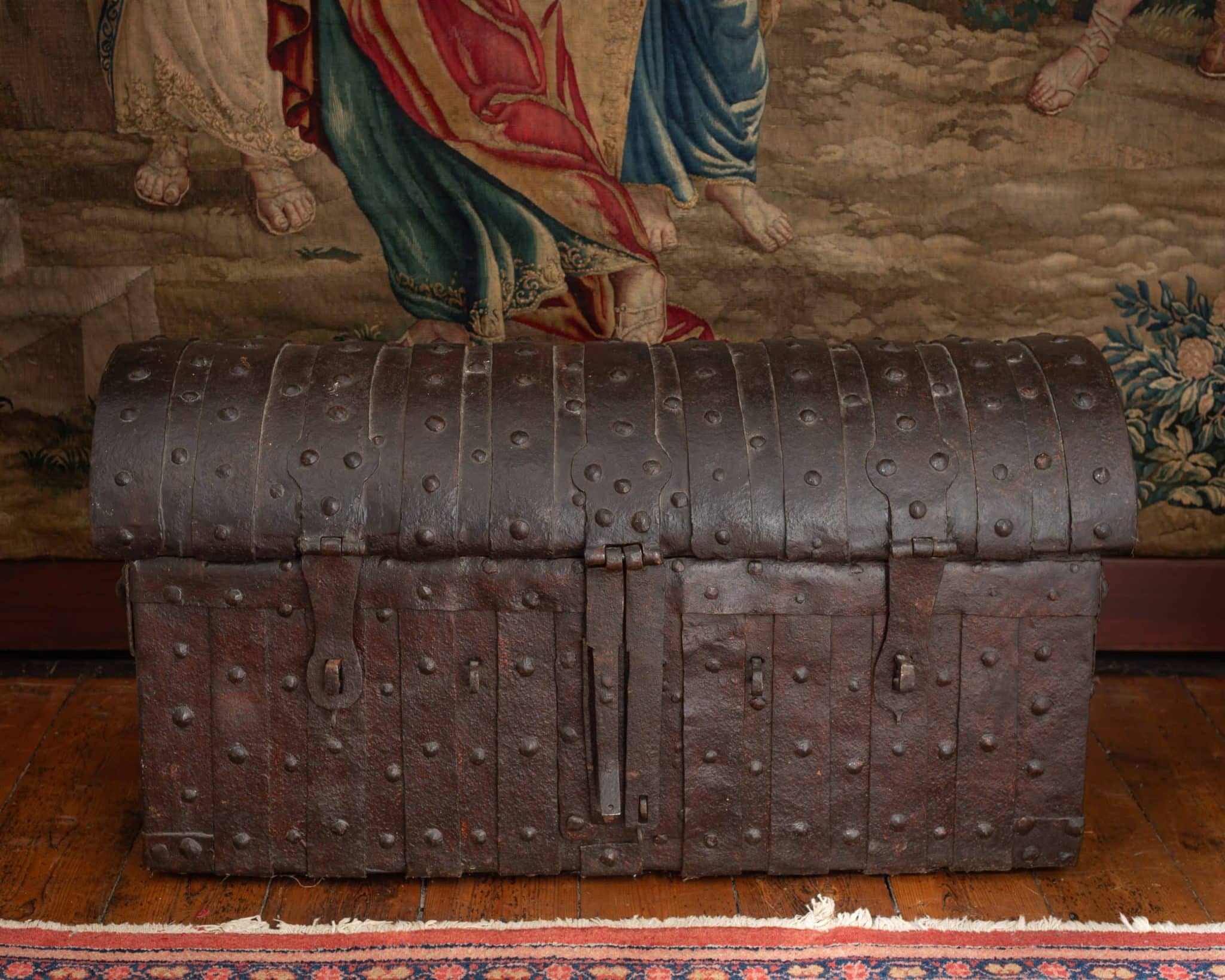
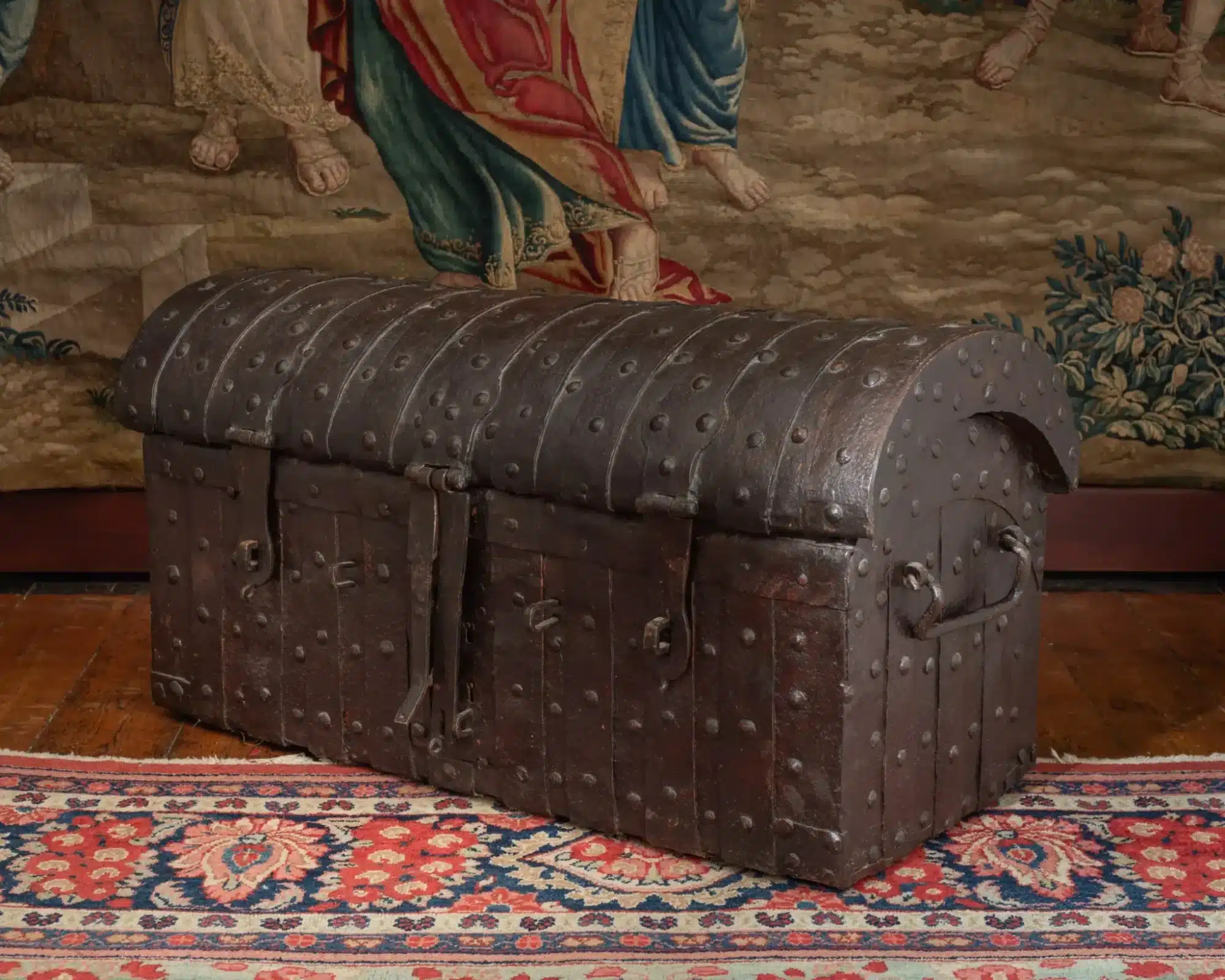
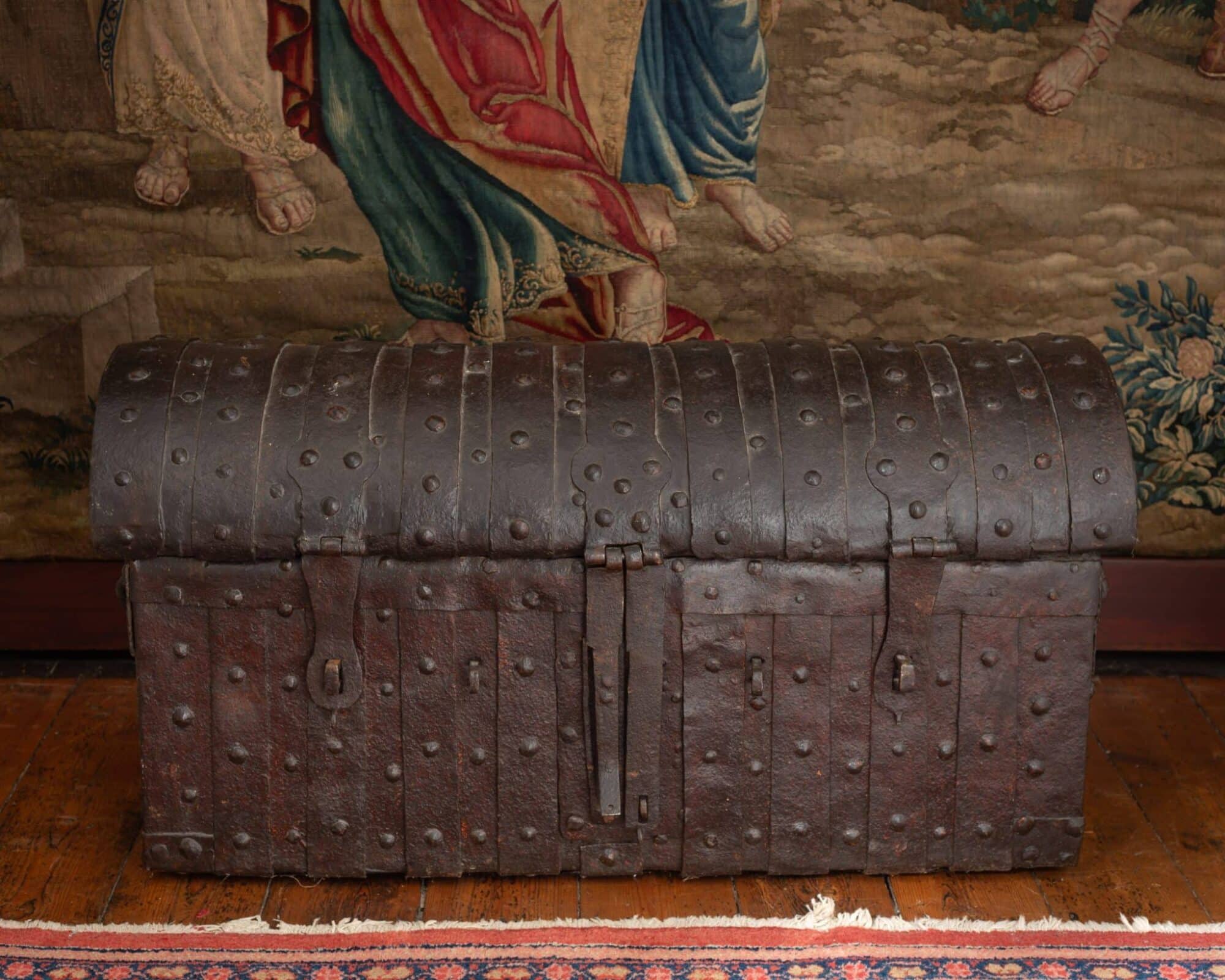
This superb medieval strongbox represents the pinnacle of the Gothic armoured chest tradition of northern Europe during the fifteenth century. Constructed from a robust deal (pine) carcass completely encased in wrought iron strapwork, the entire exterior is clad in vertical and transverse iron bands, fixed by large domed rivets and terminating in round-headed studs that lend the surface a rhythmic architectural quality. The strongly domed, arched lid—built from curved iron staves over the timber core—not only provided immense strength but also discouraged stacking, a hallmark of the most secure late-medieval “munition chests.”
The front retains its original lock plates and hasps, one centrally placed with an internal spring lock, and two flanking hasps for subsidiary padlocks or seals—an arrangement typically specified in ecclesiastical and civic statutes to require multiple keyholders. Massive forged side handles permit the chest to be carried by two men, and the full continuation of the iron armour around the back indicates that it was intended for open display within a sacristy, treasury, or manorial hall, not built into a wall recess.
Comparable examples, many of them with pine interiors, survive in the Victoria and Albert Museum (inv. M.112-1919), Westminster Abbey Treasury, Wells and York Minsters, and the Museum Catharijneconvent, Utrecht, where such chests are recorded as kerk-kisten or tresor-kisten—treasury boxes for plate, relics, and documents. Archival sources record English parishes being ordered to keep “a strong chest with three locks for the books and jewels of the church,” a mandate that produced this distinctive triple-locked form.
The present example, with its dense rivet pattern, original lockwork, and finely proportioned domed profile, is among the most complete and architecturally accomplished armoured chests of the Gothic period. The use of deal rather than oak indicates a workshop accustomed to portable security furniture for ecclesiastical or mercantile use, most plausibly from the Low Countries or eastern England, where such hybrid iron-and-pine constructions were exported across the North Sea trade routes in the late fifteenth century.